Tag: creative writing

  • dum spiro spero

    Light and dark, full and empty – how mysterious!
    Spring of Words is now elusive – how tantalizing!
    To the secret seeker with no pity – how heartless!
    And no more spirit so festive. – how agonizing!

    Midnight and moonlight and shining stars – so beautiful!
    Angles and fairies and ghosts – so ethereal!
    Come to my aide before I lose sight of it! – Yes, quickly!
    And possess me with the best of your powers – by all means!

    Is Tree of Knowledge going to become sere? – How unthinkable!
    Has Tree of Knowledge already become sere? – How miserable!
    Let nothing dishearten my spirit still pursuing, still trying
    With hope, while I breathe, even if it seems impossible. How beautiful!

  • the door of perceptions

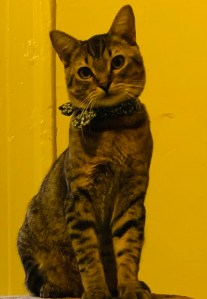
    My cat sits in front of the door
    Like an ancient statue of Basset
    And looks at me with desire
    To break the spell of the moment.

    In the high night
    When the only light
    is iridescent emerald beams
    from his large green eyes,

    I open the door
    He believes to be
    The door of perceptions
    When there is only darkness.

    But he roams in eager eyes
    With a lamp of his cat’s eyes
    Searching for the wonder
    With neverending hopes.

    Alas, my elderly mother stops
    His hopeful night’s adventure!
    Still yearning, ever curious
    My cat tries it always tomorrows!

  • 2021 Nobel Prize in Literature goes to Abdulrazak Gurnah

    The great writers are capable of metamorphosis and travel across a gulf of time and a hiatus of cultures and continents because their narratives speak to the sentiments and reason common to all humankind. Enter Abdulrazak Gurnah, this year’s Nobel Prize laureate in Literature, in this celestial constellation of great writers. The following is what I think about Gurnah based on reading his interview with today’s Reuter.

    Gurnah, born in Zanzibar (now part of Tanzania) in 1948, went to England in the 1960s as a refugee fleeing from the political turmoil and social unrest of his native country. Then began his migrant’s song composed of multiple strands of his experience, thoughts, and feelings that became polyphonic acapella in variant notes and rhythms. Unlike many other laureates of prestigious literary awards or esteemed recognition, Gurnah is a champion of underdogs who were not expensively educated in private institutions and, above all, who were not born into the surroundings of English as mother tongue. Working at the places where his privileged literary peers would not think of, Gurnah wrote in English as Second Language as his Lingua Franca literary tool. The result is his enchantment of readers to a fantastic maze of his inner world. His narratives become Ariadne’s thread that guides his readers to the world that seems so unfamiliar yet oddly universal.

    Gurnah seems to be the kind of writer I sincerely respect and dare to emulate who have lived among ordinary people like a sun in evening declination with the soft but radiant scarlet hues covering the earth, reflecting its magnificent face in shining waters. I am delighted to confirm that you don’t have to be born into a culture that speaks English if you want to become a good English writer. It is not about the Perfect mastery of language but about articulating thoughts to become a great writer. Although the media emphasizes Gurnah’s being the second black African author to have won the award since Nigerian Wole Soyinka in 1986, I don’t think it’s about his race that draws attention to his books. His being a writer supersedes his race because writers are different kinds of the race with a unique eye to look at the world and show it to readers, standing together in the collegiality of human spirits.

  • Song to Artemis

    Stars sundry and allwhither
    Planets pompous and distant;
    But the Moon is only always
    Goddess excellently bright!
    Fairy Queen rides in her chariot,
    Ghosts rejoice in the moonlight
    Nature basks in moonbeams;
    I revel at sight wonderous
    Goddess excellently bright!

  • day stars

    The skies they are blue and boundless
    The stars they are serene and sightless
    The stars they are many and sightless;

    It is the day that invades the brilliance of the night
    With the glare of the fiery sun haughty downright;

    It is dreary with no menagerie of heaven’s beasts,
    Afloat in the abeyance of immemorial pasts

    It is gloomy with no festivals of ancient legends,
    Aglow in a heaven’s theater at their best acts.

  • Letter from the West

    Eight hundreds of suns and moons have passed since I was uprooted to Southern California from Northern New Jersey, and I have to say every day is still a new day on the frontier home in the Wild West. Cowboys, gunslingers, and drifters looking for chances and time for winning the Wheel of Fortune in life may have gone with the dust of wind. Still, I feel like a hardscrabble but resiliently brave and adventurous frontier woman I have seen in western TV dramas and movies with the central theme of Little House on the Prairie surrounding as a leitmotif for the story of My Life So Far in the Wild West.

    The great French writer and humanist George Sand once said that every place has place memories that influence the spirits of the site and people without them knowing it. Given this, the place memories of Southern California fill the domes of the spirits and palaces of the souls living in it with the characters endemic to the nature and shaped by the events artificers made based upon my empirical observations. People I have come across here are a curious mixture of friendliness and brusqueness added with a dose of saloon bravado and air of southern plantation riches under a high Californian sun.

    The charade of Californian Rhapsody continues thus: people reading in public, such as public transportation or coffeeshop, is as rare as finding Nemo in a vast ocean. In such an environment, I feel awkwardly vain to read in such places as if I were a showy blue-stocking, contrary to New York City, where readers are part of the landscape under the Manhattan skyline. It brings me back to my reading of Horace Greely’s experience of an overland journey from New York City to California. Greely, the famous 19th-century journalist, the editor of the now-extinct the New York Tribune and the rival presidential candidate of Ulysses Grant, also noticed the lack of intellectual cultivation in many Californians and thus called the attention of young single, educated woman from the East Coast to go west in a proliferation of civilization from the cultured East Coast.

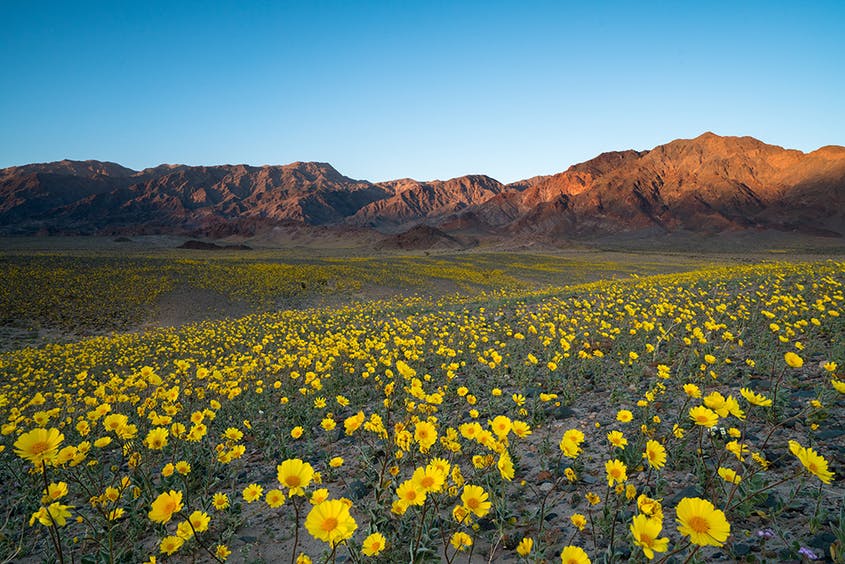
    Part of me still longs for the convenience of city life in New York City, where people of all walks of life ride on the same bus and subway and eat at the same place. Nevertheless, what holds me to this immigrant land is its gorgeously untamed wild nature that whispers to my ear, “Tarry with me,” like a beautiful paramour. The wildflowers in the fields over the ridges are sweetness to the weary soul seeking a place for visual pleasure after being exposed to a miasma of an unpleasant office environment, even though I am still unaccustomed to the sight of palm trees with long unruly hair. Still, I like to think of myself as a 21st-century frontier woman living with an elderly ailing mother and a young tomcat in my care, trying to keep my foot on the ground and my eyes on the stars, to claim my happiness on a new land against all odds in this Wild West, Still and Ever.