The first ray of light from heaven dispels The gray silence of night lost with lusters With pale hues of the sun in the soft sweetness Lingering in a lake of shimmering waters.
Iris unfolds the wondrous seven colors Weaved into an arch of dreams and hopes Always new and fresh in never-ending grace That fills with pleasure the hearts of beholders.
Aurora releases dewdrops from crystal buds Made of moonbeams, stardusts, and starlights Kept from a visiting moon and traveling stars Washing the faces of earth with heavenly pearls.
The devil came upon a poor miller In exchange for wealth with luster And wanted his daughter’s hands Though it pained her in blood and tears.
Now the girl without hands wandered off Day and night with her tears washing off The pain she suffered from the promise Her father made with the devil for riches.
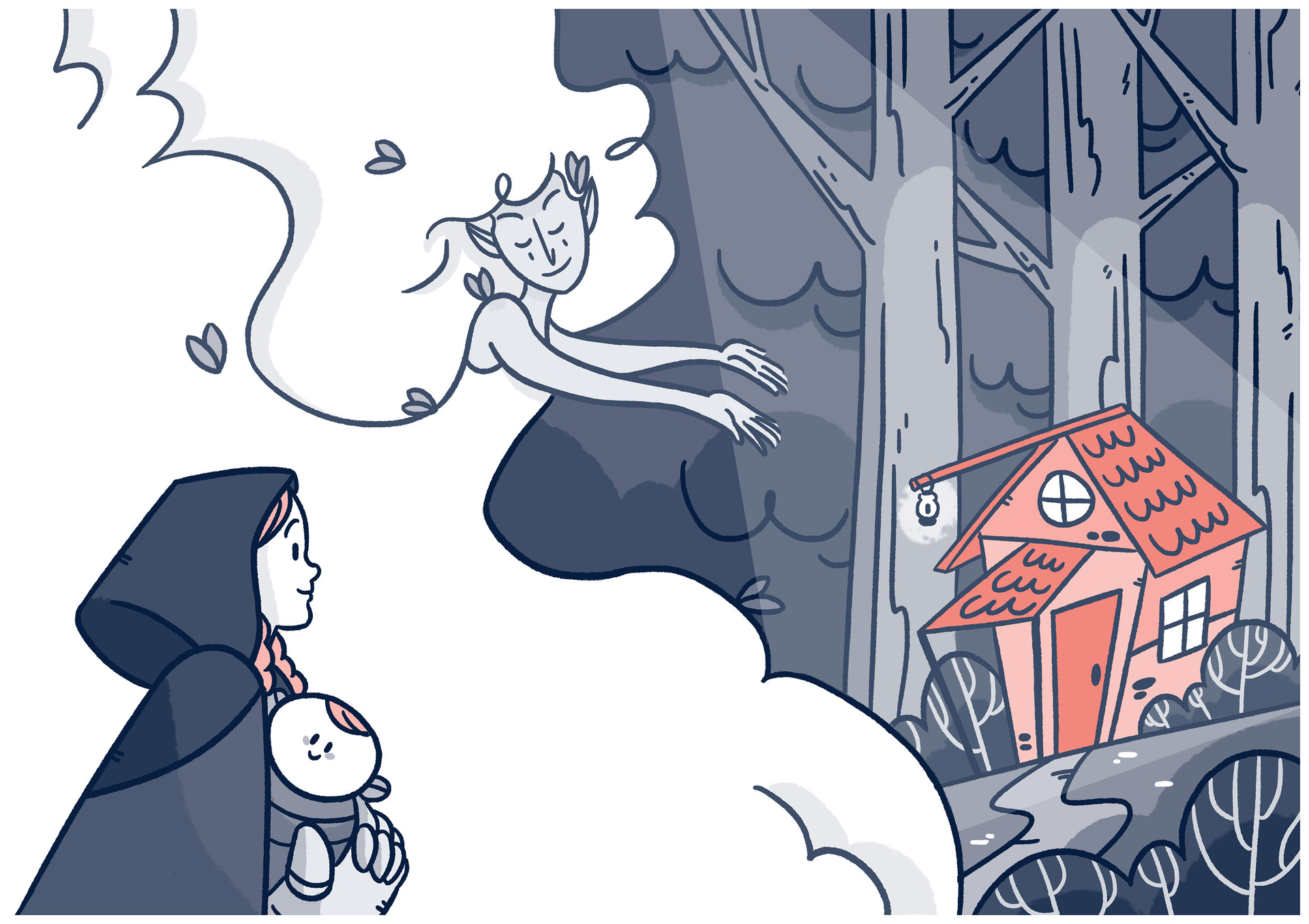
The girl without hands came upon a garden Where Tree of Fruits of Grace seemed to beckon with the susurrus of leaves coaxing her And she saw a besotted king approaching her.
The girl without hands became a queen But the devil returned with a scheme To kill her and her son for their pure souls As bounty for his region against angels.
The girl without hands fled with her son Deep into a forest where seven years began Until the king found them in Angel’s Hut And the girl with no hands was no more.
She, with her wings clipped in shackles Sees the light above the high altar Through the dusk of leaves and boughs Beneath the dome of boundless skies Without spires and stained glass within.
But why else when nature has it all Sermons in trees, brooks, and skies? From the haunt of life’s vicissitudes rests herself under the pillars of trees As the choristers of hummingbirds begin The hymns of hope in nature’s cathedral.
There is a sky in the eyes Sparkling with sweet stars Made of fire, spirit, and dew Swirling in liquid emerald hue;
There are secrets of the universe Across the oceans of galaxies Farthest into the unbeknownst One world more to the loneliest;
There is an alchemy of a wizard Inside the magical windows Unlocking the magic beyond, Revealing the wonder inside.
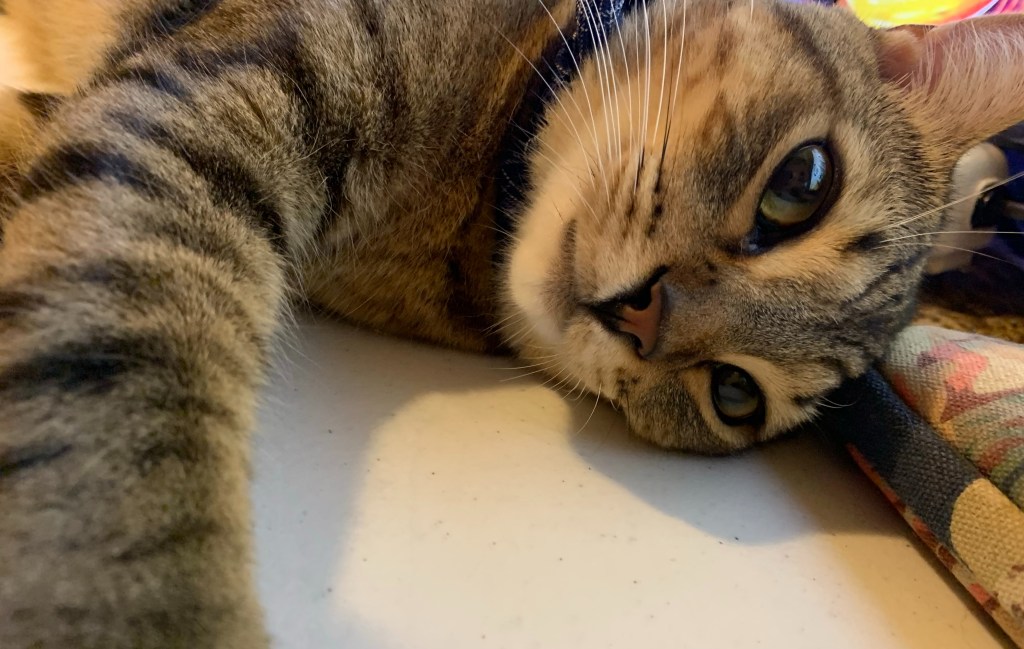
P.S.: This little poem is written as an ode to my fourteen-month old cat Toro in celebration of one-year anniversary of his adoption from a shelter. When I look at his large light green eyes, I see a world of his own composed of stars, moons, and suns – all in the mystery of the unknown galaxy far away from the end of the farthest known star. As George Orwell referred one man’s death to a condition of one world less in the whole universe, my living with Toro means a cosmic show of birthing another world of stars from a beautiful emerald and diamond supernova.
I have recently read an article about how the prosperous presence of wolves reduces the number of deer road-kills because their very predatory sense intimidates their prey, one of which is the deer. Fewer traffic collisions mean fewer government funds to spend on the aftermath of car and traffic accidents from animal crossings. So far, so good. But what about the resolution about protecting livestock from wolves, which has become an economic issue disturbing the farming community? So here are my small suggestions that I deem mutually benefitting people and wildlife by virtue of Charity, Faith, and Hope.
The article continues to support recolonization that the reduction of traffic collisions resulted in economic gains, which outweighed the costs of livestock losses by nearby cattle ranchers whose livelihood feels threatened by their lupine marauders. I remember reading newspaper articles and tweets about ranchers in Washington that the multiplication of wolf population engendered their livelihood and that clamoring for lupine rights outright disregarded human rights to make a living. When I commiserate with the woes of the ranchers at the same time, and also hope best for the great grey wolves, my mind’s eyes see the visceral images of the Maasai in Tanzania and African lions living in co-habitation. The Maasai find the most cost-effective and nature-friendly way of guarding their livestock against the lions by establishing chain-like fencing supported by the thorny African myrrh trees. I am sure the American contemporary can take cues from the Maasai and adapt them to their environment.
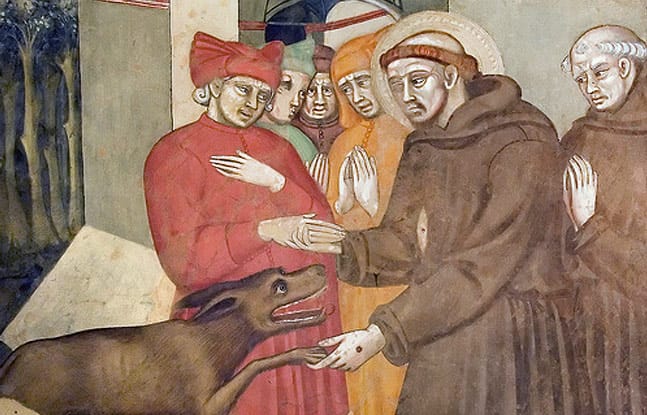
I like wolves for their commendable fidelity to spouses and respectful sense of a society that emits from their majestic composure. I also admire the fortitude of cattle ranchers who are vigilant of the livestock their families subsist. Both beasts and men have reasons to live for and kill for. Yet, there should/must be a way of satisfying the needs without losses. Indeed, the medieval Italians knew exactly about the problem, but no more understanding and effectively than St. Francis of Assisi in meeting with the Wolf of Gubbio. Francis admonished him for his terror of fear over the people and made a pact with him publicly at a popular marketplace that if he ceased his predations, people would feed him from their very doors. The Wolf put his paw in Francis’ hand as a gesture of agreement, a sort of beastly hand-shaking. Can I make a wish for the miracle once again in my time? I believe I can, if they or we want to, for sometimes we as part body and part spirit can do beautiful things together.
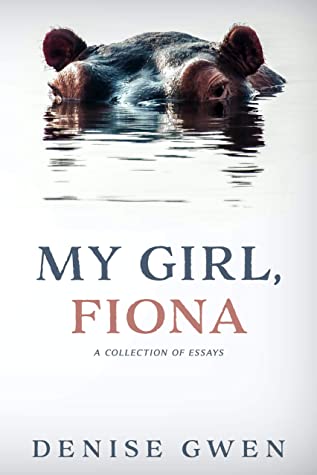
Sometimes we see ourselves in animals – here I mean the mammals, especially — and relate our mental images to them, whether they are pets living under the same roofs or wild ones in nature or zoos. That is why animals are apropos mediums to project our mirror images into their figures without exposing our naked selves outright. And that is what Denise Gwen does in her elegantly poignant collection of essays My Girl, Fiona.
Fiona is a hippopotamus the author adopted emotionally from her struggling birth into the world at Cincinnati Zoo. Abandoned by her enormous mother, the vulnerable yet adorable baby Fiona chimed the emotional bell of the author on the octaves of her family. Fiona, the name of Gaelic origin, provokes the image of a vivacious fairy whose feistiness and resilience elements make her all the more mysterious and, not to mention, beautiful. But the beauty is uncommon and only kind, which strikes Edgar Allan Poe’s wise dictum that “There is no exquisite beauty without strangeness in proportions.” Then the adorable hippo Fiona becomes a kaleidoscope of images of women, representing the Exquisite Beauty Tribe. It consists of her youngest sister, whose name is also Fiona, her feisty Welsh late mother, and herself in midlife crisis blotted with sentimental reminiscences. Added to this tribe is Shrek’s wife is Princess Fiona. Her transformation from conventional slender beauty to a green-colored ogre-like her beloved hubby is a guest of honor in the Fiona Parthenon. One way or another, they all share the beauty marks of uniqueness, confidence, and self-esteem as the author brings them into life in the alchemy of words, brewing the images into a fascinating pastiche of the Fair Fiona.
Animal stories charged with human emotions may well turn to the art of anthropomorphism in which animals speak like us with accents varied from Brooklyn to Los Angeles. But the author nuances the overtly human sentimentality in her narratives lest they should become schmaltz through Fiona, the lovely hippo. Also, the way she narrates with an elegantly apt choice of words and poignantly witty expressions is reminiscent of the British writing style I am familiar with. In fact, before finishing the book, I suspected her of being British for the reasons mentioned above. Consequently, I wasn’t miles away from the speculation because her mother was a proud Welsh who remained Welsh in her spirit and language during her lifetime. My Girl, Fiona is a thoughtful and heartful memoir disguised as short fiction apart from egotistical meanderings, which many celebrities nowadays indulge in stories that lack universal empathy. It is also a compact book you can read without leaps of attention and boredom in your spare time.








You must be logged in to post a comment.