Tag: creative writing

  • Our Mutual Friend

    IMG_3875

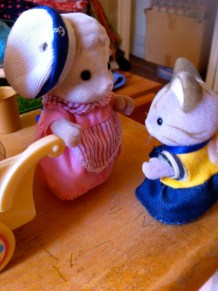
    Mornings in Avonlea always start with the calliphony of euphonious “good morning” exchanges between and among whomever you meet in the street, banterings of the townspeople on just about anything from what they ate yesterday, to the books or magazines they have recently read with relish, and to their projections on the next episode of their favorite TV movies including “Oliver Twist,” “The Brief,” “Mind Your Language,” “Macgyver,” etc.  And of course, they do gossip in the grapevine about anything they see or hear prodigious and pronounced from the quotidien landscape from their suburban life as it is our indelible human evolutionary trait to be incessantly curious about the lives of others. In this Darwinian regard, Mrs Brenda Beaver and Mrs. Mary Collie are probably the very essence of collective human curiosity. They are good chums together bound by mutual cultural interest, roles and duties of married women with children, and vivacious loquacious nature.
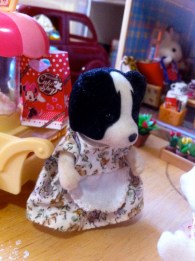
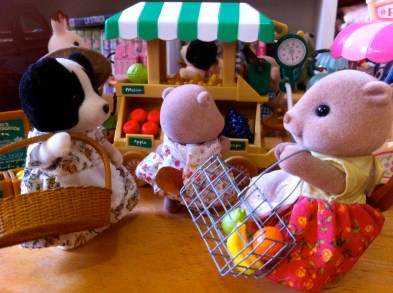
    IMG_3789As usual, Willie’s Fruit Cart is the first business enterprise that heralds a beginning of every day. The merry women of Avonlea are loyal customers of Willie’s fresh and scrumptious fruits because the products are organically planted, cultivated, and handpicked by the conscientious farmer Wille himself.  Naturally, it is no surprise to spot both Mary and Brenda chatting away around the cart on every saturday morning. “Hi, Brenda! You bought some fruits there. Did you get them from Willie’s Food Cart?” Mary opened the day’s bantering (or gossiping, depending upon your point of view.)  “Hi Mary! Yes, I needed to get some fruits for my family because my daughter Betty is on a  diet. I told her she would not need to lose weight, but you know, girls are girls. (sigh)”  Having said it with a touch of motherly concern for her daughter’s growing self-conscious image about herself, Brenda looks ruefully at Betty picking up more fruits from the cart. Mary ‘s innate empathy connects her into the inner world of Brenda and commiserate with her incidental m melancholy. So she decides to turn Brenda’s attention to something provocatively productive.

    IMG_4013

    “Brenda, you surely read The Glass Castle by Jeannette Walls, right? I finished reading it last week and have to tell you my honest review of it. Well, although I admire the author’s resilient and independent spirit in combination with her high intelligence and academic achievement against the vicissitudes of her childhood fraught with economic insecurities and shiftlessness of her parents, her situations did not seem to be as destitute and adverse as Judy Redfox’s in our own town. ” After decanting what she had in mind about the book, Mary feels that her mind could never be clearer and sober. Mary’s zeal soon grasps Brenda’s inquisitiveness, so she asks her to go on.  “You know, the Redfoxes who moved into our town two years ago and have since lived on Bell Street? Well, their only child Judy has been supporting her mother and father since she was eighteen years old by working at odd jobs and going to university at the same time. She worked through her way to university with financial aid from the state and the government. She even joined the National Guard to receive tuition assistance – all because of the fact that her parents lack practicality and totally depend upon their daughter for subsistence and everyday drudgery. I firmly believe that Judy’s travails are incomparable to what the best-selling author went through in her early life as narrated in her famous memoir in all aspects. Judy’s everyday life is a testament to resilience, courage, and determination because although Walls achieved her career and materialistic success, Judy still lives in the existential labyrinth of endless impecuniousness, arbitrary filial responsibilities, and ambivalent future of her own.

    IMG_4014

    Having read The Glass Castle when the book came out for the first time, Brenda knows what Mary talked about enthusiastically and can’t help agreeing to her friend’s point of view. For the author of the book’s now public travails do not amount to what her town’s Judy has been going through. Although Judy has never confided her feelings about her hard life to anyone, Brenda can see her unparalleled difficulty in life that Judy has to bear with all her might, with all her spirit, and with all her intelligence, to get by. Of course, you can not compare one’s life to the other’s, as that’s what social conventions and religious tenets have been conditioning the minds of people. But for all Brenda and Mary see, Judy is an unsung heroine whose existential tasks akin to the Eleven Labors of Hercules are worth the writing of her own memoir in future. So what the merry women of Avonlea will do next is to stop by where Judy works today and treats her with some nice lunch to cheer her up to let her know that she’s not alone.

    thanks-for-reading-Rok-Hardware

  • Passing over

    01a14x14ChildeHassamWomanReadingdetail

    Divine Pleasure of Reading travels
    To the world of imaginations
    Perceived by the eye that decodes
    Words thru a rapid firing of cells
    At the behest of the frontal lobe
    Mustering the neuronal minions
    To the seat of the noble spirit of
    Feelings breathing life into letters
    Linking to the sovereign experiences
    With the intellectual flexibility to the
    Fore to prepare your soul to pass over
    To the beyond and the far beyond thither
    In a brand new mind evolving evermore.

    • AUTHOR’S FOOTNOTE:  “Passing over” as used herein is interpreted as immersing yourself in the world of a book you are reading or you have read by identifying yourself with the characters and/or the authors. The term was coined by the late American Roman Catholic priest and theologian John S. Dunne (1929-2013). He referred it to a spiritual experience of entering into the psyches of others and building empathy with them in order to understand their woes, travails, and frailties. This simple but profound concept of spiritual togetherness is wonderfully cogently  applied to the principles and development of our reading brain as the apotheosis of why we read in Proust and the Squid by Dr. Maryanne Wolf. Hence this seemingly riddle-like poem of mine reflects a meaning of reading that depicts a reading process starting from the sensory perception of texts to decoding the perceived texts through reptinotophic organization in neuronal circuits, and to the understanding of the texts in our brain, the final destination to get ready for a journey into the minds of others. 
  • Fate or Providence?

    IMG_3851

    Julie has a sweet tooth. She loves bonbons, jelly, fruit candy, and butterscotch candy saturated richly in fresh milk. She savors them not in excess, for her motto is “Nothing in excess. Moderation is a virtue,” which is a synthesis of Apollonian adage found in the terrace of the temple at Delphi and Christian virtue recorded in the bible, a wonderfully syncretistic maxim created by her father Willie Shue, an intellectual food vendor of Avonlea. But today is not one of those lax halcyon days of Julie’s; neither Sally’s Sweet Cart stuffed with fresh buttery popcorn, Ice Frappuccino, chocolate-covered bananas, sugar-coated churros, and bottles of Coca-Cola nor her good old chum Lana seems to perk up her innate conviviality. It seems as though Julie was under the spell of a malicious witch bearing generational grudge against the Shues.

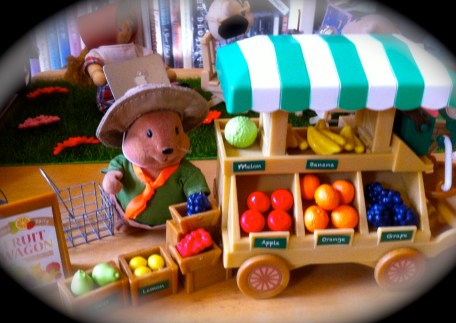
    IMG_3912Anyone around Julie is flabbergasted by her sudden change of mood. None has seen her this lugubrious, saturnine, and crestfallen. This perturbs the heart of ever altruistic, magnanimous Sally, who is tending her aunt Mary’s Sweet Cart today and tomorrow during her brief jaunt to Lake Leda 10 miles away from Avonlea. Having known Julie for over ten years since she and her vagabond intellectual father Willie made their debut entrance to Avonlea. Although the father and the daughter have been living in a hut with limited bare necessities, they are rich in humanity, knowledge, and imagination. Knowing this eggs on Sally to ask Julie if all is okay with her and her father.”No, Sally. Actually, I am deeply worried about my father. Last Wednesday, he went to see his physician for his result of a blood test. And the doctor told my father that his kidneys were damaged and that he needed to take medications everyday for two months until the next appointment with the doctor. My father has been diagnosed with “Acute lobar nephronia”. That was why my father was often dizzy and stumbled on the ground as flat a pancake.”
    IMG_3913

    The litany of Julie’s woebegone feelings becomes a heartrending ballard of life in which we have to deal with unforeseen forces of malice and misfortune akin to those of Odyssey, Hercules, Jonah, and Aeneas according to the whims and caprice of gods and goddesses, and God. So would Willie’s predicament be a fortiori sign of divine intervention in the maning of his life? The new medical revelation of Willie’s ailing kidney poses a concatenation of philosophical musings that seems like Sphinx’s famous riddles: Delphic, visceral, esoteric, and maddening. Sally is wondering just what Willie is thinking about his decided fate, a diagnosis of his failing health. Perhaps he takes it in stoical attitude. Or according to Elisabeth Kubler Ross’s five stages of dying, he will be at Stage 1, which is “Shock and Denial.” It’s all a priori assumption that Sally can think of as far as Willie’s state of health goes. But most of all, Sally’s heart is now heavily laden with pathos for Willie and his daughter Julie. What will become of Julie if Willie’s symtoms gets exacerbated all of sudden, and he does not wake up next morning?… With all her a posteriori assumptions about Julie and Wille locked in her mind, Sally consoles Julie with a cup of buttery popcorn and a bottle of ice-cold Coca Cola for free and tells her that she will drop by her house to say hello to her father Willie with a box of Julie’s favorite bonbons later in the evening.

    thanks-for-reading-Rok-Hardware


  • The Glass Castle by Jeannette Walls

    The Glass CastleThe Glass Castle by Jeannette Walls

    My rating: 5 of 5 stars

    Dickensian world of poverty is so abominably tenebrous that we tend to think of it simply as an anachronistic, if not antediluvian, work of fiction apropos of a bygone Victorian era, without translating its elemental essence of nobleness of human spirit that arises from predicaments into our own zeitgeist. The fictitious characters of Oliver Twist, David Copperfield, and Pip are the embodiment of such resilience, phoenix-like spirits enduring sordid conditions that life could impose upon us to the extent possible. Spinoza, the Dutch thinker and watchmaker, once said that it is Amor fati, love of fate, by which man’s inner strength could raise him above his outward fate. In fact, Nietzsche centuries after corroborated by saying: “That which does not kill me only makes me stronger.” Given the above axioms, what if someone in our contemporary time a fortiori lives to tell such victory of human spirit? That was the reason that I chose The Glass Castle by Jeannette Walls. All of the aforesaid noble triumph of human spirit over existential horrors of life is substantively and stoically recorded in this compelling living memoir with all her spirit, with all her intelligence, and with all her heart.

    The story starts as Walls invites us to board her memory train and travel back in times until we return to where we depart along the long and winding railroads of her windy but beloved past. We meet her charismatic, intelligent father whose engineering feats are passed in smolder by his ever independent, anti-establishment, recalcitrant spirit a fortiori emboldened by a spirit of Dionysian portion. The artistically inclined mother is all liberality: She is a devout Catholic – although far from being sanctimonious – and has a heart of gold, save a practical sense of the world. Then there are one brother and two sisters, all of whom are highly intelligent and well-behaved thanks to the moral upbringing by their parents. The parents do not have the gumption to support their children, let alone themselves in terms of economic security, which was the cause of the existential ills of the family, pushing Walls into a position of  a de facto breadwinner of the family.

    What is most profoundly august about Walls through living amid the straits of constant economic insecurity, frequent threats of family separation by social agencies, and dangers of physical harassments was her strong sense of responsibility for her life and for her family that enabled her to endure the existential predicaments. Many people mired in such situations might have develop disputatious streaks of rebellion against everything ascribed to them. However, Walls and her siblings took different attitudinal values to their existential dilemmas: they held on to a sense of purpose and a tenacious grasp on togetherness nurtured by their yearning to achieve a higher aim in life. In fact, such attitude toward life corresponds to one of the tenets of Logotheraphy: in order to find a meaning of life however trivial or nihilistic it many seem, taking a different, constructive stance on what is ascribed helps us to rise above biological, social, and cultural inhibitions during a difficult times because we give our suffering meaning by the way in which we respond to. Which also brings us back to Spinoza’s Amor fati axiom: a different approach to our suffering is sublimated into supremeaning of life in travails by believing in its meaning to every situation with will to live a meaningful life, which then ceases to be a suffering itself.

    The literary merit of this memoir lies in its absence of unbridled namby-pamby outpourings of emotions in the narrative with a certain air of stoicism. Ironically, Walls’s frank, touchy-willy, matter-of-fact manner of discoursing her story belies her overwhelmingly heartrending heartaches, disappointments, and dismay smothered under factual descriptions of her past that renders the authority of truth and the power of reality without hindrance of prohibitive emotions that often results in fabrication. In her literary confession, Wall achieves catharsis by putting what was in her mind on pages after pages, pushing her pen through in expense of her will to come to terms with her parents, let alone herself, producing forgiveness of her parents’ wrongdoings and acceptance of their frailties in a package of love and tenderness.

    All in all, Walls’ s message to her reader is clear: you can’t choose your fate, such as a family, but you can choose what to make out of what you are given. In one way or another, the story itself chimes the bells of emotions and thoughts of many of us: the problems and issues that the Walls had and the ones we have or had are not oranges and apples through our voyages of life. Walls shows us that notwithstanding all the vicissitudes of life, self-reliance, resilience, and determination helps us to sail through with cheerfulness and humor as handmaids to courage. This honest-to-goodness tale of a woman rising above the planes of her inhibitions speaks straightly to our hearts. This book is a one-of-kind testament to its veracity and quality that upon reading this book, you will feel as if you knew Walls telling a story with a sense of elemental kinship which you can relate to. Moreover, this bona fide memori gives us a sense of relief that no family is perfectly blissful, which resonates with Tolstoy’s view of families as inscribed on the first page of Anna Karenina: “All happy families are alike; each unhappy family is unhappy in its own way.”


  • Practical Poet

    01279

    Beauty is a Nature’s Ecstasy,
    Calming tempest of chaos,
    Lighting the lamps of the eyes
    Of all to whom it appears in bareness
    With tender and thrilling tensity.

  • Dogs and Psychospirituality

    RE: 9/3/2018 The Los Angeles Times article of “Convicts and canines get a new leash in life”

    No one is either excellently good or extremely evil. It’s this ambiguous nature that we must guard at all times lest we should give free reins to our defiant, recalcitrant horse in our soul which can prompt us to go beyond the pale of Reason and Judgment universal in human societies. Nevertheless, this does not mean that those who are sinned against the principles must be forever stigmatized by their wrongdoings in public and barred from turning over new leaves because by doing so, we not only estrange them from a sense of belonging to society but also oblige them to resort to their former errors. That is why every person deserves of a second chance without question to right the ship of the life with wise, practical, and altruistic supports from good folks.

    Janette Thomas, aged 53, strongly believes redemption of the souls of human and the lives of dogs from whatever predicaments they are put in either by will or against the will. Every human as well as every dog needs second chances. Out of her firm conviction in redeeming the lives of Nature comes in a form of 10-year-old organization named “Cell Dogs”. In fact, the program is for the benefit and behoof of both the inmates and the dogs. Throughout the year, the organization takes dogs from various shelters and brings them to correctional facilities where inmates put the dogs through 8-to-10-week training course. The course begets mutual munificence to both of the estranged spirits; inmate handlers gain new skills with confidence, patience, and responsibility that provision them with new career opportunities. Canine trainees go on to become companions to autistic children, veterans with post-traumatic disorders, and physically disabled individuals. In effect, the records show that there is a low rate of recidivism by inmates who participated in this program and that more than three hundreds dogs found their new homes upon completion of the program.

    This program is indeed all things to all people and our canine friends by giving both of them second chances to start their lives anew. The act of bonding between a human and a canine produces the very essence of trust, security and happiness in a psychospiritual way. An inmate who trained his canine partner attests to his noble ends of turning over a new leaf as corroborated by the following verse from the Gospel of Luke: “He who is faithful in a very little is also faithful in much.” For any possible criticism of cynics jeering at this beneficial and altruistic program and dismissive of bestowal of second chances to the neglected, it is perhaps high time that they should thumb through the bible and read the following Gospel of Matthew:

    “Then came Peter to him, and said, Lord, how oft shall my brother sin against me, and I forgive him? till seven times? Jesus saith unto him, I say not unto thee, Until seven times: but, Until seventy times seven.”