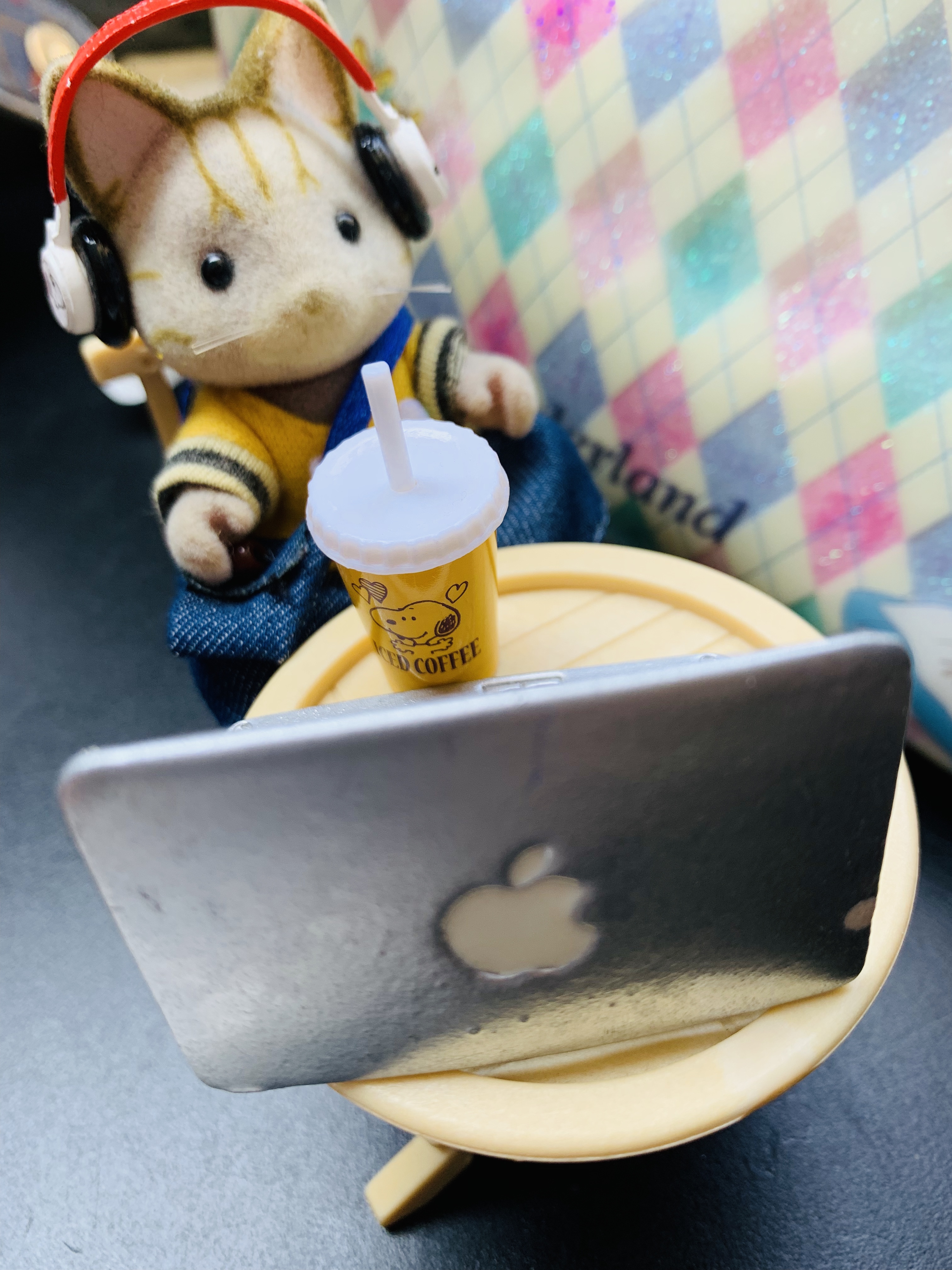
 She sat beside the trodden ways
Among a gallery of strange faces
Like a wandering lonely cloud
Hidebound, softbound, spellbound…
She sat beside the trodden ways
Among a gallery of strange faces
Like a wandering lonely cloud
Hidebound, softbound, spellbound…

It is the eighth hour when things seem to go wrong, and your spirit feels bereft of knowledge of words and drained of zeal for creativity. It’s the dark night of the soul through no fault of your own, but a repertoire of existential self that collides with the forces of reality dealing with daily tasks of living. Many people cope with such a dilemma in a simulation of positive thinking and enterprising attitudes toward mental obstacles and physical labor. Alas! poor woman, I know her, my dear reader. She has none other than human frailties but always strives for the loftiest, the highest goal that is beyond her reach in the ether where the spirits of the learned and famous float and reign over the middling and underling infatuated with vain hopes and false valuations of themselves yearning for recognition from their intellectual superiors.
Iris likes to write, which is the only legitimate and safe way to manifest her thoughts in anonymity. Anonymity is the rescue of the underdogs whose natural attributions and social planes prevent their souls from growing further. Wearing a cloak of invisibility from Hades guarantees safety and truth and power. It’s a bartering of the face with the voice, and it’s the tragedy of the underlings whose wills are stronger than their natural endowments. “Some are born great, others achieve greatness,” said the ever-wise William Shakespeare. He must have felt the same because Shakespeare, lacking formal education and not being born with a silver spoon in his mouth, was often ridiculed and is still criticized by his supposed plagiarism and dubious authorship of his plays and poems. For people who have criticized the Bard are the so-called intellectuals crowned with golden wreaths of academic olives, who want to discredit all his achievements and his natural talents due to his lowbrow backgrounds. They want to re-invent Shakespeare as a serious literary figure about whom only the elites can talk and appreciate or create a whole new Shakespeare by possessing his spirit with that of a man with high birth and academic accolades. George Orwell knew all about this fiasco surrounding the authenticity of Shakespeare’s authorship and jested: “If there really is such a thing as turning in one’s grave, Shakespeare must get a lot of exercises.”
Iris believes that reading a book and modeling the writing style of the author is an act of social evolution by which dispersion of literary knowledge enriches our cultural enterprise and social progress. That is how human civilizations have evolved by constantly borrowing and creating as Hesiod’s Theogony succinctly described as thus: “Out of void comes night. From night comes the day.” Likewise, Iris likes to read the writings of her favored authors, such as Stuart Kells, George Orwell, Charlotte Bronte, Paul Johnson, and even Stephen King, so that she can write as good as her literary Olympians with Longfellow’s Psalm for life in mind:
“Let us, then, be up and doing,
With a heart for any fate;
Still achieving, still pursuing,
Learn to labor and to wait.”
I was angry with my foe
I hid it, my ire did grow.
And I tendered it in fears,
Day and night with my tears:
And I dried it with smiles,
And with false whispers.
And it grew day by day.
Till it bore a peach pretty,
And my foe saw it ripen
and knew it was mine.
And into my secret garden,
When all’s veiled in the dark;
In the morning delighted I see;
My foe trying to reach the tree.
Author’s note: This is my take on William Blake’s “A Poison Tree.” I have to write this before saying goodbye to today and hello to tomorrow, lest all negative feelings should remain in my mind’s garden. For it is how I feel sometimes… But do we not?…

Sunday is the saddest day of a week because it heralds a start of another week that brings unknowns to all mankind: employed/unemployed, men/women, affluent/impecunious, and educated/uneducated. Every minute of Sunday hastens to its end like as the waves make towards the quicksands. For Paul Collie, who works as a manager at a supermarket, is an imperturbable person hardly under the weather, Sunday means constructive solipsism in which his artistic sensibilities and intellectual proclivity are manifested in such forms of gardening, reading and writing otherwise smothered under the pretext of financial needs and familial responsibilities during weekdays. Gardening, because it gives him a sense of being a master of fine arts akin to Michelangelo; reading and writing, because he it teaches the styles of writing he can employ in his own writing. On this late afternoon, Paul is having a jovial time with his like-minded friend Hans Cow, a senior librarian at Tolkien Library and a part-time private investigator, who called on him to talk about the current affairs of the week. This week’s topical subject of the Sunday talk: “Elitist Art exclusive of the undesirable”
Hans: “Did you read an article about Snotty Museum turning down an annually pledged largess from Johnny Mojo, the chairman of the cleaning company Mojo? The reason for the rejection was said to be of moral, ethical standards because Johnny Mojo was a one-time drug addict and affiliated with some kind of money-laundering scheme. But you know what? I think it’s all about posturing, gestures of some kind of uneducated, former jailbird upstart trying to hobnob with the big wigs and the celebs that these so-called “Guardians of Fine Arts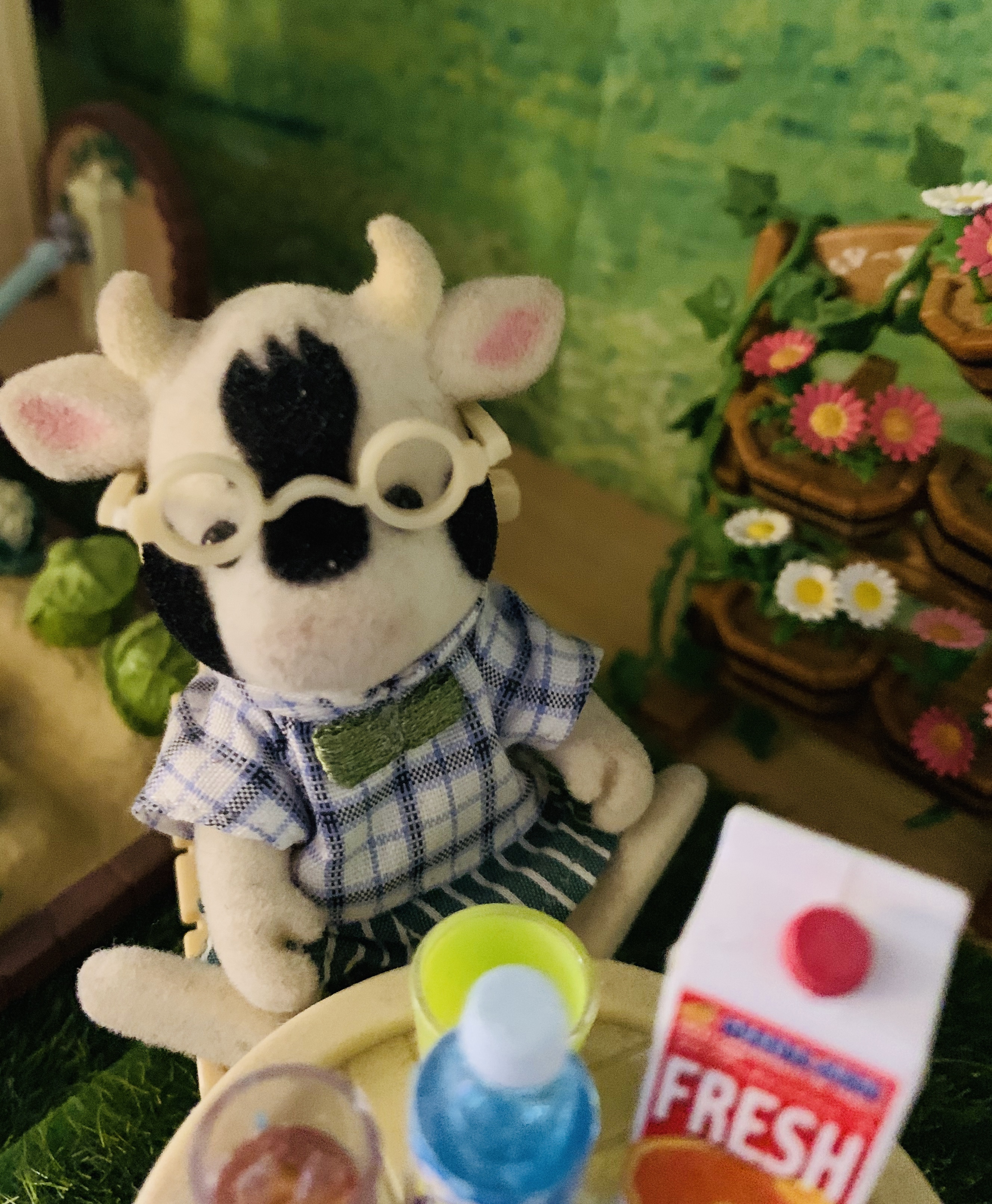 ” do not want to approve of. For Mojo – let’s be brutally honest – does not meet their standards of impeccable donors. What they want is immaculate man without original sin!”
Paul: “Yeah, I read that Mojo guy. You are right in saying that Snotty Museum’s decision  was rather foolhardy and rash, groundless in their a priori reasoning that a donor should be also morally and spiritually immaculate to support artistic causes. Which is a supercilious stance on the puritanical touchstone of sponsorship. That a company doing a dubious business should not contribute its munificence to the museum is a hokum, nothing but a supercilious illustration of elitist art exclusive of the populace. The museum do not want to be involved in moral money-laundering, or “art-washing”. I want to think that Mojo’s intention to donate his wealth to the museum was bona fide because art is open to all, not a prerogative of the moneyed. Besides, art is for art’s sake and not should be used as a tool for political campaigns or social dogmas. Lucy Maud Montgomery expressed the same sentiment, and W.H. Auden also concurred that art should not be trapped by political and social systems. The museum’s decision shows that even a realm of art has been a domain of social Spencerism…
Pleasure and activity make the afternoon hours seem short as the discussions seem to have no ends. There’s nothing like a merry heart that goes all day when talking and listening to a kindred spirit who understands your mind’s world and encourages to continue cultivating your mind’s garden. The sun has moved closer to the horizon, and soon the evening will come. Then this Sunday will become a part of the memories of the past as a new Monday comes. Then it all seems legit to chime the timeless Latin phrase: “Tempus figit”. So it does. Times flies.

‘Everyone else is doing it, so why can’t I?’ Iris, the interrupted woman whose inverted elitism outed her of the quotidian pleasure, was finally on the verge of private rebellion against the lofty isolation from the world that beckoned her yonder with an alluring panoply of all things sensuous, tactile and visceral, like the tempting fruit from the tree of knowledge. The more she thought about the mysterious man’s Byronic face with Olympian physique, the stronger the flame of her heart grew. It’s really a foolish heart, thought Iris, but when she had no other than a woman’s reason and thought him so, who could berate her? Call it the affair of the heart or whimsical infatuation of the beauty that looked so patrician, so elated, and so untouchable. Yet, her heart was telling her that this time she should surrender to the power of the human nature by letting the force of desire besiege her solitary castle and infiltrate it in all corners without mercy of the inter-cultural code of ethics built on the puritanical dictatorship of the body and the soul.
Consumed in the flame of passion, the soul of Iris was in communion with that of Dido, who loved Aeneas more than he loved her. Poor Dido- She deserved a better man who could return her love, for she was beautiful inside and out. Silly Dido- She should have moved on even after her lover deserted her for the glory of his predestined royalty in a new land. Dido was a woman of passion, and so was Iris. They lived on the idea of love and must have figures of love, for that’s what gave them perks of life. But at least, Dido had Aeneas, and her love was consummated in the cave on a stormy day, albeit it was all staged by Venus, the goddess of love and the mother of Aeneas, and Juno, the ever-jealous goddess. Dido’s love was actualized even for a short period of time when she was alone together with Aeneas. Alas! Poor Iris, I knew her, my dear readers. It all seems to me now that Cupid’s arrows took aims at her, but not the figure of her love. Her love was alone, her existence was always invisible, and she was not allowed the joy of love. Iris was dissociated from a parliament of Love, a congress of lovers.
It was said that the idea of love to the classical Athenians was primarily erotic, rather than platonic, instinctual rather than spiritual, physical rather than mental. What we now understand about love was no more than a close bond between family members or a master and a horse or a dog. What Iris was feeling now was a combined love of Eros and Agape. She wanted the wholesomeness of love, as in the union of Cupid and Psyche. People would think that she was disinterested in love because of her beautiful but austere look that prevented people from being jovial with her. She never told her love to anyone but let concealment feed on her damask cheeks. She pined in thought with a green and yellow melancholy with solitude as her steady companion.

All strange and terrible events were welcome, but comforts she despised. And there was nothing left remarkable beneath the visiting sun. It was just her wish that was father to the thought; the thought that the man would be interested in her and talk to her. But it was just a foiled dream, vain hope, blind passion, and cruel deception. Iris was left all alone again. Francis Bacon regarded anyone delighted in solitude as a wild beast or a divine being, and Iris wanted to think of herself as a divine being because she could not bear to accept the fact that she was left out of warmth and love of humanity, and that she was perching on the brink of social isolation as a recluse. It was safe that way to protect her already bleeding heart and bruised soul from the acknowledgment of reality. The world had never seen so perilous and cruel to Iris, who began to doubt that human nature was selfish and violent.
Sitting at her desk at home, Iris was watching the chariot of Apollo moving toward the grand horizon to return to his celestial palace. She wanted to put her soul into the world of writing, but the words became all hodge-podge in bottomless chaos. Now all the forces of darkness were unleashed from an abyss of her inner world and trying to infest her mind with all lies that began to gnaw it till she collapsed in despondency. The age-old self-consciousness felt renewed and resuscitated, egged on by the diabolic echo that everything was set to work against her and that all things would end in naught. Her intention to write was about to be erased from a tablet of her mind, as well. ‘What good will it be when my writing will always reverberate with sighs and more sighs because it is not as polished as her admiring writers?’ Then all of sudden, Voice of Reason began to speak, breaking the silence of gravitas: “Iris, let nothing disturb you, let nothing disparage you because you are indeed a good writer who writes the language of the heart and the mind. Forget the supercilious rabble raving about immaculate textual aspects of writing, for they are blind to see the essence of writing that possesses the soul and the mind of the writer. Remember Tolstoy, who was himself poor at grammatical respects of writing. So was Jane Austin, who was a weak speller. Focus on opening up the treasures kept in your Wunderkammer in writing.”
Whether it was just an imagination or a last thread of will to write was open to a myriad of questions. But Readers, that was what sprang from her mind when Iris wanted to surrender herself to the end of hope, to the abandonment of everything she had tried thus far, and to the killing of her near-forsaken self. And yet, it alleviated acrid heartaches that tormented her like a huge carbuncle and saved her from falling into a bottomless pit full of fire consuming her everything to ashes without mercy. Iris wanted to preserve a sense of purpose and a tenacious grasp on her hopes, thinking that present fears were less than horrible imagining. Then she ceased to die.


You must be logged in to post a comment.