Tag: history

  • live to tell

    I just read an article from the January 2021 issue of BBC History about a British family’s real-life experience in China during the Chinese Cultural Revolution in the 60s. It was so engrossing a read that prompted me to put pen to paper.

    Kim Gordon’s live-to-tell childhood memories during the turbulent times in the country where he and his parents had believed to be a model communist haven as accounted in his diaries and letters put it on the same pedestal with Louise Malle’s Au Revoir Les Enfants and Anne Frank’s Diaries in the context of regarding political turbulences through the eyes of the tender age and the lasting impacts on the minds of the young.

    Gordon’s writings are a prime example of historical records, which George Orwell called a reason to write in his “Why I Write.” In fact, reading Gordon’s account of his memories of forceful detainment in Peking gives me an association with reading one of Orwell’s war correspondence and his first-hand experience as a voluntary tramp in London to report the reality of homelessness and unemployment.

    I think his writings deserve far higher recognition and broader readership in the publication of a memoir, for which I will read forthwith.

  • Patience and Fortitude

    My misery will be beatitude
    Smiling at grief, grim and gray
    Till I see two little birds afar, fly
    Tweeting in fugue of melodies unknown
    And sit on the back of my weak palm
    Frolicking with the beads of Rosary
    Wreathed by pearls of wishes porcelain,
    Bringing the message from the Queen
    Above to her votary sentenced in sadness
    Patience in Blue and Fortitude in Green.

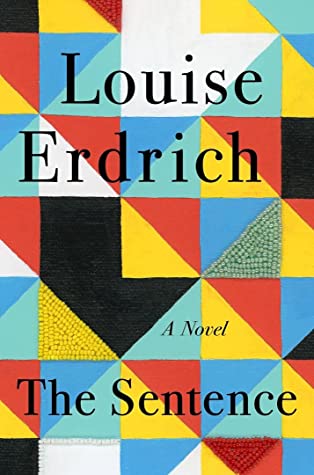
  • Spirit Away: ‘The Sentence’ by Louise Erdrich

    The Sentence by Louise Erdrich
    My rating: 4 of 5 stars

    The Sentence by Louise Erdrich is about the power of words, spoken or written, awakening the spirits of the author, storyteller, characters, and readers, all adrift and luminous as the boundary between the real and the ideal collapses. It’s a polyphonic work of trauma narrative, cultural studies, social commentary, and philosophical memoir interwoven in multiple strands of a joint account.

    The story evolves around Tookie, a doubting bibliophile who thinks books have everything you should know except what actually matters. Books are no more than a portal to mental escapade, a world of make-believe in the likeness of truth or reflected in the highest ether of reason and sentiment, which makes no defining impact on her checkered life as if it were her sentence from the judges of this world and the beyond. So much so that when Tookie finds that the newly deceased soul of a regular customer haunts the bookstore, she works at, she laments her fate of chaos that seems ever to stalk her small wish to live a quiet everyday life. Is it her sentence to live In perceptual existential malaise? And yet, Tookie ends up living daily life with a loving husband and daughter in a house of their own with a steady job as a bookstore attendant. Isn’t it what is considered an everyday life? So why can’t Tookie let the ghost alone when ghosts refuse to depart for the other until they finish their businesses in the world as part of their spiritual sentence?

    I decided to read this book after reading a review from the NYT Book Review a couple of months ago because of Tookie for being exceptional wanting to be ordinary. I felt for her, which was valid until the middle of the book. But as Tookie became settled with her husband in their own house burgeoning as a knowledgeable employee at a local bookstore, she began to lose her fabulous, unique luster. Indeed, I was all high fives for her happiness that I felt deserving, but the further I progressed to pages, the more my heart parted with Tookie’s existential frustration, except the touching moments of love between her and her husband. Also, unlike the book’s general introduction as a ghost story, It is not a supernatural book that will fulfill your cravings for an intelligent horror story. Instead, it is an extended short story featuring a ghost as a fire-starter of narratives connected by bibliophilia. The author believes bibliotherapy is a recipe for the existential malady to quiet the anxious mind. There is no more enchanting than a book, electronic or bound. The lifeless words become alive as the reader awakens the book’s spirit by entering the world of make-believe through the labyrinth of stories leading to the secret garden of truths that the author has fruited.


    View all my reviews

  • ‘Maid: Hard Work, Low Pay, and a Mother’s Will to Survive by Stephanie Land’ – book review

    My rating: 5 of 5 stars

    A good memoir amid the detritus of in-vogue memoirs is a gemstone, like a treasure island descried by a weary sailor. Marry Ralph Waldo Emerson’s appreciation of travails of life as the best teachers with George Orwell’s no-nonsense realistic credo for writing. You will see that Stephanie Land’s eternal spirit fills the pages at the expense of her will with a sense of purpose and a tenacious grasp on intellectual superiority. It was a tide in her affair Stephanie Land was waiting while wiping a stranger’s dirty toilet bowel due to fortune’s malice or, shall I say, whims and caprice of the supreme beings?

    Land’s memoir applies to Orwell’s tenets of “Why Am I Writing?” In it, four elements of writing are (1) aesthetic purposes, (2) sheer egoism, (3) political/social purposes, and (4) historical record. Contrary to most reviews of focusing the book on her single parenthood, I deem it to be her testament to her self-worth in a society where external achievement determines your character. In fact, Americans have a Calvinistic cast of minds in a puritanical cultural foundation that poverty is a priori resultant from laziness and that it should be dealt with scorn. American Catholics are not altogether generous because of John F. Kennedy’s adage to Americans: “Ask not what your county can do for you… ask what you can do for your country….” Land feels the hostility of the skewed, confused, maligned conservatism masqueraded as patriotism in an ordinary landscape of daily life. In writing, she potently and victoriously wields her pride smothered in want of bread and roof with her daughter.

    Memoirs of rags-to-riches are thought to inspire readers with can-do attitudes fused with a dangerous combination of ephemeral hope and flippant desire that Thucydides warned of his progeny. However, they are self-treaties of achievements, usually despite the biological or sociological plane, and almost always with people who help them achieve their goals. Jeannette Walls of The Glass Castle was from a low-income family, but her family was loving, and she had scholarships and went to Barnard College and became a journalist. Hillbilly Elegy was touching, but the poor white boy who had a loving mother went to Yale and became a lawyer. But Stephanie Land is intelligent and honest, down-to-earth, and her issues and circumstances are more existential and relatable than what the mentioned above have famously accounted. Forget the dialectic classicism, forget the social reform, forget the right for single parenthood. It’s all about Stephanie Land’s dignity, her right to be happy, her yearning to be what she wants to be. So be it ever the nominative determinism, and it’s in the name. All who have the name Stephanie have that feistiness. Well done, Stephanie!


    View all my reviews

  • Triumph of the Will

    Like Hecate, the goddess of underdogs, I have a soft spot for writers and thinkers who arose above personal hardships and triumphed in the will. If they have not experienced human highs and lows, how could they write and explain the meaning of life? Take the Russian writer Fyodor Dostoevsky whose near-death experience on the gallows and subsequent travails shaped how he viewed humanity, the purpose of God, and the dichotomy of good and evil. I compared the life of Dostoevsky with that of Victor E. Frankl, the father of Logotherapy, who survived five death camps during World War 2 because both men’s intellectual fervor saved them from self-destruction in the darkest hours of their lives.

    Dostoevsky (hereinafter “D”) was a political prisoner sentenced to death for reading banned books. But the most incredible feat of luck pulled him out of the gallows, and he was sent to a Siberian work camp. He forced himself to channel a danger of hopelessness and resignation in such a squalid environment into the world of imagination. His characters were his alter egos trapped in a cycle of solipsistic containment of morality, religiosity, and social justice. In these attitudinal and creative values as a way of relieving himself from the slough of despond, D finds a kindred spirit in Frankl (hereinafter “F”), whose spirit never succumb to the hopeless situations in death camps where life seemed to be a curse. Instead, f kept himself busy by constantly devising his school of thought, analyzing it, and structuralizing the concepts in his head and on any writable medium he could find discreetly. The result is Logotherapy, the third Viennese school of psychotherapy that encompasses philosophy, religion, neurology, and psychoanalysis, whose nature and method are common to all humans and applicable to all regardless of age, gender, race, and culture.

    So much so for the reading of the brief article, but the effect is magnanimous and resonant with a pellucid tenor of a victorious high human spirit with humor as a handmaid to intellect (wit), which would otherwise be grim and dreary subject to temperamental bouts of depression and pessimism. Both men in their prime of youth had their sovereign rights of individualities in tatters and shackles, but their willingness to live and achieve their goals exceeded the compass of the malicious fortune and triumphed in perennial glory. They are, as Ben Jonson in his humor might have concurred, men not of an age but for all time.

  • the unlikely family

    “So you have now the earth, the water, and the sky in your room! Awesome!” That was my brother when I told him over the phone about my recent adoption of a parakeet from a Petco. The paroxysm of excitement catapulted me into the awareness of a reality that I did bring a bird—those small but sharp beaks and those wrinkled tarsi feet manifesting the atavistic characteristics of dinosaurs, particularly the T-Rex. The truth that I now have to cohabitate with the least-likely coveted descendent of T-Rex still swivels my head in wonderment as if the ghost of Alice in Wonderland possessed me. So why the bird then?

    Dreaming of Sinbad and Serah

    While there might be the remotest chance of using my parakeet as a divine medium to consult my future, I have recently brought Sera home with great expectation of making a friend with the lonely Toro. Toro is now one year and four months old, and his growing curiosity calls attention for a playmate to share his enthusiasm and vociferous nocturnal stamina. Of course, the kinship of feline presence is the best option to fulfill the requirement. Still, the existential circumstances of present life eliminate it. Hence the lot fell into a blue parakeet I named Sera after the talking bird Serah, a travel companion of Sinbad the Sailor, from my favorite childhood cartoon. As you can guess, Sera is a girl who spends most of her time in front of the mirror and then trills in high soprano like a pretty and prim starlet prima donna.

    The crossed Sera befriends a reflection of loneliness.

    My endless attempts to tame Sera to sit on my finger and her constant ignorance of my presence are both disheartening and ireful. Toro is a susceptible and timid cat who denied looking at dead fish by turning away his head from the sight. Even though Toro wishes no harm on his new friend Sera, who fastidiously avoids him with all her feathers and beaks, she defends herself from him with all her might. Toro looks at me with his large sad eyes full of liquid heartaches whenever the conflict occurs, and I comfort him in my arms. Sera then flaps her tiny pretty wings, returns to her castle, and ensconces herself on a twiggy perch with a loud and snappy chirping as a sign of victory over the feline Goliath.

    I still don’t know if my decision to extra-species friendship is counterproductive amid Sera’s callous attitude toward Toro and me despite our apologies and continuous endeavor to reconcile with her. Perhaps I should not have taken Sera yet from the cage while she might have been still not familiarized with her new home. Still, there’s hope in my Pandora’s Box weaved in a rope of sparkling diamonds that promises a dazzling delight of trust and love filling the loneliness of the little hearts in our room. Who knows, one day Sera suddenly talks both Korean and English and tells me my todays and tomorrows? You never know.