Tag: history

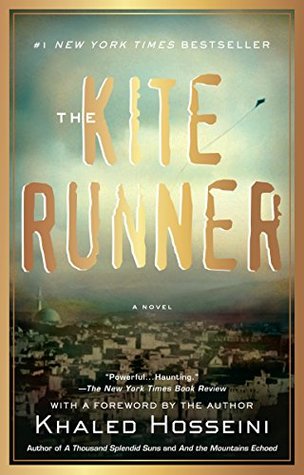
  • ‘The Kite Runner’ by Khaled Hosseini – book review

    The Kite Runner by Khaled Hosseini

    My rating: 5 of 5 stars

    Writing is the most solipsistic and democratic means to make people discover your secret histories or inner world so that they can understand why you are what you are. That is what Khaled Hosseini does enchantingly in The Kite Runner. It is a bildungsroman story reminiscent of the Au revoir, Les Enfantes-Esque ambiance surrounding the narrative of a grown-up boy who wants to reconcile with the stupendousness of mistaken guilt becoming a malady of the heart. But that doesn’t mean it is all too surreal or stark grim to make an accidental reader think it is a wrong choice. On the contrary, Hosseini vividly conjures up the faces and scenes, resurrecting the spirits of the places and times, by putting together the tesserae of his memories in this rivetingly heartrending read.

    The book incorporates the sociological theory of symbolic interactionist perspective focused on the relationships among individuals within a society and how political changes affect the lives of individuals and the sense of who we are and our relationships to others. The story’s narrator, a young Afghan boy of the upper-class named Amir Agha, gives the reader a ride to his childhood in Kabul to show the halcyon days of pre-soviet and Taliban reigned Afghanistan. First, you will see him and his best friend Hassan, a Hazara servant boy in his house, wallowing in reading stories and lost in kite flying. Then and thereafter, Hassan becomes a victim of the most horrific act committed by the half-German blue-eyed Afghan boy threatening him to win kite. Amir’s retrospective narrative becomes his public confession and ablation, all of which is a combined act of purging out the painful memories of the past and exorcising his demons tormenting him with the guilt of jealousy, ignorance, and cowardice. The whole narrative then becomes a plethora of pathos and empathy, resulting in a cornucopia of forgiveness and sympathy, drifting it all in a high-flying kite once and for all.

    It is a fitting story in this particular time of Afghanistan history and Abdulrazak Gurnah’s winning of 2021 Nobel Prize in Literature for his achievement of universalizing human travails transcendent of racial, cultural, and geographical differences. Vivacious at times but dolorous at most, the Kite Runner is synthetic literature that wears habiliments of memoir and novel. There truth and fiction dissolve into one another anchored in real life with factual geographical and historical facts smoothly amalgamated in the individual narrative account, which reminds me of Herodotus’s “Histories.” Or it is an alluringly pioneering memoir-making that resembles Realistic Fiction. For whatever it is, the Kite Runner bestrides the aisles of contemporary literature sections, alluring the public with simple language that magically juxtaposed in beautiful prose style with lyrical quality, all soul and mind in the marks upon pages evocative of the spirits of the memories materializing.


    View all my reviews

  • education is not a status symbol

    Education is not a prerogative of the fortunate who have been born into comfortably well-to-do socioeconomic families or, if deprived, sponsored by goodwill fairylike patrons for splendidly expensive private higher education. It is not a status symbol to distinguish the fortunate from the melee in ostentations display of their supposedly high intelligence, dazzling scholastic aptitude, and a means to continue such expensive education as a symbol of confidence, competence, and cleverness.

    But Joshua Angrist, an Israeli-American Nobel laureate in Economics of the year 2021, doesn’t think that way, not least because those who enter expensive elite schools are already brighter than their ordinary or troubled peers. The Nobel-Prized theory of education in the context of the selective admission process has become a concrete, incorruptible credo for the elite academic institutions and enflamed the already swelled up egos of the diploma holders doing well in their lives. When I read about him from today’s newspaper, I had to re-read his saying that “the reason graduates of those schools tend to do well has more to do with selective admission than education.” I understand his intention to demystify social legend that an Ivy-league diploma will guarantee you lifelong flowery roads to financial security and commensurate social status. However, it has more to do with his defense of continuous selective criteria to muster a pool of academically, and usually economically affluent, prospective students than anything else. What he argues is, “Don’t mess with the elite schools’ admission processing, for they select only the smartest ones!” Therefore, his argument calls for changing social agendas for changing such selective admissions to improve public education.

    Angrist himself is a product of privileged education that some people wear like fancy hats on their pointed heads. He went to Oberlin College for BA and Princeton University for MA, Ph D. He teaches at Harvard University, which has become the infallibly supreme Ivory Tower in the States and most East Asian countries. Based upon Angrist’s focus on causality and effects on social impacts, it will be natural for him to defend the selective admission process, and I say go for it.

    But it irks me to read from the Nobel laureate that supreme education is not for everybody. Since Angrist prides himself in employing real-world empirical evidence in his theory, does he marginalize those who have ambitions and aspirations to receive such quality education but are disadvantaged of the opportunities to learn the skills apt for demonstrating their minds? What about them, and how can he help them to access such opportunities? He’s not a social worker, which I don’t think he will not be pleased to be associated with even, but as an intellectual, he has a social responsibility to answer such vital issues. And if this unequal distribution of privileged educational opportunities is not worth studying, I wonder if those Nobel Prize panels thought his opuses deserve such international recognition. After all, Economics always comes last in the Nobel Prizes, with its being on the criteria most recently in the late sixties mainly begetting Americans.

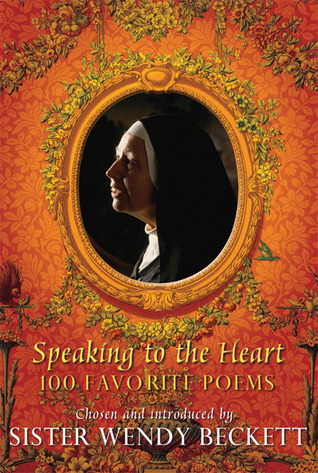
  • Sister Wendy’s lovely ‘Speaking to the Heart: 100 Favorite Poems’ – book review

    Speaking to the Heart: 100 Favorite Poems by Wendy Beckett
    My rating: 5 of 5 stars

    Sister Wendy was an erudite and delightful cloistered art historian in a veil who knew that Poetry is a song of the heart from a mind spring of sense and sensitivity, not to be burdened with a weight of reason. The result is a lovely apple-picking of her favorite poems in her pretty poetic orchard to share the beauty with the universal reader whose heart intoxicated and the spirit exalted in ethereal ecstasy. Her selection of poems manifests the finer tissues of her heart and the higher octaves of her spirit. Reading the entire book creates empathy for the sensitive minds of the poets so physically poignant that the reader senses the pain and the longing of the poets vis-à-vis.

    Sister Wendy, also known for her long-time BBC documentaries on the history of art, speaks her heart through the poems of her choice colored in the spectrums of human emotions, ranging from longing to wonder, hope to sorrow, and anger to love. Even the subject of Faith becomes alluring due to Sister Wendy’s magical transformation of the matter into fairy-like ideation with sensually diaphanous wings as pagan as could be. Her interpretations speak on the poet’s behalf as an individual soul at the utter solitude, not as a literary artificer whose achievement merits the name in the canon of literature. In doing so, Sister Wendy brings out the poet’s true sentiment under a forage of words and shines her mystic perspectives on the poet’s reading in a splendid but straightforward way.

    The reader will find famous, not-so-famous, and obscure poems from Elizabethan England to 20th century America in this lovely book. Sister Wendy is both discriminating, and non-discriminating in the human emotions poured into the world of poetry. She is discriminating in the sense that she has a “Third Eye” that sees the poet’s soul and understands the sentiment nuanced in the poem, including wrath and despair, poisons to the mind. Non-discriminating in a way, she values poems spirited in the heroic but straightforward endurance of existential malaise in everyday life written in the plebian language. From Shakespeare’s ‘Fidele’ to John Harris’s ‘Feral’ and many more, the reader will feel ennobled to walk the gardens of the poetic Elysium with Sister Wendy introducing you to each of the poets’ greeting and smiling.


    View all my reviews

  • Teresa of Avila – book review

    Teresa of Avila: A Life from Beginning to End by Hourly History

    My rating: 4 of 5 stars

    Her epithet is deservedly illustrious, equal to her protean capacities for being multifarious: saint, mystic, and artist’s muse who was a curious kind of practical mystic with vision to match – that she would talk and hear God’s words from within and share them with the crowd in practice of charity, faith, and hope but never without heart. Protestant Elizabeth I of Great Britain might have envisioned the image of a Catholic nun of Spain a night before her Tilbury address that she had a woman’s body but had the bravery of a king. She is also the Doctor of the Church. She is Saint Teresa of Avila, the headstrong founder of the Carmelite Discalced and the woman of Lorenzo Bernini’s Ecstasy of Saint Teresa.


    My first encounter with this remarkable woman was not religious but academic; while researching women’s monasticism in the high medieval age during my college. Teresa saw many women who were too poor to pay dowry and didn’t want conjugal life found convents as shelters from social conventions without certain religious convictions. Consequently, convents became gossipy sonority houses populated with lackluster and jealous nuns backstabbing one another. The sad atmosphere of the convents used as a mere social institution propelled Teresa to establish the Carmelite Discalced – the Convent of Saint Joseph – with physical labor and disciplined monastic rules not without tenderness attended to individual nuns from all walks of life. She abolished land ownership and rent collections of and by nuns and instituted self-sufficiency of working without shoe but sandals, hence the name “Discalced.” The reformation within the Church was seismic but was a necessary medicinal receipt for the ailing monastic community.

    What is most brilliant about Teresa was to create the idea of “The Interior Castle,” a philosophy that the creator of the Universe dwells inside the castle of our souls. That God is from within us, rather than the beyond betokens the idea of personal God with whom we can communicate and thus become a literal mirror image of him for what’s best in ourselves. In fact, this revolutionary philosophy is also linked to Giordano Bruno’s “The Memory Palace,” from which the knowledge needs to be unlocked to bestow upon us the power and joy of the knowledge from within. Further, it is related to the idea of the Nine Muses, whose inspirations are invoked from our minds, not from the Olympus or oracles. All of the mentioned above shares one origin in the cognitive technique employed in Christian meditation developed from the essential reading and contemplating the Bible. But Teresa’s Interior Castle is a beautiful poetic license to enrich power that is never esoterically prideful but blissfully joyful. Where Bruno’s Memory Palace and the Artist’s Nine Muses are not all-inclusive, Teresa’s Interior Castle is universal with tender charity and faith even if it is not necessarily Christian God.

    Teresa of Avila was one brave and adventurous woman who was a prototype of feminist in the sense that she voiced out her mind to the patriarchal church authority in danger of being suspicious of heresy or witchcraft even in Catholic Spain, known for the Spanish Inquisition. But she was not a vociferous activist for abolishing the Church or would-be founder of an offshoot of the Church. Teresa was religious of the supreme kind. However, she never abandoned her femininity latticed with passion for helping a young priest in his spiritual crisis in war with physical temptation, tenderness for attending those in need of her consolation, and beauty that was both beautiful externally and internally. She shows us that a strong woman doesn’t need to shout out invective expletives or clamor for the reward for her damages in the name of womanhood when it is really for her sworn revenge. Aside from sectarian religious affiliations, Teresa of Avila deserves her reputation as a star in the Milky Way of the Great.


    View all my reviews

  • today’s world in my view – news from norway

    Politics comes in gray gravitas, and politicians look like seasoned actors with Tears for Fears singing in a mighty chorus of “Everybody Wants to Rule the World.” Simply saying, a majority of elected officials are charmless. But at least not Norway’s winning Labor Party leader Jonas Gahr Stoere about whom I read from a newspaper this morning because his background and perspectives feel like, as it were, a fresh cool mint breath out of stuffy, dull air.

    In the last two decades, the world has turned conservative and jingoistic in many countries due to economic and social changes. The liberals seem to clamor for ideological agendas that do not gain universal support without a structural plan concerning livelihood from healthcare to job security and social security benefits. For example, in the States, it’s all about ideology politics, not constructive reformations that attempt to narrow a wide gap of class stratification. In addition, American liberals are not closer to European liberals any more than the fashionably favorable appellation for free-thinking politicians. That said, Stoere, despite his being mega-rich with old money, has a clear vision for the universal welfare of Norwegians without antagonizing people of different classes. Stoere saw the vast difference of living qualities between the rich and the poor in France during his study at Science Po in Paris in the 80s and vowed to prevent it from existing in Norway. He also reassures that only the top 20 percent of the high-income individuals will see their taxes increased. Contrary to the vehement subjective political agendas vilifying the other with scarlet letters as an enemy of people prevalent in the States and elsewhere in the world, Stoere includes all strata with an ideal vision to match his practical campaign to distribute wealth among people evenly.

    Stoere is indeed undeniably rich himself with the wealth that will support at least three generations of his family. It is also true that not many politicians pinpoint another country’s quirks and make an example out of it for the betterment of their countries. Social reformation of narrowing a wide wealth gap has been a duty of politicians since the age of reason. Still, it never comes to realize without determination and intention to make it happen. As a cosmopolitan citizen of the world, I vote for Store for being refreshingly innovative and nobly aspirational.

  • Democratizing Delicacies

    The delicacy of life that sprinkles flavors to our otherwise mundane routine of everyday life is not a prerogative of the rich. American Catholic saint Dorothy Day once gave a diamond ring donated by a wealthy woman to a poor demented old lady and riposted to a chiding onlooker thus: “Do you suppose that God created diamonds only for the rich?” In this light of democratizing luxuries, Chef Marie-Antoine Careme championed the world of haute cuisine available to all walks of life and shared his knowledge and experience of Haute culinary arts for the use and enjoyment of the public.

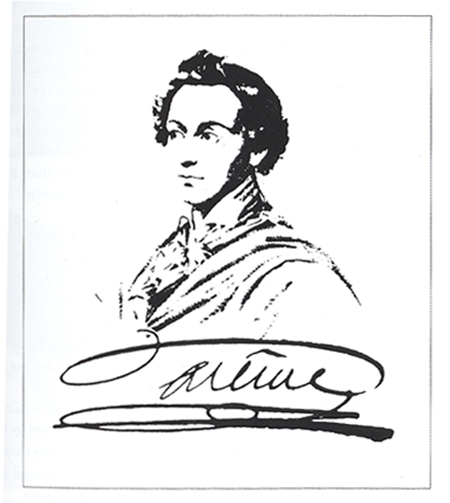
    Born into a poverty-stricken peasant family in 1784, Crame was abandoned at ten by his father, who told him to make use of his cleverness for his future. Before long, Careme found an apprenticeship to a famous patisserie. That was the beginning of his long, epoch-making legacy of master patisserie. With an innate intelligence and passion for culinary art, he opened his patisserie within a couple of years. His ingenuity for culinary art and a happy chance led him to a top diplomat’s chef to cook diplomatic banquets, for which he became the most sought-after chef in Paris. The success catapulted him to opening a famous patisserie at 19 on the rue de la Paix, baking the wedding cake for Napoleon and Marie-Louise of Austria. If Napoleon conjures up an image of a scrumptiously layered piece of Napoleon, Careme is smiling in a constellation of artists in heaven. Careme’s popularity endowed him with a celebrity figure in post-revolution, industrial age Europe where the luminary la dolce vita aristocrats commandeered was beginning to shine on those on the low rungs of social ladders. Careme might have been an ambitious entrepreneur to mark his name all over Europe with the crowning glory of lucrative success, but no one else but he tried to share the taste with the crowd indiscriminating class distinctions in his time.

    Careme’s success story has a familiar rags-to-riches repertoire with a combination of chance and apposite time surrounding his rise to success interacting with his talents. But why not the taste of the fame when his triumph of will over strife inspires achievable hopes and approachable aspirations? Careme personifies overcoming the mantra of existentialism that experience precedes essence. The fact that his own indigent family abandoned Careme didn’t dispirit his connatural intelligence nor did it plunge him into a Slough of Despondency. Or that didn’t really matter to Careme with his eyes, nose, and hands tuned for the world of delicacy that used to be exclusive for the rich and whose heart made it accessible to all. Indeed, the man was not a saint, nor do I intend to canonize him. But at least his actions and legacy deserve appreciation and admiration adorned with flowers and bonbons.