Tag: history

  • the unlikely family

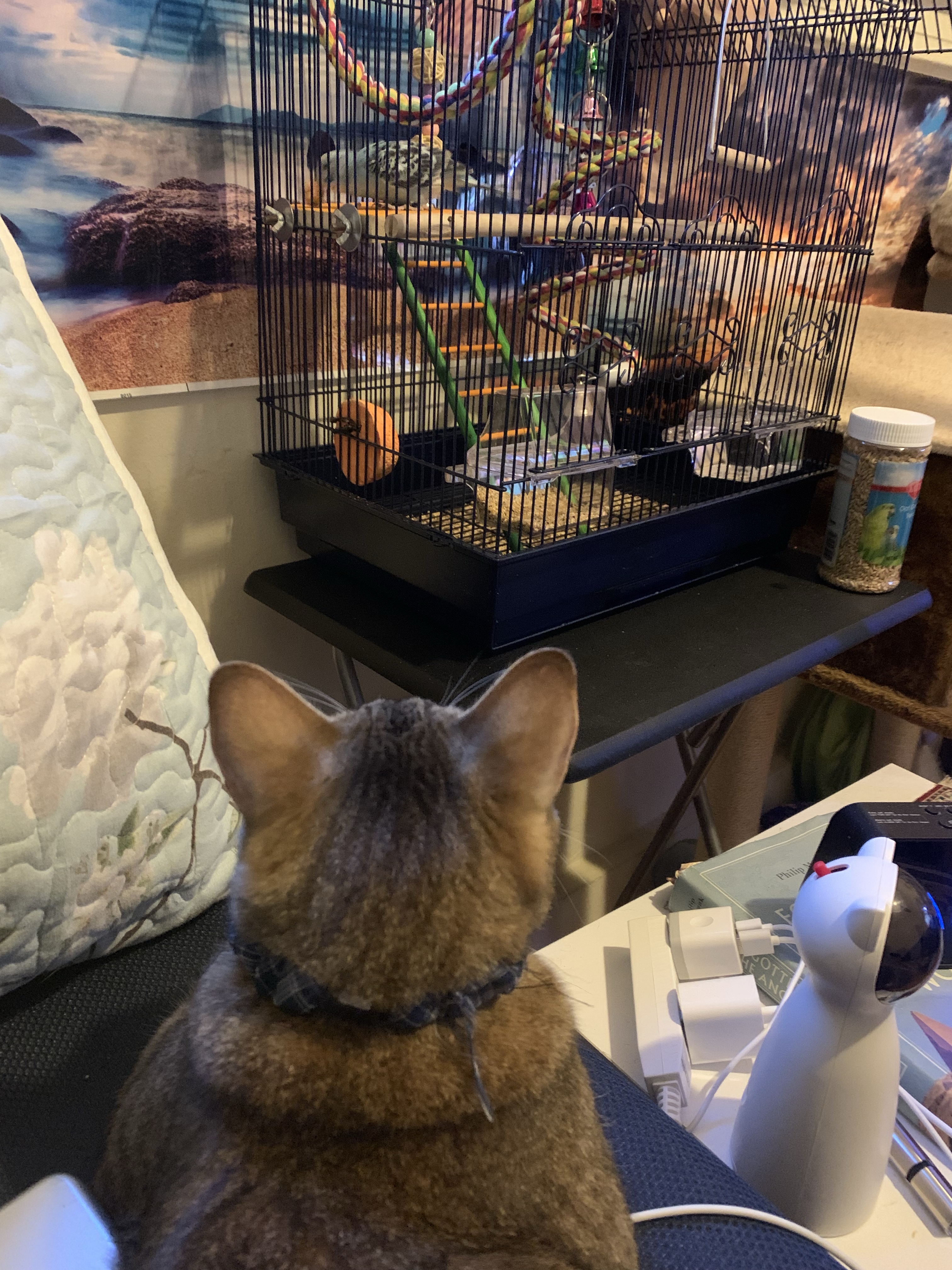
    “So you have now the earth, the water, and the sky in your room! Awesome!” That was my brother when I told him over the phone about my recent adoption of a parakeet from a Petco. The paroxysm of excitement catapulted me into the awareness of a reality that I did bring a bird—those small but sharp beaks and those wrinkled tarsi feet manifesting the atavistic characteristics of dinosaurs, particularly the T-Rex. The truth that I now have to cohabitate with the least-likely coveted descendent of T-Rex still swivels my head in wonderment as if the ghost of Alice in Wonderland possessed me. So why the bird then?
    Dreaming of Sinbad and Serah

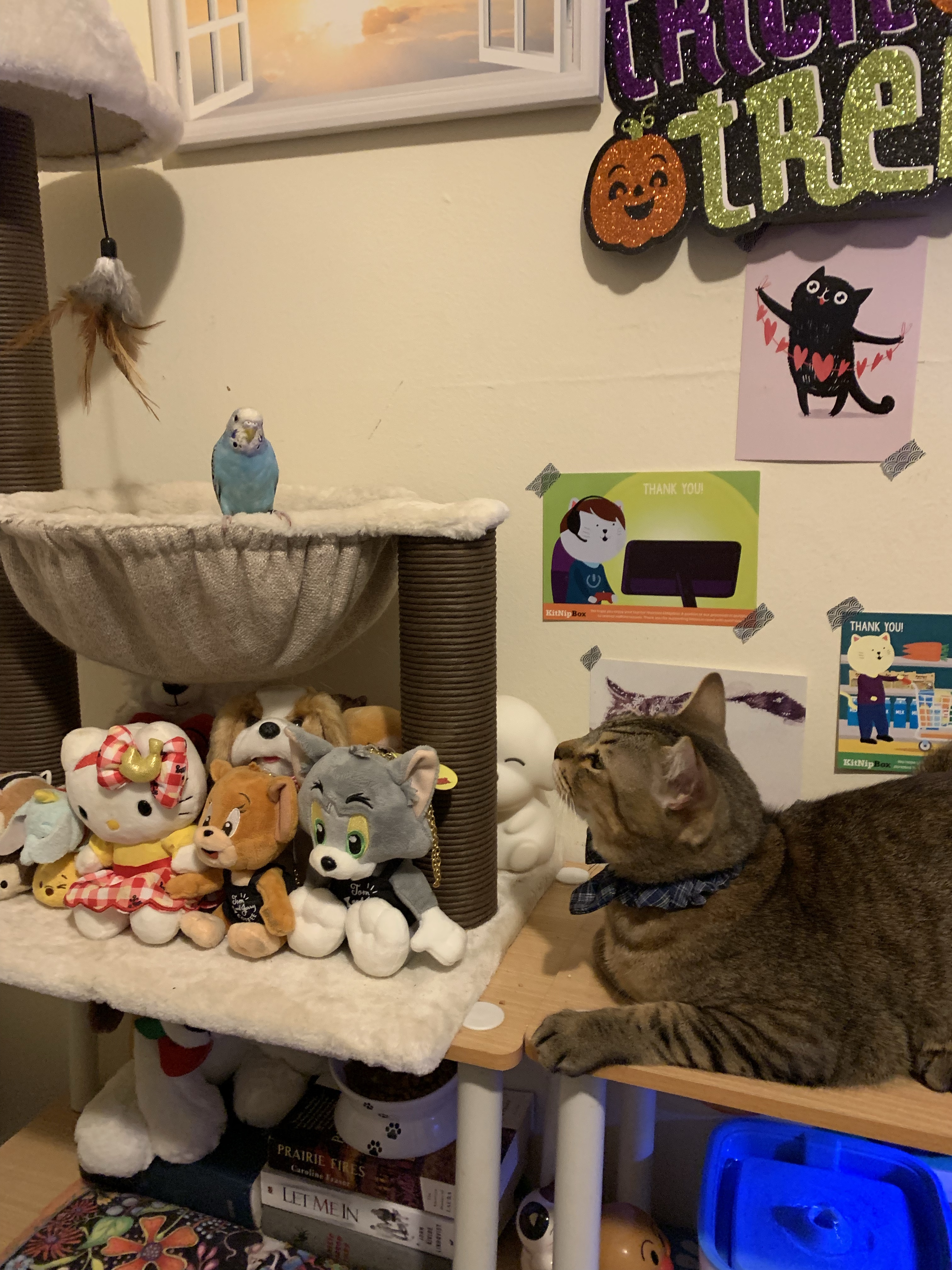
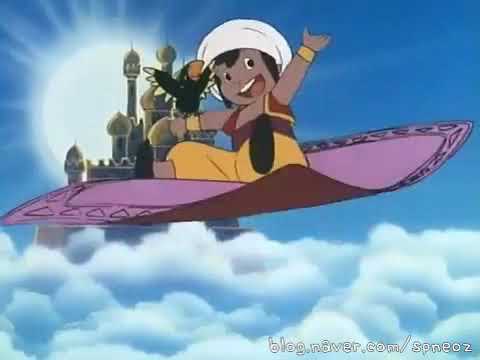
    While there might be the remotest chance of using my parakeet as a divine medium to consult my future, I have recently brought Sera home with great expectation of making a friend with the lonely Toro. Toro is now one year and four months old, and his growing curiosity calls attention for a playmate to share his enthusiasm and vociferous nocturnal stamina. Of course, the kinship of feline presence is the best option to fulfill the requirement. Still, the existential circumstances of present life eliminate it. Hence the lot fell into a blue parakeet I named Sera after the talking bird Serah, a travel companion of Sinbad the Sailor, from my favorite childhood cartoon. As you can guess, Sera is a girl who spends most of her time in front of the mirror and then trills in high soprano like a pretty and prim starlet prima donna.

    The crossed Sera befriends a reflection of loneliness.

    My endless attempts to tame Sera to sit on my finger and her constant ignorance of my presence are both disheartening and ireful. Toro is a susceptible and timid cat who denied looking at dead fish by turning away his head from the sight. Even though Toro wishes no harm on his new friend Sera, who fastidiously avoids him with all her feathers and beaks, she defends herself from him with all her might. Toro looks at me with his large sad eyes full of liquid heartaches whenever the conflict occurs, and I comfort him in my arms. Sera then flaps her tiny pretty wings, returns to her castle, and ensconces herself on a twiggy perch with a loud and snappy chirping as a sign of victory over the feline Goliath.

    I still don’t know if my decision to extra-species friendship is counterproductive amid Sera’s callous attitude toward Toro and me despite our apologies and continuous endeavor to reconcile with her. Perhaps I should not have taken Sera yet from the cage while she might have been still not familiarized with her new home. Still, there’s hope in my Pandora’s Box weaved in a rope of sparkling diamonds that promises a dazzling delight of trust and love filling the loneliness of the little hearts in our room. Who knows, one day Sera suddenly talks both Korean and English and tells me my todays and tomorrows? You never know.

  • On Aristotle and Philosopher’s Stone 💫⭐️✨

    Edgar Allan Poe expressed his contempt for readers who habitually flocked to books by famous authors on the sheer merit of their popularity without an individual appreciation of the contents. Likewise, I have a handful of the famous, the great people whose celebrity I hold no regard as I am going to unveil now. I have never liked Isaac Newton, albeit his genius is doubtlessly uncontested. Cantankerous, bellicose Newton was horrible to deal with, especially when you were his servant or maid or whoever he thought insignificant in his Elysium of high intelligence. He was also a closet occultist masquerading with the face of Rational Man with long-faced gravitas adorned in a long wavy wig. So how come Newton became a votary of Aristotle, who took the virtues to be central to a well-lived life? Since I tend to disassociate any such persona non grata (Newton, obviously) from one in my high regard (that is, Aristotle), I wanted to find out the incompatibility of the sullen scientist and the benign thinker.

    Aristotle’s ethics, or study of character, is constituted around the premise that people should achieve an excellent character as a prerequisite for living a meaningful life. It is an essence of metaphysics in which Aristotle holds that there must be a separate and unchanging being that is the source of other beings. Only by becoming excellent could one achieve eudaimonia, happiness/blessedness that constitutes the best kind of human life. This philosophical perspective also applies to the ideas of self-sufficiency by Ralph Waldo Emerson and of Amore fati, the intellectual love of life by Friedreich Nietzsche.

    Emerson regarded two separate elements as being united to create the world inside of you for the former. They are raw experiences gained from somatic sensory stimulation transformed into ideas and thoughts in the realm of reason, a process akin to a caterpillar transforming mulberry leaves into gorgeous silk. Nietzsche’s Amore fati is theologically conceived in an attempt to manifest the presence of Providence or God’s will with his infallible existence through Immanence by which an adequate idea of simple attributes of formal essence of God is applied to an adequate knowledge of the simple truth of things. It might be akin to the Eureka moment when Archimedes started running naked around the town in the enthusiasm of knowing the weight of the gold in the king’s crown from his water-filled bathtub. Or it could be the Ecstasy of Saint Teresa captured by Bernini as a cherub was mischievously thrusting the arrow back and forth into the heart of the virgin. In sum, Aristotle was right in saying that knowledge isn’t innate or guaranteed prima facie but gained from the reports of the senses and logical inference from self-evident truth.

    I still believe that someone like Newton had no regard for moral excellence any more than gaining the knowledge of the universe because studying humanity was anathema to his lofty vision of the world and beyond, such as the alchemical realm. Newton was keen on Aristotle’s theory of the 5th element on top of the earth, air, fire, and water – that is, space of aether. Methinks, Newton was trying to get Rosetta’s stone in manipulating the 5th element proposed by Aristotle. He had not known that it would have become such a magical element to turn stone to gold. Notwithstanding Newton’s beguiled ambition to be a perfect Gargamel with the help of Aristotle, so to speak, my appreciation of Aristotle’s metaphysical school of thought decides that his brilliance is brighter than Plato and on par with Socrate in the constellation of philosophers’ stars.

  • Letters on England by Voltaire

    Letters on England by Voltaire

    My rating: 4 of 5 stars

    Voltaire’s Letters from England, originally published in 1733, is a solipsistic treatise on political, religious, and cultural observation during his stay from 1726 to 1729 of the benign nation that welcomed the thinker with open arms when he fled from persecution in his native France.

    But the book is not a blinded paean to a rival country with a long sophisticated warring history with an intent to retribute his spites to his mother country as an expatriate. Instead, Voltaire takes a stance of a piqued paratactic storyteller in the fashion of Herodotus’s Histories or a trenchant journalist in the school of George Orwell’s Down and Out in Paris and London. In Voltaire’s eyes, that the English are practical folk with a propensity for realism: reflective, respectful of etiquette, cool-headed, and effusively proponent of scientific discoveries are conspicuous in the overview effect of France seen across from the other side of the Channel.

    From the manners of English Quakers to Isaac Newton’s (whom he admires as the brilliant sun of Halios) quantum physics and the law of the universe in great detail, the subjects of interest and the depth of knowledge demonstrate that Voltaire is more than a rebellious French enlightenment thinker. He is a true intellectual whose reason is constituted by the consilience of multidisciplinary subjects in depth. The book is a testament to a genius of a particular kind who embodies a man of letters in its truest sense.


    View all my reviews

  • ‘Royalty’s Strangest Characters: Extraordinary But True Tales of 2000 years of mad monarchs and raving rulers’ by Geoff Tibballs

    Royalty’s Strangest Characters: Extraordinary But True Tales of 2000 years of mad monarchs and raving rulers by Geoff Tibballs

    My rating: 4 of 5 stars

    It always amazes me that some people can get away with their character flaws and faults under the aegis of social status and wealth, such as modern-day celebrities. The celebrities of the bygone days were kings and queens whose God-given authorities indemnified them from punishment. Their entitled strangeness swiveled my head in wonderment at the stupendousness of freakiness. Ironically, this anecdotal recounting of the cruel-to-be kind potentates reminds me of a tenet of Logotherapy, which explains that a healthy dose of suspense in life helps us escape boredom, resulting in excessive indulgence in perverted pleasure-seeking.

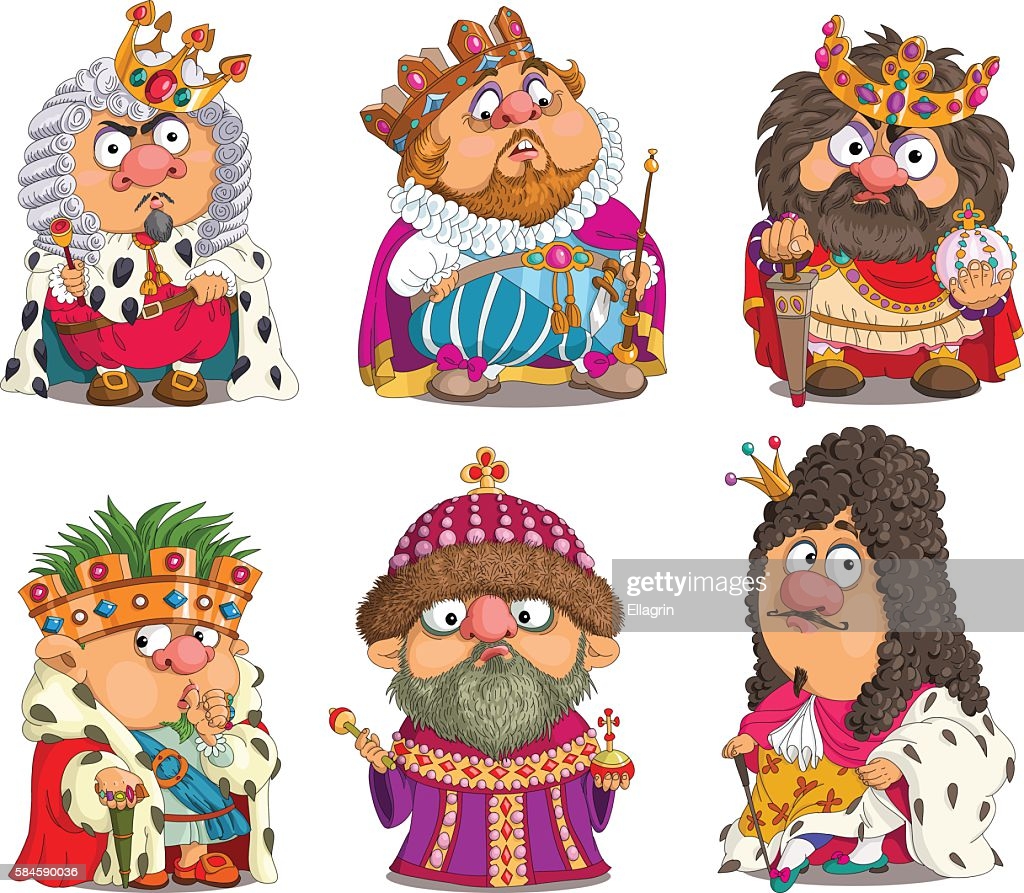
    This book tells of the infamous kings and queens and some aristocrats. They are famous and lesser-known, mainly from Russia and Eastern Europe, which gives a somber ambiance to the tales of weirds born with silver spoons in their mouths. The most memorably horrible and ignoble characters that left indelible marks on my consciousness are as follows:

    1. Elizabeth Bethany: This diabolically perverted Hungarian countess whose uncle was a king of Poland had a fixation on blood and pain in devotion to youth and beauty. Some say she was trained to be cruel, but I think it has to do with her connatural inclination for cruelty passed down in her lineage. Her aunt was a Satan-worshipping noblewoman who sought erotic pleasure in young girls, which Elizabeth also learned and practiced in her castle. She had her trusty three maids lured beautiful young girls, usually from poor families, under the pretext of training them for top-rated maids-in-waiting with generous munificence to the families. What happened next was all over but the shouting. Bethany tortured the girls in unthinkably cruel ways and bathed in their blood because she believed doing it would restore youth and beauty. She deserves no revisionist or appeals on the crime against the girls under her care. Nevertheless, modern-day feminists and the radical leftists are moved to portray her as a wrongfully accused Calvinist woman in a time when sectarian religious rivalry and antipathy were rampant. Her being charged by a Lutheran minister in the town does not ipso facto constitute Lutheran machination of destroying the Calvinist influence in the region. If the minister conspired to concoct any such plot, he would have targeted a man, not a woman whose social status was not entirely regarded as equally significant as a man even in high birth.

    2. Vlad the Lad, aka the Impaler, aka Dracula: The proverbial bloodsucker ruler had a penchant for impaling men, women, and children for leisure and punishment. The point was to give them slow deaths to heighten the apex of pain till the last breath. The legend of Count Dracula is loosely based on this Romanian ruler who might have inspired an idea of shashlik, kebab. Or any skewed food. Thanks to the detailed accounts of how Vlad artistically mastered impaling, I swore off any such skewered food lest it should conjure up the vista of the impaled helpless.

    3. Frederick I of Prussia: A stout and short, the king’s obsession with men in great height was his actualization of ideation. He had the tallest men in all the regions of Europe, especially from the North, to establish the royal military version of a freak company called “The Potsdam Giants.” The recruits, or in many cases, abductees, were consisted of a former woodsman, laborers, and farmers, allured by abundant compensations promising dazzling delights of secured lives. Yet it was an empty promise, beguiling the simple-minded low-class foreigners, who were subjected to mistreatments and even punishments should they attempt to escape. The king’s pastime was to call upon the guards at any time anywhere, including in his chamber at night, and watch them in full uniform, admiring their impossibly imposing physique that he coveted but could never have. Thank God that his son Frederick the Great disbanded the freakish guards no sooner than had he succeeded his father upon his death.

    I wonder if these royal characters were due to in-breeding abnormalities, which were usually customary in European dynasties to preserve their noble royal lineage. It also testifies that keeping means in one’s life is a blessing because extreme wealth and poverty lead a soul astray due to listlessness and exasperation, resulting in amoral walking dead subsisting on the pain of the others. Robinson Crusoe’s sagacious father was right in saying that the best is the upper station of low life. Mel Brooks once uttered, “It’s good to be a king.” Unfortunately, it only applies to these afore-described weird and evil characters. A good king or queen doesn’t.


    View all my reviews

  • Isaac Newton as he was

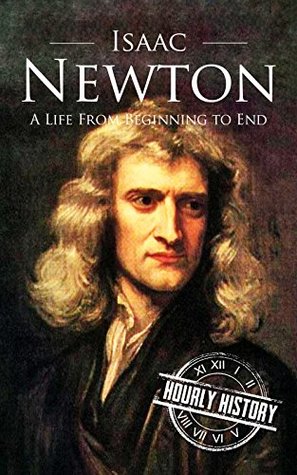
    Isaac Newton: A Life From Beginning to End by Hourly History

    My rating: 4 of 5 stars


    I never particularly liked Newton despite his paramount discovery of the law of Universal Gravity from the fallen apple tree in his mother’s little garden. Maybe it was his somber, irate facial expression adorned with a long white wig. He was a reluctant spiritual godfather of physicists Albert Einstein, Stephen Hawking, Michio Kaku, whose theoretical findings are based on and upgraded from Newtonian laws of physics. However, being a keen observer of human characteristics, I am inclined to write the review about Newton’s personality traits, not a drab biological chronology and analyses of his laws of motion.

    Isaac Newton was never the kind of chap whom you could be jovial with. If you caught Newton in a cafeteria or a coffeehouse and asked for an autograph, he would first give you a look with an exasperated grimacing and either reluctantly succumb to your request if he was in a good mood or curtly said, “I am busy.” His gaucheness in social interactions might be due to a deficiency in maternal affection and care. Newton’s mother willingly separated from her young and tender son when she married her second husband after the death of Newton’s father, whose name was also Isaac Newton. Although I object to profiling any kind and any person because it leads to a grave miscarriage of justice in many cases, Newton’s character profile doesn’t read favorably in any of his writings. To illustrate, Newton used to be harsh on his family servants, whom he often mistreated with corporeal measures and hit his younger sister. Nevertheless, his genius purchased indemnity for all his character flaws and beautified them as individual eccentricities endemic to the intellectual elites.

    But the illustrated Godfather of Science was also a discreet practitioner of alchemy in search of the Philosopher’s Stone to turn it into gold. I wonder if all of the laws of motion Newton discovered were unexpected comeuppance of his private practice of alchemy. Not surprisingly, Newton kept his behind-the-façade business, and it was until the mid-18th century that the truth came to shine in his journal. Despite its occultist nature and nuance, Alchemy was also not too far from chemistry in studying metals according to three principles: Salt, Sulphur, and Mercury, based on four elements of air, earth, fire, and water. To this fascinating manipulation of heaven and earth, Aristotle added the 5th element of aether that was believed to fill the universe beyond the terrestrial sphere. The weightlessness due to the absence of gravity occurs in outer space full of invisible aether propagating light waves. As Newton’s principal muse to inspire his scientific musings, Aristotle is plausible to understand Newton’s fascination with alchemy. He treated it not as a magical practice but as a branch of chemistry that would have looked magical to the uninitiated.

    Grumpy as he was, Newton was nonetheless a remarkable individual who devoted life to the pursuit of truth, a satisfaction of reason, in the temple of science, believing there are more than material bodies in this world, which became a foundation of quantum physics. With his head filled with the mystery of numbers and frail body subsisted on the nourishment on the mind, Newton was a lifetime bachelor without chivalric anecdotes or sybaritic tell-tales. Instead, he spurred his energy on his studies, wallowing in the delicacy of quiet and uneventful solitude. Newton influenced multidisciplinary studies including philosophy, and music, with his laws of motion, especially making the word “inertia” so democratically popular with the public that British pop band Blur made it a title song in their first Leisure album. You don’t have to like Newton to appreciate his contribution to the consilience of science and humanities. But it wouldn’t hurt you to learn what makes him enshrined in the Parthenon of civilization of humankind, even though he wasn’t a nice person to chat with.


    View all my reviews

  • The princess fairy tale

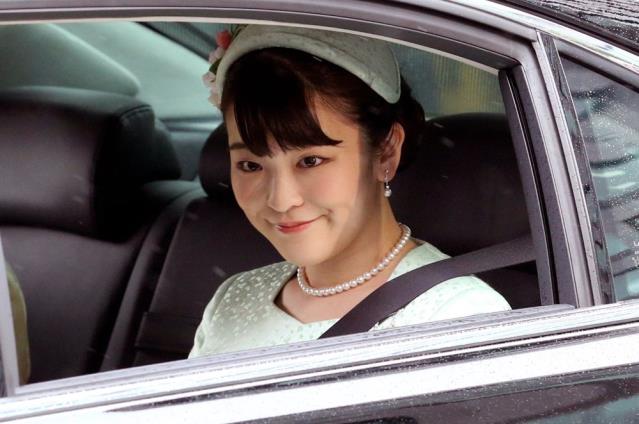
    First of all, let me clarify that I don’t believe in fairytales where beautiful poor girls achieve social escalations by marrying handsome princes and kings. Nor am I keen on the affairs of modern-day royalty whose lives are not even desirable. And yet, the news of Princess Mako’s marriage to her college sweetheart despite forced delays and oppositions is worth writing about because it is a fairytale of the most beautiful kind becoming a truth in reality. Would it be a bit of a stretch if I relate Mako’s heartaches and ordeals to Psyche’s Wanderings and Trials set by Aphrodite to separate her son Eros from the insolent mortal? It also shows that the crowned cannot escape from the intoxication of the heart that is worth denouncing the pomp and circumstances.

    Marrying a commoner is no new in modern-day history, starting from Edward VIII’s marriage to the American divorcee Wallis Simpson and his descendants Princes William and Harry. While those mentioned above British royal members married those outside the peerages, they were not the average commoners working nine-to-five or even more or fewer hours in ordinary situations where they had to depend on the whims and caprice of their employers for the secure livelihood. But Mako’s case stands most excellently because she was determined to give up the whole royal privilege to live as a commoner by marrying the one who is not from a wealthy, not even above average family. Moreover, Mako refused to receive a considerable amount of money as a gift from the royal family for marrying a commoner. On the contrary, Harry and Meghan are considerably wealthy, living without day-to-day financial insecurity about what might happen tomorrow. Their surrendering the titles publicly will not forfeit their assets as in the case of foreclosure that many struggling hard-working Americans are unfairly subject to. After all, why do they need to hold the titular positions to make more money outside the palace? People flock to the brave Meghan and her ever-supportive husband, but why do they do when their happiness illustrates no emblem of sacrifice without a sense of proverbial entitlement?

    I cannot help but compare Mako and Kei to the famously showcased ex-royal couple Prince Harry and Duchess Meghan. Besotted by the sensual charm of his renegade, free-spirited wife, Harry decided to move his young family to Los Angles, California, for good. He joined her Dissent Division to criticize his long-time family for being racist and cold-hearted. On the contrary, Princess Mako never decried her dissenting royal families against her marriage to a commoner, nor did she rebel loudly against the constitutional monarchy outside Japan. Instead, Mako kept all of her affairs of the heart discreetly, remaining true blue to her beloved Kei despite public uproar about his below-than-expected family background for being of a problematic single-mothered household. Forget the stereotypical Japanese politeness and the prejudice on the East Asian women’s submissiveness. Her graceful acts and decencies flow from her natural disposition and upbringing, which I have hardly seen in the famous royal family members.

    Watching Mako and Kei looking at each other with the eyes exchanging affection with radiant smiles in their serenely happy faces put me into a pleasant mood to make me wish for their long and happy life together. Mako is a brave princess who surrenders herself to the love of her choice, even if it means giving up her title and privilege that would make her married life comparatively comfortable to ordinary people. Mako’s decision to live the life of an ordinary wife seems anachronistic and incongruent. Still, not everyone wants to be an Amazon or Scythian warrior, nor does she want to climb up the career ladder to prove her abilities. Mako’s declaration of independence signifies an act of exercising her right to happiness by living with someone she loved dearly. What else could she do to prove her worth for love? It is a beautiful fairytale dissolving to the truth.