
A Baby on the straw bed
In a stable on a cold night
Beneath the stars Bright
Brings joy to the world
And hope to the beholder.
A Baby on the straw bed
In a stable on a cold night
Beneath the stars Bright
Brings joy to the world
And hope to the beholder.
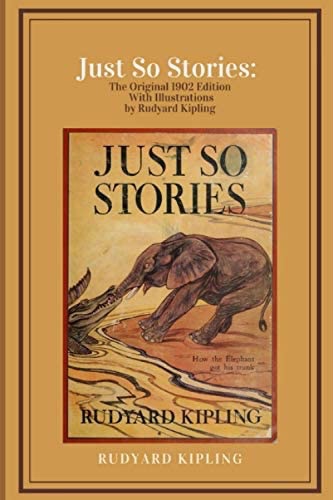
I believe history is a branch of literature full of events and stories made by artists and artificers weaving facts into myth, and vice versa, into a timeless tapestry of the world that was, is and will be. In that regard, Kipling is an artist who spins beautiful tales of how animals became what they look like into a poetic wheel of ear-delighting and cadenced words aided by gorgeous illustrations distinctively graceful and dazzlingly beautiful.
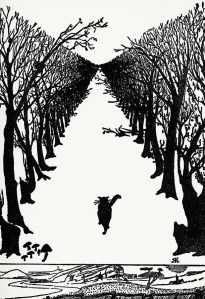
Kipling’s evolution of animals explains why they look the way they are, such as a Leopard with spots, a Carmel hump, and many more. The stories become a fable and a history of its kind. It’s a literary version of Darwin’s Origin of Species, the wonderful menageries of Man and Beast that cannot live alone despite the differences in species because we are the inhabitants of this world, Earth. But, above all the fantastic tales of wonder, the Cat’s tale stands out in the story and the subject. Kipling’s Cat is proud but not arrogant, independent but affectionate, and vain but graceful. It’s a cat who walks by himself, and everything is alike to him and nothing else. The Cat is a beautiful stranger even if he likes to be a family, a kind of forever loner, the Puss in Boots with a cowboy hat and an empty holster. Kipling’s writer’s eyes saw the romantic solitude in a cat, and the result is one poetic Cat that rhymes well like the graceful way cats do their amazing somersaults.
Just So Stories are not just for children even though it is classified in Children’s literature on the shelves of libraries. It’s a book for everyone who loves legends and magic, who still has a childlike innocence that refused to put away as an adult because it’s in nature. The stories are not for academic analysis or psychoanalysis but simply for the enjoyment of the mind and the delight of the heart. Remember Freud’s saying, “Sometimes, a cigar is just a cigar.” So are Just So Stories, so delightful and so pleasant.

She walks toward the end
An inch closer, eyes closed;
Then one leap into the air
She vanishes into the water
Where no fate can stalk her
No care of the world anymore
But only the lotus flower
To forget the memories evermore.

The Internet is a vast open ocean of knowledge ranging from how to fix your clogged toilet and where to find the nearest dry cleaners to the meaning of language you have no idea about and to the year when the world came to being (4004 B.C., just so if you are curious.) Not that the Internet has obliterated the places of encyclopedias or dictionaries, but it has outranked popularity for its convenience with your fingertips without getting your fingers flipping pages after pages. So when I came across an article that the Catholic Church has a patron saint for the Internet, my pique spurred me to write about it.
It is no other than St. Isidore of Seville, a man of God who was keen on anything in the world’s knowledge. His ambition to know everything was sanctified in making Etymologiae, meaning Origins. It is a significant encyclopedia on everything from grammar to medicine, law, religion, and war. But that doesn’t end it. It encompasses pace, animals, ships, clothes, etc. Until the renaissance, the 20–volume magnum opus was a chief reference book in Europe. In the 1990s, a group of Catholics related Isidore’s achievement to the Internet, which the late Pope John Paul Second agreed with but didn’t extend to the patron-saint naming process.

I think it’s fitting to regard Isidore as a Parton saint of the Internet in a religious hint of expectation that he will use his spiritual guardianship of the Internet productively and extensively. Naive as I may be, I hope there will be more pros than cons to using the Internet for knowledge of the world. You don’t have to be Catholic, of course. That would be like refusing to serve someone at a restaurant or a fast food joint because they are different from you.

The gramophone
In the mind’s chamber
Plays the heart’s leitmotif;
The fugue of remorses
In staccatos of ifs
Flitting on the notes
Changing sharps, clefs
Hanging on the five staff
From lento, largo, adagio
To allegro, presto, prestissimo
All baroque without a coda

The sun chariot
Reaches the end
Of the day, west
Into the gate beyond
In the molten sky
Of blue, purple twilight
With the scarlet hues
Of the shadow of the sun
Reflecting on the glass heart.


You must be logged in to post a comment.