There’s no such thing
as a classless society
even if the patriots sing
No blue blood aristocracy
but those trembled in needs
with no jobs, no money
are a class of their own
pushed and patronized
by the joy luck classes
chanting in Salem’s fervor,
“Beggars are losers!”
Tag: literature
-
compartmentalized
-
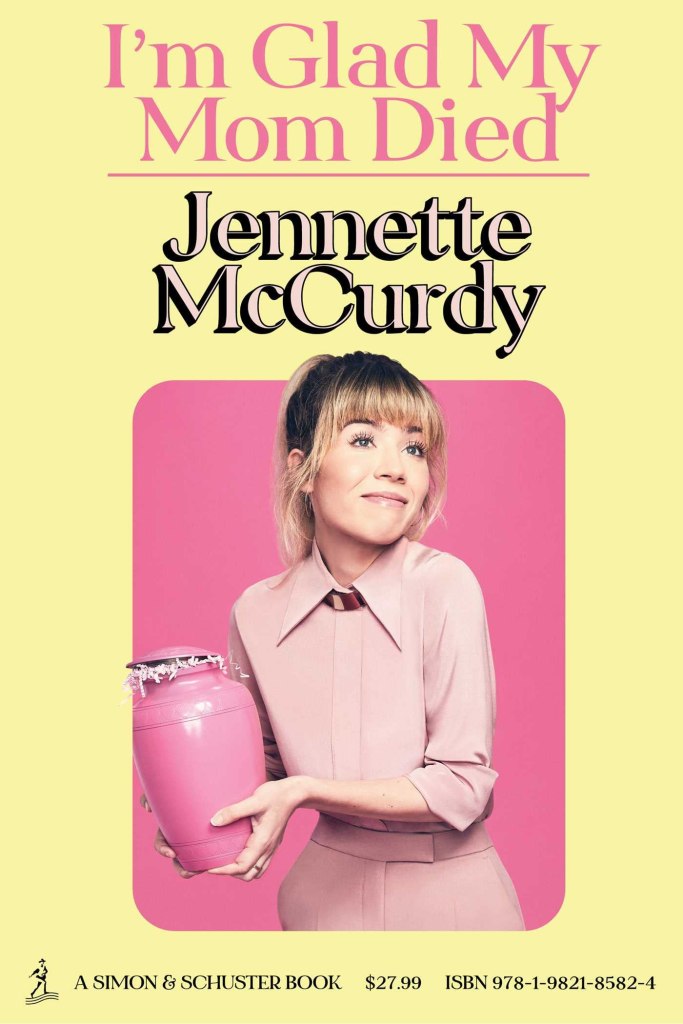
‘I’m Glad My Mom Died’ by Jennette McCurdy
My rating: 5 of 5 stars
When I first learned of this sensationally titled book with the pinky perky cover photo of the author from the New York Times Book Review, I knew I had to read it because of its boldness and frankness that I believe would strike the chords of many who must have felt or wished it (let’s be honest). However, it was more like seeking a kindred spirit in such a titled book because I felt exhilarated with camaraderie and, once exonerated from such membership, a desire to revolt against mothers.
But the book isn’t an angst-ridden, hate-filled, violence-saturated memoir nowadays in-vogue among celebrities who live to tell their dark life histories. Although it isn’t precisely wholesomely hall-mark like loving family history, it is worth pointing out the moments of love and warmth that childhood memories sometimes invoke because we thrive as human beings on those memories. McCurdy’s mother may not have been perfect, but who is an ideal mother anyway? The Bard once said that look not with the eye but with the mind. She was the one who saw talents in her daughter, encouraged them, and made them blossom into a pink dandelion when many parents either ignore or overlook the bests of their children for their future. Although I can understand McCurdy’s disaffection with her passionate mother controlling her life, I am envious of having such a mother who was willing to sacrifice her hard labor for her daughter’s success.
The cover photo is puzzling. The author has a smile but not smiling, or instead trying to smile but is subdued as if her emotions are changing instantly or frozen in the moments between joy and sadness, independence and confusion in the transition of belonging to freedom. I can’t honestly fathom what the author thinks inside, but one thing is certain she loves her mother, who is now unburdened with the cares and pain of the world. Perhaps, that is why she is glad her mother died.
View all my reviews -
‘Idol, Burning’ by Rin Usami

Idol, Burning by Rin Usami
My rating: 4 of 5 stars
We are such starstuff made of fire, spirit, and dew that we are instantly drawn to stars that sparkle and shine. And what do we call the beautiful star (and young, of course) that sings, dances, and acts even? If we call it a singer, it is also an idol. Akari calls it Masaki, puts him in the constellation of super idols and worships him like an Apollo to whom she gives meaning to her life as if he were her lighthouse on the dark ocean. He is her God, the Idol, and the Guiding Light of her lonely life. Then what?
Masaki is a member of a boy band called Mama Maza, which feeds on the cult devotion reminiscent of Dionysus accompanying the Maenads sans frenzied ritual of animal-human ripping of fleshes. Akari is something of the high priestess of the cult, running fan blogs filled with tributes to the exalted, glorified awesomeness of her Idol. Her life is centered on, evolved around the solar system of Masaki, and everything she is about, all the things she does about, is because of him. So imagine what is it like when her God becomes mortal full of human frailty, fallen from the constellation of the stars? An emotional vacuum is soon filled in her heart, leaving her lost in the direction of life, wandering about, wondering about the sense of purpose in life ahead. Her sense of void in life with the declination of Masaki from stardom illustrates the existential dilemma that struggles to find a new objective in her life in which the meaning of life depends on achieving the goals in daily tasks, which were to follow any updates on her figure of love, the source of her life energy.
Of course, the love of one’s favorite entertainer is not to be criticized. Beatlemania was not a hysterical totalitarianism but a collective popularism that entrained the ears and minds of people. The gist of this book echoes what Marcel Proust advised: “Never meet the people you admire. You’ll be disappointed.” There’s a reason for it.
View all my reviews -
Once More unto the Breach! Here comes my New Year’s Resolution

Once More unto another year, once more! As the first day of the new year has almost ended, I feel the urge akin to duty to make a new year’s resolution. There’s not much but high hopes for low heaven, with a reasonable scope of expectation and humble measurement of happiness. And since none other writers know about the depth and breadth of humanity than Shakespeare, I deem it fit to match his quotes with the contexts of what I have resolved to make this year of Rabbit fruitful and blissful.
- Be Not Afraid of Challenges
‘This is a step on which I must fall down, or else o’erleap. For in my way it lies.’ – Macbeth - Don’t be easily crestfallen
‘There is nothing either good or bad, but thinking makes it so.’ – Hamlet - Read More, Write More, No Matter What
‘We know what we are, but we know not what we may be.’ – Hamlet - Keep it simple with humor
‘I was born to speak all mirth and no matter.’ – Much Ado About Nothing - Let not a curse be my light purse
‘I say, put money in thy purse.’ – Othello - Be vigilant at all times
‘Love all, do wrong to none, trust a few.’ – All’s well that Ends Well. - Overcome existential malaise
‘Then I defy you, stars!’ – Romeo and Juliet

Nobody says life is easy, and we know it to the point that such a saying has become a cliche. But life itself shouldn’t be and is not because we are such stuff made of spirit, fire, and dew, harvesting sunlight and starlight. Now that I have listed my New Year’s resolutions as above, I feel fresh of spirit charged with new energy like the Energizer bunny to keep going in my life, even if perils will lie ahead. But in the meantime, let me be that I am who I am as I write this post in my tiny room with my two cats, Toro and Camille, and seek not to alter this moment of simple pleasure.
- Be Not Afraid of Challenges
-
Merry Christmas

A Baby on the straw bed
In a stable on a cold night
Beneath the stars Bright
Brings joy to the world
And hope to the beholder. -
‘Just So Stories’ by Rudyard Kipling – book review
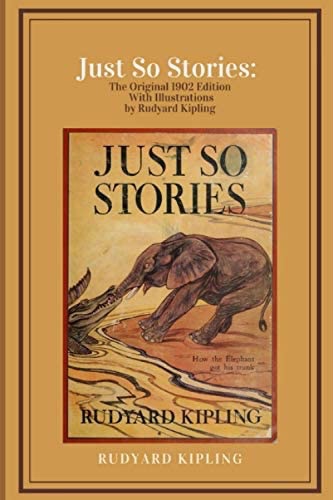
I believe history is a branch of literature full of events and stories made by artists and artificers weaving facts into myth, and vice versa, into a timeless tapestry of the world that was, is and will be. In that regard, Kipling is an artist who spins beautiful tales of how animals became what they look like into a poetic wheel of ear-delighting and cadenced words aided by gorgeous illustrations distinctively graceful and dazzlingly beautiful.
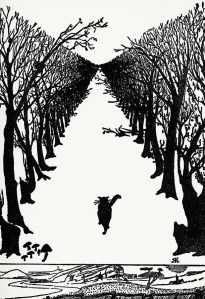
Kipling’s evolution of animals explains why they look the way they are, such as a Leopard with spots, a Carmel hump, and many more. The stories become a fable and a history of its kind. It’s a literary version of Darwin’s Origin of Species, the wonderful menageries of Man and Beast that cannot live alone despite the differences in species because we are the inhabitants of this world, Earth. But, above all the fantastic tales of wonder, the Cat’s tale stands out in the story and the subject. Kipling’s Cat is proud but not arrogant, independent but affectionate, and vain but graceful. It’s a cat who walks by himself, and everything is alike to him and nothing else. The Cat is a beautiful stranger even if he likes to be a family, a kind of forever loner, the Puss in Boots with a cowboy hat and an empty holster. Kipling’s writer’s eyes saw the romantic solitude in a cat, and the result is one poetic Cat that rhymes well like the graceful way cats do their amazing somersaults.
Just So Stories are not just for children even though it is classified in Children’s literature on the shelves of libraries. It’s a book for everyone who loves legends and magic, who still has a childlike innocence that refused to put away as an adult because it’s in nature. The stories are not for academic analysis or psychoanalysis but simply for the enjoyment of the mind and the delight of the heart. Remember Freud’s saying, “Sometimes, a cigar is just a cigar.” So are Just So Stories, so delightful and so pleasant.


 Flame, Glass and Ink are Poems, essays, and reading notes by Stefania Joori Suh
You must be logged in to post a comment.