 Ancient Greek Cavalry: The History and Legacy of Classical Greece’s Forgotten Soldiers by Charles River Editors
My rating: 4 of 5 stars
The image of a gallant bedight knight on a steed heading for a romantic journey for El Dorado or a noble cause for joining a loyal cavalry would have been a laughing stock of the ancient Greek soldiers. They regarded cavalry soldiers as aristocratic good-for-nothing redundant auxiliary to the mighty phalanx composed of ordinary foot soldiers called hoplites. From the Bronze Mycenean age until the emergence of Macedonia as the Greek military superpower, the historical context of the ancient Greek cavalry reflected the signs of military and sociopolitical developments in the 5th century BC Greece and the world beyond. The book informs the reader of the background of the rise of the cavalry in ancient Greek society thanks to Alexander the Great and its effects on military and societal contexts proven to be timelessly brilliant.
First of all, the geographical factor of the Greek islands, in general, made it difficult for the effective use of horse-driven chariots in battles due to its mountainous terrain as illustrated by the Oracle of Delphi in the valley, the Mount Olympus, and other divine earthly places. The rocky roads were not conducive to heavily charged chariots, preventing them from maneuvering the moves swiftly in warfare. In fact, the introduction of a horse race in the Olympic Games where the wealthy horse breeders reconciled the equestrian equipment’s military value to a sports game’s monetary value.
Secondly, horses were expensive to breed and maintain, as they still are in our time, and only a few wealthy (the oligarchs) were able to own horses. So much so that Aristotle acknowledged that horse-breeding was not easy to do unless you were rich. Accordingly, the democratic ideal of the mingling of titles and the exertion of the synchronized force from the collaboration of duties for the common good excluded the value of cavalry whose soldiers were also outside the Homerian value of Arete, the highest soldierly code of honor consisting of military finesse and personal integrity. To the democratic minds, the pampered nobility on horseback in battlefields had a better chance to escape on a horse than its hoplites on foot who had to confront the rains of lances and strokes of swords showered in blood.
However, Philip II of Macedonia and his son Alexander the Great saved the grace of the falling Greek cavalry by the brilliant military innovation that reflected society’s progress in the economy and political contexts. Along with its loyal ally Thessaly, Macedonia was an oligarchy unlike its contemporary city-states run by the democratic populace that usually lacked the foresight of tactical military strategy due to a general contempt for the art of war held by experienced noble soldiers. Macedonian nobles, especially the young and ambitious noblemen, made up most of the excellent Macedonian army that fully utilized the offensive and defensive cavalry force into the phalanx. The offensive on the phalanx’s right flank, the Companion, consisted of 2000 trusted and honored members of the king’s inner circle, the oldest noble families of Macedonia. The defensive on the left side, “The Thessalian,” proved to effectively outflank the enemy force with as least casualty as possible on the Macedonian side. Such cracking military operational order surpassed the Persian scythed chariots’ hideousness, cutting men in halves, mangling the still breathing fragments on the wheels and the scythes.
The unprecedentedly thriving economy due to the discovery of gold and silver mines and minting of coins meant a stable government and expensive military maintenance. The state’s wealth made it possible for financing a standing cavalry in peacetime and on a campaign. The minting of coins under the unified currency system paid salaries to professional soldiers, unlike the unorganized military structures where soldiers were ill-equipped and poorly trained in the other Greek city-states’ armies.
Upon reading this book, I felt that the title should have been “The Wooden Trojan Cavalry of Macedonia” or “Alexander the Great and His Cavalry” for the staging of Macedonian Alexander the Great in the arena of the world’s superpower upended the archaic military organization, let alone ineffective strategies. The role and value of mounted soldiers corresponded with the notion that the economic progress propelled by the natural wit of a leader who integrated all society members, high and low, won the war most productively. Alexander’s democracy in military strategy elevated the status of contemptuous willy-nilly horseback soldiers to gallant bedight warriors. It shows the reader that true democracy means the magnanimous participation of all classes for the commonwealth of a country.
View all my reviews
Tag: literature
-
‘Ancient Greek Cavalry’ and Alexander the Great’s Companion – review
-
Paid forward by a Stranger

The French existentialist Jean-Paul Satre was a cynic when it came to the milk of human kindness. He smirked by saying that generosity was more or less a feelgood giveaway of the doer in the self-contentment of magnanimity. The intention is ego-driven, not altruistic. Satre may be a brilliant intellectual in the post-modernistic world, but he was essentially missing something, obviously not knowing it for the following reasons.
I still remember a lecture given by a religious sister whose spirituality bloomed in her charity and intelligence about the practice of charity in our daily lives, rather than doing it as a penance after a guilt-ridden confession. For you never know, the one benefitted from your kindness might be an angel in disguise (the mysterious shopper!) or even Christ himself (the Lord of Lords!) So, how will I interpret an act of generosity when a total stranger paid for my sandwich at Subway?
It was a rather gloomy afternoon today because of the disappointment with the general members of humanity that I felt most acutely painful to my glass heart. The things deemed trivial or insignificant matter to me, stay in there until I burn them with candlelight under moonlit tranquility of the mind. Samuel Johnson is right in saying that you cannot will away the unpleasant feelings in full force at once. That is why we object to despotic edicts of stoic austerity to quell the perturbed state of mind. The Sun was high, but the spirit was low, and I could not pretend to be cheerful and optimistic as if there was no word for Unpleasantness in my dictionary.
So when I was in a nearby Subway store during lunchtime, I felt wretched and wished that the time would go fast so that I could go home with the alacrity of departure. But no, the reality bit when a store clerk asked me if I wanted my bread to be toasted. No, I said politely and proceeded to the counter for payment, when the register guy told me that the man before me paid forward my sandwich. Really so? But I didn’t know him. There were two men, seemingly office workers from nearby, coming for some quick bites like me. And I still don’t know which man paid for mine, but what does it matter when both of them are total strangers anyway? Then I checked my reflections on the outside building’s crystal-clear glass windows and saw a woman decently presentable looking in thin figure clothed in a DKNY tweed jacket and Michael Kors jeans, which disqualified me for being a hobo woman. So why did he pay forward for my Tuna sandwich?
Whether he was a confessional penitent doing penance or an angelic agent is still a mystery, but then something is better to remain as it is, I think. The unexpected surprise from the stranger put my emotions on the continuum of low arousal on one hand and high pleasantness, on the other hand, creating satisfaction that my life could be likable and ultimately livable. It’s a small pleasure that keeps my sailing endurable and doable in a wide ocean alone against monsters, thunder and lightning, and doldrums. No wonder the sandwich tasted sweet. -
‘Your Movie Sucks’, by Roger Ebert- review
 Your Movie Sucks by Roger Ebert
My rating: 5 of 5 stars
Criticism of any kind is never a pleasantry. It stings the heart and swells in there until the natural amnesia of time heals the wound. Also, criticism is never an easy task, either. Abraham Lincoln defined a professional critic as one who has “a right to criticize, who has the heart to help.” Therefore, being a critic is a daunting profession that can fall out of favor with the public and the criticized. Yet doing it good and right is even more challenging and requires a wealth of erudition and insight to observe all things and all beings in the world without supercilious prejudice. I can think of any such critic no other than the late Roger Ebert, whose brilliantly witty anthology of unfavorable movies Your Movie Sucks discerns constructive criticism from malicious cynicism that most of his peers love to delve.
It’s a collection of movies that Ebert finds distasteful to the taste and reason. Ebert opines that filmmakers and the performers tend to patronize with their selective elements, usually senseless violence, gratuitous nudity, and infantile comedy under the pretext of the screen reflection of the realities. But to miss Ebert as an ultra-conservative white curmudgeon movie critic does a great injustice to his bona fide intention and judicious reasoning of why he thinks the movies suck, most notably, ‘Deuce Bigalow: European Gigolo,’ ‘Chaos,’ and ‘the Pearl Harbor.” The plots, characters, and narratives of these movies ignore the taste and reason universal in all human creatures regarding the principles of sense and judgment common to all humankind. They are either devoid of artistic sensibilities or willfully negligent of the humanity that refuses to cease even in the desolate wilderness of calamities, artificial or natural. Ebert seems to seek in movies a common thread that every one of us, regardless of class, race, and gender, can be bound together to understand what it means to live, ultimately.
Ebert’s credo is the arts of films, paintings, music, and books as a consolation to the hearts that need to relive the yokes of daily lives. Therefore, the artists are to look into people’s realities from all walks of life and illustrate each life’s values, however insignificant it might be, by elevating the ordinariness into arts of life to neutralize the vicissitudes of life that we all experience. In this regard, Ebert agrees with French painter Jean-Francoise Millet’s timeless adage: “It is treating the commonplace with the feeling of the profound is what gives to art its power.”
I always like Ebert’s films’ reviews because they are easy to read and intelligently passionate and witty despite his knowledge of various subjects. There is no hint of malice in the guise of intellectual sarcasm. His views on the world are agreeable to mine, regarded as outdated forseysm in today’s amazingly political world. Maybe we might belong to a previous era where our perspectives of the world would meet with more consensus and fewer disapprovals. In fact, I liken the person of Ebert to that of Samuel Johnson, the great English writer, thinker, and author of A Dictionary of the English Language for their similarities in appearance, weltanschauungs, and styles of writing that thrill the heart and pique the mind with a touch of humanity that is so rare to be found among the contemporary writers. So, if you are a like-minded appreciator of arts in general and curious about what movies someone like Ebert finds distasteful, take heart and read this book. The words leap from pages with wit and wisdom as the time entertains you like you never know. This book may also serve you as a textual trailer of a movie that you might have fallen into the mistake of paying it to watch.
View all my reviews -
Samuel Johnson Rambles on Dictatorship over Feelings

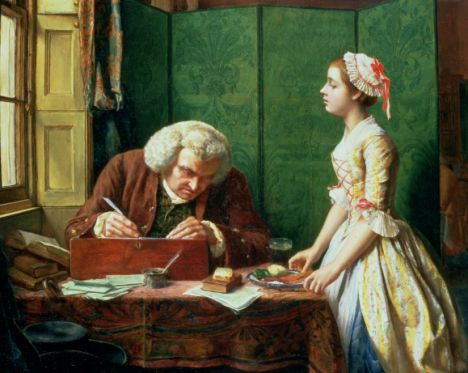
VFS109729 Dr. Johnson (1709-84) at Cave’s the Publisher, 1854 (oil on canvas); by Wallis, Henry (1830-1916); 49.5×59.7 cm; Private Collection; English, out of copyright Temperance is not an abnegation of sensuous pleasure that is innate to our human nature. It is one’s willingness and ability to rein in his or her horse of impulsive id under moderation lest the driver of the mind chariot lose the control and fall by the wayside of life’s journey and leave it in the lurch of spiritual anomy. Yet, to obliterate the pleasure of the taste that our sense requires for nourishing the body and soul will only produce counterintuitive consequences, leading to noogenic neurosis, chronic depression, or existential frustration that life is nothing but a vast vacant lot. That is what Samuel Johnson, one of the great writers of the English language and a trailblazer of the English dictionary, discerned in his brilliantly unbridled and witty essay ‘The Rambler, No. 32, written on Saturday, July 7th, 1750.
Johnson was an intellectual of the best kind: erudite in the scope of knowledge drawn on his wealth of reading, artless in expressing his views on the Pooterish lettered caste that prided themselves on the florid display of arcane words and difficult syntax, and charitable in recognition of the vicissitudes of human life without prejudice. Perhaps, such admirable traits contributed to creating a dictionary of the English language, which required the universal understanding of humanity to comprehend the origins and meanings of a language of any kind. According to Johnson, Stoicism seemed too puffed up with its lofty philosophical principles of restraining feelings that would only beget misapprehension of the old school of thought for denying the most natural human emotions.
Emotions measure changes on a continuum of arousal on the one hand and the pleasantness and unpleasantness on the other. For example, High Arousal and High Unpleasantness produce Fear, whereas High Arousal and High Pleasantness equal to Ecstasy. Low Arousal and High Unpleasantness beget Misery, but Low Arousal and High Pleasantness lead to Satisfaction, which is a positive emotion. It is this physiological state of feeling that Johnson deemed it desirable in the face of existential frustration. One in despair can not eradicate the low tide of an emotional wave but can divert it in a direction that gives a fresh viewpoint on the heart’s malady, thus making life worthwhile to continue with every new try. It is logical reasoning because consciousness predicts the world we live in, a constant revolving hypothesis of reality triggered by neurons in the visual cortex. Since the brain does not have a function to think of itself, it uses a template of emotional scripts based on experience. Thus, instead of willing away unpleasant emotions, one can translate it on a different emotional template, measuring it on the arousal continuum for positive emotional affects.While Stoicism advocates the puritanical governance of the sense and taste for Reason’s eminence, humanity’s natural law revolts against the unnaturally philosophical dictatorship under the disguise of decency and propriety. Stoicism is a school of philosophy that distinguishes the cult from “the sensibilities of unenlightened mortals.” Johnson was right in saying that repressed feelings about pain could only lead to a dormant sense of guilt in a denial of physical reality and later erupt into violent tantrums or perverted forms of debauchery. Pain is part of life, and the way to relieve its severity is by way of finding its riddle with fortitude through doing things that channel the concentration on the pain to something meaningfully pleasant, creating a sense of fulfillment. This concept is also parallel to Viktor E. Frankl’s Logotherapy, a school of psychotherapy about willingness to meaning in life as a result of responding genuinely and humanly to life’s challenges. Both Johnson and Frankl denied no tactile sense of pain, emotional or physical, and prescribed a palliative solution for mitigating a malady of heart.
Johnson’s essay on criticism on Stoicism agrees with my idea of expressing genuine feelings about sadness to effectively communicate to listeners’ hearts in a compassionately empathic way so that pains will be less burdened, griefs shared in halves, and loneliness complemented in companionship. Likewise, I believe that suicidal feelings arise from that utterly helpless loneliness alienated from the world. They are usually concealed by the actor’s self-made barriers, where the emotions are despotically imprisoned. And I believe that Johnson would have agreed with me. -
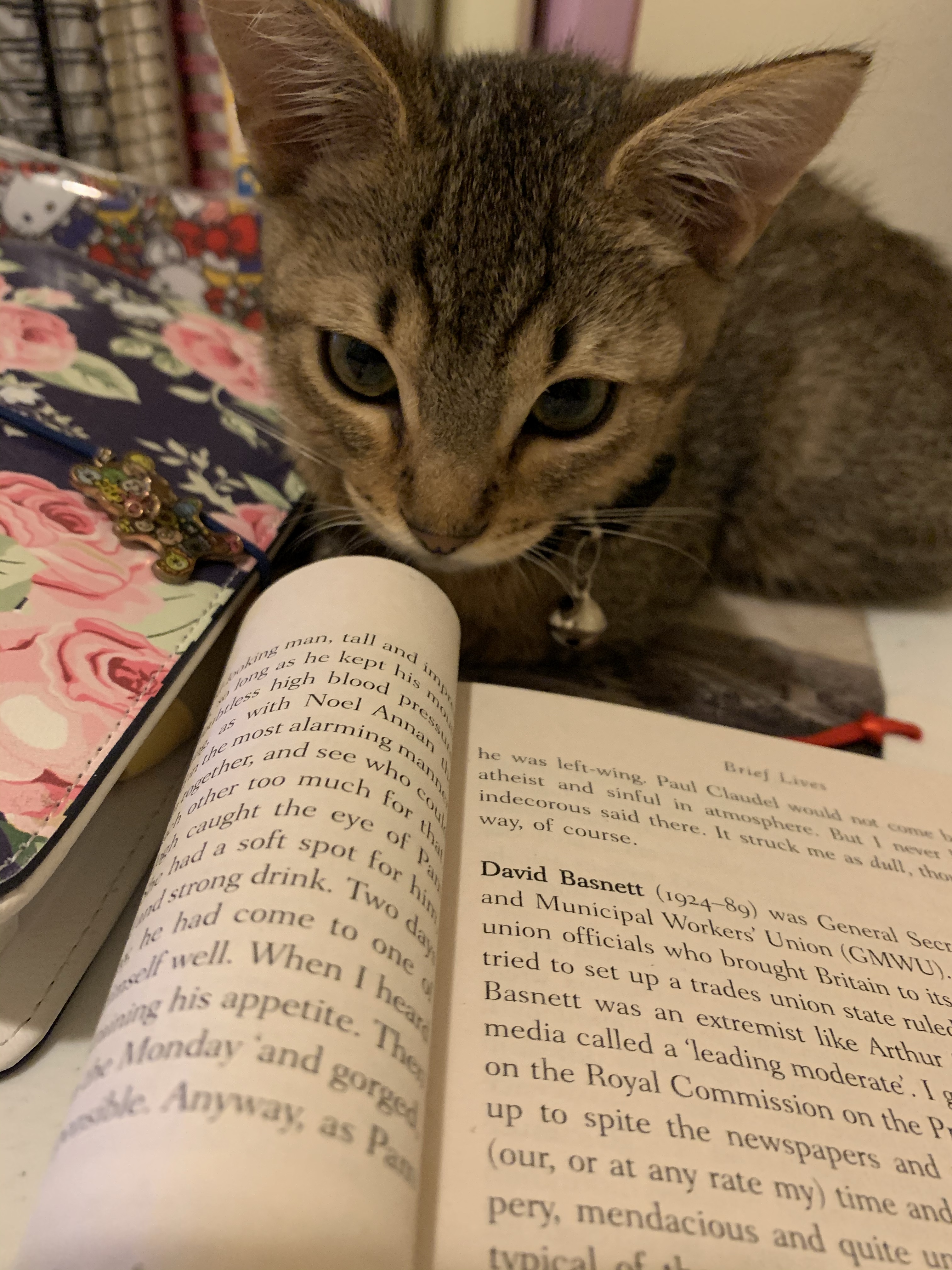
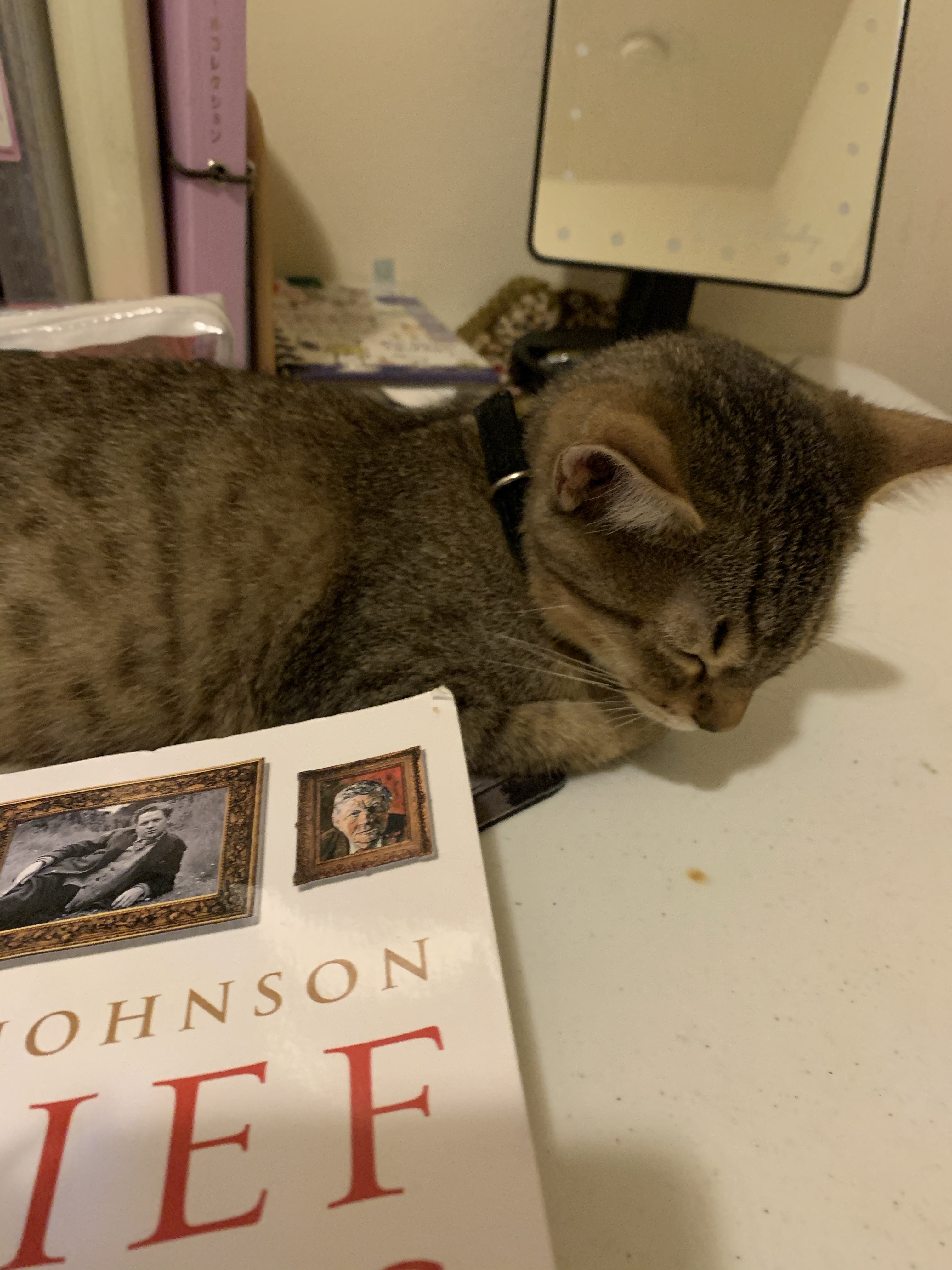
The bio of seventeen weeks old Tabby Tom

Hi There. Nice to meet you! Ralph Waldo Emerson said: “What lies behind us and what lies before us are tiny matters compared to what lies within us. How rightly so. Despite my sixteen weeks of life thus far, my feline instinct feels that there are unpathed waters and undreamed lands within me. So I deem it high time to unravel the mystery of Me.
My name is Toro, the co-editor at large of this blog with Stephanie. I am sixteen weeks old. I am a domestic short-haired tabby tom, but Stephanie believes that I am of an Egyptian Mau, admired by ancient Egyptians and the divine cat of Ra, God of the Sun, as portrayed in the Book of the Dead. I think Stephanie’s hypothesis of my suspected heritage is due to my beautiful turquoise eyes and dainty figure. She also seems to want to liken her and me to Cleopatra and her beloved Mau. (Wow!) Well, no one can blame her for regaling herself with such lofty imagination of my elated pedigree because – in all honesty – I look like one. What can I say? Seeing is believing, and beauty is in the eye of the beholder. Then the truth is to the end of reckoning, as the Bard chimed in.
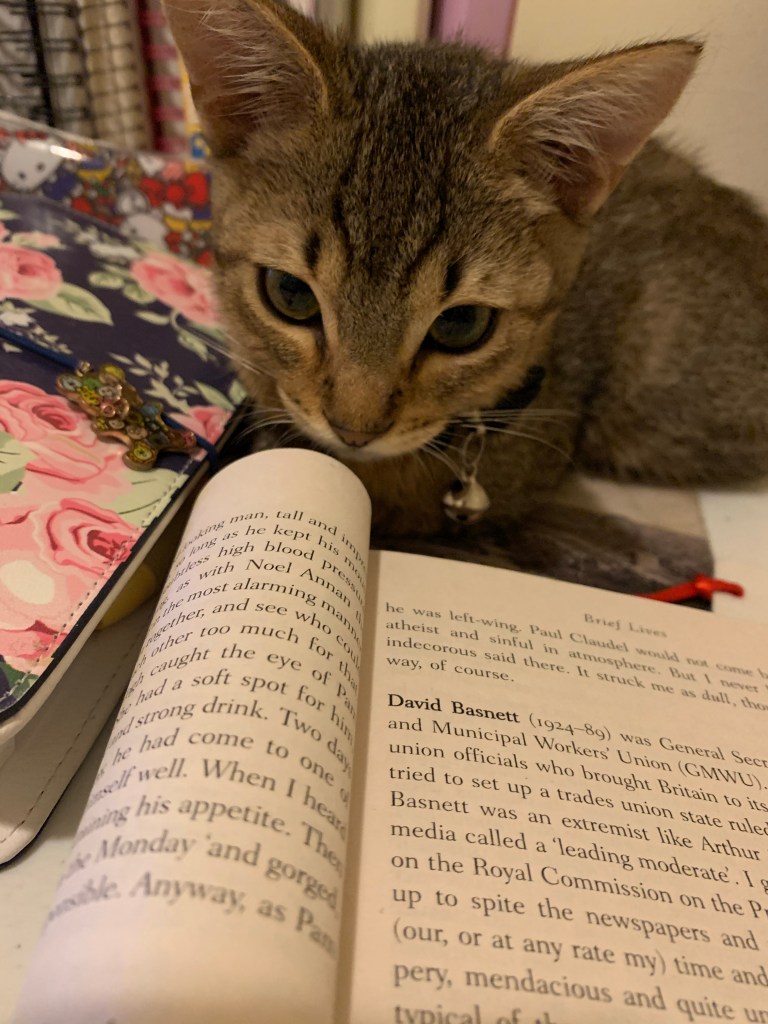
As is the queen, so is the subject. Despite my regal appearance, my biological and family background is that of an orphaned pauper, lesser than the pauper who exchanged his identity with a prince because he had mom and dad. When I was born, my mother left me alone, so a passing old lady took me to a nearby shelter where I met my sister Stephanie. I followed her because there was something that connected us from moods to tendencies and personalities. We share our peculiarities in mutual solitude shared by orphaned patronage of love and care.

How’s the writing going? Because I was left alone to tend myself at so young an age, I am prone to frequent mood swings from high and low, which often makes me frantically run around the room back and forth, up and down, and left to right without stopping. I know this strange behavior of mine startles poor Stephanie, but I can’t help such impulsive pulsing as it is part of my irrepressible feline nature. However, one thing is sure that when I see Stephanie returning home from work, my whiskers are moving all withers, my tail rises to fortune, and my little feline heart fills with meows and more meows.
This much is the bio that I dictated to Stephanie for my new career in publishing. As I am excited about this new adventure with Stephanie on board, I hope readers will join us in our one of a kind literary enterprise in joyous spirit! Meow.
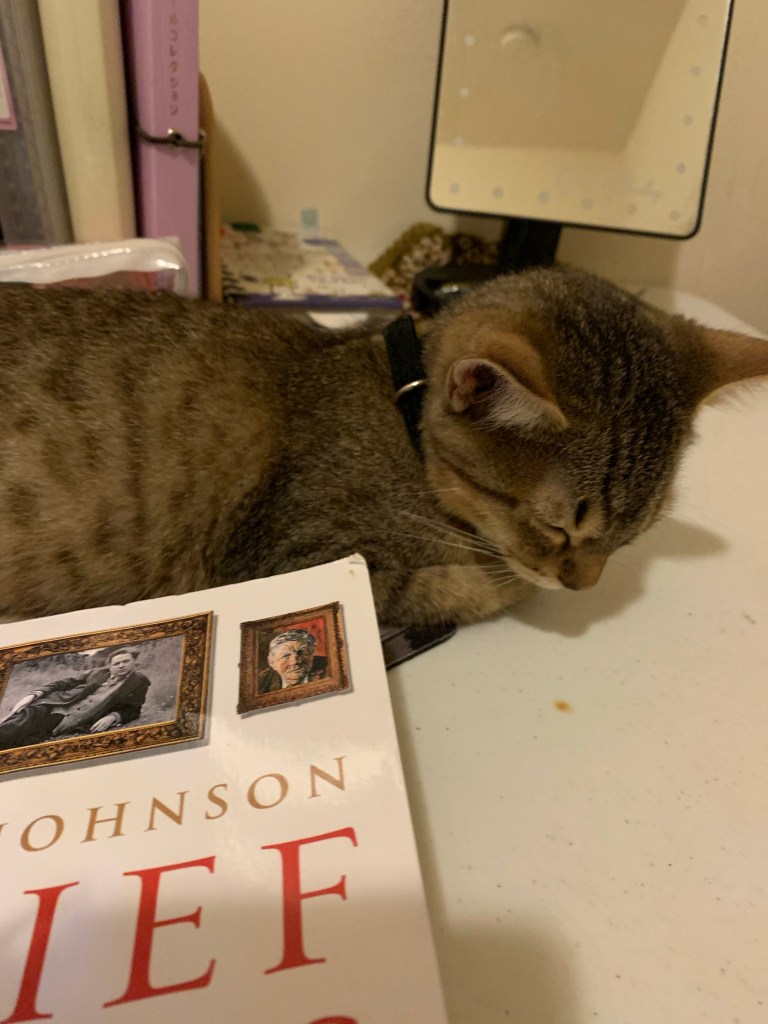
I am done with my share. So, I am taking a break. -
space odyssey

The screen of the universe
Is a magnificent film noir
Starring the stellar stars:
The methane lakes of Titan
The acidic clouds of Venus
The violet radiations of Mars
The frozen moons of Jupiter
In the cinema of Space Odyssey.




You must be logged in to post a comment.