Tag: literature

  • fee-fi-fo-fum, fee fi-fo-fum

    tumblr_p90r2uwPnN1vuvoufo1_400

    The owl hooted on the oak,

    The crow cried in the dark;

    Dogs howled on the hills,

    Cats purred in the bushes;

    The Night was ripe and ready.


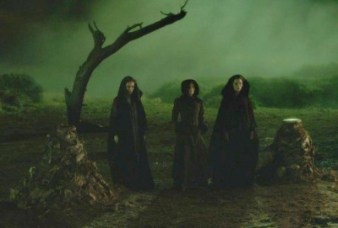
    Fee-fi-fo-fum, Fee-fi-fo-fum,

    The Three Witches began to hum

    Standing in the grim gray garbs

    With the gray eyes glaring in silence

    They were ready to tell his destiny.


    “Scotland, the jewel of thy crown,

    The sword calls for thy title to own,

    The blood is thy sacred power,

    As it runs redder and deeper.”

    Thus, the prophecy of his fate’s cast in

     Fee-fi-fo-fum, Fee-fi-fo-fum, Fee-fi-fo-fum!


    P.S.: This week’s #FairyTuesday theme on Twitter liberally encompasses witches, ghosts, and other supernatural beings, so my choice is the Graeae, the Three Sisters personifying the Fate of Man in the ancient Greek mythology. They had only one eye and a tooth to share, but the pre-Herculean Mycenan hero Perseus intercepted the eye when the Sisters fumbled with it in the air and forced them to answer the whereabouts of Medusa. They ultimately relented to the demand, whereupon Perseus set about killing Medusa. 

    This image of the Three Sisters is then also wondrously associated with the Three Witches of Shakespeare’s Macbeth by the sheer dint of the somber, dismal greyness of the three uncanny women. But as Mcbeth was a tragic figure consumed by guilt and greed, so were the Three Witches, malevolent and dystopian, vis a vis the somewhat faltering and fumbling Grey Sisters menaced by Perseus bullying them to elicit what he wanted to know. 

    This poem, however, is more of Macbeth’s Three Witches leading him to perdition because the grim image of the witches conjured up by Shakespeare is terrifically atmospheric and dismally spell-bounding without the pageantry of words and expressions. 


  • ‘Fairies: A Dangerous History’, by Richard Sugg – review

    Fairies: A Dangerous HistoryFairies: A Dangerous History by Richard Sugg

    My rating: 5 of 5 stars

    According to the races of the supernatural world, there are classes of spiritual beings that humans have arbitrarily defined with ostentatious pedanticism. For we treat the otherworldly guests of honors, such as archangels, angels, principalities, vampires, werewolves, trolls, big-foots, and even extraterrestrial aliens with awe-inspiring reverence. In contrast, fairies are regarded as sort of the underclass, juvenile guests reluctantly invited to a terrific festival of supernatural beliefs. Such spectral discrimination, argues author Richard Sugg in his Fairies: A Dangerous History, results from the fact that unlike demons, angels, and other ethereal beings of educated Christianity, fairies are in want of respectful scholarship codifying their existence and nature, cultural influence on arts and literature, and spiritual elements of faith/belief traditions in lettered authority.

    The book is a meta treatise on why the author himself believes in the belittled mystical beings’ existence. Sugg takes us to Shetland’s remotest area to listen to a nonagenarian man whose vivid memories about fairy sights are amusing. Thenceforth, the author brings the readers to the fantastic feasts of fairies as seen and described by William Shakespeare and Edmund Spencer as the rulers of the Vegetable Kingdom in their Elysium of poetic fancy, Sugg keeps us hooked on pages after pages filled with his magic spells of words because he sees and believes in fairies with their own dangerous history. It is dangerous because the truth about them is theologically reasonable, spiritually potent, culturally dominant, and physically palpable.

    In sum, this book is one fascinating account of fairies that serves the author’s purpose of educating and entertaining readers. The book is filled with the glamour spells of the author’s erudition. This book is something of the authorial account of the Fairy Folk.

    View all my reviews

  • spirited away

    IMG_1708

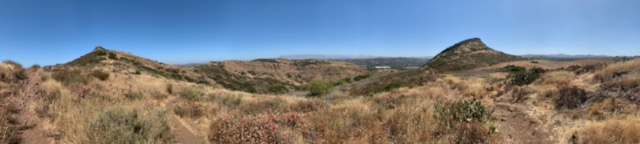
    Where the sky endless and boundless

    Touched the curves of hills and vales

    Adorned with pristine wildflowers;

    My eyes gazed at the wonder in silence

    And my heart filled with longings

    for the bounties of beauty in bliss.


    The restive soul, the ever doleful

    In want of the joy of beauty wishful

    Of the realization of desire fanciful

    Coveted the beauty of nature graceful

    In the eye of the beholder hopeful

    Of sprinkles of the magic wonderful


    Suddenly, I was a wandering lonely cloud ever

    Floating on high over the canyon in the ether

    And the top of the misty mountain yonder;

    Then as a great lone eagle, I was flying near

    The shrill west sun as a sovereign ruler

    Of the serene beauty of magnificent nature. 


    I wanted no more, and nothing more- evermore.


    P.S.: Sitting on the top of the loop overlooking the creation down under, I felt like flying in the azure firmament freely without a shred of worries and anxieties binding me in the drab and dreary reality of the world below. That was my secret nature’s elbow room where I could willingly waste my time without a qualm about not doing anything but being transfixed to the beauty of nature for an indefinite time. 

  • Officially Haunted, Really

    2ddcc1fd40814bbf40437d087f498150

    Prologue: I wrote this post in March of this year upon reading an article about historic haunted places in the UK from a subscribed issue of ‘BBC History Revealed’. I wanted to contribute my knowledge about the Whaley Museum in Southern California in a letter to the editor. The new July issue arrived on my Kindle Fire this morning, and I saw my letter featuring therein. It was edited in the context, but only for the perfect perspicacity. The letter is, in fact, one of the fifth letters that have been so far published in the magazine. 

    Sometimes they either don’t know they are dead or wouldn’t accept it because of strong attachments to their once earthly abodes. You may think it’s a puerile imagining to believe in ghosts, but there are indeed more things in heaven and earth than are dreamed of in your philosophy. As someone keen on supernatural phenomena happening in the background of our ordinary landscape of daily life, it gave me a fillip when I came upon an article from my subscribed history magazine the other day about the historical capital punishments going horribly awry as though to use the grisly scenes of capital punishment as a reminder of societal retribution for an eye-for- an eye. It also reminded me of a story of the condemned whose ordeal of execution was so unbearably painful that he is still roaming around at his execution site as though with eternal lingering attachment to his earthly life.

    Here in Southern California, the story of James Robinson (aka Yankee Jim) who was executed for attempted grand larceny in San Diego in 1852, is something of haunted folklore that attracts tourists and ghost hunters alike. He was hanged on a gallows off the back of a wagon, but being a tall man with long legs, he resisted being killed by keeping his feet in the wagon but was at last pulled off. His body then swung like a pendulum until he strangled to death. And it was this very site of hanging that one Thomas Whaley, who happened to witness the execution himself, built his dream house where he and his family soon began to hear the unexpected phantom footsteps as if being made by the boots of a large man, walking noise, and the windows mysteriously unlatched and opened up. Lilian Whaley, the Whaleys’ youngest daughter living in the house until 1953 was certain that it was the ghost of Yankee Jim haunting their house. Now the Whaley House is the Whaley Museum, a California Historical Landmark located in Old Town, San Diego, California.

    However, ‘Yankee Jim’ still lives there because although unseen, his presence is felt and heard by visitors and staff at the museum. Never malicious or naughty, the ghost of the hanged man is said to rather shyly manifest himself by footsteps, markings on the wall, or opening and closing of windows. So much so that the Whaley Museum, along with the Winchester Mystery House, is certified by the US Department of Commerce that it is genuinely haunted. So if you live in Southern California, it’s worth visiting the Museum and Jim. I think I may pay a visit. The address is 2476 San Diego Ave, San Diego, CA 92110.

  • alchemist and four fairies

    all

    An old alchemist had assistants

    Of Craft from Titania’s Kingdom

    And they worked for him at nights

    in return for fairy food abloom.


    Salamander belched out a fire

    Under the tripod holding a beaker

    In shrill forever fiery yellow ire

    that grew hotter and madder;


    Until Undine’s Purified Water

    From the well of Fairy Realm

    Boiled and bubbled in the beaker

    She watched with pensive calm;


    As Gnome put a sorcerer’s stone

    As black as the Stygian River

    From the bottom of Earth alone

    Into the Water like a wise thinker;


    While Sylph was breathing Air

    Into the Earth joined with the Water

    And the Fire in the Craft of Wonder

    Creating Gold and Elixir in Splendor.


    P.S.: The fundamental personality types are sanguine – red (hopeful), choleric-yellow (ireful), melancholic -black (shy), and phlegmatic -blue (calm). In fairy-tale theory, the following fairies represent the four elements: Sylphs – air (red), Salamanders – fire (yellow), Gnomes -earth (black), and Undines – water (blue) . Hence this poem is an amalgam of the aforesaid theories conjured up in my mind’s eye.

  • Fairy-Tale Tuesday: Queen Titania and her Courtesans

    P.S: It’s Fairy-tale Tuesday on Twitter, and this is my poesy contribution to the weekly fairy twitter feast for those of you who take a fancy to fanciful elements and dwell in the beauty of the mysterious nature.