
It’s 10 minutes before regular Saturday Vigil mass begins, and I am sitting on my regular pew, feeling responsible rather than faithful. I wonder if I am being irreligious or irreverent toward the existence of God and the observation of the ancient rite of faith that has been performed for a long thread of centuries from the Last Supper to this Modern Day of Social Media. For my trinity of Heart, Soul, and Mind is not one with this belief when my emotions run counter to the teachings of the Church that seem incongruent with everyday reality. If this sentiment had been read aloud in the 16th or the 17th century Europe, then I would have been labelled an immoral atheist, a pariah cut adrift from the traditional mooring in the canonical faith and morals of Christianity.
My anxiousness about the existence of God is emotional, rather than logical in the working of the intellect, which has been shared by writers, philosophers, and even canonized saints of the Church. According to Professor Alec Ryne’s article of “The fury that filled the rise of atheism” as featured in this month’s BBC History, the workings of emotions and the first-hand experiences of uncharitable Christians and dogmatic clerics laid out a foundation of atheism in the 16th and 17th centuries, which later became nourishment of modern western civilization.
The French polymath Blaise Pascal knew about the power of emotions: “The heart has its reasons, of which reason knows nothing.” In fact, humans make the great choices of beliefs, values, purposes intuitively, unable to articulate how and why they have been made. This means that prior to the establishment of conformed sets of moral code and religious doctrines, the Creator has already imprinted moral and ethical guides in the human mind. This can be also meant that you can be an atheist or unbeliever with a good heart because your conscience, the law of nature, can be a guide to an outward moral virtue.
In fact, the Enlightenment’s prime critique of Christianity, that is the churches in a broad sense, was that it was “immoral.” Thinkers, such as Voltaire and Thomas Paine declaimed against the churches because of their moral revulsion. Paine furthered his vehement subjective on religion as a human invention, set up to terrify and enslave mankind, bereft of advanced metaphysical views on the churches. In other words, religion as an institution should not govern human free will to decide moral choices laid out by arbitrary set of invented rules.
Thanks to the works of philosophers based upon humanism, a discovery of belief in contemplative retreat to natural wonder percolated institutionalized belief through individual spiritual reformation. That you can find God in the beauty of nature and the wonder of how the human body and mind work is a way you can affirm the existence of God as a manifestation of God because all of it could not have created itself. As a matter of fact, this natural way of finding the existence of God was St. John Paul II’s favorable method of praying during his lifetime because being a former student theater actor, he could see the clear signs of God in the workings of nature. Which coincides in the Enlightenment thinkers’ views on belief, free from institutionalized doctrines of belief.
In light of the above, my crisis of belief was more of emotional than of intellectual. The temptations that there was no God, also sprang in the minds of St. Therese of Lisieux, St. John of Cross, and other saintly men and women. Even Jesus on the Cross cried out, “Father, why have you forsaken me?” Which indicates the workings of emotions in the face of existential strife, a vantage point from which belief they had steadfastly held no longer or momentarily felt true. From angry unbelief that religion was morally intolerable to anxious unbelief that religion was an ethical institution, the history of atheism has ironically redefined the notion about belief, authentic faith, by pointing out the corruption of the churches and purifying the understanding of God as the modern world is familiar with. For me, it’s high time I went hiking on the nearby mountain trails to seek a manifestation of belief for My Own Reformation of Belief.
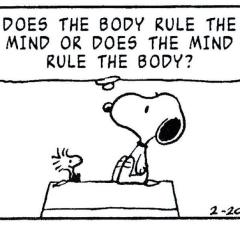


 Come to think of it, cats have appealed to the fountains of imagination and boundless perception in the human mind. The ancient Egyptians worshiped the lithe beauty of cats that distinguished itself from other animals. Edgar Allen Poe also saw something magically fascinating in a feline creature as his creative muse in literature. For me cats do not seem to be as cold, arrogant, and coquettish as they used to be. I even say hi to my neighbor’s big beautiful cat in sight, although it sends me a quizzical look as if I were a Prodigal Daughter. But above all, now I think that not only dogs but also cats will go to heaven.
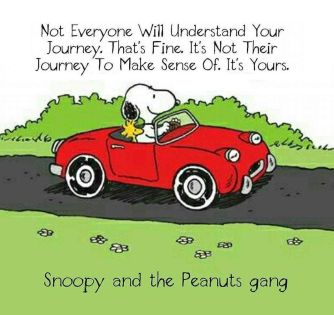 Paul McCartney sings, “Long and Winding Road,” whereas Rod Stewart utters, “I am sailing.” Then Tom Cochrane brings life back to land by proclaiming “Life is a highway.” Whatever metaphor they confer upon life, one thing is certain that it has a meaning, a sense of sui generis purpose, which leads all humankind to the glory of Enlightenment. Methinks life is a very long marathon race toward the grande finale after sailing through the vicissitudes of human conditions in the course of solipsistic running. That’s why all life is priceless and worth the living. How fast I will run and what route I will take is totally contingent upon my sui juris decision. Frank Sinatra knew it as in My Way, and the Animals shout out, “It’s My Life.” Snoopy, as wisecracking as ever, sums it all of the above.



You must be logged in to post a comment.