Tag: movies

  • “Insidious” (2010) – film review

    “Insidious” (2010), directed by James Wan is an intelligent movie with an entertaining flair to hold the attentions of both serious and light-hearted movie lovers. I am glad to have watched it last night on Netflix after reading a book on the history of ancient magic and ritual, and I must say there must be some kind of strange reason that I came upon the movie. It always seems so pat to find a supernatural movie orbiting around me and materializing at an apropos time that it gives me chilling fillip to my suspected element unrealized from within. Whatever it may be, and apart from all the mysterious signs hinting at something about my unknown anima, I am pleased to write about the movie herein.

    The movie is anything but a faulty horror movie. Not “Insidious.” Hardly Ever the criticism of flamboyant cast. Never the limitations of a seemingly infinite range of imaginations that the writer wrote and the director portrayed. It is beautiful alchemy of the harmonious performance of the stellar cast and brilliant storytelling of the extraordinary event in the ordinary existence, all fascinating and riveting. Like an incantation of a professional sorcerer, the narrative slowly builds mystery around the atmosphere. It brings up images of the beyond at the zenith of the ritual when everything seems ready for demons or the superiors to appear before your very eyes.

    The magnet of the movie is the Elise character faultlessly played by Lin Shaye, who began to change my perspectives on a psychic that if there is one like her in real life, I would love to chat with her and possibly work for her even as a part-time assistant. Elise reminds me of an ancient Cumaean Sybil who helped Trojan refugee Aeneas meet his father’s spirit in the Underworld with a gentle but powerful voice elucidating her beautiful spirit. But to call her psychic doesn’t do justice to her essence and vocation as a mystic helping people in distress. She balances her spiritual power with a rational mind by scientific methods to discern the origins of the spiritual maladies of her clients. And she does it in the gracefulness of a good witch performing white magic that I believe even priests would be envious of.

    What makes the movie on par with the timeless supernatural film is the universal subject of the world beyond our sensory perceptions and across religious dogmas. It’s the world of “Further” where spirits lost wander around and dammed lurk in the darker corners of the crossroads. Elise helps the lost spirit of the boy in the Further find his way back to Here and goes further than she should save people’s lives from the evil power even it means to be at her expense.

    “Insidious” is a thoughtful movie dealing with a supernatural thematic element that is harder to play on the screen than it is to envision in the mind’s theater. The movie’s impression spreads into a mind’s garden and stays there in alterations like an insidious charm of ghastly sightseeing so incredible that you can hardly dispel it. If you like to watch a good, decent ghost movie without mutilated bodies and ear-shattering screams, but ghosts or demons only, this movie may do.

  • ‘Coming 2 America’ (2021) – movie review

    The jubilant fanfare is blasting, the majestic elephants are trumpeting, and the sensual dancers are sprinkling rose petals on the ways to herald the emergence of the royal celebrity. It is no other person than Eddie Murphy’s Akeem Joffer himself after thirty-three halcyon years in his kingdom. He is back from the past and in America. Will the king’s festivity have the same level of brilliance it once radiated thirty-three years ago?

    King Akeem has got it all, and he envies nothing: the beautiful, thoughtful wife, wonderful daughters, the loyal friend and aides, and the kingdom of his that nothing is wanting. But alas, as it is our human nature wanting something, we think needful or must-have, so is our king who is egged on to bring out-of-wedlock son now living in Queens, New York. Akeem goes to New York and meets his old acquaintances, all of whom look immortalized in the abeyance of time because they are still alive and kicking with a little bit more gray streaks and a few more inches in their midriff circumferences. And yes, Akeem meets his young, intelligent, and brave son because, after all, it’s his son with the good genes in the blood, while the maternal line is the working-class heroine of a good sort. And yes, the storyline is all over but the shouting with introductions of a few more new faces.

    Coming 2 America is one of the recent Eddie Murphy’s big ambitious movies that he hopes to resurrect the glory of his days as the awesome, the one and only Eddie Murphy, one of the funniest comedians in the world. His sharp tongue offended no one because it wasn’t out of malice or tension to purge out his angst-ridden self. Even his pejorative language and slang were likable and genuine because he had a natural wit to make the words coming out of his mouth funny. Also, he had self-confidence in every scene he was, but it wasn’t hubris or warrior-like belligerence. People loved him for that and his movies, of course. But to be honest, when I watched this movie with enthusiasm mixed with nostalgia like meeting an old friend, I saw a different Murphy, who seemed to have lost that brilliant luster of the perk that signified him. Maybe that is why the movie’s story is mainly centered in his kingdom, for, in his kingdom, Murphy needed no quirky ad-ribs, no fast actions, no more youthful adventures of city life that would have required horse-whips of energy.

    However, the movie is not a failure because it brings fans of everywhere a nostalgia for their days of youth (mainly in the 80s) and gives them PG-13 appropriate entertainment, free of gratuitous sex and violence that movies nowadays automatically opt for. The thematic elements of family value, love, and will to meaning in life metastasize in the narrative, which we so much want in this crazy era of history. Nevertheless, I still miss Eddie Murphy when he was bolder, wilder, and funnier. For those who agree with me, I suggest another recent movie, Dolemite Is My Name, a biopic movie about the eponymous movie star because in the movie Murphy is funny with soul. It is good to see him that way.

  • ‘Tom and Jerry’ (2021) – film review

    The cartoons of the olden days always had partners in acts. Wile E Coyote and the Road Runner, Tweedy and Sylvester, the Red-Beard and Bugs Bunny, etc., in the simulation of Laelaps’ eternal chase of the Teumessian fox in the constellation. But none of them are equal to Tom and Jerry in amicability of the characters and the epiphany of our human characteristics mirrored in the figures. Now the likable duo continues the natural chase one after another and together in the bustling and rustling Big Apple with their human accomplice.

    Tom and Jerry foray into a cinematic excursion from a classic television show I used to watch as a child. The new cinema platform gives Tom and Jerry more room to chase and opportunities to mingle with different animal kingdom species, from humans of all kinds to high-class elephants. Thanks to the incredible 21-century technology, the lovable duo shakes hands with their human friends, blows raspberries to bullies, and skateboards through the bumper-to-bumper traffic to stop farewell. We see cute Jerry with a rucksack on his shoulders meeting his arch-friend-or-foe Tom, who’s thrilled to see the likewise at liberty park by the Hudson River overlooking the Statue of Liberty and the Manhattan Skyline. Usually, the combined features of animated figures and live actors and actresses appear to be incongruent and buffoonish, not least because of the live performers’ exaggerated gestures out of synch with the animated choreography. But not Tom and Jerry. The result is the wondrous alchemy of the living and the animated, bringing the fictional characters, both humans and beasts, into a reality that blurs boundaries between the screen and the audience. What an experience!

    Tom and Jerry are still in theaters and on HBO Max, through which I watched and enjoyed to my heart’s content with my tabby Toro, who looks more like Jerry than his kin Tom. It is a vibrant act of comedy on the foundation of humanity, which requires to be rekindled in our current time. Also, for those who grew up watching the classic Tom and Jerry on TV, the movie is a welcome nostalgia to wallow themselves in the memories, hopefully good, of the childhood when life seemed a little bit fun with ice cream in one hand before a TV set. Or for those born post-internet revolutions, the movie will spawn more fans of Tom and Jerry, the Great Comedians. What more can I say? It’s a feel-good movie with actions and romance that children of all ages can entertain and embrace with smiles.

  • Roger Ebert’s Cinema Paradiso

    A critic, according to Abraham Lincoln, has a right to criticize, but has a heart to help. Being a critic requires erudition drown upon a wealth of reading combined with a natural sagacity grown from enriched humanity wielded into an alchemy of words. A good critic with a poet’s heart guides the public with a lantern lighting the artist’s labyrinth in his world and helps us see the unseen in the far corner of a maze with a wealth of knowledge, sans arrogance of intelligence as Roger Ebert.

    Unlike his other contemporary peers, Ebert was liberal in views, conservative in beliefs, and fair in judgments, the commendable attributes shared by Samuel Johnson, a 17 century English social/cultural critic, essayist, and dictionarian. He wrote a public in his mind and showed no peremptory atmosphere typically attributable to influential critics showing off their mastery of language not accessible to all due to their expensive private high education. Once Ebert trenchantly criticized a specific movie for its crude violence, abject dystopian portrayal of reality, and shuddering absence of humanity. The director of the film remonstrated with him in a public letter that Ebert’s criticism ignored the fact of life, which is akin to earthly circles of hell. Ebert replied to the director that if that was how he looked at the world, then it should not be forced upon the audience’s minds, exerting his raw and one-dimensional creation of reality upon the sentiments and judgments of the audience. Ebert believed that the world was worth living because there’s hope among the odds to sparkle before our eyes with joy flitting at our sides. This belief should be an essence of Arts that gives off beauty, pleasing to our senses that grows into reason. That is the purpose of arts, to which film belongs.

    For this reason and my kindred perspectives on films in general, I miss Roger Ebert, although his writings are perennial. He didn’t grandstand with politically charged views on movies. He believed ‘Art is for Art’s Sake’ because films and books and paintings are not to be used as propagandas for a specific party ideology but to be appreciated for the minds’ food. W.H Auden said of his duty as a poet in society was to defend the use of language. I think Roger Ebert as a film critic in society was to defend the use of film as art to give life a shape.

  • ‘Your Movie Sucks’, by Roger Ebert- review

    Your Movie SucksYour Movie Sucks by Roger Ebert

    My rating: 5 of 5 stars


    Criticism of any kind is never a pleasantry. It stings the heart and swells in there until the natural amnesia of time heals the wound. Also, criticism is never an easy task, either. Abraham Lincoln defined a professional critic as one who has “a right to criticize, who has the heart to help.” Therefore, being a critic is a daunting profession that can fall out of favor with the public and the criticized. Yet doing it good and right is even more challenging and requires a wealth of erudition and insight to observe all things and all beings in the world without supercilious prejudice. I can think of any such critic no other than the late Roger Ebert, whose brilliantly witty anthology of unfavorable movies Your Movie Sucks discerns constructive criticism from malicious cynicism that most of his peers love to delve.

    It’s a collection of movies that Ebert finds distasteful to the taste and reason. Ebert opines that filmmakers and the performers tend to patronize with their selective elements, usually senseless violence, gratuitous nudity, and infantile comedy under the pretext of the screen reflection of the realities. But to miss Ebert as an ultra-conservative white curmudgeon movie critic does a great injustice to his bona fide intention and judicious reasoning of why he thinks the movies suck, most notably, ‘Deuce Bigalow: European Gigolo,’ ‘Chaos,’ and ‘the Pearl Harbor.” The plots, characters, and narratives of these movies ignore the taste and reason universal in all human creatures regarding the principles of sense and judgment common to all humankind. They are either devoid of artistic sensibilities or willfully negligent of the humanity that refuses to cease even in the desolate wilderness of calamities, artificial or natural. Ebert seems to seek in movies a common thread that every one of us, regardless of class, race, and gender, can be bound together to understand what it means to live, ultimately.

    Ebert’s credo is the arts of films, paintings, music, and books as a consolation to the hearts that need to relive the yokes of daily lives. Therefore, the artists are to look into people’s realities from all walks of life and illustrate each life’s values, however insignificant it might be, by elevating the ordinariness into arts of life to neutralize the vicissitudes of life that we all experience. In this regard, Ebert agrees with French painter Jean-Francoise Millet’s timeless adage: “It is treating the commonplace with the feeling of the profound is what gives to art its power.”

    I always like Ebert’s films’ reviews because they are easy to read and intelligently passionate and witty despite his knowledge of various subjects. There is no hint of malice in the guise of intellectual sarcasm. His views on the world are agreeable to mine, regarded as outdated forseysm in today’s amazingly political world. Maybe we might belong to a previous era where our perspectives of the world would meet with more consensus and fewer disapprovals. In fact, I liken the person of Ebert to that of Samuel Johnson, the great English writer, thinker, and author of A Dictionary of the English Language for their similarities in appearance, weltanschauungs, and styles of writing that thrill the heart and pique the mind with a touch of humanity that is so rare to be found among the contemporary writers. So, if you are a like-minded appreciator of arts in general and curious about what movies someone like Ebert finds distasteful, take heart and read this book. The words leap from pages with wit and wisdom as the time entertains you like you never know. This book may also serve you as a textual trailer of a movie that you might have fallen into the mistake of paying it to watch.


    View all my reviews

  • Let Children out of Politics.

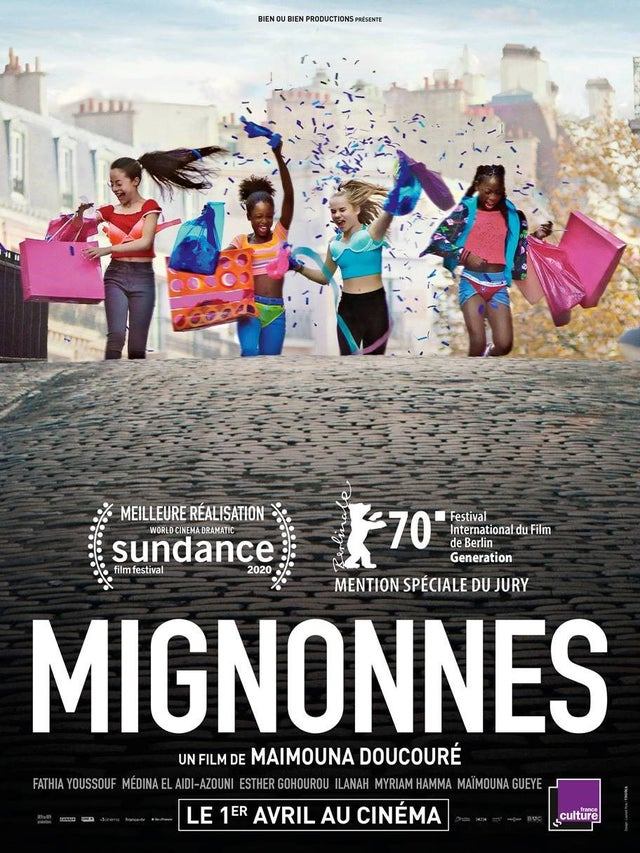
    There has been a vortex of fiery opinions on the controversial Netflix film “Cuties,” directed by French Senegalese Maimouna Maimouna Doucoure as her debut feature. I first heard of the movie while checking on Twitter feed filled with vehement subjective narratives divided -yet again-by the in-vogue trend of racially charged political views, which seems to blur the ambit of art for art’s sake appealing to the universal audience. But the unified viewpoint on the provocative representation of sexualized pre-adolescent girls weighs against the film’s thematic slogan of liberation from oppression, come what may.

    The movie has gained a cult status among self-professed progressive keyboard warriors, defenders of social inequality, when in fact, they are seldom in contact with the people they speak for or even get together in their daily lives. That said, the movie has become something of a visual manifesto of social activism, rather than a joy of cinematic experience that bestows a sensory pleasure and mental piquancy on viewers. No pornification and the misguided display of sexual oppression in children’s figures can be sublimated into art. Children are not a medium of political efficacy or a vehicle of personal ambition. The sexualization of children imitating adult acts is counter-productive in translating onto screen per se the socially disfranchised class consciousness in a highly secular society where the income level defines individuals’ worth. Little girls in skimpy attires, gyrating and eyeing in a way that makes them the cult of Ishtar at a Babylonian temple where girls offer their bodies to strange men for holy prostitution. Or shall I say it is a revisionist adaption of “Pretty Baby” or “Lolita” directed by a black woman whose directorial debut is undoubtedly impressive and provocative in the BLM wake?

    It amazes me to see people think themselves rational and reasonable when they are just self-professed egoists illustrated with their ostentatiously abstract view of social reality that seems to be out of touch with their own class. They regard “Cuties” as telltale cinematic radical feminism and socialism with a view to liberation by the parody of the reality. However, these intellectuals oversee or willfully ignore the truth about human nature: physical, rather than metaphysical; it is tactile rather than theoretical. Our faculty of mind is affected by the works of the senses and of the imaginations. To this effect, ‘Cuties” will adversely affect people’s judgment when their eyes direct toward the visual feast of perverted pleasure because the impulse, when arisen by stimuli, defeats Ego, voids the Superego, and commandeers false promise of liberation with rapacious sensuality.