Tag: movies

  • ‘The Wicker Man’ (1973) – film essay

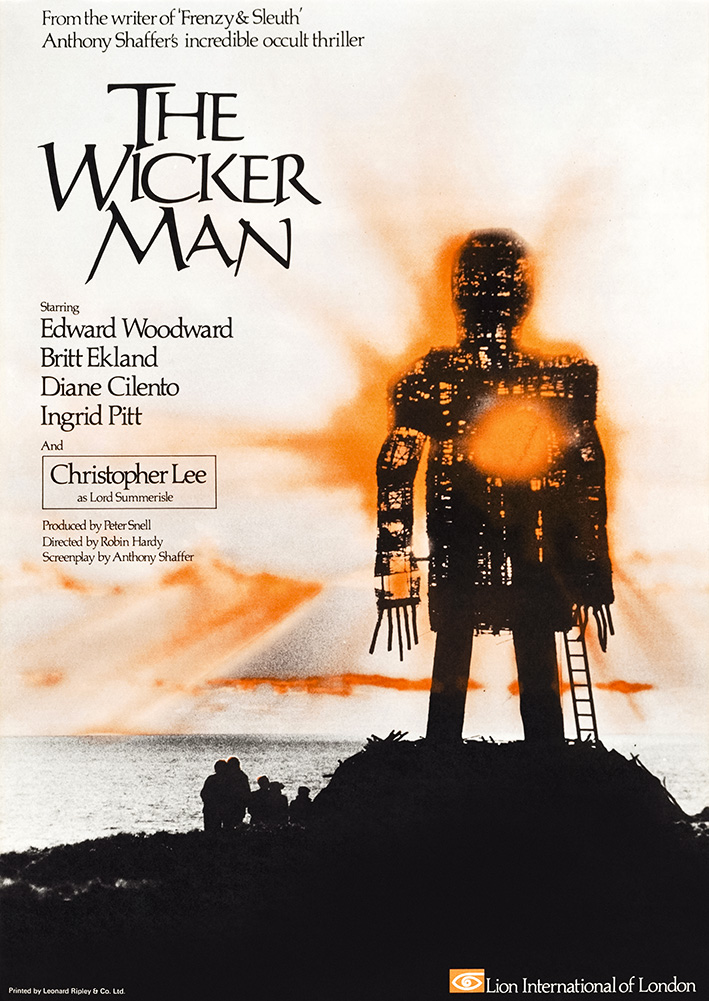
    The Wicker Man (1973) directed by Robin Hardy and starring Edward Woodward, Christopher Lee, Diane Cilento and Britt Ekland. Mesmerizing British horror with a screenplay by Anthony Shaffer and soundtrack by Paul Giovanni.

    The mentalese of Horror refers to an intense feeling of fear or shock that generates a feeling of repulsion, which is akin to ravaging terror to the sense. Consequently, horror films of our time, ranging from the 80s to the present, are filled with gory details of anatomical dissection with teeth and blood conjured up by the inflated creatures of scariest nightmares. That is why I have a soft spot for the 70s films of the supernatural phenomena with an intelligent storyline focused on the mysterious force of the beyond that subtly agitates our most primitive fear of the unknown, the uncertain, the unresolved entities lurking in between a thin line of reality.

    The Wicker Man (1973), directed by Robin Hardly, is a unique supernatural film that merits its name engraved on the obelisk of memorable films with the elements of folklore, belief system, music, and history unfolded in a vibrant kaleidoscope of scenes and scenery. It records fear in the ordinariness of landscape and people with the subtly suspected evil power lurking in the hidden alley of defenseless equilibrium. Such fear is not, therefore, forced upon the audience but tantalizing the anticipation of the sensation culminating in the extraordinary frisson of epileptic suspense blocked in a mental airlock.

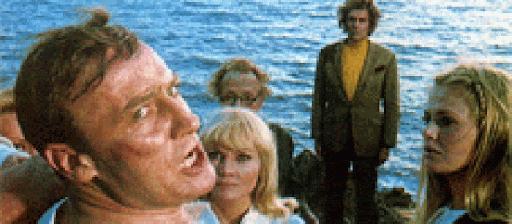
    The story begins when policeman Neil Howie from Mainland Scotland journeys to the remote island called Summerisle in search of a missing girl. A young devout Christian and virgin into the bargain, Howie soon discovers that the whole island is a pagan territory of old gods to whom the pleasant-looking islanders with names of flora practice a human sacrifice when crops fail for harvest. Besides, eroticism abounds with lovers in the field and the cemetery. Sensuality is ubiquitous and free because the instinctual desire is a ritual practice of appreciation of natural beauty, which elevates the licentiousness into sacredness by the innocently joyful acts of the actors. Howe sees himself in a cultural and religious twilight zone and thinks himself as a lone Christian hero, a sort of Nathaniel Hawthorn’s Young Goodman Brown figure stranded in the deep forest where Satanic Sabbath is taking place. Both characters distance themselves from the diabolical influence. They belong to the tribe of Wicker Man in the reality of supernatural power translated from their most deep-seated terror sealed in dreamscapes.
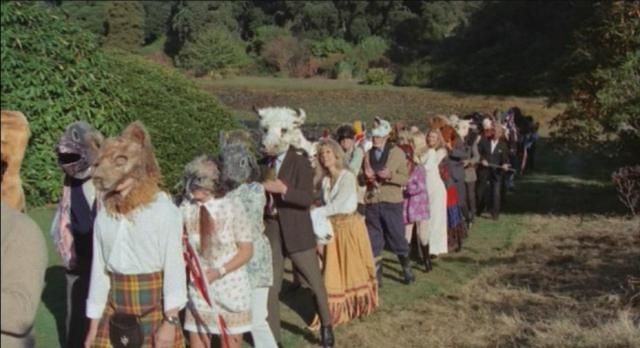
    The efficacy of music used for the insularity of the proudly pagan island away from the Christian mainland shines through the film against the idyllically pastoral scenery and its happy-looking islanders joyfully practicing everything contrary to contemporary norms and mores. They are all beautiful and peaceful in their ways and see Jesus as a loser flopping in changing the world. It is this habiliment of pleasant appearance that insidiously pervades a sense of fear without blatantly exploiting it. Perhaps, that is why some people find this film monotonous or unsatisfactory in their touchstone for the ecstatic sensation. For this reason, it is not a statement film pontificating about the significance of endangered paganism but a visual story that tells a legend of the Wicker Man. If you are a fan of the supernatural tale clear of buckets of blood and chops of mutilated bodies, you will find this film worth watching.

  • Jaws (1975) – film essay

    unnamed

    Often, we find an answer to an existential dilemma in a situation that defenestrates us to an ocean of choices. How to respond to a challenge may change the compass of the fortune’s wheel. Patience and fortitude conquer all things in the mastery of fear in defense of the sovereignty of life against inconveniences and losses in existential selfhood. In this regard, “Jaws” (1975), directed by Steven Spielberg, shows how Man fights against the Leviathan of Life with will and courage.

    1_0HJNIQoYXxy53pQsUJ3BOw

    “Jaws” is a cinematic feast of horror and adventure that brilliantly blurs the genre of the movie fashioned in minimalist realism as regards to the storyline, characters, and leitmotif. Only the thematic lynchpin is larger- than- life: a hybrid of sea monsters, ranging from Johan’s Big Fish to Herman Melville’s Moby Dick and to Ernest Hemingway’s Mako that loves to swim around by the teeming shore in New York. In fact, the peaceful resort seaboard of Amity in New York betrays our idea of a Great White Shark as a dweller of the Pacific Ocean where tall palm trees and suntanned surfers are part of the landscape. Also, the appearance and roles of the characters in the movie do not carry Hollywood glamour. Police chief Martin Brody (played by Roy Schneider) is a mild-mannered family man who has recently moved from New York City but has aquaphobia due to childhood trauma. Oceanographer Matt Hooper (played by Richard Dreyfuss) is a wealthy neurotic scientist who is determined to get the formidable man-eater. Seasoned fisherman Quint (played by Robert Shaw) has all the characteristics of the choicest seaman with bravado sealed in unhealed fear. The ad-hocish triumvirate team formed mutual allegiance to defeat the predator that not only threatens the lives of people in the water but also agitates their fears buried in the waves of minds’ mains. Jaws is the contender of life’s challenge that the three characters must face and fight.

    JawsR-lead

    Spielberg is ingenious in using music as a leitmotif in expressing the intensity of emotions in scenes that produces suspense held in abeyance of impending danger that tantalizes our ready expectation of sequential segments of the story. He uses a recurring theme without the grandiose scale of orchestral tunes, signaling the menacing presence of the predator lurking in the uneasy equanimity of ordinary leisure. Spielberg also defies casting high-billed actors and actresses to create the verisimilitude of reality. The result produces relatability of the characters placed in situations where the ordinary people might have behaved in such extraordinary circumstances, asking us what we would do if we were in the position.

    EB20000820REVIEWS088200301AR

    The stupendousness of the big predatory fish and the nuanced emotions of trepidation is akin to reading Hemingway’s The Old Man and the Sea, where the seasoned fisherman Santiago’s serenity amid the battle against the man-eater in the ocean alone testifies to the steadfastness of human will and courage. Jaws is a film version of it that says, “Man can be destroyed but cannot be conquered.” “Jaws” is a masterpiece cinema that has become a classic in the history of cinema with its legacy. Now I know why people love to watch it anew and again across the oceans.

    62e3d18b55aa1d84a75e4021e85035be

  • ‘Hawaii’ (1966) – film essay

    Hawaii_(film)

    Religion is a man-made institution that has a hierarchy with a set of values and norms as dictated in protocols. Even the reformation trailblazer Martin Luther, who protested against institutional abuses of the Church, is not entirely free from the criticism. Thus, I hold a healthy amount of preconception about a religious individual whose outwardly practice of faith incongruent with his or her inwardly reflection of personality, which is a view shared by Gandhi’s opinion attesting, “I admire Jesus, not the followers of his.” The movie “Hawaii” (1966), an American drama about Calvinist missionaries and the Hawaiian natives directed by George Roy Hill, echoes the sentiment conflated with the profundity of religious zeal and the nature of humanity laid bare in the clash of cultures.

    images

    The epic adventure story is structured around stern Calvinist Reverend Abner (played by Max von Sydow) with his faithful and delightful wife, Jerusha (played by Julie Andrews). Abner’s devotion to the religious cause at the urge of young Hawaiian prince Keoki at the Yale Divinity School brings them to the beautiful heathen islands of Hawaii. Abner is a good man disoriented in the realm of dreary religiosity and ethnocentrism. He sees the beauty in his wife Jerusha and the land of the people he comes to serve but averts his eyes from it with the Bible on the one hand. He keeps all-natural feelings of love, joy, sadness, and even jealousy locked in his puritanical castle of mind and preaches the ire of God that imbues the natives with fear, not love. One look at him will make a man like Captain Hoxworth (played by Richard Harris) infuriated with contempt for the loss of her beloved Jerusha to such ungainly zealot. Abner is, in short, a man of God and would like to think him so as the will of God he serves.

    Hawaii2

    Max Von Sydow’s skillful performance of the role of Abner invokes both contempt and sympathy for the character who does not know how to act in the intimacy of human relationships. It seems that Sydow is particularly good at playing a clergy as he also did as veteran Jesuit Father Merrin in “The Exorcist” (1973). The tall slim figure carries the intellectual air without the pretentiousness that separates him from the mass, giving him the likeness of a suffering philosopher in the wrong place at the wrong time. In playing the internal character in the external context of reality, Sydow does a beautifully nuanced job of capturing all the inner conflicting emotions ranging from joy to disappointment, to ire mixed with envy, and to sorrow. Thus, Abner’s follies and foibles are forgivable and, in fact, a medium for his new conversion into the religion of Charity, Hope, and Faith.

    MV5BMTc1MzEzMzU5MV5BMl5BanBnXkFtZTcwMjY5ODA0NA@@._V1_

    The movie portrays a realistic portrayal of a missionary living in a foreign land. The excellent Jesuit method of enculturation is possible only when he is celibate without a family to support. Then, even mastery of enculturation guarantees no eradication of racial and cultural pride of the actor. Perhaps, the wish of an entirely benign messenger of the Gospel is vain mother to the thought in the ideation of an impeccable man of God. The best thing is to accept our human fallibility by which the meaning of God and the purpose in life come to a realization. “Hawaii” shows us a process of conversion into the mystery of faith occurring not in the pagan natives but Reverend Abner in the beautiful kaleidoscope of nature’s sceneries and the people living in them. This movie deserves its merit on the list of great films of all time for the posteriority.

  • ‘Major Dundee’ (1965) – film essay

    download

    Ambition, made of sterner stuff, is the solder’s virtue that chooses gain, which darkens him. Bravery, comprised of nobler spirit, is the solder’s honor that elevates the soldier’s merit to the echelon of Homeric virtue of arete, the excellence of man leading to achieving a supernatural feat of heroism. An excellent soldier with arete knows no boundary of political, religious, social, or racial division and transcends the subjectivity of time. Major Dundee (1965), an American western film directed by Sam Peckinpah, cogently translates a balanced, objective equilibrium to test the validity of the soldiers’ virtues on the continuum of the Homeric arete in the background setting of the American Civil War.

    images

    Major Amos Charles Dundee of the Union Army (played by Charlton Heston) is a man of primitive ambition of glory sent to head a squalid prisoner-of-war camp in the New Mexico Territory. There he meets his former friend turned foe Confederate Captain Benjamin Tyreen (played by Richard Harris), who bears a grudge against Major Dundee for his betrayal of friendship. The notable tension between the two always remains even after their uneasy but necessary collaboration. Still, the esprit de corps consisting of unlikely but able-bodied characters sets to take out the Apache War Party in the new territories. Major Dundee sets out for the campaign not of pure divine patriotism but his glory despite his contentions with Captain Tyreen, who is more morally honorable and culturally sophisticated than himself.

    960full-major-dundee-screenshot

    It is Captain Tyreen, the renegade leader of the southern rebels who embodies the model of the arete, combined with moral integrity and soldierly fitness fabulously demonstrated in his effortlessly stylish habiliment. He is a dandy gentleman with decency and learning and an exemplary soldier and leader with justice and bravery. The refinement of civility as incarnate in the figure of Captain Tyreen is vividly contrasted with the rough intransigence of Major Dundee through the exterior appearances and actions of the two opposite characters. Even Captain Tyreen’s attitude toward the colored Union soldiers surpasses Major Dundee’s languid attitude toward his colored soldiers fighting for the same cause.

    images

    “Major Dundee” is a new type of western that abandons its common thematic elements consisting of noble savages, self-righteous lone gunslingers, the arch-villains, and beautiful women in pursuit. It is a new type of western that begins to be aware of the societal changes in the reflection of the nature of humanity with bold actions of likable bravado and admiring characters that are not circumscribed in the extreme ambit of norms and conventions with an artistic touch of vivid realism. Despite the rather unsatisfying commercial success of the film when it first came out, I find this film both entertaining and thoughtful in the historical background of the Civil War, showing true bravery equipped with respectful integrity of a person, friend or foe. There is no better sign of excellence in man than the bare demonstration of the act.

    download

  • ‘The Molly Maguires’ (1970) – film essay

    e867caa5-600f-4a39-8db8-3c6906605de3_1.383b15b9c449c0199f453c0ee7fa40e2

    There are two kinds of morality: one is speculative morality by which your thinking directs you to find the truth about the way things are. The other is practical morality, in which your eyes dictate you to find the applicability of your moral precepts to real-life situations. Since your ultimate end is happiness in life, you choose what deems to be reasonably advantageous means to achieve the purpose. Now here is where your moral dilemma arises from a crossroad of modus vivendi and modus operandi often directive of ego, the appetite of the sense, in the sovereign of free will beyond the boundary of Natural Law.

    the-molly-maguires-original-movie-still-n02-8x10-in-1970-martin-ritt-sean-connery

    The question of conditional morality in the face of life’s challenges is the thematic context of “The Molly Maguires” (1970), an American film directed by Martin Ritt. It is a drama of the secret society of Irish immigrant mineworkers led by Jack Kehoe (played by Sean Connery) battling to better conditions in the Irish immigrant community of coal miners in the 1870’s Pennsylvania. The story begins when Pinkerton Detective James McParlan (played by Richard Harris), employed to infiltrate the organization, arrives at the poverty-stricken mining village. McParlan himself is also an Irish immigrant from Ulster and sees his fellow compatriots slaving away at the worst working conditions in the gate of a subterranean pit of anthracite with the danger of death always lurking in all wither. The proverb of “Blood is thicker than water” may have smeared in his tortured muscles because McParlan can not be immune from the anger and vengeance that binds the Mollies together as he shares his sweats and laughs with them. The Mollies sabotage the means of production in their ingeniously effective ways and even kill the members of the powers that be if necessary, to deliver their resentment to the oppressors of failed wishes and frustrated dreams in the necessity of meager livelihood. The biblical message of “Refrain from anger, turn from wrath. Do not fret” rings hollow in the selfishness of leisured life that has no regard for those whose fortune’s malice overthrows their states.

    MOLLYMAGUIRESLC1

    The moral dilemma in which McParlan finds himself results from a clash of his id, speculative intellect, and ego, practical intellect, that binds him in the natural inclination to happiness, which he intends to obtain from a love of his landlady and prestige of social standing. Besides, as the fellowship of the Mollies enters a realm of his newfound fraternity of brotherhood, McParlan forces himself to subject natural human feelings to a rationalization of thinking under the sway of the reason for success. He sets his virtue by compromising moral precepts to realistic means of life in choosing what deems to be the most practical way of achieving his ultimate ends via a chariot of ambition without the charioteer.

    images

    This film does not turn out to be a grand social movie that its synopsis seems to present but a compelling drama of human nature and actions in contemplation of what constitutes moral actions. This film is not only about the Irish immigrant coal miners but also about those whose precious dreams and wishes are hard to materialize in the harsh reality of life. You will see that values are variable, and that virtue is a settled way of performing what you think right. Perhaps, Oscar Wile is right in saying, “Morality, like art, means drawing a line someplace.” Nevertheless, one thing is sure that you cannot do an immoral act for moral reasons, even if every human action is just as such right, come what may.

    download

  • ‘Planet of the Apes (1968)’ – film essay

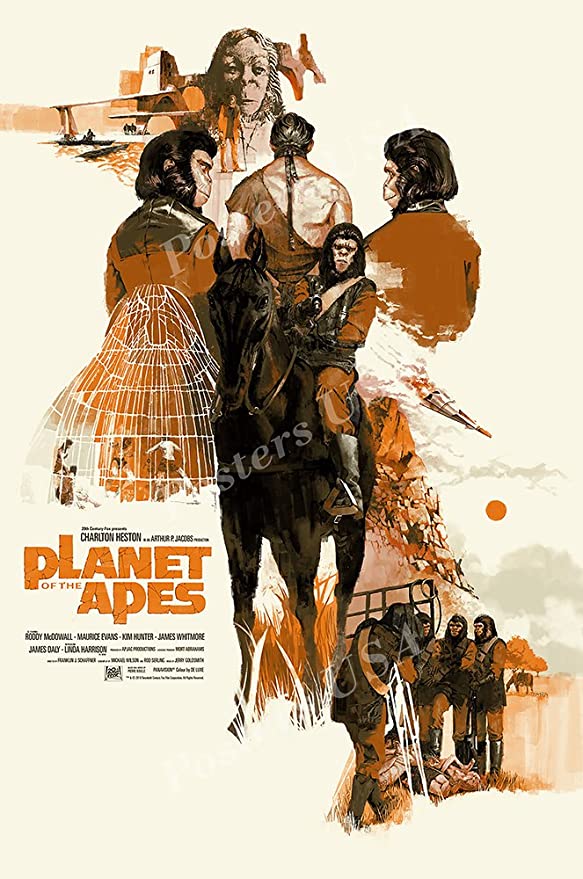
    71oadYuBx+L._AC_SY879_

    Imagine this. You are the only person marooned somewhere far away from your world. You have all heard the dystopian chimes of every brave new world from George Orwell’s totalitarian society of 1984 to William Golding’s terrifying Lord of Flies and Aldous Huxley’s eponymously prophetic Brave New World. Yet, you have not realized how it would be like until you enter such a world alone. The world you face now is the amalgamation of all the worlds described above that exist in the selfishness of lettered cases. What would be your impulsive action toward the stupendousness of the incredible event? Besides, what if your best work a la your reason and hope as good as your pride and hubris can present turns out to be a grand Faux pas?

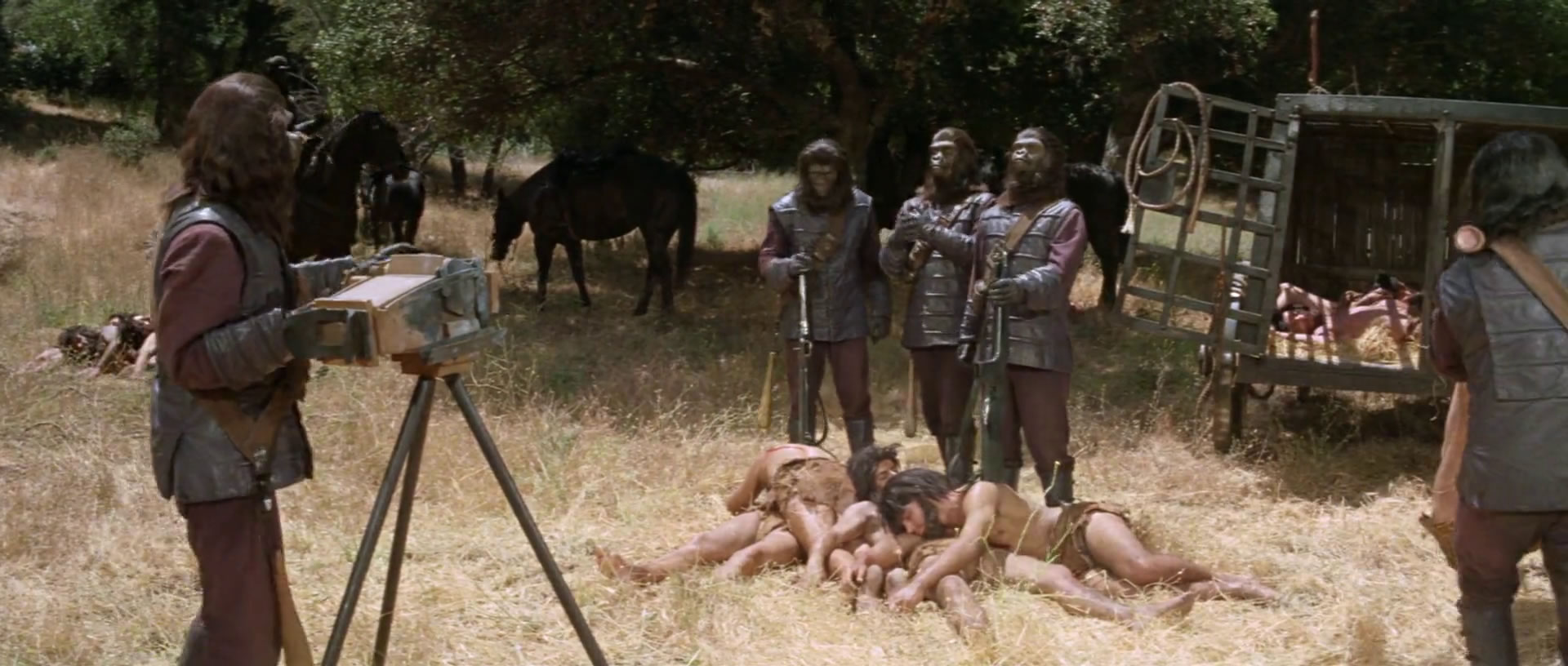
    planet-of-the-apes-soldiers-pose

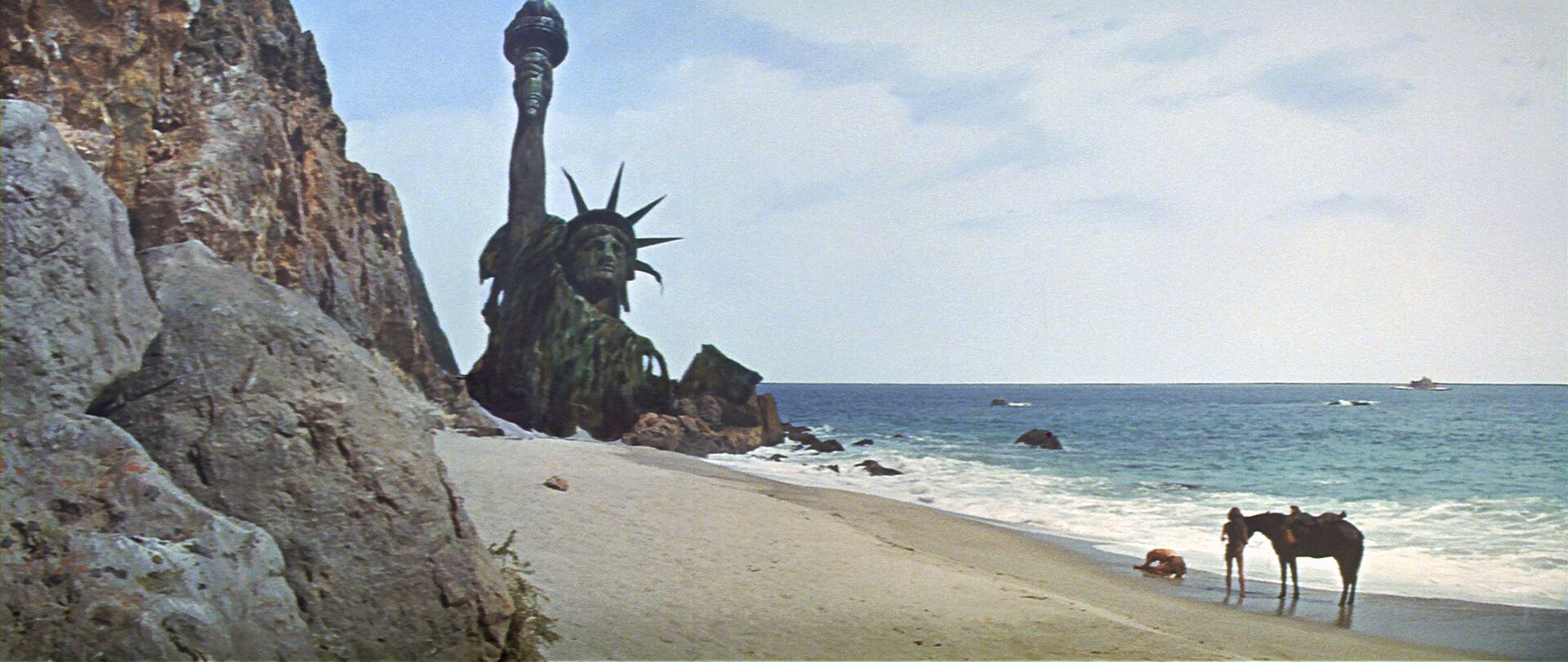
    Planet of the Apes (1968), directed by Franklin J. Schaffner, is a crackling Sci-Fi movie that translates the dystopian thematic of a world in a phantasmagorical display of primal humans and intelligent primates that upends the existing hierarchy of creations and reconstructs the fundamental doctrines of the Origin of Species. It is an advanced society of chimpanzees and orangutans that talk smart, which the 20th-century American astronaut George Taylor (played by Charlton Heston) is hard to stomach with human pride. He then becomes a deformed kind of human slave of the apes in this new brave world where from their God to a prison guard, the apes are the master of the humans. What a wonder this brave new world, that has such apes in it.

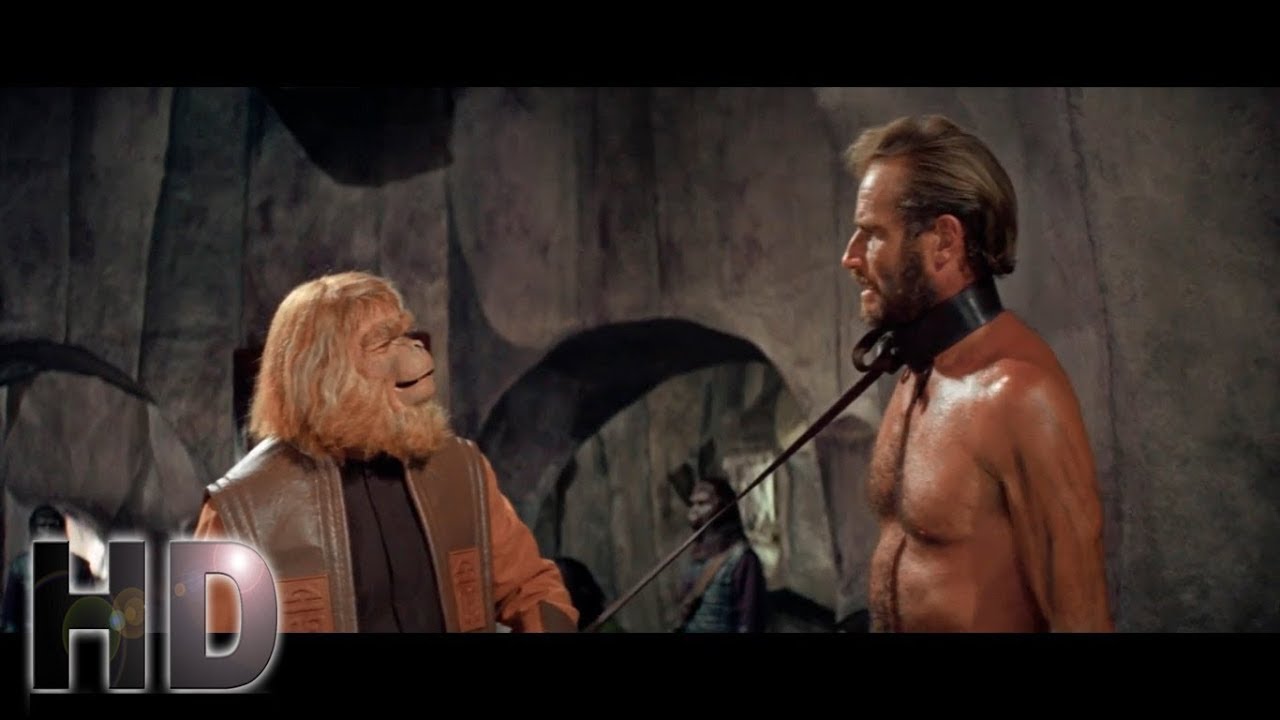
    maxresdefault

    The movie is a visually compelling Juvenalian satire that mercilessly but humorously mocks the targeted human hubris that brings about its destruction in an attempt to replace the role of God. The thinking, talking, and even kissing apes mirror the social behaviors that are no more particular to humans who fail to preserve humankind’s prerogatives by the self-destruction of humanity from catastrophic nuclear war. Taylor embodies the hubris in the optimistic veneer of audacious hope that he will find a way home, to his kinds. It is this hubris that causes the downfall of humankind and himself. He hunts desire and hopes together in the constant resistance against the apes despite the impossibility of returning to earth with the defunct spaceship. His faith is nothing but a waking dream, haughty defiance against the reality, dreaming an awareness of odds in his favor.

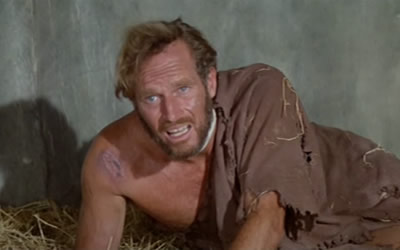
    charltonhestonplanetoftheapesgeorgetaylor

    The figure of Taylor is one oddly fascinating mixture of panache and wit, sarcasm, and heart, wrapped in the likeliness of Shakespeare’s Macbeth. Talyor represents dramas of human characters wonderfully packed in the imposing physique, towering the apes as if to manifest the sovereignty of man over the apes. The pathos of Taylor in the climactic denouement of the movie reveals his frailty in recognization of the collapsed grand narratives of hope, disillusioned wishes, and shattered dreams as uttered by Macbeth: “Life is but a walking shadow, a poor player that struts and frets his hour upon the stage. And then is heard no more. It is a tale told by an idiot, full of sound and fury, signifying nothing.” Will this be an empty outcry of failed civilization, echoing the collective pathos of the human consciousness for the corrupt world at its heart?

    planet-apes-ending