Tag: movies

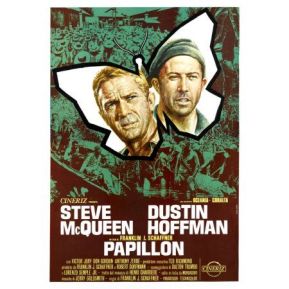
  • ‘Papillon (1973)’ – film review

    6daa8bbc3333a0740fe55fecd9b16439

    From Shakespeare to Hemingway, the resilient human spirit rising above life’s challenges is always a high human drama. Nietzsche said: “What does not kill you only makes you stronger.” This paean to a noble human spirit against the existential strains of life has been a paramount theme for masterpieces of arts, especially in literature and cinema appealing to the universal audiences, touching the deepest valleys of human consciousness and pulling at the heartstrings all in a polyphony of humanity. It is this very reason that Papillon (1973), directed by Franklin J. Schaffner, still evokes ineffable inspiration and indelible impression so powerfully displayed on the screen with the authenticity of a true story of a real-life character.

    DagmEaVV4AENyWE

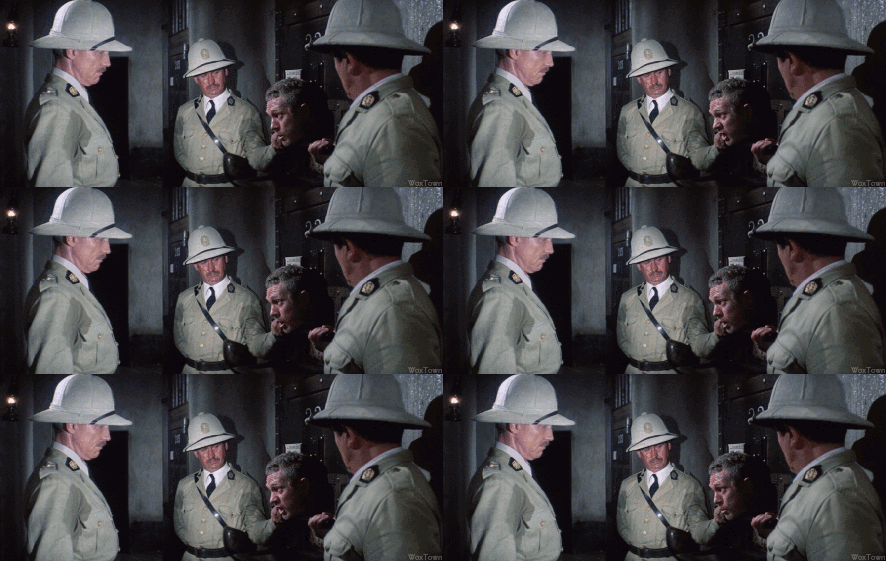
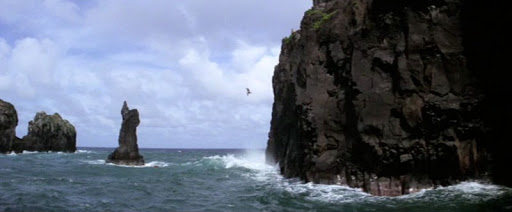
    Papillon, a butterfly in French, is a nickname of Henri Charriere (played by Steve McQueen), a safe-cracker framed for having murdered a pimp because he has a butterfly tattoo on his chest. Henri was sentenced to life imprisonment in French Guiana and decides to escape from the man-made inferno where death is the only way out of the murderous maltreatment doubled with dysentery and hard labor, which makes me wonder if the Nazis, especially Himmler and his ilk of the Final Solution, adapted the French Penal Colony system into concentration camps during World War II. And yet, Papillon’s will to escape and to live as a free man supersede the hellish daily realities fraught with endlessly cruel labor, inhumane solitary confinements, prolonged starvation, and deaths of his fellow inmates, all of which seem to conspire to break his will to live to conform to the totalitarianism of inhumanity in the name of punishment of his crime that he didn’t commit. Escape after escape, hope against hope, and betrayal after betrayal is fortune’s malice trying to overthrow his sovereign state. Still, Papillon’s sturdy mind exceeds the compass of her will, even if it takes him to the furious watery main and the murderous cliff in the Devil’s Island.
    source

    The stellar performance of Steve McQueen, playing the role of Henri Charriere, renders a sense of verisimilitude of the character and the story so convincingly that you dive into his emotions without realizing a boundary between a screen and yourself. Upon watching the film, you feel that you have contracted a severe biological strain of Stockholm syndrome with the Henri character on whose biography the film is based, which bestows the power of reality and the authenticity of truth upon your mind. Steve McQueen, often referred to as the King of Uber Cool, is excellent in portraying the convict with extraordinary feats of endurance and rebellion against the totalitarian penal system that wrongly imprisons his free spirit. McQueen’s abilities as a character actor shine when he commands his presence in a way that seems wholly authentic without overt gestures and contrived charisma but with his eyes sparkling even in the filthy prison uniform that speaks a thousand words surrounding him like a radiant halo as a token for his strong will to freedom.

    This film is, in a way, reminiscent of Ernest Hemingway’s ‘The Old Man and the Sea’ in terms of old Santiago’s indomitable burst of pep to fight the shark appropriating his hard-won big fish. The old man might look feeble and weak in comparison with the mighty power of the vast sea. Still, it is his will to win the battle against the force of sea that is sublimated into a victory of the human spirit with the resounding  dictum of this feat of humanity: “Man can be conquered, but cannot be destroyed.” That’s what comes to my mind while watching this excellent film about an ordinary human being with an extraordinary power of will to freedom. Hamlet uttered: “To be or not to be, that is the question.” To Henri Charriere, such contemplation is a meaningless echo of a defeatist. Henri is more of Macbeth working out on his plan for life as a free man with stubborn courage: “We fail! But screw your courage to the sticking-place, And we’ll not fail.” And Lo! Did he not take the advice of the Bard! And so, splendidly!
    unnamed

    Author’s Note: I watched the film last night and was immersed in the characters and the story. Not that I am an admirer of Steve McQueen but that he’s one of the greatest actors who vanished like a meteor gives a special meaning to this film. It is one of the best performances in his acting career and will always linger in our hearts. 

  • 150 miles to El Dorado

    foggy-morning-in-a-meadow

    Judy begins to feel like a whimsical paramour leaving for a new object of love at sight. What was pleasingly solitary in nature seems to be prolonged isolation from the world that Judy so wanted to escape, and her coquettish dalliance with the wild rugged nature is no longer wanted as the Sun is slowly moving westerly to cave into the Evening Star and the Moon. It might be still early for calling it a day to you with your weekend frolics still left to re-calibrate your kicks for another week, but it’s late for Judy, who would rather mourn for a passing of the last day of a weekend at home than rebel against it in a frenzy of nocturnal bacchanalian orgy elsewhere outside the comforts of her den. Now the anxiety holds a grip on her, and she begins to fret, and the miasma of the ill-feelings begins to effuse the uneasiness to Nena who begins to whimper and to the accidental trio of strangers observing every move that this girl makes as they are nearing to her, part perplexed, part bewildered. What a curious mixture of emotions she puts on her face! Rufus, Ben, and Raphael become curiouser and curiouser as they get nearer to the porcelain doll in their eyes.

    ‘Howdy! Lass! What are you doing here?’ Raphael, the talker, begins the talking. ‘We are headed west toward Los Adios Mountain. Do you know where it is?’ Judy incredulously looks up the mounted man with a mustache and a sombrero and thinks that he looks very convincingly like Sancho Panza, Don Quixote’s faithful servant. There’s something about the man, thinks Judy. The diction, the ambiance, and the deportment are rather anachronistic or incongruous even to the social media era where people flag their selfies on the internet as if they were on a popularity contest and compete for likes and comments as emotional security and collateral for their forged so-called self-confidence. My Dear Reader, don’t misunderstand that it’s immoral for you to hang your beautiful pictures on a digital platform for popular admiration. It’s just that this act of self-promotion serves as a springboard for testing your marketability and your mobility as a result of winning the competition for likability based upon looks and frivolous comments that do not mean much, much at all. Amid this train of thought, Judy despite being agitated by the lateness of the time warms to this amiable man and decides to answer him. ‘This is Wildwood Park, sir. Los Adios Mountain is 150 miles away from here. And you should go northward. You are far off from your destination.’ It is a sight to behold – the face of Raphael grimaced partly and bewildered partly, all in dazzling chemistry of emotions that is hard to describe. So much so that this display of indescribable human emotions on Raphael mollifies Nena’s agitation and puts the tempestuous waves of her emotions at ease. Now Judy feels refreshed and happy.

    Rufus and Ben are within an earshot of this dialogue between the pretty lass and Raphael and cannot but be disappointed by the fact that they are once again on the wrong track, which seems to be forever chasing after a phantom of the dead Union soldier obfuscating them lest they should find where the buried treasure is. Where’s the Aztec gold? When can they find it? Maybe the miasma of frustration and agitation that hovered over Judy must have been transmitted to Rufus and Ben on the stead because now their faces mirror the symptoms of a malady of broken hearts. Then suddenly, Nena now recovered from the plague of uneasiness, springs forward and wags its chubby tail and bark toward the firmament as if it were looking at a thing invisible to your and my human eyes. Nena keeps barking and looking at the puzzled crowd behind as though it were trying to explain to them that there is something in the air that only Nena can see but we can’t see. ‘What is it, Nena? What do you see?’ Judy knows that dogs and cats can see supernatural things because their eyes can look through the souls of the living and ghosts of the dead. Judy tries to follow the direction where Nena is looking and barking and sees a gossamer trace of haze vanishing into the air like the vestige of a propeller plane soon to be effaced across the skies. The more Judy tries to scrutinize it, the faster it disappears. And Nena keeps barking, looking in front of the curious crowd. What is it that the dog is seeing?

  • ‘Bad Ben – The Way In (2019)’, by Nigel Bach – review

    I don’t know why I am drawn to this bold middle-aged curmudgeon named Tom Riley, who fashions himself to be a self-professed paranormal investigator. While I liked the Mandela Effect one about which I even wrote because of its refreshingly ingenious takes on a genre of horror film, it never occurred to me that I would be contracted with the uncanny charm of this ireful, cloddish Jersey man’s fiasco of battles with a legion of nine demons commandeering in the same beautiful house to no end. That’s the gist of this hilariously polished offbeat film about Tom Riley, the alter ego of director Nigel Bach, and that’s why he returns with his own legion of demons in this ‘Bad Ben – the Way in.’

    In this installment, Riley goes back to the haunted house of which he was a former owner to rid the demons thereof at the request of a new owner before the family moves in. He accepts the offer for none other than an existential need of money, hence the repertoire of his wrestling with the demons begins: the toy girls still wreak havoc of already edgy borderline neurotic Riley with seven other demons, introducing Clown and Voodoo dolls that look irritatingly menacing without diabolic charisma. Well, that’s the point of this new film by Bach, who seems to render the ambiance of irony fused with comedy and tragedy, which is another stance on life itself according to his view of reality. At least, that is what Bach visualizes his way of weltanschauung with go-aheaditiveness and hubris even though the motives are for lucrative rewards. But then who will pillory the man in need when we all need it to get by?

    Mad, bad and bold Riley is here again to do his job, and he does it with his trademark dour humor and grumpy face that render his continuing saga of ghost-busting all the more realistic and business-like, which is all the more refreshing and oddly attractive and highly addictive. If you do not like the person of Riley for his ill-temper at his worst, you can appreciate his resilience, optimism, and courage against the forces of evil at his best. This is Bach’s finest hour.

  • what i liked about “Upstairs, Downstairs” (TV Series) – review


    upstairs-downstairs

    A long time ago, somewhere in London there lived two families under one grand roof: one lived in downstairs, and the other upstairs, all behaving according to their modus vivendi that seemed only natural to accept without a shadow of doubt to contest. It was the time when a lady would require a parlor maid to groom her in her boudoir and a butler would act in the capacity of a superintendent of a household as well as a messenger incognito for his master. But to dismiss those “good old days” as an obsolete oppressive social institution is to deny the memories of those cherished in their everyday lives as portrayed unforgettably in a British television drama series, “Upstairs, Downstairs” (1971).

    This is not like the overhyped “Downton Abbey” in the sense that the plot of the story involves these two opposite classes (the benevolent master and the content servant) in a very fashionable mansion. Contrarywise, this classic series of “Upstairs, Downstairs” is rich with feelings and thoughts that make the viewer empathetic to the characters and absorbed into each episode for the reason that they touch upon the heart of the viewer, let alone the fine performance of the cast and the elegant screenplay attuned to all.  On the point of purely subjective note, the character of Rose Buck, an excellent parlor maid who is beautiful both inside and outside is what gives to the ethos of the drama: she is all humanity, showing compassion toward the eccentric but tragic footman Alfred who was shunned from others. Notwithstanding her goodness and beauty, Rose is unlucky with her personal life, ever finding herself out of reach of love like the forlorn nymph Echo. Her character is universally appealing regardless of time, ethnicity, and class. And Butler Hudson may seem prejudiced and stuffy, but he has a heart, too. In fact, he’s a good father figure: stern but fair, strict but kind. No one in Downstairs is sacked coldly, come what may.

    The residents of Upstairs are not your proverbial snobbish English aristocratic family whose haughtiness and zero regard for their subordinates are something to be enshrined in the temple of Marxism; the Bellamy family, headed by the magnanimous and highly respectful viscount Richard Bellamy, who was originally a son of a country parson, were all too human, woven into intricate relationships of love and loneliness, betrayal and misunderstanding. To put it in a nutshell, the Bellamys are a paradigm of noblesse oblige. No wonder Butler Hudson and his Downstairs family show such a high, heartfelt regard for the family like they are their real family.

    If you are accustomed to the splendid British manor scenes that typify your image of the classic British class distinctions, then you might find this drama rather antiquated and boring as a period drama. But those of you who value stories and characters, not to mention fine scripts, this will feast your senses and sensibilities. What’s more, you don’t have to be British to enjoy this excellent drama that fuses historical backgrounds as factual grounds of each episode with interesting and empathetic characters with stories to tell which we could relate to one way or another. Good dramas are contemporaneous with any period of times, theirs and ours. 

    Author’s Note: Since the acquisition of a Kindle Fire, I have been wallowing in the enjoyment of quality TV shows of the past. People ask me why I am hooked on the dramas or comedy shows of the bygone eras before my coming to the world. But as I firmly believe that pathos of humankind are transcendent of time and universal in every culture, my sensibilities channel me to the dramas that know no boundary of zeitgeists. I am open to all good TV shows so long as they are worth the viewing. 

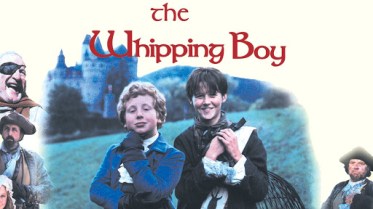
  • ‘Prince Brat and the Whipping Boy (TV Movie 1994)’ – review

    unnamed
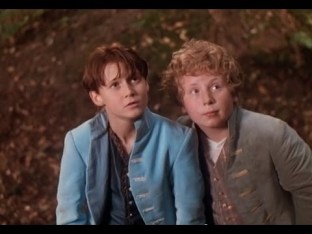
    The Unlikely Duo in tandem

    Tales of mistaken or traded identities between either by the irony of fate or whimsical voluntary submission bespeak our desire of realizing dreams and desires at one fell swoop without drudgery of going through rules and conformations of social norms and mores. From The Prince and the Pauper to Cinderella and to The Trading Places, the basic story lines contextualize the instant social mobility of improving one’s social status and the essence of human nature laid bare in dealing with new milieus. But forget the verbiage of latent sociological theory and academic analysis because after all, we all know that such wish for rapid social escalation is only father to the thought. So why not continue to enjoy the world of wishful thinking entertainingly translated on screen for the sake of art, such as this delightful movie Prince Brat and the Whipping Boy (AKA The Whipping Boy)?

    hqdefault
    Guess who’s the prince?

    The movie has a charm of Mark Twain’s The Prince and the Pauper and The Adventures of Tom Sawyer, giving it impression of a spin-off from the two stories in all likelihood. But what makes it worth the viewing are the characters whom you find difficult to dislike and the detailed background setting that conjure up the spirit of the time and bring out the personalities of the characters delightfully rendered on screen. The young prince is not really a brat but a lonely child who needs love and attention from his ever busy king father. The prince’s impudent pranks are signals for sending emotional SOS to the king who puts the security of his kingdom before the attention to his one and only child. And there’s a young rat-catcher about the same age as the prince who accidentally finds himself as a whipping boy for the unhappy prince. What happens next is the gem of this movie in their subconscious quest for their cherished ends, their treasures at heart, through their eventful journey together in the unlikely duo of the prince and his whipping boy.

    All in all, it is a little cute feel-good movie intended for all ages about what’s really important in life. Yes, we all may know the answer to it, but it really touches us in the denouement of the movie, leaving us with a feeling of warmth, affection, and jolliness, chiming the emotional, sentimental bells of our childlike imagoes. That said, if you want a movie that takes you away from your worries and sadness arising out of living adult life for some time, this movie might do good for you as it did for me for the day.