Tag: Nonfiction

  • the sentence

    Order tends toward disorder. Chaos stalks feeble efforts. Normal is not default, and sadness is nature. I see it all as a gift of the fates that I have to grin and bear with stoic charm like a Sisyphus rolling up the boulder on a hill in Hades. So much so for the morning’s episode that shadows the day’s remains.

    I had to cancel my counseling appointment for tomorrow at 7:00 pm due to training at my new prospective job after work. Should I have rescheduled it instead of canceling? Anyway, the counselor could have asked about such an option if she had been a caring and considerate licensed listener. Writing usually shows a person’s character, however brief it is, as proven by my text communication with her earlier today. Her response was curt and short with a timbre of haste, artful courtesy of an empty reply to her client. I know it because of my divine ability to look through people’s psyche by the mode of speech, writing, or twitching facial muscles. Depending on how you look at it, you can call it a blessing or cursing, but I call it nature. For what’s worth, my extrasensory perception tells me that it’s high time that I prepared a slow parting with her with the pain of disappointment and resentment for betrayal.

    In retrospect, she has never provided me her feedback on my mental state since the onset of counseling sessions. Once I had asked her opinion, she was obliged to tell me reluctantly that I had traumas due to an unfavorable family environment, interacting with lots of missed lucky opportunities and debauched aspirations. Then was heard no more. My understanding of counseling is active communication with constructive feedback about the client’s mental state and what to do. However, she only listened, smiled, said goodbye, and continued. Although my heart is weeping for the loss of paid listener whom I could turn to for talks, sorrow will dissipate into the currents of time. Goodbye to you, Ms. A____. I may see and talk to you again, but my spirit will not welcome you again with all my heart and all my mind.

  • friends or foes?

    I always feel guilty about leaving Toro alone when I go to work. It would be best to add another feline companion, but the existential circumstance prevents it. Hence the flying tenants moved in. The new parakeets are Sera (Blue) and Pippi (Green), who demonstrate that the phrase “eats like a bird” should be part of the Woke movement of removal. They are also unknowingly clever and perceptive that I wonder if they are secretly enchanted humans serving their time for misdeeds till the spell is cast off.

    Toro, aka the Curious Cat, also seems to know that Sera and Pippi are a joint force to be reckoned with, so to speak, but nevertheless shows undeterred attention to every move the duo takes with feline discreetness. Timid but curious, Toro wants to touch the moving feathers of parakeets whenever they come out of the cage for sauntering. But the birds show no fear but irritation against the unwanted friendship from the lonely feline. Poor Toro. I console him after Sera pecks his little nose with her dainty beak in protest against his pawed touch. However, my original purpose of making the birds friends with Toro is still valid because both Sera and Pippi do not altogether repulse Toro with wild shrieks of danger.

    I hope the birds will be warm to Toro as time goes by till we move to a bigger and better place to live so that I can bring another cat to the family.

    Twinkle, emerald dreaming,
    Love flocks in blue and green,
    Curiosity stalks love’s gathering,
    Loneliness emboldens attempting
    touch of love fluttering in longing.

  • TikTok, the Orphaned Marmoset’s Story

    TikTok rescued from a miserable life courtesy of BBC.

    Whether it is my animal zodiac sign of Tiger that is believed to be highly incompatible with anyone with that of monkey, let me just clarify that monkeys are my least favorite animals. However, that doesn’t mean that I should not feel strongly about the article from a recent issue of BBC Wildlife about the U.K.’s primate trade accompanied by the title photo of the baby marmoset named TikTok. Call it milk of human kindness. I cannot just leave the pages closed and forget about it as a piece of memory. The images and words still haunt me, which prompts an enduring reckoning, resulting in writing this essay.

    The primate trade in the U.K. and here in the States evokes the human history of slavery. Under slavery, human lives were counted as chattel, and the families were continuously disintegrated because of volatile trade-offs. On the same token, keeping primates as pets seems no less different from colonialists or slave owners whose eyes were set upon the exotic physical attributes of the people they subordinated.

    The article has also taken me to my brief research into the U.S. primate trade with the following facts: in 2012, 19 states, including California, where I live, had outright bans on private monkey ownership. The primates are considered a threat to wildlife and public safety and health because their habitats and nature are not agreeable to our environment despite our conventional knowledge of primates as the closest to our species lost in the evolution tree. Come to think of it, the idea of “Planet of Apes” has a point in reversing the directions of gaze from humans to apes, and vice versa, showing us why the two species could not cohabitate by confining them in the opposite environments.

    We should not think of animals as live toys or ornaments that will satisfy our whimsical, capricious tastes. From pets to wildlife, animals are not our property but companions. I know it for sure when I feel a little heart of my cat Toro sleeping at my feet.

  • autocracy of writing

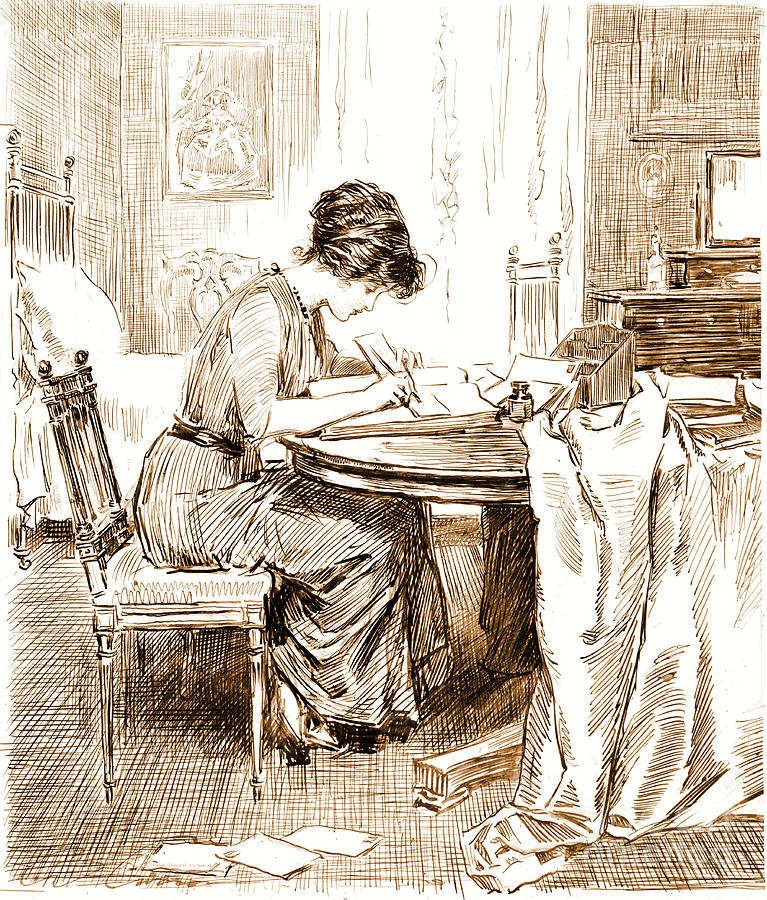
    Woman Writing Letters 1911

    As a hobbyist blogger with the temerity to write in English on her blog, it irks me to realize the pomposity of literature and the hypocrisy of classicism, especially in American writers. Take, for example, my ambivalent opinion on the book introduction about ‘Essays Two’ by Lydia Davis I read from the 12/11/2021 issue of The New York Times Book Review.

    Knowing another language certainly gives you a unique insight into the world with a subtle but more caring timbre of sentiment and reason common to all human creatures. But the magical ability is not a prerogative of a brilliant professional translator of a high literate/academic echelon. Davis’s Marcel Proust is undoubtedly impressive, but Proust is not for everybody, showing that the literati excludes general readers. On the other hand, there are would-be, potential, or unclaimed writers whose narratives are to be reckoned with, from a refugee to an immigrant. Take Nobel Literature Prize winners Abdulrazak Gurnah (2021) and Kazuo Ishiguro (2017). Both used English as their literary tool to articulate their narratives with the images seen through their poetic “third eye” sense.

    Davis and other translators-turned writers speak languages of the same language family. So, of course, the perspectives are similar. But, in all fairness, I want to see writers (and former translators) of all social classes writing about subject elements of particular views from a platform where they become universalizing, striking the chords of our human life. Isn’t that what literature is about?

  • ‘Maid: Hard Work, Low Pay, and a Mother’s Will to Survive by Stephanie Land’ – book review

    My rating: 5 of 5 stars

    A good memoir amid the detritus of in-vogue memoirs is a gemstone, like a treasure island descried by a weary sailor. Marry Ralph Waldo Emerson’s appreciation of travails of life as the best teachers with George Orwell’s no-nonsense realistic credo for writing. You will see that Stephanie Land’s eternal spirit fills the pages at the expense of her will with a sense of purpose and a tenacious grasp on intellectual superiority. It was a tide in her affair Stephanie Land was waiting while wiping a stranger’s dirty toilet bowel due to fortune’s malice or, shall I say, whims and caprice of the supreme beings?

    Land’s memoir applies to Orwell’s tenets of “Why Am I Writing?” In it, four elements of writing are (1) aesthetic purposes, (2) sheer egoism, (3) political/social purposes, and (4) historical record. Contrary to most reviews of focusing the book on her single parenthood, I deem it to be her testament to her self-worth in a society where external achievement determines your character. In fact, Americans have a Calvinistic cast of minds in a puritanical cultural foundation that poverty is a priori resultant from laziness and that it should be dealt with scorn. American Catholics are not altogether generous because of John F. Kennedy’s adage to Americans: “Ask not what your county can do for you… ask what you can do for your country….” Land feels the hostility of the skewed, confused, maligned conservatism masqueraded as patriotism in an ordinary landscape of daily life. In writing, she potently and victoriously wields her pride smothered in want of bread and roof with her daughter.

    Memoirs of rags-to-riches are thought to inspire readers with can-do attitudes fused with a dangerous combination of ephemeral hope and flippant desire that Thucydides warned of his progeny. However, they are self-treaties of achievements, usually despite the biological or sociological plane, and almost always with people who help them achieve their goals. Jeannette Walls of The Glass Castle was from a low-income family, but her family was loving, and she had scholarships and went to Barnard College and became a journalist. Hillbilly Elegy was touching, but the poor white boy who had a loving mother went to Yale and became a lawyer. But Stephanie Land is intelligent and honest, down-to-earth, and her issues and circumstances are more existential and relatable than what the mentioned above have famously accounted. Forget the dialectic classicism, forget the social reform, forget the right for single parenthood. It’s all about Stephanie Land’s dignity, her right to be happy, her yearning to be what she wants to be. So be it ever the nominative determinism, and it’s in the name. All who have the name Stephanie have that feistiness. Well done, Stephanie!


    View all my reviews

  • forget sister acts

    This week’s The New York Times Book review of The Trouble with White Women by Kyla Schuller manifests dishearteningly why Feminism has failed to gain unanimous consent of the universal womanhood across social barriers, cultural differences, and physical planes. Instead, it reinforces my conviction that Feminism is a league of an ambitious, level-headed elite group of women (Black or White) pretermitting the rights and positions of all ordinary women who live in the periphery of their ambitious political constituency academic appellation.

    The review written by Joan Morgan, the director of the Center for Black Visual Culture at NYU, who is also a black feminist scholar, is an intricately academic and emotionally trenchant antithesis to white Feminism, so to speak, by the women, of the privileged, for the white. Morgan’s review itself has no regard for a general reader in mind with her magnificently intellectual syntax and abstruse syllogism, which makes on a par with the hypocritical white feminists she and her league of feminists criticize. Feminism, in its unalloyed sense of justice and the most original idea of essence, should belong neither to ideology politics nor to academy subjects that cater to a specific group of demographic populations. Thus non-white (the adjectives I am so hesitant to use because of its coarse way of describing a person) women should not feel betrayed because many white women who professed themselves to be feminists voted for blocking the Texas law that bans abortions after six weeks of pregnancy. The stance of pro-choice is not a proverbial character of white conservative Christian women because, as a matter of fact, Hispanics, African-Americans are more religiously and culturally more conservative than their counterparts. I am not here to debate my stance on abortion, but historically, the procedure has been motivated and campaigned by the eugenic inclination to curb a particular “undesirable” population, no matter how intelligently the proponents of abortion would try to persuade you. That said, wouldn’t it odd to even contemplate the recent Texas case as a manifest token of White Feminism v. Non-white Feminism?

    Perhaps it’s an American thing that inherently discombobulates a simple truth. Outside the States, sisterhood among the members of Female Species is comparatively felt and celebrated, albeit without a total transcendence of racial and cultural discrimination, which you can’t eradicate in this world. But America is New World, and it still lacks a coherent force that unifies peoples. That is why Feminism, which should be only one with capital “F,” has so many subsidiaries, resulting in Morgan’s review of the book by another feminist (a Rutgers University professor who happens to be a white woman). Such is my true feeling about my reading of the review, but it should not be yours.