Tag: Nonfiction

  • Believe it or not

    The morbidity of cannibalism is often associated with the primitive obscure tribes living on a faraway island or in the deepest heart of the darkest jungle over the other side of our comparatively Atlantis-like world. To put it more blatantly trenchant, it was a practice of uncivilized non-European races reported by European explorers of the age of voyage until the mid-twentieth century. As it is always dark under the lamp, the idea of eating human flash ipso facto overrides the fact of consuming it in one way or another yet purposefully. The evidence is the existence of mummia in recent Europe.

    Mummia was human flesh or excretions mostly imported from the Middle East as medicinal palliatives in apothecaries’ shops, a prototype of a modern-day drugstore. It was made of desiccated human corpse matter from mummified bodies and ingested for its supposed healing powers in the same sense that the ancient Egyptians and Romans crushed up mice to put on cavities to cure toothaches. Farther to the east, people believed that the leg of a fresh corpse was to be a panacea to any incurable disease during the Chosen Dynasty in Korea. For mummia in the 16th and 17th Europe, it was recently deceased bodies of executed criminals, a youth of violent death, or unfortunate socially disfranchised. The former two kinds are the flash of passion that rushed thru the veins to the brain, resulting from a sudden frenzy of instantaneously leashed sensations. Such corpses were believed to possess magical feeling power akin to aphrodisiac or love potion, aka pharmaka, enveloped in an Egon spell with the aid of a demon. Mummia of the corpse was famous for abscesses, carbuncles, menstrual problems, and pestilence, all of which are directly or indirectly connected to blood circulation-related illness.

    Believe it or not, the presence of mummia was conspicuous in British pharmaceutical catalogs until 1908. I think some people might have bought it without the information about the source. But even if they knew about it, if the poor people could not afford to see the doctors cure their painful illness, the abomination of a corpse would yield to the need. The intuitive preference of judgment by resemblance applies to the folk religion, especially in the form of magic or witchcraft to which ordinary villagers often had recourse in need of an instant response to their wishes without rigidity and arrogance of the church putting dogmas before hearts. So, I like to believe that the use of mummia was on the same continuum. After all, it was different from Druids, Mayans, and Aztecs, who killed humans in the most defiantly brutal ways as sacrifices to their devil gods.

  • Living boys’ adventure tales: a-ha at the Wiltern, Los Angeles, CA, on April 8th, 2022

    a-ha from left Magne Furuholmen (Keyboards), Morten Harket (Vocals), and Pal Waaktaar-Savoy (Guitars)

    After the two years beneath the gray clouds of the pandemic, a-ha came to town with the halos of seasoned veteran wizards of pop music. They entered the world’s music scene like brilliant comets four decades ago with the catchy hit ‘Take on Me’ and continued to travel into the universe all the more brilliantly over time. Indeed, age could not wither them away, nor custom could stale their musical alchemy.

    With the opening song ‘Sycamore Leaves’ with its characteristic guitar riffs and heavy drum beats, a-ha came on the stage. The fans were instantly enchanted by their charismatic appearances, like the Three Musketeers of Pop. Magne Furuholmen (Keyboards), Morten Harket (Vocals), and Paul Waaktaar-Savoy (Guitars) were now veterans of the music industry. They were all methodically professional and effortlessly entertaining to present what the fans wanted the most by coming to their concert after two bleak lockdown years. They gave all they got by mainly playing the songs from the first and second albums because those two albums were best known and loved by their US-based fans. The result was the touchy-feely, feel-good atmosphere of the concert. Viktor E. Frankl, the father of Logotherapy, acknowledged that the moments of pleasure in appreciating arts equal the happiness in finding the meaning of life. That night at the Wiltern, a-ha gave the happy moments of life to their fans as their music pleased our senses and sensibilities, allying our passion for what our existential life outside the concert hall had brought to us just for the moments.

    Music is the most potent magic in conjuring up the memories in the phantasmagorical display of images of the misty past, vivid and vital, all adrift then aglow in condensed particular energy, becoming nostalgia in the sweet melancholy of romantic solitude manifested in the music of a-ha. Looking at the audience, I thought that we all came to go back to our days of innocence when the pleasure of listening to a-ha’s music on the radio and records required no dreadful existential worries of the world. That night at the Wiltern, a-ha transported us back to our memory lane in the soft sweet melodies of the past and then to the present, lingering in the heart’s windows and staying in its garden forever with the triumphant ‘Take on Me’ ending on a high note in the encore.

  • Untitled

    Is anyone out there? Although I feel like a lonely gauche scientist who incessantly sends a life signal to an extraterrestrial being across the galaxies, I am again sending another life signal in writing to express that I am still alive. So, if any accidental reader stumbles on this blog, welcome.

    I once read that magic is the power of manipulating nature without knowing the source of the force. If so, then the magic I once possessed is lost, making me good for nothing. But, as observed by Francis Bacon, I am talking about the faculty of cognition that affects linguistic abilities for speech that makes a ready person, reading a full person, and writing an exact person. The satisfaction of reason, the power of expression aspiring to development of the spirit, which gave me a content elbow room, vanished into the curtains of the past, leaving me to fend for provisional existence of survival in the most primitive way. It reminds me of Viktor E. Frankl’s memories in concentration camps, where many of the inmates dissipated into the hopelessness of abandoning themselves in the stupendousness of tragedies.

    I always think of my life as an inspiration fit for a documentary film about a working-class immigrant single woman who painstakingly tries to preserve a sense of purpose in life with a grasp on intellectual aspiration. Doing so makes her compare to the burgeoning careers of her peers, who seem to be of a higher station in life than she. I am not trying to play a typecast role of proverbial fatalist or unreconstructed defeatist caviling at the happiness of others as a result of their hard work and abilities to do wonders. That would be a callous and sordid a priori judgment for her unfortunately cursed life. Didn’t Shakespeare also say that our lives are governed by our stars? Didn’t Cicero believe that our lives can be read by avian augury? Come to think of it, Francis Bacon and Isaac Newton also believed in and engaged in alchemy craft. The commonality of the examples described above illustrates that there are more things in heaven and earth than are dreamt in your philosophy about the world, whatever it may be.

  • ‘American Made: What happens to people when work disappears’ by Farah Stockman

    Howard Stern might not be everyone’s friend, but he’s got the point when he articulated in his radio show a decade ago that what was eating out this great nation was not racism but classicism. The recent unionization movements among service industry workers, such as Amazon and Starbucks, indicate that the demand for the dignity of workers supersedes ideological politics that discourage the growth of American esprit de corps. American Made is a story about this American class consciousness that will put together disintegrated tesserae of the collective national mosaic made by the people and events.

    The author follows the three principal workers of the now-defunct Rexnord Factory in Indiana: Wally, a black man whose diligence and amiability promoted him to a coveted position in the factory; Shannon, a single white woman with an abusive partner taking pride herself in being a wielder, a male-dominated position, and John whose fortitude and conscience never left him during his long, turbulent unemployment days. Sex and race don’t matter when it comes to losing their jobs, let alone loving them because the importance of what they do for a living and the need for their livelihood are their commonalities that build a sense of camaraderie. In fact, class solidarity can never be achieved if class consciousness is transcendent of racial prejudice to be achieved first. Unfortunately, the antebellum wealthy southern plantation owners systematically destroyed the poor white laborers’ wage systems by replacing their workforce with the free labor of African slaves, thus planting the seeds of racial hatred in the hearts of the poor whites. The vicious cycle of devious racialized economic caste system has since firmly constituted the American economic system ethos under “Separated but Equal.” The author sees the absurdities of American society as a result of the disintegrated labor movements primarily due to racial prejudices, which is why worker’s solidarity is a way forward to achieve national unity.

    Wally, Shannon, and John are not just working-class Americans. The author emphasizes differentiating her elite station characterized by expensive private higher education and intellectual “profession” from those with hardened coarse hands of workers in the factory. They are ordinary people, a majority of Americans making up this country, ubiquitous in the landscape of our daily life. They are expendable at the whims and caprice of profit-driven employers who see their employees as no more than living at-will automates. That is what happened to the Rexnord Factory, where workers’ lives were no less than collateral damage for a successful operational mission of the company.

    At times, the author positions herself as a conscientious liberal intellectual, paralleling her fortunate environment with her unfortunate subjects. Perhaps it’s an occupational hazard for being an NYT journalist. Nevertheless, the book succeeds in pointing out a lack of national cohesion resulting from the politicization of racial rhetorics into bipartisan ideology, which falls by the wayside of solidarity of labor movement overcoming institutionalized racial prejudices. Recently, I have read that the workers of Starbucks and Amazon in New York have voted to unionize. American Made is a story about them and us too because the dignity of work makes us who we are.

  • Wonderful Adventures of Mary Seacole in Many Lands – book review

    What we know as history takes a winning and popular side reflecting mass psychology because a winner writes it, and it is our human nature to win. Perhaps that is why the glare of Florence Nightingale eclipses the brilliance of Mary Seacole. Written in 1857, Wonderful Adventures of Mary Seacole in Many Lands is a vivid autobiographical touchy-feely account of one remarkable Mary Seacole who resisted herself being invisible and manifested her existence with a story to tell.

    Seacole was a healer and entrepreneur born of a Scottish father and a Jamaican mother. Her medicinal knowledge and business acumen distinguished her from her contemporary peers. They often showed discrediting and unappreciative regard to such achievements and her person, not least because of their bias. Seacole identified herself as a British with pride and patriotism, especially when confronting Americans whom she observed to be egregiously racists with unruly behaviors. She took pride in feminine propriety and cultural sophistication, which made her look audaciously flamboyant to those who determined to ignore her virtue, one of whom was Florence Nightingale.

    In the wake of the Crimean War, Seacole was imbued with the flames of patriotism and humanity to volunteer for Nightingale’s nurse corps. However, Nightingale and her nurses kept refusing her aspiration, calling her intention dubious because they suspected her setting up the famous Seacole’s Hotel at the battlefield by providing sensual comfort to soldiers with her women employees. Her noble courage and abundant charity were unreciprocated in non-institutionalized racist 19th-century zeitgeist that paved the way to systematic 20th-century scientific racism. It perceived non-white women as no more than sexual subjects of imprudence and passion. Being dark, Seacole was not seen for the flame of Nightingale’s candles.

    Had it not been for Nightingale, would Seacole have been regarded as the angel of the Crimean War? Or was it because of Nightingale that Seacole became known? I think that would be harsh undue judgment for both great women. It would be a typical social dynamic of praising one to the detriment of the other. Yet, I believe Seacole deserves recognition for what she did and who she was worth noting. To me, Seacole embodies Queen Elizabeth I’s Tilbury Address that though she might have a woman’s body, she had a king’s stomach and heart. That says it.

  • Nobody’s property

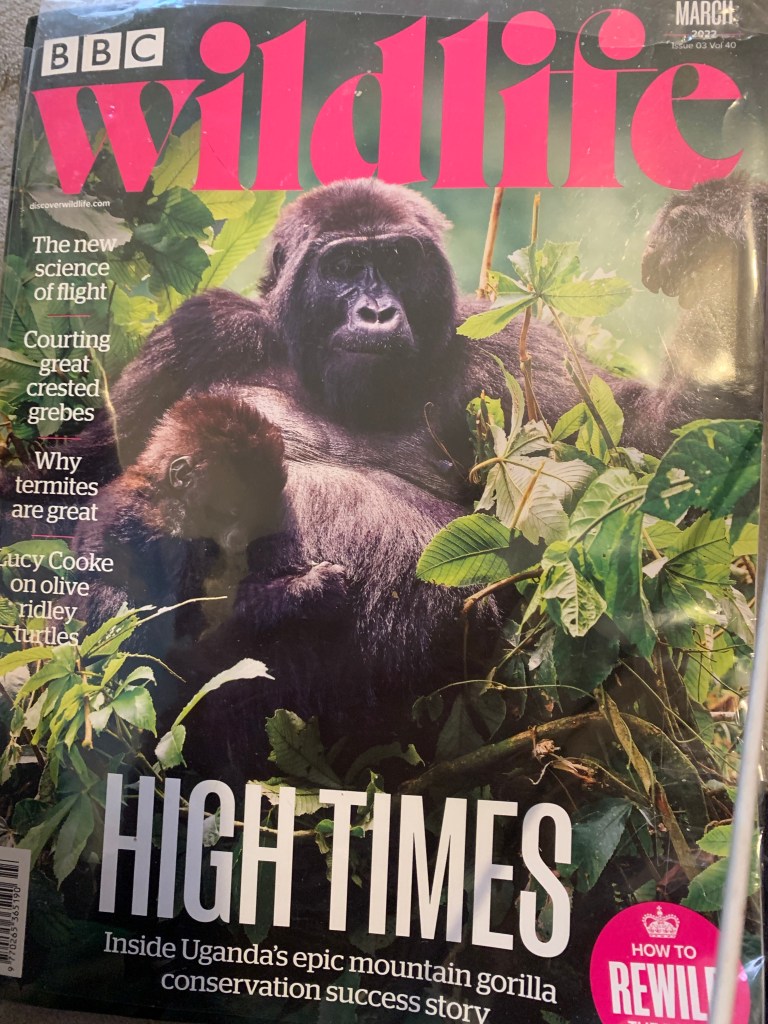
    My letter to the editor of BBC Wildlife was printed in this month’s issue. I wrote about my impression of an illegal primate trade in the UK featured on a previous issue, which reminded me of human slavery where lives were treated as expendable chattel.

    The story of TikTok tells the marmoset baby monkey who was rescued from a miserable life as a pet in a birdcage abandoned alone. It raised awareness of animal abuse in mental and physical forms as pets at the mercy of whims and caprice of the owners, who regard them as nothing more than live, expendable toys. TikTok was first bought for its exotic beauty and rarity in the illegal animal market, but the owner soon lost interest in the new pet, forsaking due care owed to him. When TikTok was finally rescued, he was in a state of fear and shock, so he was put together with another rescued older marmoset who cared for him like his son. Looking at the two photos, I thought of enslaved people who were sold off like commodities seen from Alex Haley’s heartrending saga of American black family “Roots.” In the story, humans are perceived and treated as nothing more than talking stock, and therefore the most basic unit of society in the form of family is unthinkable for slaves. Mothers and children are forcefully separated, let alone husbands and wives are for mating purposes only to multiply the population. Such comparison is not a stretch of the imagination but a sheer fact of association.

    We have come a long way to the progress of the mind regarding human rights and animal rights compared to the past, or we like to think it so. Perhaps it is our animal instinct to dominate what is perceived as controllable. That is why a force of civilization in the form of rules and law is essential to reining in our unruly and crude id in implementing reason as a way to prevent cruelty against lives. But such rationalism should always complement humanism lest we should act on the mechanism of the mind. And let us not forget that those who mistreat animals also do the same to their human brethren.