Forgotten Peoples of the Ancient World by Philip Matyszak
My rating: 5 of 5 stars
Forty years on our evolutionary scale amounts to a microsecond on our twenty-four biological clock. The millennium years, even Before Christ, feel so alienly anachronistic from our modern sensibility. The sense of time builds upon a fundamental element of consciousness as molded into a collective emotional experience as contemporary citizens of the world, just as the peoples of the misty pasts we tend to overlook felt the same for the civilizations before them. They were the titans of the pre-ancient Egyptian, Greek, and Roman cultures. They, like the evening sun in its full declination, vanished in the hazy horizons of the time, still dazzling with its scarlet hues of radiating halo lingering on the remnants of human civilization to this date.
Forgotten peoples of the Ancient World is an anthology of the peoples whose feeling of permanence and importance in their time of the world betrayed their fates buried in the tires of cities beneath the earth and returned to the dust in the winds. To illustrate, Akkadians were the first builders of the empire who elevated the Akkadian language to the cultural and political lingua franca of the late Bronze Age. The Hyksos were outstanding charioteers, and their military prowess benefitted their Egyptian subjects. The Bactrian culture was a delightful mixture of Greek and Indian heritages, while the Vandals gave a final, fatal blow to the already destabilized Roman Empire. These peoples affected the celebrity civilizations we are automatically associated with the ancient civilizations. As to why the forgotten peoples became peripheral in our realm of ancient history, it is a question of the immanence of the supreme being in the universe. However, what is certain is that they were the torch-bearers of the first civilizations passing the torch of society they had ignited and encouraged to the next in a relay run of collective humanity.
The book is an excellent anthology of these ancient peoples in chronological order from east to west, showing how civilizations expanded from the cradle across the plains, mountains, deserts, and seas to the Isles of Britons. Divided into the eras marking the epochal changes of history, Matyszak succinctly elucidates the peoples of the misty past with his trademark witty ways of describing historical contexts. Moreover, the exciting historical trivia resurrects the eras in a phantasmagorical display of faces and places.
To conclude, the stories about the forgotten peoples attest to the objectivity of truth applicable to any time of history that that which is here was there, has been, and will be. All things must pass, and there is nothing new under the sun. Our sense of time and culture is a likeness of truth, a matrix-like reality, because our facility is rather instinctive than reasoning, rather physical than metaphysical. Who would have known that people 100 years later now would think our time and us in this time anachronistic and antediluvian? Herodotus felt the same when he arrived in Egypt and saw the wondrous pyramids in awe that the people before his generations had built. So did the Babylonian king, who dug and discovered artifacts from centuries ago. We have seen the hungry ocean gain advantage of the kingdom of the shore, and the firm soil win of the watery main, increase with loss and loss with increase. The forgotten peoples and we are time’s subjects, and time bids are gone.
View all my reviews
Tag: Nonfiction
-
‘Forgotten Peoples of the Ancient World’, by Philip Matyszak
-
Becoming the Ancient Mariner
Think. What do Kubler-Ross Model of Five Stages of Grief, Spinoza’s Amore Dei, Nietzsche’s Amore Feti, and Logotherapy have in common? That it is all about how to accept fate as it is, the stupendousness of truth, the veracity of suffering as a way of finding meaning in what you have to endure. Religion is a poetic way of describing the suffering, a burden of life, another intuitive interpretation of looking at the pain and yielding to it as a destiny. But it is easier to be said than to be done when your spirit is plunged at the lowest tide of life and sees no hope of descrying a land of opportunities in the doldrums. And it betrays your noble hope and begins to shoot albatrosses then become like the Samuel Taylor Coleridge’s Ancient Mariner. Or so it seems.
All the wise in the civilization of humanities told their progeny the reason for bearing the unbearable because they all knew about one thing: that’s what life was about. It is what it is and will be as long as humans exist. In his theory about Amore Feti, Nietzsche posited that evil was what prevents us from striving toward our goals and that power to affirm what we have is the only way to move on in the sailing of life, however terrible it would be. Knowledge and its pursuit are a must-have to shape an essential feature of our consciousness to keep sanity in contextualizing the whys and wherefores of struggles in life with an active mind. It is indeed a noble psychological philosophy, but what about people who are not intellectual as the renowned philosopher but just ordinary earthlings stuck in the existential backwaters of the rut? Did Nietzsche, Spinoza, or Kubler-Ross have to worry about livelihood? Well, Spinoza was a watchmaker, so he should have known something about making a living, but still, he was autonomous in pursuing his intellectual Elysium without having to worry about the burdens of daily life.
I had not known what the darkest night of the soul until now, and the fear of losing myself has finally descended upon me. C.K Charleston said madness is when you lose yourself except for your reason. Shakespeare quipped when nature, being oppressed, commands the mind to suffer with the body, and you would become derailed from norms of behavior and faculty of cognition. I prefer the latter version of madness because if I lose myself, then it should be all or nothing for the complete liberation of my spirit from the chains of enslavement. From insidious dominion of gaslighting to dreadful ascribed duties that I didn’t choose, to endless sadness, and cursed estrangement, I now know why the Ancient Mariner killed the sacred albatrosses whom seamen believed to be the souls of the dead sailors. Ire for the delusion of hope, retribution for the betrayal of faith, and freedom from the pain of unrealized dreams drove the Ancient Mariner to execute the birds and then become one of them, never returning but always wandering.
If only. I long for a sign, omen or augury, that can show me what to do or if I can break this vicious circle of unhappiness that has been cursed on me. No Ouija Board. Why? I don’t trust bargaining with the Devil because he, as a henchman of Satan, is like an angel of God in reaping as many souls as possible to build their armies or populate their cities of the Beyond. Then why do I find myself pleading to God by default while writing this for not ignoring me when he prefers the beautiful and the pleasant? Spinoza and Nietzsche, I beseech you to persuade me with your best reasonings of why I should believe that life is still worth living!
-
‘Leonardo and the Last Supper’ by Ross King
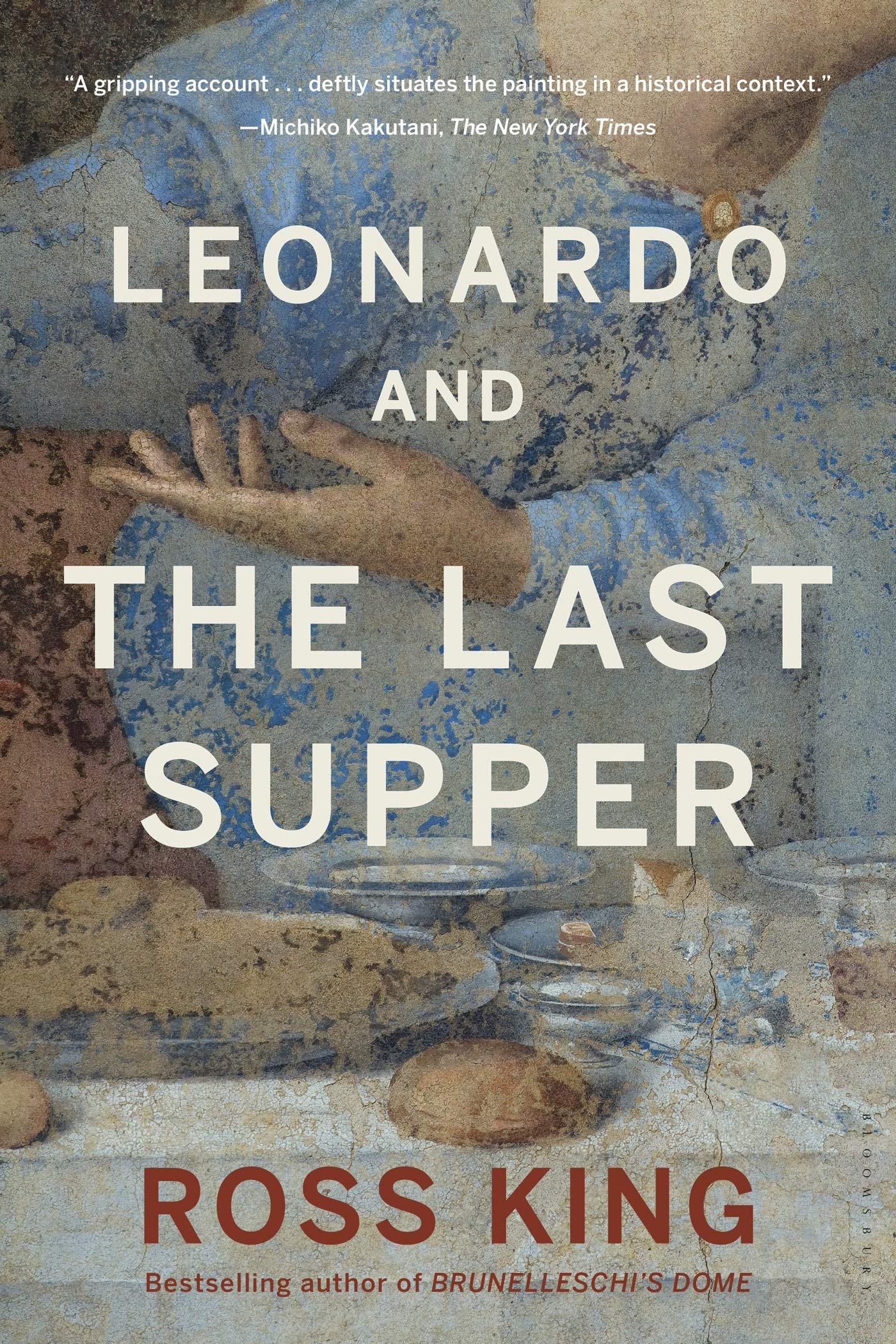
Leonardo and the Last Supper by Ross King
My rating: 5 of 5 stars
I still remember an excellent replica of Leonardo da Vinci’s “The Last Supper” in a tapestry form decorated on the wall of our family living room when I was in elementary school. It was vast and expansive, nonetheless magnificent with the profoundness of the scene and the expressions on the faces in it – all wondrous and curious. Now a stream of time has flown, but the first impression of the art still has become one of the stars in my heart’s constellation. “Leonardo and the Last Supper” by Ross King has added to the star the brilliance with telling stories resurrecting the atmosphere of the time and vividness of the people surrounding the creation and the creator of the art.
The book is an alluring admixture of the biography of Leonardo da Vinci and the history of religion, politics, society, and culture; all skillfully swirled in Ross’s skillful narrative account of the person of da Vinci and his work of the Last Supper. The narrative becomes more intriguing as the chapters replete with entertainingly informative tidbits about personal accounts of people related to da Vinci and involved in creating the Last Supper are ascending. The story’s construction follows how Samuel Johnson, the 18th-century English essayist and cultural critic, narrated the lives of poets in The Lives of the Poets, composed of a brief biography of a poet, personal accounts of the poet, and professional criticism of the works. The reader will first be acquainted with da Vinci’s biographic backgrounds: parents, a well-to-do lawyer father, and a middle eastern slave mother owned by his father’s household. Da Vinci’s struggle with spelling and even harder Latin education, his fabrication of engineering work experience in his curriculum vitae to obtain a military commissioned engineer post when coming to Milan from Tuscany, and so forth. All the information is a telltale factor contributing to da Vinci’s rise to celebrity in his and our times, which is refreshingly informative to learn that the perennial polymath also had feet of clay with colors of contrast.
Ross is a scholar with a novelist’s magic wand to wield his writing power, casting a spell on facts and knowledge with the beauty of language and ease of words, captivating readers of all life paths with gripping narrative skills. Another book of his “Michelangelo and the Pope’s Ceiling,” which I enjoyed with great pleasure, is a helpful companion to this book because both Michelangelo and da Vinci were contemporaries, working under their aristocratic patronage the recalcitrant spirits of creative souls in reins of livelihood. It would also be an excellent reference to the social statuses of artists at that time. Contrary to our images of free-spirited artists, artists worked for their royal, ecclesiastical, and wealthy employers. Therefore, they were not free to choose subject matters for their works because their bosses wanted their power and fame to become works of art, as it were.
Upon closing the last page of Leonardo and the Last Supper, I reminded myself of Plato’s aesthetic definition. Art is a copy of Form, the perfect, pristine Beauty. It exists only in Idea because da Vinci was also a scientist and an engineer who found perfect beauty in perfect numerical and astronomical elements of nature. However, da Vinci’s Last Supper is filled with pathos, contrasts of human emotions, paradoxes of light and dark, good and evil, constantly changing, never-ending. Da Vinci was a humanist, finding beauty in nature as it is, regardless of perfect Form, the unattainable ideal that is out of touch. One thing right about Plato’s Aesthetics is that art is at best entertainment and at worst a dangerous illusion. That says it. Leonardo’s Last Supper is a soul’s entertainment, and so is Ross’s “Leonardo and the Last Supper.”
View all my reviews -
’24 Hours in Ancient Rome: A Day in the Life of the People Who Lived There’, by Philip Matyszak – book review
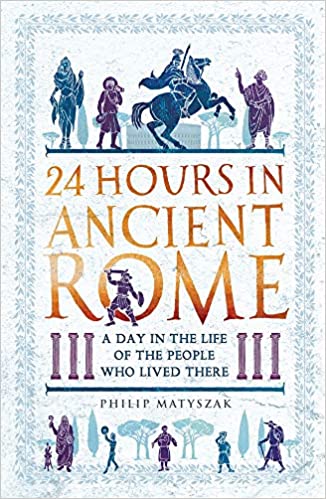
24 Hours in Ancient Rome: A Day in the Life of the People Who Lived There by Philip Matyszak
My rating: 5 of 5 stars
Edgar Allan Poe once declared that the great was Greece, and the grandeur was Rome. Rome was not built a day, and it lasted from Before Christ to His After for one thousand years. All roads led to Rome, and foreigners, colonials, and slaves from the foes all wanted to become the proud citizens of the Roman Empire. So, what then was it like living in Rome at its glorious prime? 24 Hours in Ancient Rome: A Day in the Life of People Who Lived There by Philip Matyszak comes and carries off the reader in a time coach to Rome’s grandeur and invites to the daily lives of people there with magic of words.
In terms of residential mode, there were more apartment buildings than villas and detached houses in Rome. Apartments called Insulas had 3 or 4 floors with no bathrooms, which means the residents dumped their bodily wastes in buckets out of their windows to the ground any time of day or night when unfortunate passer-byes would have unpleasant surprise showers from above. The apartment residents were city dwellers whose livelihood was arranged from a fish-stroll attendant to a nightguard, an unlicensed independent prostitute, and primarily others diligent and savvy waiting their time and luck to come.
Rome was a practical society with shrewd politicians and powerful merchants/tradespeople. For instance, baking was a highly respectful and lucrative trade because not many people had well-equipped kitchens to cook or bake at home. Bakers had their representatives in the Senate who would lobby for the increase in the price of bread. Still, the Senate often rejected the proposal because the Senate knew that keeping the price low would maintain social stability lest the mass should not cause riots for a change of living cost.On the other hand, unless they were aristocratic or wealthy mercantile families, women had not many choices of working with desirable pay or respect. They worked in shops or stalls densely concentrated outside the walls of Circus Maximus for long, arduous hours, wrestling between the demands placed upon their tasks at work and home without due respect. Slave women’s employment was mainly hairdressing and doing domestic chores. It was less rewarding and more demanding, contingent upon the mercy of their lustful masters and the whims and caprice of their mistresses, who often inflicted cruel punishment on their slaves if they irked their temper and nerves on a bad day.
Rome was undoubtedly splendid in its dominance and influence consummate with the longevity, but only a few privileged basked in the sunshine of grandeur. Matyszak puts together tesserae in the mosaic of ordinary Ancient Roman lives in this leisurely entertaining and academically stimulating narrative of his part-fictional and part-actual characters. It becomes each vignette comprising a collective story of human life that still rings true to our modern life. Matyszak is an unlikely, uncommon historian whose erudition and humor put him on the same pedestal as renowned historians, such as Tacitus, Plutarch, Herodotus, and Paul Johnson. His narrative styles are engagingly knowledgeable but surprisingly personable, collapsing a great divide of time between the people of the past and the present reader.Rome was no fun when you had none. Nevertheless, for all that’s worth, Rome was a great city rich in ethnic and cultural diversity. The energy of urbanity made Rome all the more vivacious and vibrant, bustling with businesses and people, and created opportunities for better lives. It is no surprise that Poe thought highly of Rome.
View all my reviews -
Portrait of Vincent Van Gogh
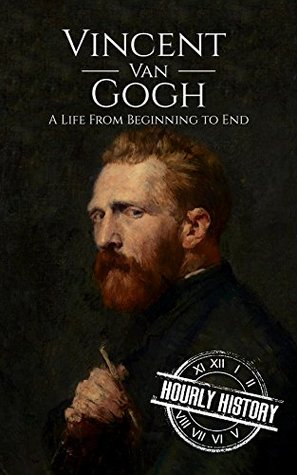
Vincent van Gogh: A Life From Beginning to End by Hourly History
My rating: 5 of 5 stars
Here’s a portrait of a man who hated being alone yet found freedom when alone. Austere yet bohemian, religious yet autonomous, he was a paradox himself like the faces of Janus. It was no other than the painter Vincent Van Gogh himself in his well-known portrait looking more in disappointment with the world than in madness against it.
As the late eminent Australian biographer of Ben Jonson Ian Donaldson once put, good biography is anything but a bland, chronological summation of a man’s life, and I am not intent on reciting the dates of from Gogh’s birth to death and in-betweens. Instead, I am all mind in positing what I think he was, other than the man with a bandaged self-mutilated ear because our sensory perception often betrays the truthfulness of what we see when stimulated to the external sensation. Indeed, Gogh was a disturbed man whose sensitivity found no elbow room in the world with which he so endeavored to have a long-lasting content relationship. It is not to say that Gogh was an archetypal self-imposed exiled artist who voluntarily distanced himself from ordinary life scenes. Hardly so. As shown in his letter to his beloved little brother Theo, who helped his misunderstood forlorn artist brother as ever, Gogh tried to be as good-humored and cheerful as he wanted. Still, it was the world that seemed to betray him with blows that bludgeoned his unalloyed wishes and noble aspirations.
Gogh’s paintings reflect his love of realism and reject artificial romanticism without the ideal romantic ambiance in vogue with the time. He was interested in all that existed as they were because discovering beauty in the coarseness of reality was his objective in achieving creative and experiential values. In this regard, Gogh was in the same artistic vein as Francoise Millet, whose paintings Gogh admired because Millet believed that treating the commonplace with the feeling of the sublime was what gave art its true power. The only difference between the masters of art was how to portray it with individual flairs of colors, techniques, and perspectives based on their tastes and judgments. Gogh’s ‘Potato Eaters” might not have that romantic dignity surrounding the hardscrabble peasants. Still, they were unforgettably expressive in the nuanced struggles and strife they had to bear and live with. Perhaps the uneasy cohabitation of the independent spirit and the loving heart distinguished Gogh from his famous peers who had the practical sense to reconcile their creative souls to social needs.Moreover, Gogh lost a sense of direction when he realized that a man of the cloth wasn’t his cloth. The existential frustrations from the confliction of the will then added to his already innate fragile sensitivity, a hereditary mental trait running in his maternal family. Nevertheless, Gogh continuously endeavored to fend it off and conquer it, even when the citizens of Arles, where he dreamed of building a haven for his kindred spirits, united to expel him from the city he once cherished. However, one good-hearted postman continued to give him a touch of kindness till he voluntarily admitted himself into a mental asylum for the peace of his mind and others’.
To me, Gogh tried to live up to his conviction of good, fulfilled life with exquisite sensibilities, and unalloyed humanity too great for the realities of the world he was born into. His life was life imitating art, and art was not imitating but expressing life as he saw. Yet, be it ever the play of the fate, the more he tried to be good-humored, the more estranged he became because he was an extraordinary artist constantly breaking away from confinement prejudicial to his ever sensitive and creative spirit. Upon reading this elegantly narrated life of Vincent Van Gogh, I realized the truth of the genius only took some time for its brilliance to shine, no matter how long it would take. Who would have thought Vincent Van Gogh, who once sold only one of his works out of hundreds, would be looking at his admirers in the constellation of brilliant painters in heaven? For those who are creators of arts in all genres, famous or hidden, amateur or professional, the story of Vincent Van Gogh will be a consolation to the heart and hope to the spirit that never knows the end.
View all my reviews


You must be logged in to post a comment.