Tag: Nonfiction

  • Not impossible

    It is supposed to be about being a woman that binds all women regardless of race and ethnicity across a great divide of time. Forget all others and let us focus on the parallel circumstances and kindred experiences as women. But alas, that seems only a tale told by a romantic fool such as I am. If you think this is hyperbole, then I suggest you read the tweets and comments on the recent news that a black actress plays the role of Anne Boleyn, the second wife of Henry the Eighth and the mother of Elizabeth the First, in the upcoming British periodical drama, which went viral among the learned and the general.  In addition to the vehemently acrid narratives on the racial authenticity of Anne Boleyn – especially from fellow women-, the juxtaposition of the two women’s images, the actress Jodie Turner-Smith and the queen Anne Boleyn itself, belies the popular sentiment as though to mock the actress’s appearance in the fashion of the Tudor period by making parallels with the classical portraiture of the Anne of 1000 days.  It has produced vociferous tweets full of fury from people who regard the role as audacious cultural appropriation faithful to the PC ethos of the time. 

    Actress Turner-Smith’s playing the Tudor woman Anne Boleyn is indeed an innovational idea of breaking the typecasting based on the physical distinction for the roles thinkable and conventionally conceivable for the specific attributable characteristics of certain characters. Thus, non-whites playing the roles conceived for whites are seen as usurping the equilibrium of cultural heritage, upending the very foundation of national identity translated into racial identification, a sentiment prevalent even among the professed liberals anti-everything related to Trump, Republicans, and racism. The rejection of the race crossover representation on screen is supposedly due to the difficulty of following the story’s fluid narrative, unable to be absorbed in the story, not least because performers’ distinctive physical attributes mar the harmony of racial fluidity. But do we really?

    I have watched a few good dramas (British) in which the races of performers do not pin down them to the racially charged roles. To illustrate, in Benedict Cumberbatch’s Frankenstein, the wife of Victor Frankenstein was played by a black actress. Besides, his father, M. Frankenstein, is a black actor, a fine ensemble of excellent thespians whose energetic performance brought Mary Shelly’s original Gothic story to a theatrical feast to the eyes and the mind. While watching the drama, I was not distracted by the black performers’ appearances being the father and Genevan Victor Frankenstein’s wife. Instead, the powerfully emotional and assiduously methodological performances resurrected the textual characters to real humans, full of pathos with vigor and wonder. Also, British Asian actress Gemma Chan, who played the role of Elizabeth Hardwick in ‘Mary Queen of Scot’s,’ is known for her versatile roles transcending her racial background. Her recent performance as a cyborg with a touch of humanity named Anita in ‘Humans’ is as naturally harmonious as streams of a river flowing into a great ocean, not highlighting her physical differences.

    L-R Laura (Katherine Parkinson), and Mia (Gemma Chan) from ‘Humans’

    So why the fuss full of sound and fury of the people who cannot accept the black queen in the Tudor drama when they are boastful of the most advanced mind since the age of Enlightenment? In the wake of the global Black Lives Matter movements, people have become afraid of the wind of changes as a frightful tsunami to subvert social foundations, upending the social orders adverse to their belief systems. Although I don’t eschew their concerns for the wind of changes as I am also conservative, not conventional in belief, the current vehemently acrid opinions about the black woman becoming Anne Boleyn are tokens of latent racialized hostility surfaced by the deluged dissents pouring forth from the socially suppressed sentiments. Indeed, you can’t ignore the differences between the two Anne Boleyns. Still, there are more commonalities than the images seen through your optical sensory input: that they are both women of elegance and confidence who are not afraid of expressing what they can. The actress shows she can pull off the character with what she has, and the queen her the courage to confront the criticism for being the cause of subsequent religious turmoil that changed the face of Christendom in spades. Let not prejudice darken entertainment. 

  • ‘Poltergeists: Then and Now’. by Wayne Ridsdel – book review

    Poltergeists: Then and Now

    From Plato, who believed that the dead walked around a cemetery, Pliny the younger who told of his friend’s in Greece encountering a ghost of an old man in a chain, and Arthur Conan Doyle, who himself manifested as a revenant looking for his lost diary in his former early abode, there is no distinction between the learned and the general in acknowledging the existence of spirits. There are more things on earth than are explained in theories. Poltergeist: Then and Now by Wayne Ridsdell revisits the places where the noisy spirits were/are reputedly manifesting themselves and lets the reader judge the veracity of the existence of the century-old poltergeist on his own.

    The book reads like an anthology for the history of poltergeist 101. The author has gleaned several famous poltergeist cases from the Cock Lane Poltergeist to Borley Rectory Haunting, The Enfield Poltergeist, and the Rosenheim Poltergeist. They are all too familiar to stimulate the reader searching for a new case of the subject, even if it may not be as sensational as the aforesaid famous cases. But in all fairness, the instances’ enumeration latently serves as suggestive DYI touchstones for discriminating the genuinely supernatural from the others, including mental illness, fraud, or overt imagination. Take, for example, the Cock Lane Poltergeist and the Mayfair Ghost, aka Berkeley Square ghost. Despite the shocking incidents recorded in the annals, the circumstantial evidence surrounding the cases arises from a jilted lover’s malice, the rage of failed expectation, and rambunctiousness of avarice, manifested in one big hoax of an invented poltergeist. Although the authors do not directly debate the cases’ truthfulness, the detailed accounts of the stories behind the issues bespeak the possibilities of stratagem.

    What lacks in the originality of strange poltergeist incidents makes up in the unveiling intelligence about historical and literary relations to the ghostly phenomena. For example, the haunted 50 Berkeley Square in London inspired Rudyard Kipling’s “Tomlinson,” a poetic version of the Book of Dead retold in his poetic vision is a gem to discover. From London, the reader travels to the ghastly Glamis Castle and finds himself in the secret chamber where the sinister force originates from, which no one but the first-born son at his twenty-one birthday can access to. The secret remains intact to this date in the Bowes-Lyons Family, the castle owner, who included Queen Elizabeth, the Queen Mother, and the unfortunate Nerissa and Katherine, who were locked up in an asylum for their prenatal imbecility till their death, eschewed by their loyal cousins. The reader’s thirst for the supernatural piquancy in the context of historical evidence is adequately quenched in such information.

    The reader keen on supernatural (not paranormal, psychic, or psychological) stories based on real events might find this book mediocre in contents that are a well-organized summation of case studies. Still, the book is a good primer for the world of poltergeist and its historical record that links the past to the present, which the noisy spirit knows no boundary of time and space. What happened before happens now and will happen tomorrow. I think this is what the author wants to ascertain in this book.


    View all my reviews

  • Around the World in 72 Days

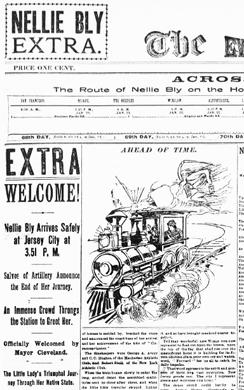
    The masts were solemnly lowered as the anchor was triumphantly docked in at a Hoboken harbor in New Jersey. Then there appeared a young woman with eyes of brilliance that glowed with joy and alacrity of departure from her race against the time. One hundred thirty-one years ago today was when one steely journalist named Nellie Bly broke the boundary of imagination and reality by completing her round-the-world race in 72 days at New Jersey. Bly’s phenomenal record was indeed transcendent of the realm of fictitious reality where Phileas Fogg, Jules Verne’s creation of gentleman adventurer, finished his globe-trotting in 80 days. The world record was not only a sensational media headline in her time but also a glowing manifestation of grit, resilience, and the power of the mind that Bly demonstrated on herself as a woman.

    Born Elizabeth Jane Cochran in 1864 in a small Pennsylvania mill town, Nellie Bly was her catchy nom de plume for the literary world, where she became successful. She was something of a frontier pioneer woman in investigative journalism and adventuring into unpathed areas of news reporting of the Dickensian world of crime and health bureaucracy, notably of the asylum at Blackwell’s Island in New York where she infiltrated as an undercover. However, a panoply of her achievements backfired when her pent-up yearning for holidays on a different shore agreed to a spectacular proposal by Joseph Pulitzer, the New York World owner, of the ingenious race-round-the world against the time. Bly’s decision to embark on the one-of-kind adventure was an apropos admixture of personal yearning to get away from the weight of reality and the publisher’s entrepreneurial aim to proliferate circulations.

    So there off, she embarked on the race with a trunk containing hygiene necessities, a few wardrobes, and some books to read, but without any weapon, not least because of her belief: “If you smile at the world, the world will smile at you.” She sailed across the Atlantic Ocean from New York, through Europe, the Arabian Sea, and the Far East, and then back across the Pacific to return to the homeland. During the voyage from Hong Kong to Japan, Bly heard that another contender emerged from the oceans’ edges: twenty-eight years old Elizabeth Bisland, the literary editor of Cosmopolitan, a rival publication of The New York World. Always achieving, always forwarding, Bly hastened to complete her race guarded by the goddess of fortune and blessed by Jules Verne, whom she met during the race in Europe and was able to trounce her rival journalist arriving five days earlier and Philias Fogg eight days.

    Bly was a supreme one of a kind, not most because she was a woman reporter who was some rarity. Instead, she was a person of indomitable determination, commendable work ethic, and insatiable curiosity, which were coveted attributes even to men of high aspiration. Bly demonstrated the Nietzschean will to power in her achievement by the epiphany of the noble soul to create capabilities to make the idea into an incredible and remarkable reality in the chapter of humankind’s history. Herodotus would have loved to record it.

  • thereby hangs a tale

    Life’s meaning is not from distant, lofty examples of public recognition of personal achievements. It can be found in everyday life; however, it may seem trifle or prosaic. For me, I see my mom in her old, invalid self whose back is arched like a bow and her left knee immobile and think she has reached the stage of the Old Woman as presented by Shakespeare’s poetic view of human life composed of Seven Stages of Man. Gone are the days of parental tyranny built on tirades, a rant of frustration, ire of a disappointed expectation, and a delusion of estrangement. Without the queen’s mighty power, she is now approaching the age of oblivion with one foot in the threshold of the last stage of a play called life.

    I have recently read Samuel Johnson’s essay on authoritarian parenting. Johnson must have written it out of his childhood experience or observation from others. Johnson follows the Aristotelian definition of parenting as being naturally tyrannical. He admonishes the dysfunctional effects on the child’s mind and body, subject to the illogical rants of inordinate temper and crude ignorance on the part of the parent. To be a good parent requires no occasion for the assistance of high education or social standing of recognition, but unconditional love and understanding springing from the parent’s heart. A good parent encourages, nourishes, and loves the child who will return the jewels of parentship at the Latter Stages of Man. Therefore, it is all over but the shouting that a parent whose intermittent bouts of uncontrolled tantrum inflict pain and exact terror on the child will live in malignity of the disaffected child who mistreats now the old, infirm parent without the presence of love and warmth. What a pity.

    Upon reading the essay, I saw the images of a young mom, mature mom, and old mom screened in a phantasmagorial display of the ancient time on a mind’s theater. From childhood until now, mom I have known is lonely, living in her castle where no one would bother or scare her fragile sensitivity that feels too much to confront life’s realities, including parenthood. How I will think of her as a parent is a foregone conclusion not with spite but with sympathy. With her left knee immovable by the osteoporosis combined with calcification in tibial arteries, I now only see an older woman on the verge of extreme pathos about the life she did not like much, among which her regret of not being an ideal mother. Although Johnson had a point in admonishing harsh parentship without love producing revengeful quid pro quo consequences, I cannot turn my shoulders away from my mom, who has none but me to take care of her in this world. I remember Mother Teresa pleading to all of us that charity begins right at home. That’s what I feel when I see my mom asleep like a baby. And thereby hangs a tale.

  • The Curious Duo’s Jonah’s Day in Downtown LA

    The Bard must have been punctual like me in doing his business as an actor, a writer, and an entrepreneur, not least because of his perspicuous witty aphorism that “Better three hours too soon than one minute too late.” Yes, the Bard and I are connected, among others, by the number three (3) because when I went to Little Tokyo for Toro’s follow-up appointment with a vet, it was thirty minutes earlier than the appointed time. It seems too pat that gave me a mental jolt, while Toro was trying to get out of a new pet carrying tote I had bought from Amazon. The popular tote failed to serve the purpose of being a portable carriage of the ever Curious Cat preferring his humanoid sister as a moving tall cat tree. In fact, Toro always likes to climb on my back and shoulders, which I wish to be wider and firmer so that he can securely sit on either side of them. My wish was father to the thought unless I saved a fairy who would grant me the wish as a quid pro quo in bona fide.  

    Since coffee is my morning elixir, I wended my direction toward a nearby Starbucks with the Curious Cat on my right shoulder, making me look curiouser and curiouser. Maybe I should not have gone to the Starbucks but instead to the Seven-Eleven, where they also sold excellent cheap coffee. Or is it just my innately high-strung sensibilities that detect the vibe? Notwithstanding the famous green mermaid’s angelic presence, it was the surprise unwelcome reception at the mermaid’s coffeehouse. My Curious Cat Toro was sitting on my shoulder while I was entering the store, and the two lady barristers looked at us as though they were looking at freaks from a defunct circus closed due to the pandemic. One of them at the register began with a slight grimace: “Miss, you can’t bring a cat here.” I was surprised to hear such an announcement because having seen dogs at other stores; it was more than a mind blow akin to heartbreak. So I remonstrated as softly as possible with my futilely pitiful reference to the dogs at Starbucks stores near my work. Then the other woman who appeared to be senior in staff hierarchy explained: “Dogs are allowed, but not cats. Our district manager is very strict about that. But I will serve you coffee because you seemed to not to know of it.” What a mercy. Yes, I got the coffee, I took Toro to the vet, and at least all was fine. Yet, the incident made me feel sorry about Toro, a de facto discrimination subject, per se.

    Thankfully, Toro didn’t know of the episode performed in human language, but my heart sank when I looked at his large green eyes innocently looking into my eyes from a backpack I carried him into. So I showered him with new feather toys and cans of chicken pumpkin soup from a Petco in the afternoon. The district manager’s policy of not allowing cats to enter the premise makes my head swivel in 360 degrees of wonderment. Whether or not such policy is personally motivated under the particular feline nature’s pretext is a mystery, but cats’ exclusion is hard to swallow. Certainly, Toro and his feline kind will be welcome in the coffee houses of Teheran, where their wild ancestors were an integral part of arts and religions. Is that why cats were burned with alleged witches in Europe? No? It makes me couriouser and couriouser. 

  • my life with a cat so far

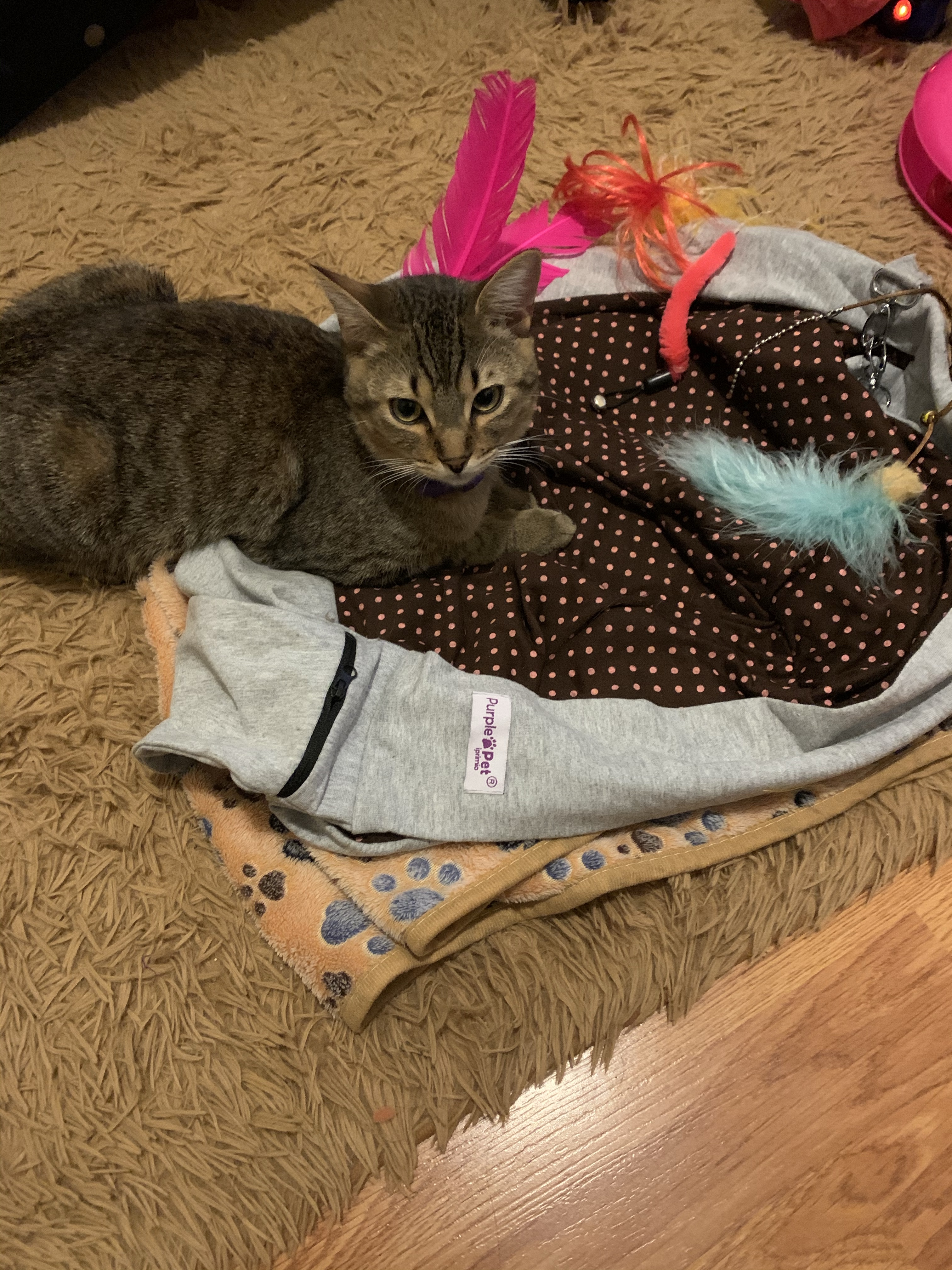
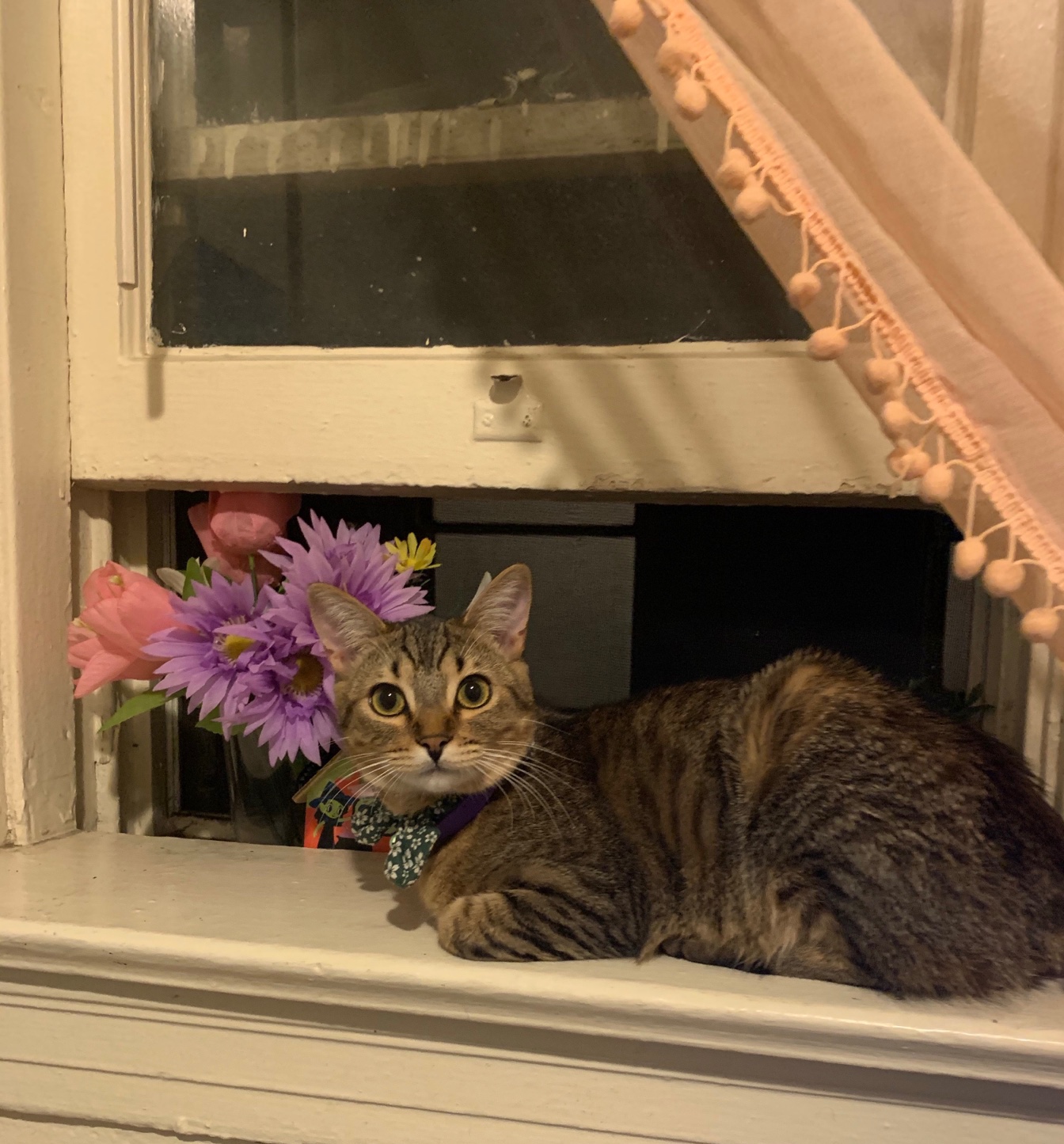
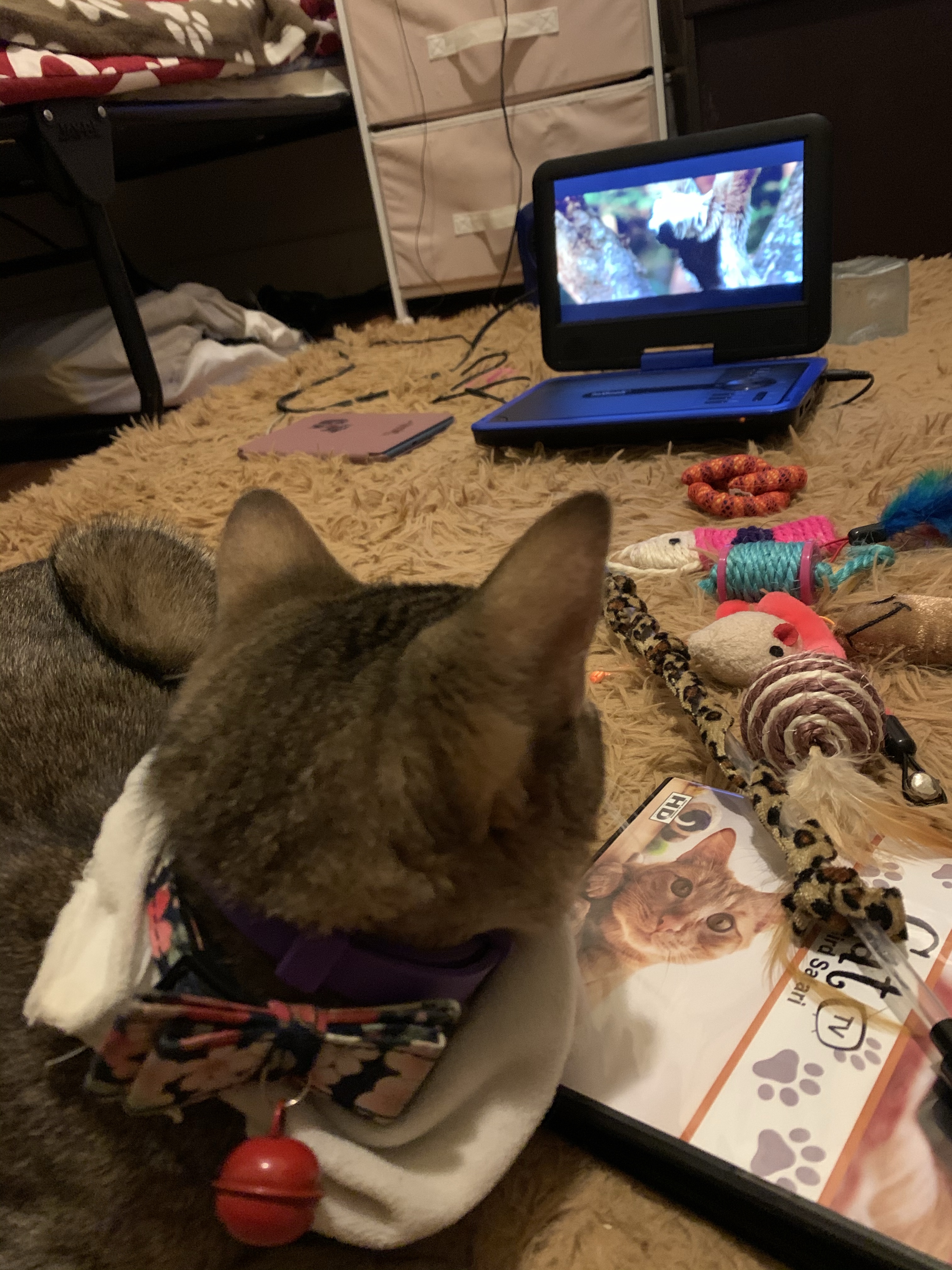
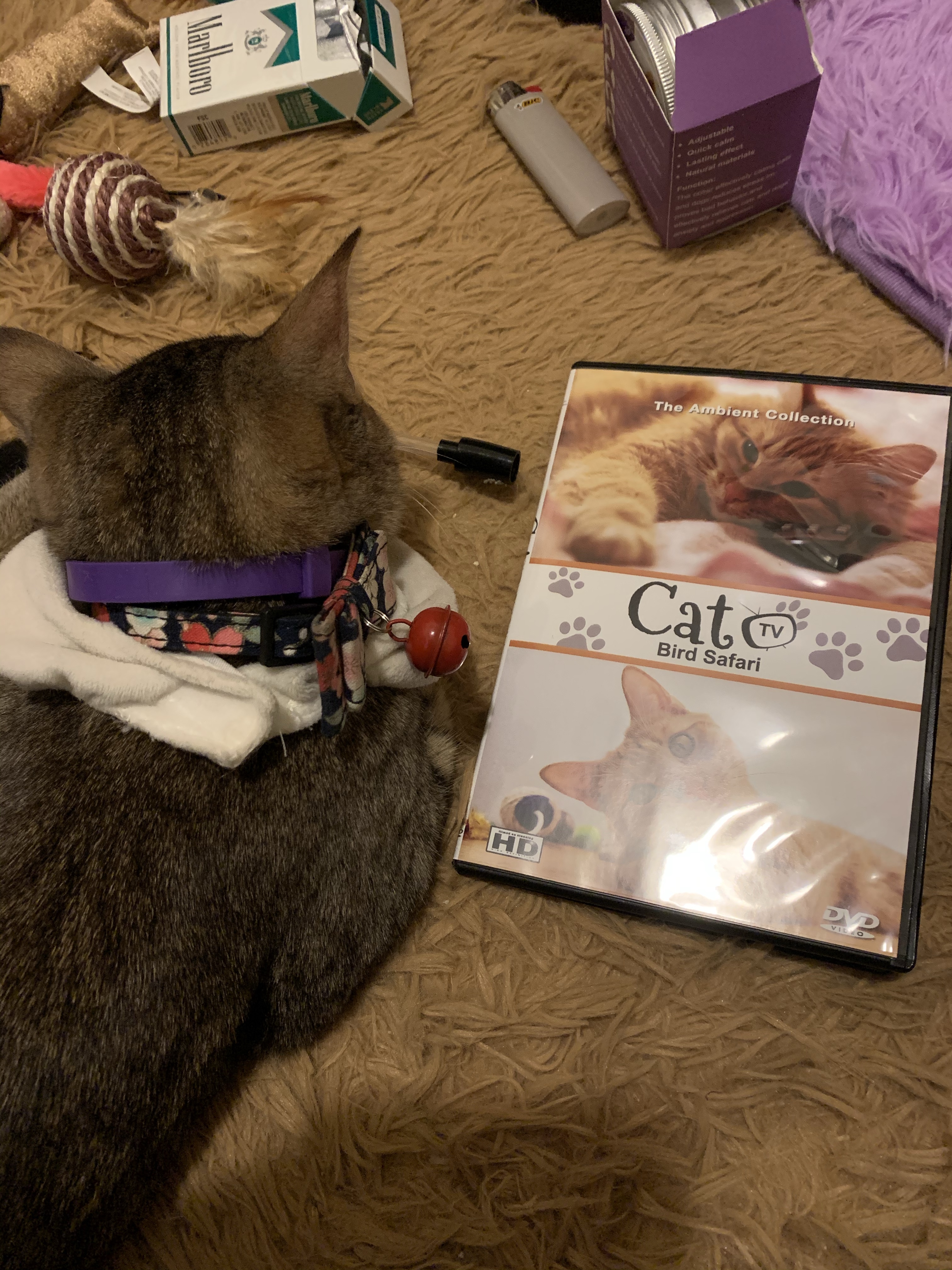
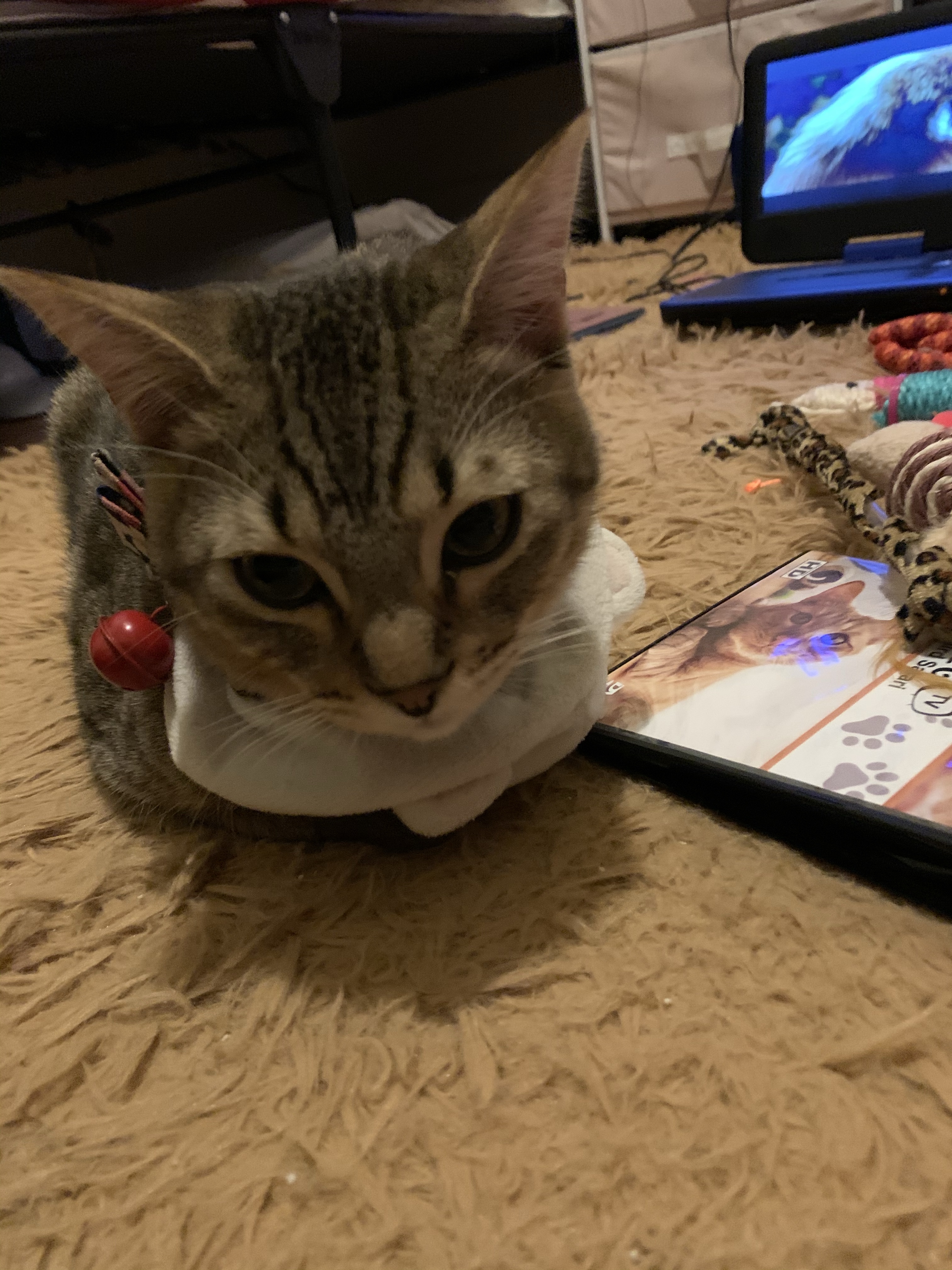
    The period of four months can be long or short, depending upon how you feel it, and to me, it amounts to a long time that has changed my life in every possible way akin to an epoch of revolution. My life with an orphaned kitten named Toro has become a fugue of meows and voices in multiple strands of more meows and voices that has no coda.

    During the four months, Toro and I had anfractuous moments made of frequent visits to different veterinarians, displays of whims and caprice on both sides, tears and smiles, frustration and understanding, doubts and hopes, wishes and disappointments, all of which are crystallized into a virtue of acceptance. I still cannot believe that I have a cat when I still have a weakness for more domesticated, more trainable, and more approachable canine breeds. This doubt develops into a sense of guilt, a whirlpool of self-criticism of not being good enough to be a loving owner of Toro, who is particularly in need of love and kindness due to his sensitive nature and suspected traumatic postnatal experience. Those educative textual and visual information on raising cats dissipates into a gray area of reality and stay there amid my trials and errors in the course of being a terrific guardian whom Toro wishes to live with. Does Toro want to live with another owner who can make him happy in a bigger house where he can run like his wild ancestors or cousins in nature with his new playmates? I ask Toro, but he returns me with that pensive glance and grooms himself like nothing more is necessary than licking his legs and rectum.


    My mother still wants me to return Toro to the shelter because his burst of pep and temper is unprecedentedly unbridled and insurmountable to be caught up with. Then I read other cat owners’ stories and watch their YouTube channels only to make parallels to their blissful lives with their cats and to descend to the labyrinth of gloom and sorrow without an exit. My previous post about my precipitated proclamation of a mutually beneficiary feeling of dependency becomes a public humiliation, a textual pillory of an incompetent cat owner who has no idea about the animal that does not like to be with her the first place. Or so it seems. Alas, woe to the one whose head is whirled like a potter’s wheel in the vortex of confusion, illusion, and discord in a da capo.

    Notwithstanding all of the above, one thing is sure that Toro’s wellbeing, both mentally and physically, is what I care about the most. I have taken him to three different vets so far due to his frequent diarrhea, constipation, and anal pain repeating like Bach’s Toccata. Even if Toro may indeed secretly entertains a wish to meet a new ideal owner, I want to take care of him as much as I can to the fullest extent within my capabilities because I care about him and want to be happy together. His little heartbeat I feel in my hand and when he sleeps at my feet is the most precious thing I treasure that empowers me with a sense of purpose that I have a life depending on me.