Tag: Nonfiction

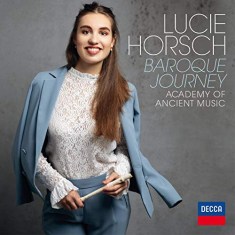
  • Academy of Ancient Music: “Baroque Journey” with Lucie Horsch – review

    img_0202-1The recorder is a wonderful woodwind musical instrument: light in weight, affordable in price, delightful in timbre, and easy to learn, it has been adopted as a part of music curriculum at many elementary schools, just as ancient Greek schools necessitated students to learn an aulos or a lyre. However, this seemingly insouciant musical instrument was the centerpiece of Baroque music because of its florid and vivacious sound that strikes the chords with busy, sophisticated, delicate melodies of Baroque, the term which originally means irregular shapes of pearls in Portuguese. So much so that Vivaldi, Handel, and Bach had composed music just for the recorder long before the cello, the violin, or even the harpsichord came into the scene and outclassed the lovely recorder.

    Ergo, the wanting of its significant contribution to the history of music and of its tainted beauty of the timbre has recently been brought to light, especially in Europe. The heroine of this jubilant revival of the Baroque recorder music is Lucie Horsch, a young Dutch recorder player whose musical finesse characterized by her vivaciousness of technicality and instinctive understanding of baroque music makes her exquisite musicianship look effortless and seamless. That classical music is not for the old conservative snobs but for anyone who has an ear for beautiful music is a tenet of the Arts on the grounds that the standard of taste and reason is universal in all humans as regards the principle of sentiment and judgment is common in humankind.  As illustrated in this music video, Horsch and her musician friends represent the democratizing of classical music in general, making it accessible to enjoy for all, not a prerogative of a few fortunate in a stuffy concert hall.

    If you are a novice in Baroque music, then Lucie Horsch’s Baroque Journey is a choice introduction to the world of Bach, Handel, and Vivaldi. She will be your Beatrice who will guide you to Paradise of the music, as she did for Dante in the Divine Comedy. In my opinion, the best number is The Arrival of the Queen of Shiba by Handel, for it best shows Horsch’s dexterity of playing the recorder flawlessly, delivering the best of her musicality with a burst of pep like a vivacious sprite.

    Author’s Note: You can download Lucie Horsch’s Baroque Journey from your iTune on your iPhone to enjoy the delightfully whimsical world of a Baroque Recorder. The music will cast out from you a momentary vertigo of worries and anxieties and elevate your mood to an instant jolly caprice 🙂

  • ‘Joan of Arc: A Life from beginning to end’ by Hourly History – review

    Joan of Arc: A Life From Beginning to EndJoan of Arc: A Life From Beginning to End by Hourly History

    My rating: 5 of 5 stars

    They condemned her as an irreparable heretic, apostate, idolater, and witch and then burned her at stake even though she saved them from their enemy. And yet, in spite of such egregious treachery of her own countrymen, she knew no surrender to fear with stalwart faith in the Cause she intransigently believed to be her divine mission from the greatest man above as the flame rose to her nose, and then engulfed her therein, turning her to ashes. She was no less a figure than Joan of Arc, the Maid of Orleans, the Virgin of Lorraine, whose bravery and belief – be it ever spiritual or psychological- epitomizes existential will to meaningfulness to live a purposeful life, as is vividly and elegantly related in this book.

    Each chapter draws up on the substantial aspects of Joan’s purposes, acts, and achievements rather than illustrates religious or spiritual overtones in anecdotes or legends to glow her in a halo. The narrative takes us to where Joan of Arc witnessed the English occupiers’ hectoring of her village folks, including little children by beating, and we feel her indignation at the perpetrators of such violence on her soil. We also come to know that the divine messages she received were not directly from God but through St. Michael, the archangel, St. Margaret, and St. Catherine as the messengers of God with the three divine missions. That Joan of Arc had three cardinal missions of (1) taking up arms; (2) rallying the French to defeat the English occupying army; and (3) putting the Dauphine Charles on the French throne betokens her guiding lights of her life, her purpose of life that constantly reminded her of a “why” to live for. So we follow Joan, a tall and lean girl with her raven hair cut in bob attired in shining armor that weighted about twenty pounds to the frontlines of hand-to-hand combats fighting against the English army without her helmet on to boost morale of the French soldiers and got her neck pierced by an arrow. Then the narrative puts us forward to the dark cell of Joan harassed by five lewd English guards and to the heaps of stake where her body was consumed to ashes.

    The lucidly vivid descriptions of each chapter in cogently casual narrative are the elemental force of this book that brings the grist to the mill for the visualization of the whole story as though it were played on a screen. In fact, while I was reading toward the end of the book, a song called “Bigmouth Strikes Again” by the Smiths, in which Morrissey sings, “Now I know how Joan of Arc felt” was starting to being played in my mental stereo set with heightened emotions. It also illustrates the canonical facts that many of us may be unaware of: (1) that it was the French, including the dauphin who later became Charles VI wholly thanks to Joan, who sold her to the English; (2) that Joan, for none other reason than being only human, attempted at several escapes which ended in foils; and that (3) it was twenty-two years after her death on fraudulent grounds of treachery and heresy that the Trial of Rehabilitation exonerated her from such preposterously erroneous charges, thanks to the troubling conscience of Charles VI who belatedly endeavored to make it happen.

    This is an excellent primer on further study on Joan of Arc with a comprehensive overview of the time as regards the relationship between the Church and the politics, the role of the Church, and its dominance over society, let alone people. It will induce you to look at Joan of Arc not as mythological French virgin whose legacy exclusively appertains to the French as their patron saint only, but as a human who tried to do what she believed was right despite any biological or social inhibitions that she had to rise above. In this regard, Joan is an emblematic figure of courage, hope, and self will to achieve her existential values as someone with purposes in life, someone whom we can identify with in one way or another in our daily struggles of contemporary life. Upon reading this book, you will come to understand what made the American humorist Mark Twain offer such approbation: “Whatever thing men call great, look for it in Joan of Arc, and there you will find it.” Indeed, her steadfast attitude toward her firm belief is something we can deem truly inspiring and remedial to apply to our own way of fulfilling demands placed upon our daily tasks in life.

  • ‘The Secret History of Poltergeists and Haunted Houses: From Pagan Folklore to Modern Manifestations’ by Claude Lecouteux – review

    The Secret History of Poltergeists and Haunted Houses: From Pagan Folklore to Modern ManifestationsThe Secret History of Poltergeists and Haunted Houses: From Pagan Folklore to Modern Manifestations by Claude Lecouteux

    My rating: 5 of 5 stars

    As someone who is keen on the stories of supernatural phenomena based on true events devoid of media-generated sensationalism, testimonies of mediums (or psychics), or narratives of parapsychologists, I was immediately hooked on this interesting book by Claude Lecouteux, a former professor of medieval literature and civilization at the Sorbonne. What distinguishes this book from other books of similar subject matters is its etymological, historical, and sociological explanations on poltergeist and other supernatural incidents as recorded in annals, newspapers, or folktales.

    The word “Poltergeist” meaning a noisy spirit in German, first appeared in the dictionary by Erasmus Alberus in 1540, an era marked by turbulent religious conflicts between the Catholics and the Protestants, including Reformation. In fact, Martin Luther, the father of Protestantism, was an avid believer in devils’ manifestations in the form of poltergeist and availed it of a potent means of proselytism of his new religious founding. Also, from 1550 to around 1700, many books on spirits were written mainly by scholars, men of letters, and theologians, including King James I of England (1566-1625), who wrote Demonology in form of a Dialogue, a treaty on spirits of devilish nature.

    As aforesaid, etymologically, the word “poltergeist” denotes a primarily acoustic phenomenon that has also been termed as “knocking spirits,” which Lecourteux uses as a neutral term without academic snobbery. He categorizes the activities of poltergeists as follows: (1) Casting stones/filth; (2) Vague noises; (3) Banging of windows; (4) Mischievous/Malicious acts; (5) Broken dishes; (6) Destruction of houses by fire; and/or (7) Attacks on specific individuals. He further illustrates the historical accounts of poltergeist incidents in the cases of a certain Greek philosopher named Athenodorous as narrated by Pliny the Younger (62-113) in his letter to his friend Sura in which a story of a specter of an old man who appeared to the philosopher to show him where he had been buried and a man named Gilles Bolacre who rented a haunted house in Tours that disturbed him every night with knocking sounds and went to court to have the lease successfully rescinded on the ground of the landowner’s violation of caveat emptor.

    Lecourteux also proffers a reasonably plausible connection between some of the supernatural phenomena and human synchronicity, which includes telesthetic power. He provides the reader with the concept of “Place Memories,” a telesthetic phenomenon in which the cries of the victims and various noises accompanying the violent scenes are imprinted on the walls or at the places where acts of violence were committed as if upon a magnetic tape recording. He elucidates that inanimate objects could be endowed with human properties by means of the telestehtic faculties of the subconscious that have the ability to find and interpret such uncommon vibrations and emanations, just as mnemonic faculties have the ability to discern the latent vibrations of thought.

    In light of the above, Lecourteux addresses our human nature that has hardly evolved at all in the domain of supernatural despite the dominant influence of Enlightenment rationality in the recent historical and social landscapes. That is, science has failed to deprecate ancient beliefs in spiritual entities variable in accordance with religious and cultural climates throughout our human civilizations. Also, the veritable records of supernatural incidents betoken different mental attitudes of the times. After all, our ancient predilection for anything supernatural have survived and will survive change of time and political, social ethos because it is linked to man’s fundamental questions about a realm inhibited by the dead and spirits.

    View all my reviews

  • ‘Michelangelo and the Pope’s Ceiling’ by Ross King – review

    Michelangelo and the Pope's CeilingMichelangelo and the Pope’s Ceiling by Ross King

    My rating: 5 of 5 stars

    After Pope Julius II saw the Pieta installed for the tomb of a French cardinal, he wanted the same awe-inspiring adornment for his tomb. Hence, Michelangelo Buonarroti from Florence was summoned for the work. That’s how Michelangelo at age thirty-three reluctantly embarked on his Herculean task of frescoing the vault of the Sistine Chapel. This book by Ross King recounts such background stories of the making of the Sistine Chapel frescoes and descriptions of the personal traits of Michelangelo.

    Michelangelo’s work on the frescoes resulted from part Divine Providence of endowing the humanity with an awe-inspiring masterpiece of art to delight the senses of mankind throughout the ages, and part secular ambitions to mark the names of both the commissioner and the artist themselves. Pope Julius II also wanted to renovate the Sistine Chapel that had been used as a living quarter for the guards, a fortress against papal enemies, and a jail. As no one pours new wine into old wineskins as said in the bible, the pope’s plan to revert the chapel to its original place of worship, which made him drop his tomb project, was met by his idea of frescoing the vault in its entirety. Michelangelo, who was a breadwinner of his family, accepted the commission with good amount of salary and commenced four-year of labor of woes and dramas on the vault of the chapel.

    There are revealing truths that should be known concerning the process of frescoing the Sistine Chapel as follows: Contrary to popular belief that Michelangelo did the work while lying prone on his back, he worked with his upper body bent backward like a bow. Also, it wasn’t done by Michelangelo alone but by a team of his assistants chosen by Francesco Granacci, a close friend of Michelangelo, even though he was innately a solitary worker who had a strong distrust of others who worked with him.

    Michelangelo was said to be a man of  homely appearance without sociability in comparison with his contemporary and rival Raphael Santi whose beautiful look, even-tempered, and sweet character topped with artistic ingeniousness endeared him to the many. Also, Michelangelo’s direct altercation with Leonardo da Vinci as described in this book was amusing to discover. Both of the masters of the arts did not like each other publicly, but it was on the part of da Vinci who instigated such heated feud. He disregarded sculptors, including Michelangelo, as mechanics in the appearance of unkempt bakers.

    It is also interesting to pay special notes on the figures Michelangelo used for the frescoes, which shows his ingenuity of selecting unique subject matters distinguished from his contemporaries. To illustrate, he used 7 prophets from the Old Testament and 5 sibyls from pagan myth to decorate the Sistine vaults. He was fascinated with prophetic knowledge of the sibyls who had dwelt in sacred shrines and predicted the future in fits of inspired madness. This offered a riveting link between the sacred and the profane, the church and the esoteric pagan culture by reconciling pagan mythology with orthodox Christian teachings.

    Readers will find that the position of a painter/sculptor was not esteemed highly; he was more of a skilled laborer, a craftsman given exact orders how to produce his work by his commissioner or patron. In fact, he image of a solitary genius who would wield his brush and pallets to portray his world of imagination from the fathoms of his soul was a romantic fable. In Michelangelo’s time, an artist’s creativity was fettered by the demands of marketplace or his patron. Nevertheless, Michelangelo often disagreed to the pope’s own artistic direction and even had a temerity of broaching the shipping charges incurred in transporting the marbles from Carrara for the aborted tomb project at a dinner table with the pope .

    All in all, this book has its magical way of transporting readers to Italy in the early 16th century and invites readers to meet with Michelangelo as he was without sprucing up his personal character. Upon reading this book, I avert that Michelangelo is an artist bizarre fantastico whose magnum opuses on the ceiling of the Sistine Chapel have both the beauty and the sublime that produce in the spectator a kind of astonished wonder so formidable and so fantastic transcendent of time and place.

  • ‘Cursed Britain: A History of Witchcraft and Black Magic in Modern Times’ by Thomas Waters – review

    Cursed Britain: A History of Witchcraft and Black Magic in Modern TimesCursed Britain: A History of Witchcraft and Black Magic in Modern Times by Thomas Waters

    My rating: 5 of 5 stars

    Witchcraft as popular belief system may sound anachronistic, if not extinct, in our age of the Internet, Satellite TVs, and planned colonization of the Moon, in the same way, that people in Renaissance regarded the Medieval times culturally backward and religiously superstitious. Yet, it has survived the leaps of time and waves of persecution, withstanding like a flickering candlelight in hours of stormy dark nights and remains in modern landscapes of buildings, cars, airplanes, and people with mobile phones on their hands.

    Thomas Waters in his Cursed Britain: A History of Witchcraft and Black Magic in Modern Times tells us how this ancient belief system of faith-based healing at its lightest and of maleficent bewitching at its darkest has kept its vitality from the rural areas of provinces to the bustling streets of cities in Great Britain throughout the centuries based on his extensive research of historical documents and scholarly analysis on the uncanny but very real phenomena that grips your attention on every page of this fascinating book.

    If you are keen on historical facts and anthropological evidence of human nature in relation to the ancient esoteric knowledge that looks so appealing and tempting, this is an excellent book.

    View all my reviews

  • Better a witty fool, than a foolish wit

    Shakespeare said that fool thinks he is wise, but the wise man knows himself to be a fool. This also means that a wise man knows what and when to speak. In this respect, simulation and dissimulation according to English Philosopher and statesman Francis Bacon is wisdom providing you with a strong heart to discern the opportune time to tell truth and to do it in protect of yourself against derisive remarks and false opinions on you by whom you talk to at work and any other social occasions. In Other Words: you take false shadows for true substance lest you should lose yourself under the misapprehension that revealing all of yourself will develop rapports for socialization.

    In this “Express Yourself” era that lionize glory of show-it-all and tell-it-all in the form of memoirs and selfies, vying for a legion of followers cossetting juvenile mentality of the authors, Bacon’s tenets of veiling yourself may be deemed anachronistic and unreconstructed. However, it would contradict the importance of self-respect if we let ourselves peddled by the melee nitpicking someone’s weaknesses.  That said, the advantages of simulation and dissimulation and how to do according to Bacon are as follows:

    1. Advantages
    • To quiet opposition and to surprise
    • To reserve a fair retreat to yourself. By concealing yourself to a certain degree, you can protect yourself in a situation that you fee inappropriate to you.
    • The better to discover the mind of another by letting the other party open him/herself without sacrificing yourself to disclosing your inner thoughts that might be incompatible to the other, and that will generate a false impression on you.

    2.  How-to-do

    • Have openness in appearance, such as smiling countenance and civil manner of listening to another.
    • Keep your true feelings and thoughts to yourself. I have read that the former British Prime Minister David Cameroon was good at being canny enough not to speak of his opinions on politics during his university years, lest he should ruffle other students of different political opinions.
    • Pretend to be what you are not if there seems to be no other way than to speak your mind in a setting where your true opinion will be unwelcome.

    The aforesaid may seem boring or passé, but then there’s good reason why a wealth of wisdom shared by great minds of history still ring true, resounding through the leaps of time and borders of nations and boundaries of cultures. The prudent keep their knowledge to themselves and speak their minds when their ripe judgment of Reason deems the time apropos. Maybe it’s high time we got off the bandwagon of “Follow Me” and took a nice long walk alone around in romantic solitude and reflection thereof.