Tag: Nonfiction

  • The Lives They Left Behind: Suitcases from a State Hospital Attic by Darby Penney

    51emoQ2iSAL._SX327_BO1,204,203,200_The Lives They Left Behind: Suitcases from a State Hospital Attic by Darby Penney

    My rating: 4 of 5 stars

    I believe that reality is always better than fiction in truth of events and artifacts that accompany the stories. Besides, if such story chimes the bell of my emotion even in the faintest decibel, I dive into it. In this regard, this book was a sure thing to read about people who were inflicted with “sacred disease” -as termed by Hippocrates – how they got there and what they were really like as individuals with dreams, memories, hopes, and wishes.

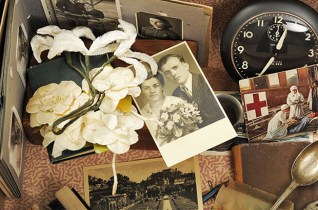
    jon-crispin-dmytres-suitcase-01
    One of the suitcases found in Willard Psychiatric Center courtesy of phaidon.com

    Hundreds of derelict suitcases came into light when Willard Psychiatric Center in upstate New York were closed in 1995, ending its century long history of a public mental institution. Each suitcase has a story to tell with pictures, bus/train tickets, diaries, letters, and even teacups contained herein. In the eyes of the author, it was like the fateful revelation of the outcry of the people who had come to live in the hospital. What I have found in reading this book is that many of the patients do not seem mad or needful of being institutionalized. Many of them suffer from loneliness, abandonment, and ill treatments from others. To my consternation, if a spouse or a family member was regarded irksome, bothersome, and troublesome, a ticket to the lifelong institualization was a sine qua non solution to get rid of the person forthwith.

    A truly powerful testimony to the dignity of the people who found themselves on the edges of society, The Lives They Left Behind is comprised of heart-wrenching accounts of those whose lives were immortalized in the artifacts they forgot to claim ever more; that there is only a thin layer of difference between those within and without gives rise to requisite re-examination of what constitutes normalcy of behaviors as “socially and culturally” accepted because in one way or another we all carry a certain degree of “madness” within -for better or worse.

    저장

  • Bluebird Interview

    photo

    She was born when Saturn and Uranus were housed in the Aquarius. That says pretty much about her. The Aquarian are known for their independent spirits, compassionate and caring nature, and unquenchable wants of knowledge, all enveloped in mysterious estrangement even among the crowds. Yet, Stephanie, the writer and the editor of her two-year old Web log, “The Stylus,” (formally known as “Offbeat) is generally quite approachable and genial although she is never too loquacious at a first meeting. In fact, you might find her quite interesting to talk to, especially when you strike up a conversation with her about books written by classical writers or about history, dogs, or cultures. And if any of these appertains to one of her writings published on her digital log, “The Stylus,” you will see her soul being elevated to the ether with her eyes sparkling like stars on the Persian night sky. On Monday morning at a cozy cafe in Avonlea, Bluebird had the pleasure sitting down  with a cup of warm hazelnut coffee to talk with her about her blog, from the inception, the purpose, and the future thereof.

    BD: Hi, Stephanie. As Oscar Wilde has said that a woman who would reveal her age would tell anything about her, I won’t ask you how old you are because I suspect that you will not anyhow.

    Stephanie: I appreciate your judiciousness. (Smile) And yes, you are right in saying that I won’t tell you my age. (Smile) But I am neither teen-aged nor maturely aged, single, like one of those 10 vestals in the ancient Roman Empire. (Smile)

    BD: Okay, then let’s start talk about your Web log. What was the idea behind the creation of this log of yours? Did it occur to you all of sudden that you wanted to have yours like everyone else?

    Stephanie: Well, I first started thinking about having my writing log about 2 years ago. I had always wanted to write things about what I liked and to convey it in written letters because I think writing revels one’s soul in his/her genuine self without worrying about the physical appearance and how to present the self externally in public. In that regard, writing is non-discriminating of all social and biological differences. And I always thought that in people’s writings I could see the intelligence and nature of the writers because people would tell about their innermost feelings by means of writing rather than by speaking, which I think, sometimes seems a bit pompous and artful.

    BD: So, is this why you came to create your blog to write about what you think and feel that cannot be shared by speaking in public?
    phoo

    Stephanie: Partly so. And partly it’s because writing seems easier to communicate than speaking, which requires of me instantaneous faculty with dialogue that necessitates breaking from shyness. You see, English is not my mother tongue. Being a native Korean, the language differences between the two languages are as wide and deep as the Pacific Ocean: The English belongs to the Indo-European lingual family, while the Korean to the Ural-Altai to which the Japanese, the Turkish, the Finnish, and the Hungarian also belong. The syntax and the grammar are of course very different. So, it will be much different from, say, someone from any Western European country speaking and writing English because Western European languages belong to the same family as the English. Nevertheless, I want to break from such syntactical, grammatical, and literary inhibitions to craft the art of writing, just as Jack Kerouac felt the same about it.

    BD: That’s a sublime motivation to create your blog. Then how about the name of your blog? It has recently gone through some changes…

    Stephanie: Yes, indeed. But for the good reasons. First, it was started as “Offbeat” because one of the teachers at the language school I currently work at told me that my blog seemed to carry this offbeat vibes, a sort of New York feel, the independence, the avant-garde spirit that knew no boundary of subject matters of writing. So I thought it was a cool name for my blog and kept it until the last week. But suddenly I came to think that it needed name changing just for a change of scenery; you know the kind of moment when you want to reinvent your image with a new haircut.

    BD: Okay, Stephanie. By the way, what are your readers like? Do you have many followers?
    WK-AK224_BOOKS2_20071011174112

    Stephanie: To be honest with you, I am more concerned about the qualitative likes I get for what I write from fellow bloggers who also love writing and publish qualitative posts by which I mean the writings, such as musings, creative stories, poems, and/or book reviews. The reason I say this is that recently there has been someone who creates several unsolicited blogs that only contain commercial stuff, copied works of others, or nothing just to get to my blog. And I tell you that I only appreciate the likes from those qualitative bloggers. And I also tell you that I don’t appreciate those of illegitimate ones’ likes. How do I know they are illegitimate? Well, can you like my writing as soon as I publish? That means that person does not bother to read my writing, which I take it as an offense.

    BD: Who is that one plaguing your blog with empty likes? Have you done something about it?

    Stephanie: First, that one appeared in my spam comment section. He said he liked my blog and asked for some advice of writing. I think I was too naive to even reply to him, thinking that he was going to have his meaningful blog filled with writings, but no… I should have never done that…. This is my character flaw; that I bring trouble and pain on myself through pity and compassion… In that respect, I sympathize with Katherine Cookson, who said the same thing in her memoir Before I go, about which I have also written.

    BD: You must be really frustrated with that person… Sorry to hear that.
    betty beaver

    Stephanie: I even contacted an engineer at wordpress. about this issue in effort of stopping him from visiting my blog, but was told that because it’s in a public domain, there’s no way I could do that… And you know it’s really disheartening to see it happening in my blog because it is a sheer form of sabotage to my blog because my blog is not an object of popularity… Although my current followers are 52, what I care about is my works being duly appreciated by fellow writers, amateur or professional. Nevertheless, I don’t want to canvass for liking my writings. It’s just not me. But if you like any of my writings in terms of the contents regardless of any grammatical errors, that makes me feel fulfilled. And any comment is always welcome.

    Don’t be shy to comment on any of my posts because I am a human being, too! (Smile)

    BD: Stephanie, I understand how you care about your blog and your love of writing in this interview. Any word to your readers?

    Stephanie: I just want my readers to know that I write because I like to portray what I feel about things in my heart in poetry and what I think about books I read in my mind in belief that taste and reason is universal in all human creatures regarding principles of judgment and of sentiment common to all mankind, as Edmund Burke averred in his essay On Taste. So Many Thanks to You, Dear Readers with My Whole Heart.

    BD: Thank you, Stephanie. I hope your writings will have a wide range of loyal noble readership.

    Stephanie: Thanks! Have a lovely day!

    img-thing

    저장

    저장

  • A License to Heal by Steven Bentley

    A License to Heal: Random Memories of an ER DoctorA License to Heal: Random Memories of an ER Doctor by Steven Bentley

    My rating: 5 of 5 stars

    Steven Bentley, M.D., an American Board of Emergency Medicine certified ED doctor and also the author of this book with a fabulously fitting title, began his medical vocation in the mid-1970s with a naive but noble cause to heal the wounded and save human lives. His reason for choice of the ER Medicine was that it consisted of Minor Surgery and Emergency Medicine and thus gave him opportunities to practice a wider scope of medical knowledge and administer it to a wider range of patients.

    Over 30 years until his retirement in 2000s, Dr. Bentley was a commendable doctor equipped with an arsenal of immense medical knowledge combined with a sea of compassion and kindness to treat all the patients he encountered in the ER of a hospital in North Carolina regardless of their social and economic statuses. Unlike most impersonal, officious doctors, Dr. Betley “listened” to his patients and oftentime went out of his way to help a patient whose medical need was repeatedly and cruelly rejected beyond a reasonable measure.

    Welcome an old veteran man whose doctor was out of town, so he had to get his prescription for blood pressure control refilled at a VA hospital. However, it was such a painful ordeal for the old man, for he had encountered frustrating runaround from one hospital to another because they did not want to take a responsibility for refilling his prescription without his primary care doctor’s consent. So when the man finally came to Dr. Bentley, he burst out crying saying, “All I need is to get my usual prescription refilled…” Thereupon, Dr. Bentley wrote him a refill prescription and told him not to come back to the hospital. And off the man went out of the hospital with a relieved mind.

    The world of the emergency medicine as experienced by the ER doctor himself was a variety of fragmented views of human frailty, both physically and mentally, but it was also the world of the most human medical practice where compassion, kindness, and charity were witnessed to the hopeful eyes and shared by the staff and the doctors in the name of humanity.

  • Before I go by Catherine Cookson

    Before I GoBefore I Go by Catherine Cookson

    My rating: 5 of 5 stars

    This is my first encounter with Mrs. Cookson in her writing. What a world of writing she immersed herself in out of the melee! The book is one of her post mortem work discovered by her estate with the other unpublished novel, and I can see Mrs. Cookson must have intended to have this memoir published after she’s long gone because of the self-evident title of “Before I go”. This book is filled with her innermost feelings towards her family – her mother whom she called “Our Kate” and her dearest husband Tom and the people who entered her life, such as Nan Smith, the various doctors who attended to her lifelong health frailty, and her faith as a doubting Catholic. As an illegitimate child of an unwed mother from a poverty-stricken family, Mrs. Cookson however did not yield herself to the the bare necessities of life as it demanded.

    Mrs. Cookson was a true example of a triumph of will and hope over experience and condition. Working as a manageress in a laundry, the author did not resign herself to the complacency of her social class. Instead, she raised herself above the hubbub of life and arrived as a fine writer who wrote about people whom the readers could relate to based upon her experiences. Also, her Catholic faith, which she had been fighting with reason to no avail, was the bedrock of her character and shaped the way she looked at the world around her. For it was her faith to which she held on in times of trouble and from which her compassion, pity, and forgiveness sprang.

    What I like about Mrs. Cookson is her feistiness and pride which distinguished her from her peers and people of similar social origins. But this does not mean that she became haughty and untouchable with her literary success; on the contrary, Mrs. Cookson still retained her charitable nature although she often lamented about it because of people’s appropriation of her compassion and pity gratuitously.

    The reader will be able to read the mind and heart of this fine and very human writer. It’s not about her lifelong health problems of nose-bleeding, 8 miscarriages, and a peripheral vision by advanced age; this memoir is about Mrs. Cookson’s resilient spirit that enabled her to rise above the planes of biological hindrance and societal prejudices.

  • Daily Life in Victorian London by Lee Jackson

    Daily Life in Victorian London: An Extraordinary AnthologyDaily Life in Victorian London: An Extraordinary Anthology by Lee Jackson

    My rating: 5 of 5 stars

    This book is a fruitful archive of personal diaries, newspaper/magazine articles, letters both official and private, and other historical records, all of which portray a glimpse of the everyday life of the Victorian Londoners – the poor, the middles class, and the middlings in between – minus the poshness of Downton Abbey. In this book, the reader will peep into many lives of different folks, kinds of job they had, the work conditions, and the places they went for recreations on holidays, and feel empathic towards their victorian kindred spirits. However, this is not a book of insalubrious living conditions for the proletariat, nor the litany of existential woes in living hard lives. In fact, reading this book is like reading a Charles Dickens’s story featuring an Oliver Twists, a Pip, a David Copperfield, and many others of interesting characters working for odd jobs . This book is about the humble but vibrant in Victorian London who were never the boring.

  • Through a Dog’s Eyes by Jennifer Arnold

    Through a Dog's EyesThrough a Dog’s Eyes by Jennifer Arnold

    My rating: 5 of 5 stars

    If you are a dog person, reading this book will make you become better understanding of your dog or just any dog in sight – in his perspective. This book is written with knowledge and heart by Jennifer Arnold, the Executive Director of Canine Assistants, a school for educating dogs to help people with disabilities, including epilepsy, paralysis of broken spinal cords, and others that prevent them from functioning their ordinary tasks of daily lives . The author specifically emphasizes on the word “education” of her dogs, not “training” because the student dogs are taught to respond to foreseeable/unforeseeable situations that require their immediate problem-solving skills for the safety of their human partners based upon the author’s belief on ethology, the scientific and objective study of animal behavior, by incorporating Operant Conditioning method to modify a behavior by reinforcement and
    punishment.

    What Ms. Arnold avers in the book actually corroborates what I have always believed to be true: (1) that dogs do have feelings without filtering them through the intellect, which can be found in the cerebral cortex of human. But because of this absence, dogs are artless in expressing their emotions toward us; (2) that dogs’ characteristics of being loyal and empathetic indicates that consciousness, the state of being awake and aware, enables them to do what’s in the best interest of others; (3) that in no way, is a concept of “alpha dog” in a human-canine relationship useful or even sensical; and; (4) that operant conditioning with positive reinforcement (rewarding with a treat)  and negative punishment (not giving it) works the best to reinforce intended behaviors.

    You will find a kindred spirit in this book filled with laughters by the wonder dogs at the Canine Assistants, tears by the pains of those who were and are in need of their canine assistants, heartaches by those fallen dogs because of misunderstanding on our human parts, but most of all, joy by understanding our fido friends in their own paws.