Tag: Nonfiction

  • Broken Will, Lost Soul

    RE: 8/12/2018 article of “Broken Guy goes down with plane” from the Los Angeles Times

    However bleak and and fatalistic his views on Death of God and Nihilism might be, the one definitive thing German philosopher Friedrich Nietzsche knew was this: “Anyone who has a why to live can bear also any hows.” How reassuring it is because it means that even if life presents you anything but shattered dreams, aborted hopes, and clipped anticipations for whatever you try to work out, as long as you still hold steadfastly onto a sense of purpose – that is a why to continue this so-called “life”- your life will not end in nil, or in crash such as the man I read about in the newspaper today.

    His name was allegedly known as “Richard Russel,” according to his bantering with an airport controller during his audaciously precarious aerial heist of an passenger aircraft he had stolen from Sea-Tac Airport in WA. He was reported to be a 29-year old former ground service agent at Horizon who had also run a bakery with his wife until 2015. It is reported that he died in crash on a wooded area on Ketro Island south of Seattle, WA by saying, “I wasn’t really planning on landing it.” The plane did not hit any structures nor did it cause any collateral damages to private properties, since the island itself is underdeveloped. The whys and wherefores of Russel’s quixotic joy ride have not yet been manifested in the course of the current FBI investigation, but judging from his communication with the controller, he might have been suffering from existential vertigo in which he had lost a sense of purpose, a why for continuing his life in dealing with demands of tasks that everyday life had imposed on.

    In case of art imitating life, Russsel on the passenger aircraft reminds me of Don Quixote who, on his beloved Rocinante, gallops toward the huge windmill to vanquish it, a stereoscopic symbol of pompous hypocrisy of life that generates nothing but the ills. Foolish, yes, needless to say. But heinous or even insidious? Hardly so. Stealing is one thing, but ending his life out of emotional distress is another thing, as they are apples and oranges in the sense that he meant no fatal harm on anyone by using the stolen aircraft as a weapon of mass destruction as in the case of the terrorist carnage of 9/11. I wonder what might have gone through his mind in the cockpit of the plane as he was nearing to the end of his life: a phantasmagorical display of his memories that he had collected through life, willed or unwilled? Perhaps, being a pilot of the plane might have given him a tactile sensation of being capable of piloting his own life, that ineffable stupendousness of capability, which would have given him the equal dose of confidence at the spur of the fateful moment.

    Playing a pseudo psychiatrist is not my forte, but it is viable to think that Russel ‘s contemporary strains of life and postmortem malady that anesthetized his Reason and thus emboldened him to do such a foolhardily venturesome act at the expense of his own life are something that we can feel pathos at the least. And that is why I find it hard to criminalize him by putting him into a moral/ethical Procrustean bed, which also brings me back to an act in Macbeth:

    “Life is but a walking shadow, a poor player that struts and frets his hour upon the stage; and then is heard no more; it is a tale told by an idiot, full of sound and fury, signifying nothing”


  • Marie Antoinette: A Captivating Guide to the Last Queen of France by Captivating History

    Marie Antoinette: A Captivating Guide to the Last Queen of France Before and During the French Revolution, Including Her Relationship with King Louis XVIMarie Antoinette: A Captivating Guide to the Last Queen of France Before and During the French Revolution, Including Her Relationship with King Louis XVI by Captivating History

    My rating: 5 of 5 stars

    History is a branch of literature made by artificers and artists with stories full of events, people, and places woven into a timeless stereoscopic tapestry of humanity, which in a succession of ages lays bare truths unjustly condemned in the circles of Treachery, Heresy, and Wrath by the winners of the epochal changes. In this regard, Marie Antoinette by Captivating History is a viable account of one of the most arguably scandalous figures in the history of civilization written without prejudice but with facts based upon the extensive collection of historical evidence of letters, small notes, and other written records that is testament to the veracity of the characters and historicity of the events concerning with the lachrymose last queen of France and her family swept in an indomitable whirlwind of epochal changes.

    The book delineates the humane sides of the Bourbon couple, Marie Antoinette and Louis XVI with an ample provision of personal aspects of the king and the queen in the context of regarding the historic accounts that give the reader new insights to the last dynasty of France and the bellicose retribution of the revolutionaries. Maria Antonia became the famous “Marie Antoinette” at the wedding with Louis XVI, an academic introvert who was into locksmith work and carpentry with a generous soul and deep love for France and the people. The young couple was bounded by spirit of charity and benevolence and exemplified the epitome of nobless oblige: To illustrate, Marie Antoinette told the French not to pay “Queen’s Belt Tax,” a customary tax that the subjects must pay when a new queen ascended the throne because she had heard the woes of the impoverished states of the people. Also, both Marie and Louis founded the Maison Philanthropique and hosted evening meals at Versailles and built cottages for the needy, which the French willfully forgot and forced themselves to remember the ridiculous price of bread when they later invaded the palace and demanded the lives of the Bourbon family.

    With respect to the monumental achievements of Louis XVI, the promulgation of Edict of Versailles, also known as the Edict of Tolerance, permitted the French to practice their own religions and marry without converting into Catholicism. In addition, he abolished for the first time servitude akin to serfdom and slavery in France and did cut back the personal budgets to the extent possible by funneling the money into a multitude of charity organizations, all of which was willfully overlooked or ignored by the demagogic revolutionaries and vengefully ambitious bourgeoisie and their populace whom they used as minions to overthrow the monarchy by force.

    The book leads the reader to a kind of Eureka moment of light to see the souls of Marie Antoinette and Louis XVI in their captivity at the Temple, an ancient royal prison where the family was incarcerated and unjustly tried, during their numbered days before the executions by the mob. We see Marie’s hair turned completely white a day before the execution, which is now known as “Marie Antoinette Syndrome,” as was in the case of Thomas More prior to his execution, and feel her fear at the kangaroo trial where she was arbitrary and intractably accused of (1) stealing French money and sending it to Austria; (ii) planning the deaths of revolutionary soldiers; and (iii) abusing her youngest son, which was patently manipulated by the perfidious revolutionaries to make her a scapegoat for the social ills of the past monarchy because she was a naïve foreigner with soft manners and cultural sophistication, which was an ad hominem embodiment of aristocratic refinement that must be annihilated in a new brave world of the middle class and its peasant class as their henchmen and women.

    Nevertheless, this is not a revisionist book on the last queen and the king of France. Rather, it is a book of rare gemstone that is discrete from so many other books on the subject in a pervasively uniformed perspective that does not cast positive light thereon because of the modern complacent intellectual attitudes that discourage an objective scrutiny of historical facts by safely choosing to remain in the political correctness of history. However, truth will come to light at the length; Truth is truth to the end of discreditable reckoning of demotic, partisan views and defamatory opinions on infamously misconceived historical figures that deserve of equitable judgment of the characters and deeds thereof. All this makes this book enjoyable and enlightening read, which is much to recommend it if you are willing to find out facts that lead you to beacons of truths.

  • Walk like Poet Henry David Thoreau!

    photo (1)
    Sally, the Thinker

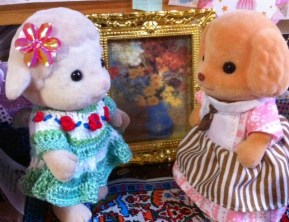
    “Give me a box of bonbons and a pouch of fruit candy assorted with gummy worms to sweeten my vapid imaginations! Oh, and a cup of Hazelnut coffee with a little bit of half-and-half to spark up my dormant spirit that resists to awake after a day-off.” Sally was hoping to make a new Monday as vivacious and jovial as possible, so she decided to meet with her lovely alter ego Bonnie for brisk morning sauntering. Yes, sauntering. Or even perambulating, which in fact reminded her of a baby perambulator.

    “Hi, Sally!” Bonnie’s euphonious soprano voice manifested her presence like a spirit conjured up by a magician in an esoteric ancient language. Sally saw her dear friend approaching her from a distance waving effervescently at her with genuine smile. ” Oh, Dear. You look a bit pale… Have you eaten well? And please tell me not you are in a diet because you need it not.” Bonnie was concerned about a noticeable difference in Sally’s outward view: she looked thinner than before, and it did not look becoming to Sally. No, it was not out of that cardinal jealousy of womankind that knew neither friendship nor truth. In the eye of Bonnie, Sally looked prettiest with her round cheeks and dimpled elbows.

    photo (2)

    “No, I am not on a diet, but I just did not have any appetite… I like walking than eating! Well, let’s call it our “sauntering” as the great poet Henry David Thoreau defined. Do you know Thoreau himself was an aumbulater nascitur non fit? He was an avid walker who used to spend about two hours walking in nature. His study was out of doors like his poet pal William Wordsworth.” “Oh, I did not know it, Sally. I only know that Thoreau was a great naturalist poet and died from consumption. “Yes, Bonnie. That too was right. Soon both adorable ladies were embarking on their ritualistic morning sauntering along the Avenues of trees and flowers with larks and bluetits vivaciously chirping and tweeting, all in nature’s symphony that could make you forgive your foes and love humankind at least for that pristine moment of pleasure.

    photo
    Bonnie, La Bonne amie

    Thoreau was right: the act of sauntering in nature would blot out the strains and cares of contemporary life and anesthetize your weary body and minds against the strains of everyday life. It’s absolute freedom from all worldly engagement. Like Thoreau, Sally thought that sauntering was not an exercise but a kind of enterprise, an adventure of a day that invigorated her spirit and mind. And Sally was hoping that Bonnie would share her pleasure of appreciating the symphony of nature. “You know Thoreau was something of an eccentric genius,” Sally decided to add some tidbit of gossip on the poet. “Oh, really? How so? ” Bonnie seemed intrigued.  “Well, he never went to church but believed in God; did not marry, nor did he cast vote, nor did he pay taxes! But this very individuality endowed him with a crown of literary ascendancy, I think.” “How could he not pay his due taxes as it’s his sacrosanct duty and responsibility as a citizen? You know what, Sally? That’s why I do not like any of these intellectuals who put ideas before their civic duties and personal responsibilities.”

    Bonnie’s truculent remark was a bit startling aberration of her usual diplomatic modus operandi of expressing her opinion. But come to think of it, she couldn’t agree more with her friend about the duplicity of so-called the intellectuals, the new ecclesiastical estate of our modern society. And Sally was inwardly glad to have a friend as thoughtful and truthful as Bonnie. But still, Sally wanted to spare Thoreau from the supercilious learned elites.

    1-210

    The ante meridian sun was suavely sunny in the fiercely blue sky that would remind you of the celestial garb of the Virgin Mary in Rembrandt’s paintings.  The Italians would call the color “azure,” and they were good at making the pigment for Renaissance painters who raved about its lucidity and vivacity of the exquisite hue. And the fragrant breeze was a blessing of the beautiful Titan-goddess Aura for their friendship bound by mutual understanding and love of history and literature. As the two good friends were continuing to enjoy their sauntering in nature, it seemed right that without even going to church on Sundays, you could find the evidence of the Creator in awe of nature’s beauty and feel the presence of the existence just as Thoreau and the late Pope John Paul Second had felt and expressed.

    hqdefault

  • “Mind Your Language” (TV Series 1977-1979)

    1

    Have you ever tried to explain a certain colloquial expression, such as “kick the bucket,” “shoot off his mouth,” or “until the fat lady sings” to someone whose mother tongue is anything but English? You probably have been delighted to find out how meanings of words can yield multifarious feats of creative interpretations, which can also, in turn, be prospective nouveau vocabulary of the most effectively deployed Lingua Franca of our time. After all, that’s what Geoffrey Chaucer and William Shakespeare, and George Bernard Shaw did to the English language, which is still kicking and alive in keeping up with the evolution of our own cultural progress. And certainly, the students in the evening English class are a tour de force of such cultural enterprise in this hilarious original British sitcom “Mind Your Language.”

    The story of Jeremy Brown, an ingenuous young academic teaching English to his slightly offbeat motley crew of foreign adult students at evening classes in an adult education college in London forms the basis of the show. Mr. Brown has to deal with his students’ creatively wily answers to his questions, while trying to instill in them the elements of the English language with his Oxford-educated academic credentials. In fact, it’s the class that gets the laugh by pushing their naive enthusiastic young teacher into an imbroglio of jocular situations all for the celebration of joviality in their evening English class after hard days of work. In bewilderment of his students’ wily but innocuous chicanery, Mr. Brown’s affection for his class grows bigger and deeper as the show continues; you see him becoming something of Jack of all trades for his students as well as the principal, Ms. Courtney. You will find Mr. Brown at the police station, in court, in hospital, on the dance floor at the school fete, and of course at the pubs with his beloved students or Sidney, the cockney school caretaker.

    91QJXCCwS7L._RI_
    The Cast of “Mind Your Language”

    The delightful peals of hearty laughter, the bounty of warmth, and even remedial lessons of English embroider on these three scintillating series of the show produced by London Week Television between 1977 and 1979 for ITV in England. Each of the episodes was ingeniously written with simply brilliant feats of words and ideas on the grounds of realistic situations relating to anyone who speaks English as a foreign language or anyone who deals with such person in reality. Also, the collective efforts and performance of the cast with each actor and actress harmoniously contributing the best of the self to the respective character is the ipso facto gem of the perennial popularity of the show to this date. All in all, the setting, the topic, the storyline, and the cast of “Mind Your Language” give you the idea that in order to make a good TV comedy show that strikes the chords with a wide range of people regardless of ethnic, racial, and/or social backgrounds, all you have to do is to look into the everyday life around you and see if there is anything that transcends the subjectivity of the aforementioned backgrounds in order to reach the universal code of humor and humanity without pontificating social/political ideology. For these reasons, “Mind Your Language” is an unmissable feast of comedy of intelligence, wit, humor, and a touch of innocence that deserves of its recognition in the canons of British Classic Comedy.

  • Lonely Planet California by Lonely Planet

    Lonely Planet California (Travel Guide)Lonely Planet California by Lonely Planet

    My rating: 5 of 5 stars

    FORGET La La Land. Horace Greeley, founder and editor of the New-York Tribune, writer, and statesman whose ingenious wit melded with erudition and humanity endeared him to the American public urged the people on the East Coast, especially educated unmarried women in the east – to move to California for its primordial beauty: “Fly, scatter through the country, go to the Great West, anything rather than remain here.” Also, Henry David Thoreau described California as a pristine virgin land where a terrestrial River of Lethe flew the Lethe of the Pacific. The collective literary rhapsody comes to life in this world-famous travel book with its signature vivid colorful pictures and detailed, itemized information on the region in suavely offhand  convivial narrative style that entices you to love California at first sight.

    Abundant with its rustic and restive natural beauty unsurpassed by glamour of tinsel cities and its unique melding of multifarious cultures and rich history, California is a sun-kissed prize of the States. Take a hiking in Mt. Shasta, and this awe-inspiring mountain will stir your imagination and makes you believe it a home of a sky-spirit as the native tribe believe. If you are in mood for being in touch with the caress of the blue waves away from the meele and reality just for one day, you can elope with your beloved or with your own weary self to Big Sur. Nested against mysterious-looking redwood forests, the Big Sur Coast has all the elements for being a lovers’ paradise where you can be in your most unguarded self and be a Phoebe Cates or her lover in movie Paradise. On the next day, a visit to Santa Barbara will be quite a cultural feat by visiting the 18th century villas, shops, and churches built by Spanish conquistadors and priests. Or you and your fido friend can do some super-fun splashes or even venture surfing at Huntington Beach on weekends. And of course, there are Disneyland and Universal Studio if you want to meet your favorite characters from childhood and roll with what the best amusement parks can provide to your wildest dream at the best.

    This book is a comprehensive overview of the places and history of California in addition to rich remedial information on the rates of currency and estimated expenses expected of traveling the region if you come from a different country. Written by several veteran globe trotters and well-traveled Californians in compilation, reading the book will give you a sensation of listening to your friend’s travelogue or experiencing a jolly tour guide by an amiable cicerone all to yourself for free. Moreover, the book will equip your mind with knowledge of the region, so that when you actually go there, you will appreciate the beauty of the region like never before.

  • Onward: How Starbucks Fought for Its Life without Losing Its Soul by Howard Schultz

    Onward: How Starbucks Fought for Its Life without Losing Its SoulOnward: How Starbucks Fought for Its Life without Losing Its Soul by Howard Schultz

    My rating: 5 of 5 stars

    It was eight years after the founder of Starbucks Howard Schultz had resigned from the position of CEO when the company that he had sown with the wind and reaped in whirlwind was at stake amid the catalytic financial crisis in 2008. The perilous state of Starbucks called for its creator’s return to take the helm of a distressed ship on the verge of sinking into the abyss of obscurity with all its hopeful expectations, respectful achievements, not to speak of all of its shipmates from the management down to the store employees. Schultz could not let all of it happen. He accepted the calling in the capacity of CEO to save the ship and continued sailing onward, which forms the basis of this book.

    What might be considered as an autobiography of a business tycoon at first blush of the title of the book will lead the reader to an interesting peek-a-boo of a successful enterprise that is armed to the teeth with its unique philosophy of practicality and idealism rooted in operational rigor and accountability striving for a healthy balance of profit and social conscience to provide customers with prime quality coffee proprietary to the brand. Schultz’s ambition to perfect the art of making fine espresso as the company’s distinguishing attitudinal value of coffee-making from the competitors is akin to that of craftsmanship of a seasoned artisan of a medieval guild. For example, in the afternoon of one Tuesday in February 2008, Schultz closed all of the US stores to improve the making of espresso because pouring espresso was something of an art, and therefore required a barista to attend to the quality of the beverage even though it meant the huge loss of profits for closing the stores just for one day. To Schultz, taking the ordinary to elevate it to an art also relates to a business principle of putting the sincerest endeavors to the foundation and innovation of the company; it is a right way to win as he believes, “Coffee can’t lie,” which is also reminiscent of what Theodore Roosevelt commented on his favorite coffee as being “good to the last drop.”

    In addition, Schultz offers many more interesting tidbits of the company without disclosing its trade secrets in an informative way: That Starbucks is company-owned and not franchised is something new to learn. Unlike William Rosenberg, the founder of Dunkin’ Donuts, who was a fervent believer of a franchise, Schultz adamantly opposes the idea of franchising Starbucks because ceding ownership of stores to individuals will most likely to mar the enterprising spirit of the company and loosen the cohesiveness of esprit de corps, let alone the principles of providing a customer with the best quality beverage in a social yet personal environment between one’s house and job. Besides, the company’s provision of full health care benefits to all employees, ranging from the corporate heads to part-time attendants in stores points to the veracity of Schultz fostering of social conscience in the course of making profits, withal.

    Onward is a testament to the steadfast adherence to cardinal principles of playing a good clean competition in a business world without becoming a tainted soul. That is, achieving success in promoting its entrepreneurial profit growth and humanistic idealism is all over but the shouting. It might make the reader wonder if Schultz has heard the adage of Ralph Waldo Emerson during his lecture to the audience in the height of the Lyceum Movement: “Knowledge, plus moral character, promotes business success.” All in all, Schultz’s touchy-feely narrative surprisingly devoid of self-aggrandizement or ostentatious display of his lifetime achievement, relates a tale of a man whose ambitious but admirable philosophy of entrepreneurship rigorously kept against the insurmountable odds with  the heart of a man responsible for his legion of employees and their families appertains to the reader in one way or another. Upon reading the book, the reader will feel a bit privy to his/her regular Starbucks on a next visit in a nice sort of way.

    저장