Tag: reading

  • New Possum’s Book of the Curious Cat


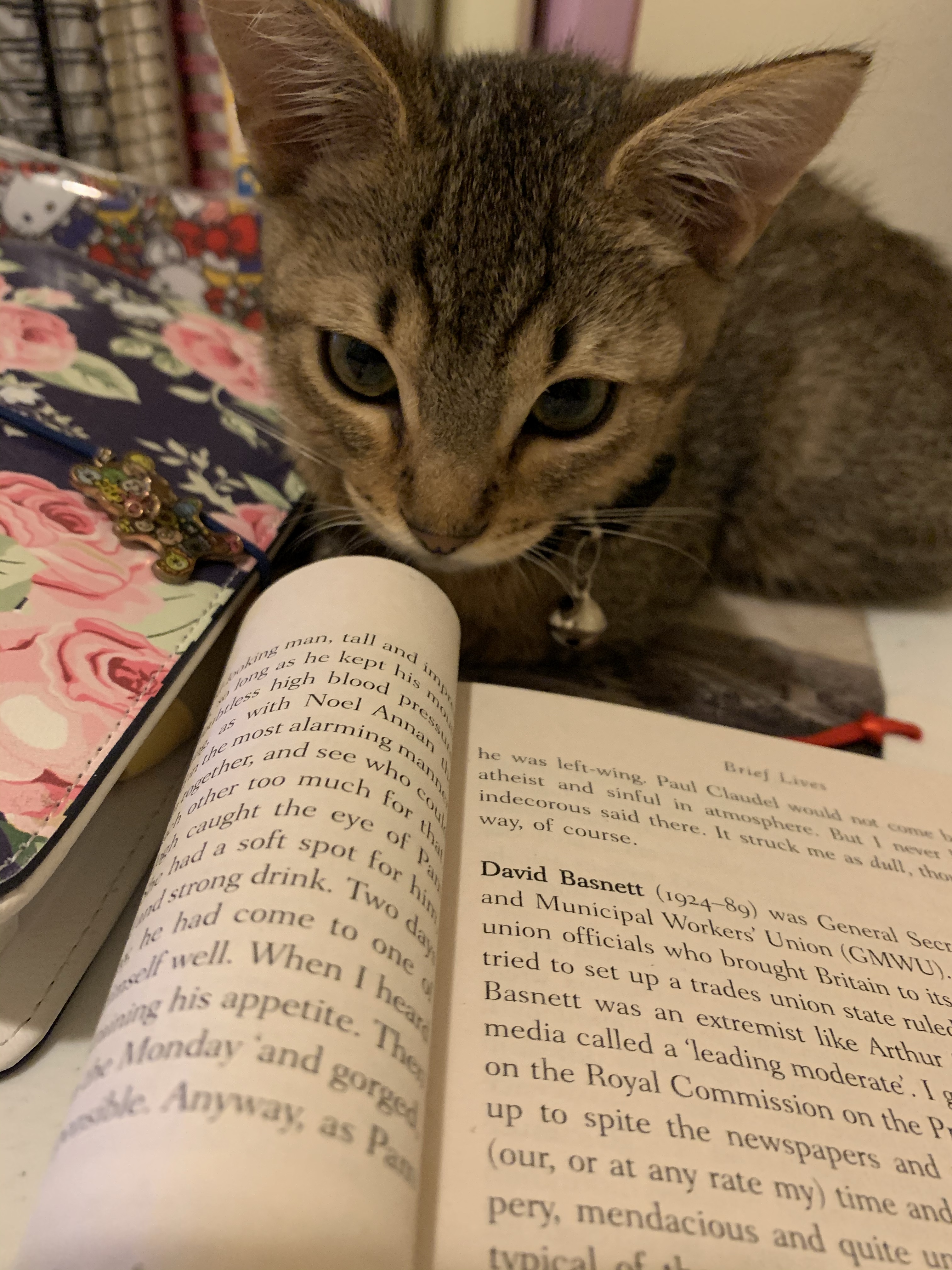
    There’s once a cat name Romp Pomp Bunter, aka the Curious Cat,
    who liked to romp with pomp and bunt his head against
    his guardian, the woman with the beautiful but lonely heart.
    She named him in rapt contemplation of the thought, of the thought
    of his name; his ineffable, effable name, debonair and extraordinary.

    The Romp Pomp Bunter has a secret that no one knows it:
    The Romp Pomp Bunter once saw a grand statue of Bastet
    In a book on the history of cats originating in ancient Egypt
    And was so impressed with the splendid grace of the goddess
    That he wanted to emulate the mysteriously beguiling poise
    Even if he was a Californian moggie tomcat of Los Angeles.

    But the Romp Pomp Bunter, ever the Curious and Adventurous,
    An orphan kitten whose parents nobody knew or cared even,
    Felt that he was originally from the Ancient World with a reason
    That he looked nothing like the ordinary domestic short-haired,
    The insignificant, the common, the trite, the obsequiously tamed
    Breed of Cats that contrasted the Egyptian Mau, the First of Firsts
    Endeared to Pharaohs, Queens, Priests, Soldiers, Farmers, and Artists.

    So, the Romp Pomp Bunter believed that he was the Royal Descendant,
    The indolently elegant, adoringly capricious, the inscrutably alluring
    Egyptian Mau, the paragon of the goddess Bastet, divinely beguiling.
    You see, that is why his name is the Romp Pomp Bunter, the Curious Cat.
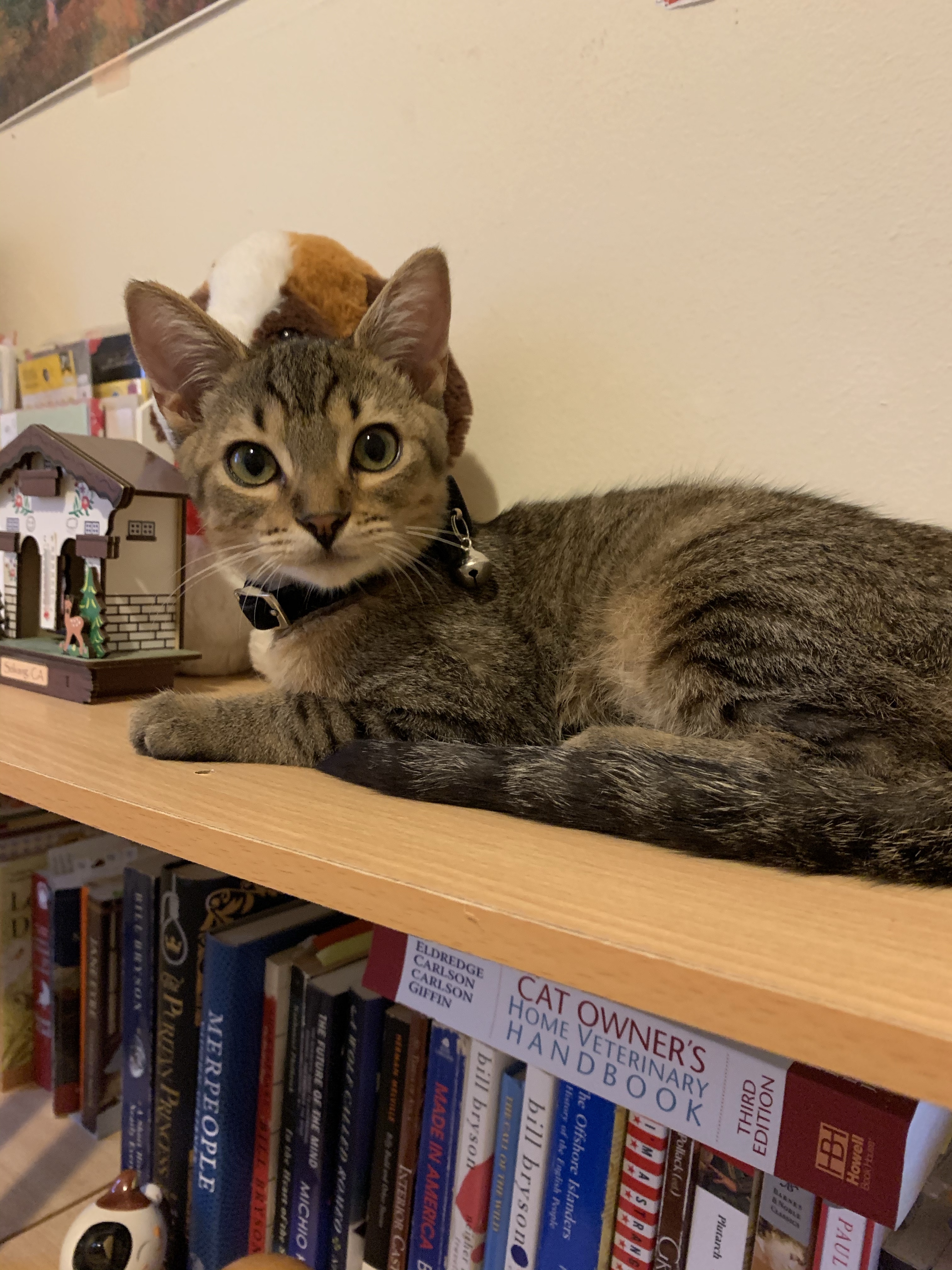
     

  • The bio of seventeen weeks old Tabby Tom

    Hi There. Nice to meet you!

    Ralph Waldo Emerson said: “What lies behind us and what lies before us are tiny matters compared to what lies within us. How rightly so. Despite my sixteen weeks of life thus far, my feline instinct feels that there are unpathed waters and undreamed lands within me. So I deem it high time to unravel the mystery of Me.

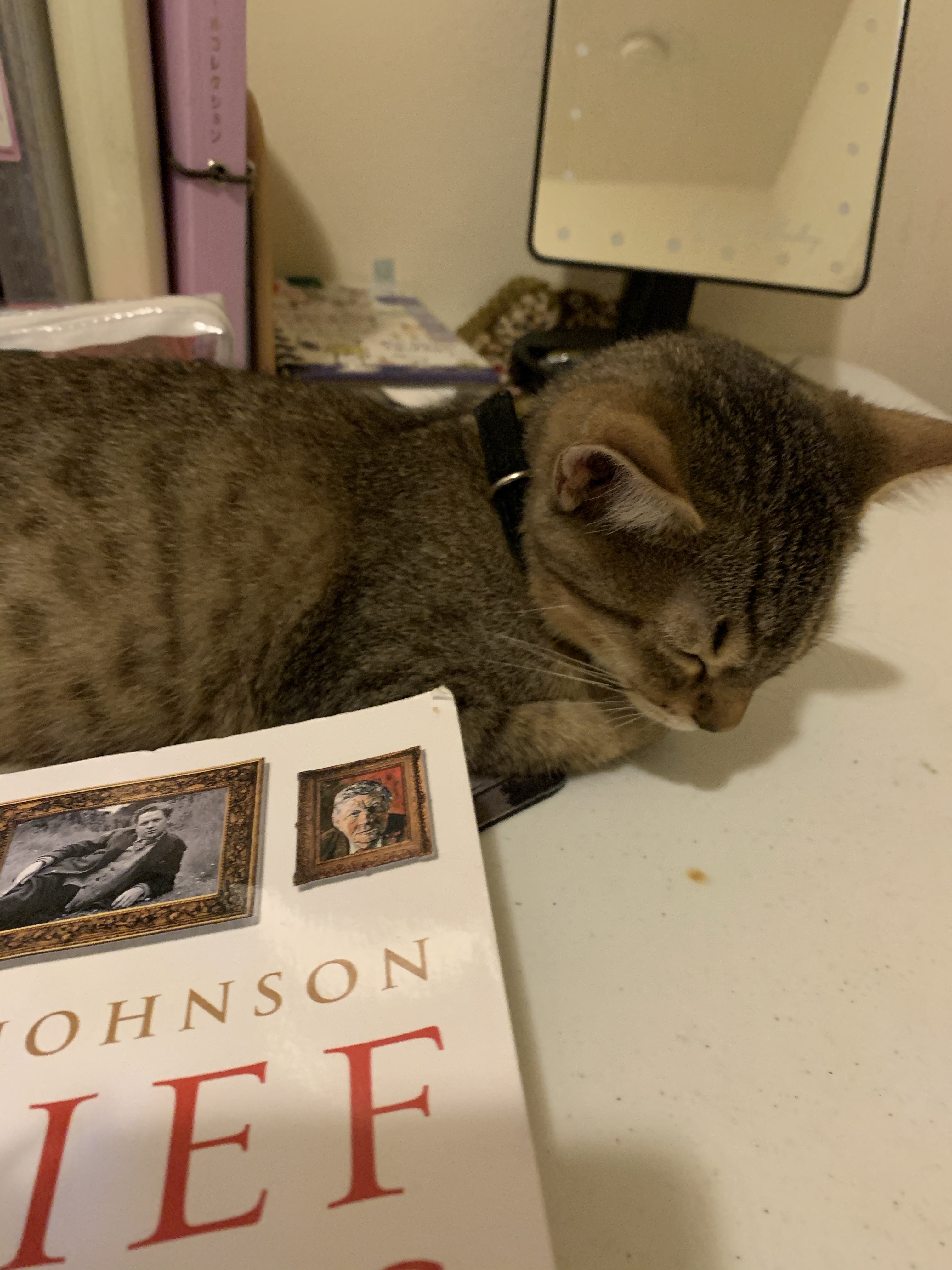
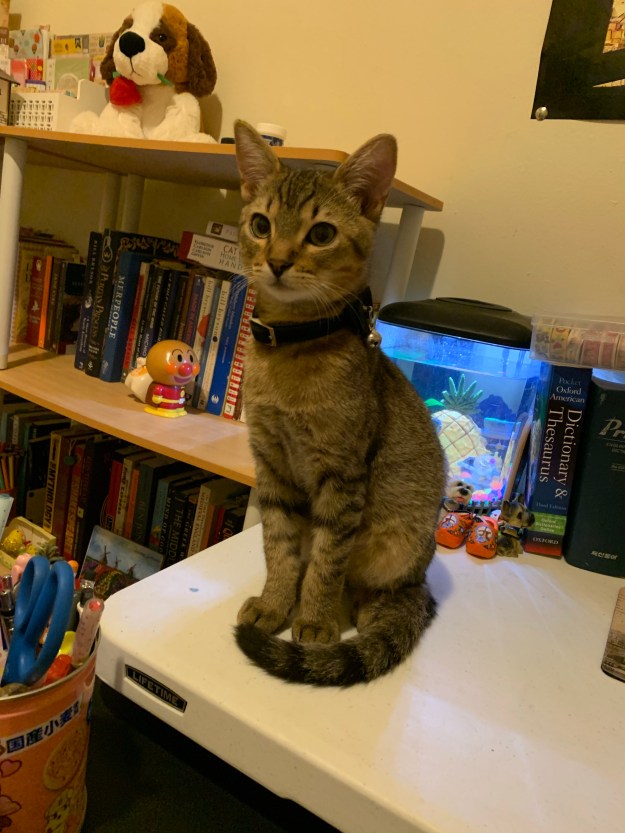
    My name is Toro, the co-editor at large of this blog with Stephanie. I am sixteen weeks old. I am a domestic short-haired tabby tom, but Stephanie believes that I am of an Egyptian Mau, admired by ancient Egyptians and the divine cat of Ra, God of the Sun, as portrayed in the Book of the Dead. I think Stephanie’s hypothesis of my suspected heritage is due to my beautiful turquoise eyes and dainty figure. She also seems to want to liken her and me to Cleopatra and her beloved Mau. (Wow!) Well, no one can blame her for regaling herself with such lofty imagination of my elated pedigree because – in all honesty – I look like one. What can I say? Seeing is believing, and beauty is in the eye of the beholder. Then the truth is to the end of reckoning, as the Bard chimed in.

    As is the queen, so is the subject.

    Despite my regal appearance, my biological and family background is that of an orphaned pauper, lesser than the pauper who exchanged his identity with a prince because he had mom and dad. When I was born, my mother left me alone, so a passing old lady took me to a nearby shelter where I met my sister Stephanie. I followed her because there was something that connected us from moods to tendencies and personalities. We share our peculiarities in mutual solitude shared by orphaned patronage of love and care.

    How’s the writing going?

    Because I was left alone to tend myself at so young an age, I am prone to frequent mood swings from high and low, which often makes me frantically run around the room back and forth, up and down, and left to right without stopping. I know this strange behavior of mine startles poor Stephanie, but I can’t help such impulsive pulsing as it is part of my irrepressible feline nature. However, one thing is sure that when I see Stephanie returning home from work, my whiskers are moving all withers, my tail rises to fortune, and my little feline heart fills with meows and more meows.

    This much is the bio that I dictated to Stephanie for my new career in publishing. As I am excited about this new adventure with Stephanie on board, I hope readers will join us in our one of a kind literary enterprise in joyous spirit! Meow.

    I am done with my share. So, I am taking a break.
  • ‘A Journal of the Plague Year’, by Daniel Defoe – review

    A Journal of the Plague YearA Journal of the Plague Year by Daniel Defoe

    My rating: 5 of 5 stars

    The biblical cyclicity of history proclaims that what is happening now happened before because there’s no new thing under the sun. As I agree with the cyclical history theory, I prefer stories that confirm the continuity of human nature, which results in this felicitous book I came across on the Kindle store. The precedent epidemic scares and the response to them in Daniel Defoe’s A Journal of the Plague Year, a classic 1722 account of the Black Death that devastated England from 1664 to 1665, do not read no less different than ours. Defoe’s recounting of the plague successfully resurrects the spirit of the epoch as his narrator guides the reader to the places and scenes of the seismic event in the capacity of a charitable and knowledgeable guardian of posterity, making them surprisingly familiar with ours.

    It is a literary eye-witness account of what happened during the resurgence of the bubonic plague that had ravaged Europe hundreds of years earlier in the semblance of a nonfiction narrative. Even though Defoe was only five years old when the plague swept England, his fictional narrator feels very real and the account telltale as though it had been written it in the spirit of Veni Vidi Vici. So much so that the story seems more veritable than the counterpart of Samuel Pepys, whose narrative feels comparatively prosaic without the personal charm of the narrator. The reader will also learn that the 17th-century modus operandi of dealing with a pandemic is not that far from the current 21st-century preventive measures of social distancing, personal hygienic disciplines, and other relevant systematic societal restrictions.

    Defoe holds up a mirror to his posterity that shows what it was like during the epidemic scare and what the people from days of yore did to sail through such calamity as a wise and warm advisor to our current global pandemic situations. In fact, while I was reading the book, I was surprised by how similar the cautious measures decreed by the authority were then to our own now. In my opinion, this book replaces Boccaccio’s The Decameron as a must-read during the pandemic, because of its power of reality drawn on empirical oral accounts so close to the lives of the ordinary folk that we can relate to our own time.

    View all my reviews

  • ‘The Time Traveler’s Guide to Elizabethan England’, by Ian Mortimer – review

    The Time Traveler's Guide to Elizabethan EnglandThe Time Traveler’s Guide to Elizabethan England by Ian Mortimer

    My rating: 5 of 5 stars

    People tend to make an anachronistic mistake of assuming that their times are more culturally and socially superior to their previous generations’ times, whereas forty years on an evolutionary scale amounts to a million second on a twenty-four-hour clock, the amount so infinitesimal that it makes you smirk. What makes us set apart from the predecessors of our human civilization is not how they looked but how they looked at the landscapes surrounding their everyday lives, which led to the creation of the ethos of society peculiar to the different historical periods of time. This Thucydidean approach to history as a branch of social science as well as humanity strikes the chords with Ian Mortimer’s perspectives on his Elizabethan ancestors in his scintillating book, The Time Traveler’s Guide to Elizabethan England.

    Rich in details and splendid in descriptions that successfully and naturally resurrect the period, Mortimer’s vividly atmospheric accounts of the era transform the people and the landscapes of Elizabethan England from one-dimensional textual elements to animated figures in his engagingly vivacious narrative that strut in the mind’s theater of the reader, commanding attention in every chapter in a way that looks virtually real, evoking a phantasmagorical display of the periodical images. Mortimer is a knowledgeable and witty guide well versed in the English Renaissance with a practical sense of reality, which makes him something of Dr. Who, who pitchforks his wide-eyed volunteer reader to the subject time and then materializes when the reader is in a pickle. He shows the reader both the beauty and the beast of the Elizabethan society at its core with his wealth of knowledge drawn upon extensive research on the period and general erudition without putting a supercilious air of a highly learned man and stands in awe with the reader of the cultural and social progresses of Elizabethan England that began to define the “Englishness,” with which we tend to associate when the name “England” chimes the bell of literature, religion, and geography, all in the collective image of being “English.” Mortimore does this wonderfully with his engaging narrative skills that will not make you bored and skip a page.

    Mortimer as a literary Dr. Who aims to bring the gaps of time and space between the reader and the populace of Elizabethan England to elucidate his stance on the truth about unchanging human nature wrapt in a periodical costume; in fact, history is a branch of literature made by artificers and artists with stories full of events, persons, and places that are woven into a tapestry of time, which also reflects how we have become what we are. In light of this, Mortimer is a cross between Herodotus with his entertaining narrative skills and Thucydides with his objective analysis of the historicity of society and culture. At the end of the book, the reader will find William Shakespeare, one of the most notable figures of Elizabethan England, holding up “a mirror to Mankind and shows people what they really are.” This is a cracking read packed full of interesting tidbits on the ways of life in Elizabethan England which he relates with wonderfully lucid insights into the turbulent but magnificent era that marks an indelible landmark in the history of England, and ultimately, of the world.

    View all my reviews

  • How well they’re read, to reason against reading!

    I have recently read an article about popular instapoets from one of my subscription magazines and been appalled at the author’s dyspeptic raillery on the poems of the known poets and brazen-faced mockery on the literary merits of the works by playing a role of agent provocateur following the instapoets just to mock their works with malice.

    Just because one does not like another’s work doesn’t ipso facto endow the person with right to desecrate the work and to insult the author by putting him/her in the pillory and, thus dispiriting the mind and the heart that are indeed “noble” and respectful. As a hobbyist writer of my blog who has the temerity to write in English, I am now indeed in more sorrow than in anger that there might be agents provocateur or double agents in hides of followers intent upon deriding my amateurish but sincere writings.

    The instapoets, bloggers and anyone dabbling in the craft of writing are the cult of Knut Vonnegut’s maxim: “To practice any art, how well or badly, is to make your soul l grow. So do it.” I hope the author and his likes will understand it with magnanimity of the learned literati who will not use their learning to reason against these noble spirits.

  • A reader lives a thousand lives

    cropped-img_4046

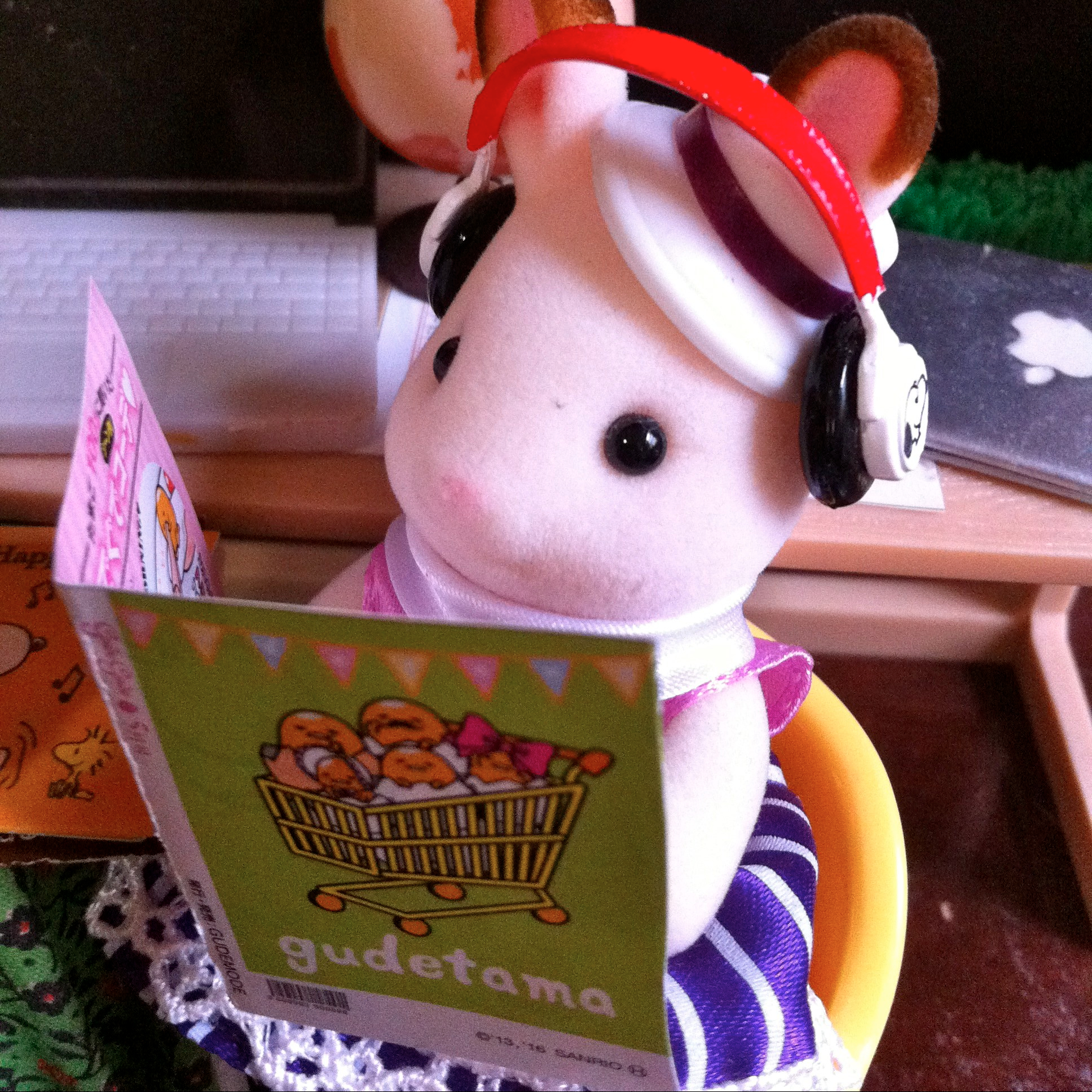
    Seraphina Rabbite, the habitual reader, believes in the power of reading. It generates pleasure peculiar to the literary medium of communication, the magical realm of make-believe reality, the alchemy of imaginativeness and sensuousness, all in the artistry of the literary cunning folk called writers, casting spells on the readers to pass over to the minds of the creators and of the characters. She believes that writer and reader engage in a magical ritual of connectedness through vicarious experience in the moments of empathy, the epiphany of the Eureka moments when the third-dimensional wall between the writer and the reader tumbles down. That is why Sally thinks that all writers, professional and amateur, are in one way or another possessed of certain supernatural feats of spurring their restless spirits on writing.

    That said, Sally has scribed the effects of reading in a form of her self-professed credo as follows:

    1. Reading is both entertainment and stimulation of mind.
    2. It is in their appeal and in their power to bestow pleasure, self-satisfaction and the joy of mental growth to readers.
    3. It takes readers from the humdrum existence, the rut of life, to stimulate the minds to fresh endeavor, to give them a new viewpoint upon existential problems, to enable them to get a fresh hold upon themselves.
    4. It intends to show the progress of the human race within the historical times as depicted in books.
    5. It is an active force toward the sound mental equipment of reading people.
    6. It takes readers out of the rut of life in the town they live and makes them citizens of the world.
    7. Readers understand the minds of the writers by passing over to the inner world of the writers.

    Shakespeare said of reading thus: “This is true; there’s magic in the web of it.” If writing is akin to a literary witchcraft, reading is a voluntary intoxication of the witchery elixir in expectation of crossing over to the liminal zones, the in-between zones of our reality and imaginary world. The best summation on books and its effects comes from our contemporary Stephen King: “Books are a uniquely portable magic. You experience magic every time you read without knowing its influence on you. Go for it.