Tag: reading

  • For Love of Fate: Book review on Man’s Search for Meaning by Viktor E. Frankl

    Man's Search for MeaningMan’s Search for Meaning by Viktor E. Frankl

    My rating: 4 of 5 stars

    Many books are to be tasted or swallowed, whereas certain books are to be chewed and digested for the nourishment of our minds and souls, such as Man’s Search for Meaning by Viktor E. Frankl, the founder of Logotheraphy, the third Viennese School of Psychoanalysis, along with Freudian psychoanalysis and Adler’s individual psychology, that deserves of its recognition of being one of the books of our time for its content as well as its origin. This book is not of survival literature of the Holocaust but of a memoir of a courageous human soul that did not succumb to despondency. It is less about what he suffered and lost as a prisoner at four concentration camps during World War II than it is about the sources of his intention to live through it, attesting to the words of Nietzsche: “He who has a why to live for can bear almost any how.”

    Man’s Search for Meaning is a fruit of Frankl’s resilient soul ever resisting the existential horrors of situations that life could afford; whenever the miserable conditions of the camp suppressed the spirit, Frankl diverted such negative energy to reconstructing the manuscript which he had lost in the disinfection chamber of Auschwitz and scribbling the key words in shorthand on tiny scraps of paper. In fact, it was a way of intensifying his inner life full of intellectual resources and spiritual freedom to which he could retreat from his terrible surroundings by forcing his thoughts to turn to another subject, which made him enable to rise above the situation, above the sufferings of the moment.

    In addition to the willful act of deluding anxiety and negative feelings, Frankl ensures us that a sense of humor is another of the soul’s weapon in the fight for self-preservation and can afford an aloofness and an ability to transcend any situation, for developing a sense of humor and seeing things in humorous light is a kind of trick learned while mastering “the art of living.” That is, by laughing about any sordid or callous situation, we ease our mental distress and are able to take on a different stance on the situation in a less negative way that is essentially not overwhelmingly stressful or unbearable. After all, humans are the only biological organism that can laugh, and thus this sense of humor is our prerogative as human.

    It is also interesting to learn that the prisoners who did their utmost best to look good even in the sordid surrounding survived the dreadful experience because they looked “fit” for survival. This act of grooming links to will to meaning – that is, a will to live- that has physiological bases of psychic energy which rejuvenates the body and the spirit to see a why to live. On the other hand, there was a young inmate in the camp whose sudden loss of hope and courage to live affected his already typhus-stricken body so adversely that such mental condition lowered the man’s temperature and resistance against typhus, which ultimately caused his premature death. This episode shows us that what we believe becomes our truth and thus can alter our reality with another one, a virtual reality as a product of psychosomatic effect, which also links to the three sources for meaning of life as follows:

    Creative Value – Doing something meaningful, such as Frankl’s scribbling the manuscript
    Experiential Value – Appreciating beauty of the Arts or love, such as his thinking of his wife in another camp whenever he was on the verge of falling into an emotional distress; and
    Attitudinal Value – Triumphing over biological, social, and cultural inhibitions during difficult times, such as Frankl’s endless efforts to divert his thought to another object of lofty value. It is this value that gives to our sufferings meaning by the way in which we respond to.

    Man’s Search for Meaning by Viktor E. Frankl testifies to Nietzsche’s dictum as aforesaid that suffering can grow out of existential frustration in the sense that there is a point to sufferings, that there is a hidden meaning in the guise of suffering, as there is only one right answer to the problem posed by the situation at hand. The essence of existence, which is search for meaning of life, underlies our awareness of a possibility against the background of reality – that is, what we can do about our given situations, not depending on the happenstances. Our emotions, which are interpreted as suffering, cease to be suffering as soon as we form a clear and precise picture of it by applying the three sources for meaning of life. Viewed in this light, this book is a veritable guide to how to overcome the struggles of our lives and achieve demands imposed upon our daily tasks however insurmountable they seem, which gains utmost credibility against the backgrounds of his own anguish in Auschwitz.
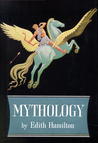
     

  • The Birth of Humanities: Mythology by Edith Hamilton

    MythologyMythology by Edith Hamilton

    My rating: 5 of 5 stars

    The essence of myths is threefold: it is a branch of natural science, trying to explain what humans saw around them. It is also a genre of pure classical literature. Besides, mythology is religion, the deepening realization of what human beings needed in their gods and goddesses. That is, mythology is a way to show us the way the human race thought and felt untold ages ago. Through mythology we are connected to the men who had close relationship with nature, who had no real distinction between the real and the unreal, unchecked by reason but with the spirit. In this light, Edith Hamilton’s Mythology breathes life into the Greek, Roman, and even Norse myths, which are the bedrock of the western civilization – the stories of gods, goddesses, and heroes that have imbued the humankind with multifarious creativity from time immemorial to present.

    The aim of this book is to produce knowledge of the myths that had been recorded by ancient writers and poets. In fact, the myths as we know now are the creation of great poets, one of which is the Iliad by Homer. Unlike the Egyptian, the Greeks made their gods in their own image and breathed them with their emotions and feelings. It is uncertain how the genesis of the Greek mythology came into being; however the earliest Greek poets arrived at a new point of view which had never been dreamed of in the world before them. It was at this point that mankind regarded itself as the center of the universe, intent upon producing the beauty of human, which was the very consummation of reality.

    According to Hamilton, what distinguishes Greek mythology from others is it’s foundation on the factual reality. The nonsensical took place in a world, which was essentially rational and matter-of-fact. For example, Hercules always had his abode in the city of Thebes, save when he took of a journey to accomplish his twelve labors; Aphrodite’s birthplace was just offshore from the island of Cynthera; Pegasus’s comfy stable was in Corinth. There was a sense of reality in the mythological world but no place for magic.

    Mythology is not a tome that requires of modern readers perquisites for scholarly knowledge of academic languages, intellectual superiority, or historical knowledge of the ancient time. It is an anthology of entertaining and inspiring tales of gods, goddesses, nymphs, and mortals who fell out of favor with the divine, written in plain English; it’s like listening to a very well-read story-teller. In Mythology, we meet all from the mercurial gods and jealous goddesses on the Mount Olympus even to Norse gods in Valhalla. We are fascinated with tales of Cupid and Psyche, Odyssey’s Golden Fleece, and forlorn Clytie whose love for Apollo pined away. We discover that Paris of Troy used to live with a nymph called Oenone before deserting her for Helen of Sparta. Also, we listen to the legends of constellations of the stars as well as many other references for literature, paintings, and music that have been deeply inspired by Greek mythology.

    Mythology is the most comprehensive and lucidly accounted tales of mythology based upon Hamilton’s extensive collection of the sources from great ancient poets and writers. Of all other books on mythology of the western civilization I have encountered, this book is by far the most excellent in providing readers with both entertainment and knowledge without academically esoteric approach or literary pompousness. Mythology succeeds in  offering education and appreciation of art that has been passed down to our present time for thousands of years. For this reason, Mythology by Edith Hamilton is a touchstone for books on mythology.


    저장

    저장

  • Neither Here Nor There: Travels in Europe by Bill Bryson

    Neither Here nor There: Travels in EuropeNeither Here nor There: Travels in Europe by Bill Bryson

    My rating: 5 of 5 stars

    When John Steinbeck, who wrote The Grapes of Wrath, East of Eden, and Travels with Charley: In Search of America, met a young man in traveling across America in his converted camping car named Rocinante, he met a young man who longed to travel to Europe with the idealization of the continent as he had seen in magazines and books. Steinbeck, being already weary of the existential dealings on the road, advised him, “What’s the need when the world is conveniently at your fingertips in colors without all those travel-related hassles? You can see the world in books and films and still keep your ideal images of Europe.” Which is exactly why Bill Bryson, an American- born British writer renowned for his great sense of wit and superb command of the English language, decided to embark on his journey once again twenty years after he and his pal Katz backpacked across Europe. Bryson wanted to see Europe in itself with a tabula rosa and write something about the cultures that seemed at once so different and yet so oddly similar in his own eyes. The result is the touchy-feely, impetuously hilarious, and astonishingly insightful Neither Here Nor There.

    Bryson’s journey began and ended in the two geographical outposts of Europe, Hammerfest and Istanbul. By virtue of his narrative both so inviting and vivid with the use of languages both colloquial and literal that are so characteristic of his writing style, readers will easily and willingly follow his train of travel through the chapters, as he first takes us to Hammerfest to watch the beautiful shimmering gossamer of Northern Lights. We find Bryson feeling not-so-attractive while sitting on a bench at a park in Copenhagen, where all people looked handsome and beautiful. Such existential estrangement became heightened in Belgium, for all along he felt homesick, reminiscing about an old diner in Iowa and its cantankerous but hearty old waitress he frequented. In Amsterdam, he was concerned about the country’s “oddly wearisome” social conventions in regard of its complacency toward untenable political stance under the banner of tolerance. We see Bryson in the streets of Stockholm disappointed in the perfect socialist country littered and defiled by wastes mindlessly thrown away anywhere by its civilized residents without a shade of shame.

    And who would not but sympathize with Bryson’s pathos in Florence? Here in this City of Flowers, Bryson saw the ubiquitous Gypsies importune everyone, with their haggardly clothed little children as an instrument for orating their poverty to passers-by at which Bryson was righteously indignant. He questioned himself why the police were not making any efforts to stop the Gypsies from harassing people. Further in Austria, we feel for him as his idealization of Austria as the epitome of all things European was ungraciously punctured by unfriendly services, an irritatingly slow mode of business operation, and a lack of charming coffeehouses where he could rest his spent body and spirit for a time. What a Don Quixote-like journey full of episodes  it was.

    Bryson’s cultural notes of each country he visited were, however, devoid of malicious sarcasm or jingoistic ignorance of its customs or social conventions. Things that he experienced in his travel in Europe was a clash of cultures he came from – originally Iowa, The U.S. and England afterwards – and cultures he had imagined in his mind, all of which spellbound him like a Boy in Wonderland. In fact, what fascinated him in Europe was his discovery that the world could be full of variety in which there were many different ways of doing essentially identical things, such as eating and drinking and buying movie tickets. Unlike other travel writers who only write about the sunny sides of the countries and peoples in their interests, Bryson is unafraid of telling readers his observations through his experience with a certain kind of fraternal or avuncular affection added by his trademark wits wonderfully interwoven with intelligence and humanism.

    The travel ended in Istanbul with his hope of seeing more of the world, his everlasting wanderlust still luring with a vision of Asia across the Bosporus Bridge. He’s all up for the unforseeable happenings awaiting for him to encounter because that’s the glory of foreign travel, a travel to a terra ingonita where anyone can become a stranger, a wanderer blissfully ignorant of almost anything. To Bryson, the whole existence of traveler is to be constructed by a series of instantaneous guesses and endless actions. Notwithstanding all the woes of a lone traveler who was culture-bound, Bryson’s travels in Europe was something of his experience in Wonderland filled with a great sense of childlike wonder and appreciation of the wonders of each country in its own colors. Neither Here Nor There is his tale of veni vidi, vici experience and entertaining accounts of the world through his eyes with amusing and telling details resembling none other than themselves.

    저장

  • The Lives They Left Behind: Suitcases from a State Hospital Attic by Darby Penney

    51emoQ2iSAL._SX327_BO1,204,203,200_The Lives They Left Behind: Suitcases from a State Hospital Attic by Darby Penney
    My rating: 4 of 5 stars

    I believe that reality is always better than fiction in truth of events and artifacts that accompany the stories. Besides, if such story chimes the bell of my emotion even in the faintest decibel, I dive into it. In this regard, this book was a sure thing to read about people who were inflicted with “sacred disease” -as termed by Hippocrates – how they got there and what they were really like as individuals with dreams, memories, hopes, and wishes.

    jon-crispin-dmytres-suitcase-01
    One of the suitcases found in Willard Psychiatric Center courtesy of phaidon.com

    Hundreds of derelict suitcases came into light when Willard Psychiatric Center in upstate New York were closed in 1995, ending its century long history of a public mental institution. Each suitcase has a story to tell with pictures, bus/train tickets, diaries, letters, and even teacups contained herein. In the eyes of the author, it was like the fateful revelation of the outcry of the people who had come to live in the hospital. What I have found in reading this book is that many of the patients do not seem mad or needful of being institutionalized. Many of them suffer from loneliness, abandonment, and ill treatments from others. To my consternation, if a spouse or a family member was regarded irksome, bothersome, and troublesome, a ticket to the lifelong institualization was a sine qua non solution to get rid of the person forthwith.

    A truly powerful testimony to the dignity of the people who found themselves on the edges of society, The Lives They Left Behind is comprised of heart-wrenching accounts of those whose lives were immortalized in the artifacts they forgot to claim ever more; that there is only a thin layer of difference between those within and without gives rise to requisite re-examination of what constitutes normalcy of behaviors as “socially and culturally” accepted because in one way or another we all carry a certain degree of “madness” within -for better or worse.

    저장

  • The Rise of Fido : Book review on Dogs by Raymond Coppinger

    513eG+OX1CL._SX329_BO1,204,203,200_Dogs: A New Understanding of Canine Origin, Behavior and Evolution by Raymond Coppinger

    My rating: 5 of 5 stars

    We claim to love dogs, and yet we know so little about them. We long for their unconditional affection, but we are ignorant of their needs and our faults altogether. Moreover, we like to think dogs as wolves and believe it so. Since I am a kind of person who says hello to a dog I encounter in the streets, this book caught my eyes and mind to know more about dogs, a beautifully different organism worthy of our attention and care, and to find out how they got their way based upon scientific and cultural examinations of dogs.

    Faculty_RayLornaCoppinger_011_300-237x300
    Raymond and Lorna Coppinger with their fido friend courtesy of google

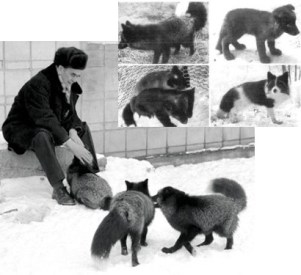
    This book, written principally by Raymond Coppinger, professor of biology at Hampshire College, a former sled dog racing champion, is unique among many other books about dogs I have read in terms of its scientific bases of anthropological and behavioral studies of canine familiaris, i.e., the dog. The most significant fact about this book is that the author forthwith and forthright argues that dogs are not direct descendants of canis lupus, the wolf. Furthermore, he counters Darwinian evolutionary theory based upon the three factors of anthropological evidence, behavioral ecology, and Belyaev’s tamed foxes.

    dex
    Pemba Village Dogs courtesy of marinebiologist.com

    To begin with, the author takes readers to to a village of Pemba, an island off the East African coast in the territory of Tanzania, where the inhabitants still live on a boundary between hunting-gathering of the Mesolithic period and agriculture of the Neolithic period. In Pemba, dogs exemplify village dogs with a prevalent display of the uniformity of shapes, sizes, and colors of the coat, all of which indicate isolated gene pool untainted by any other strain of dog that would introduce a variation in appearance. The Pemba village dogs have co-habituated with their human inhabitants by choosing a niche close to human existence as a place of steady supply of food, safety, and reproduction. This leads to a conclusion that they are the descendants of the first evolved domestic dogs from the Mesolithic period of human history.

    Belyaev_foxes
    Dmitri Belyaev and his tamed Silver Foxes courtesy of es.turopedia.com

    First, people created a new niche called the village. Then some curious wolves came to the niche and gained access to a new food source. These wolves adapted to this new convenient niche are “genetically” predisposed to show less “flight” distance than those of their wild peers and become tameable. A Russian geneticist named Dmitri Belyaev’s long term experiment with the Russian Silver Foxes corroborates this domestication process: after 18 generations (36 years on our evolutionary clock), the foxes became naturally tamed and remarkably resembled dogs in appearance and temperament.

    domestication-and-evolution-41-728
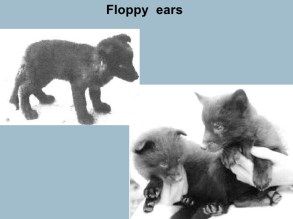
    Characteristics of  juvenile features of wolf pups courtesy of evolution-slideshow.net

    Moreover, Coppinger ardently disagrees to the wolf-turned-dog theory. Rather, dogs descended from a “wolf-like” species that became extinct is their paramount contention to the widely accepted opinion. In addition, dogs possess characteristics of neoteny by retaining wolfish juvenile shapes and features, such as round and short facial shape with floppy ears, and care-soliciting behaviors into adulthood. That is, by keeping the cute and lovable appearance of wolf puppies into adulthood, the behavioral developments of dogs still remain in perpetual juvenile stage, which makes themselves well adapted to the human inhibition and thus able to survive in their niches for their safe existence.

    1a254e2871ced71d4b2d38a9b598403e
    A Little heartbeat at my feet courtesy of naver.com

    Dogs are one of the fewest animals who share our lives and require our tender attention and care for the reasons concerning the above and most of all, the feelings we get when we see the eyes of dogs that are so soulful and insightful. We need to take a close look at our canine fellow creatures in their true form based upon their biological needs and behavioral tendencies, to love them as they are, and treat them as a wonderful creature of nature that has been with us for so many years in our human history.

    Don’t forget the little heartbeat when a dog is at our feet. Never forget that they are only dogs.

  • The Timeless Art of Jean Francois Millet: Book Review on Jean Francois Millet by Estelle M. Hurll

    Jean Francois MilletJean Francois Millet by Estelle M. Hurll

    My rating: 5 of 5 stars

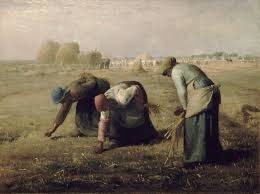
    I was 13 years old when I first saw “The Gleaners” reprinted on a small tin plate as a complementary bonus to a carton of vanilla ice cream my mom had bought for me and my little brother. The painting had a peculiar charm that diverted me from the love of my favorite ice cream; its serene but picturesque impression of the three working women and the pastoral scene produced in me a peace of mind and a sense of comfort. Since that time, the painter of “The Gleaners, ” Jean Francois Millet, has become my favorite painters of all. So when I came upon this book by Hurll published in 1900 on Kindle Bookstand, I was already downloading it on my kindle with a kind of same delight I felt when I was 13 years old.

    x
    “The Gleaners” By Jean Francois Millet courtesy of wikipedia

    Jean Francois Millet (1814-1875) was born into a hardworking and caring peasant family who had been residing in the old province of Normandy, France through the generations. The rustic, chaste beauty of the pastoral scenery and the coarse but artless and diligent village people who toiled to grow life out of land and tended flocks of livestock for living were imprinted on the senses and sensibilities of Millet. His subject matters were already indelibly marked in his nature. It is in fact, this natural beauty that became his muse and the epitome of his aesthetic beliefs. He spurned the artificial beauty of the forced setting. He believed, “The beauty is the fitting,” which links to what Saint Augustine explained in his “De Pulchra et Apte,” meaning “The Beauty and The Fitting,” in which two kinds of beauty: beauty inherent in the thing itself, and beauty by virtue of thing’s use were explained. In this regard, Millet’s tranquil beauty pertains to the latter as shown in his paintings of the pastoral life and its inhabitants.

    What’s special about Millet’s paintings are distinctive features of his art. To illustrates, in “The Angulus,” “The Gleaners,” and “The Shepherdess,” the landscapes cease to be a mere setting or background in figure pictures and become “organic” parts of the compositions, focusing on the human sides in the expressiveness of the figures, and thus make both figures and the landscapes interdependent, fitting together in a perfect unity. Millet also mastered in the effects of changing the light during different hours of the day, which creates the ambience of the normal and the quiet in the paintings.

    cropped-g1mllt010_5_1862-1864-bergere-gardant-ses-moutons.jpg
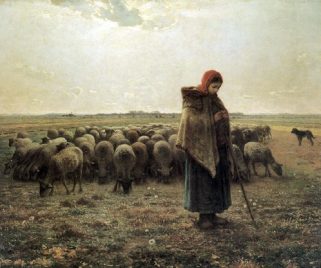
    “The Shepherdess” by Jean Francois Millet courtesy of 1000 museums.com

    Although it was “The Gleaners” that allured me into the world of Millet’s paintings, my favorite is “The Shepherdess” completed in 1862. There is a young shepherdess knitting like she is transfixed, while her flock of sheep and her assistant black little dog are following slowly their pensive guardian. The expression of her face begets many thoughts on the sacredness of work and its worker that strikes into your heart with a sense of respectfulness, which is stretched to the far distance in the scene where men working on piles of hay and their carts to carry them over. This painting gives an impression of a suspended action captured in the eyes of the painter as if it were photographed that would proceed to move in any moment soon. Also, it renders the 3rd dimension of space with the figure of the shepherdess having a solid, tangible appearance and the space that seems so infinite, so boundless, and so eternal with the quality of surrounding light of space composition evocative of religious serenity.

    This book does not contain a biography of Millet but rather serves as a reference book of his paintings to get readers acquainted with the artistic world of Millet in a short period of time. One of the reasons I chose this book is its year of publication. It was published in 1900, only 25 years after the death of Millet. Therefore, Hurll could glean information on Millet’s life from surviving friends of his, which is all the more authentic and factual, devoid of myths, legends, and fables that are so prevalent in the books on the famous who were long gone.

    For these reasons, Millet is one of the fine artists whose intense love of human nature and expression thereof is the chief element of beauty. In his paintings, nothing is ignored in the landscapes as well as the figures. He was indeed a master of the arts who could use the seemingly commonplace with the feeling of sublime that gave to art its true meanings. Many years might have passed since the first time I saw “The Gleaners,” but the kind of mysterious delight of peaceful awe I felt at that time still remains with me after all those years. Millet was right: the true beauty knows no boundary of time and place.