Tag: reviews

  • ‘Life below Stairs’ by Alison Maloney

    The idea of domestic servants and their relationship with the masters is superficially romanticized not in the least due to period dramas, such as ‘Downton Abbey’ or Victorian masterpiece theater. In such fictionalized stories, the social dynamics between the classes are often bowdlerized or beautified, in addition to the romanticization of the working class as though to neutralize class antagonism in fear of marring a lofty literary theme. That said, ‘Life Below Stairs’ by Alison Maloney is a documentary of the real people who had to find themselves in servitude of their betters and their live-to-tell accounts of what it was like to be servants.

    While reading the book, I could not help but think that the professional domestic service in the capacity of maids, footmen, and butlers was not so much different from today’s social dynamics of at-will employees who provide their labor to employers for livelihood. Of course, the labor conditions and workers’ rights have been considerably improved, thanks to continuing reformation of workers’ compensations. However, the essence of the exchange of labor for necessities of life and the nature of employment is often precarious and insecure on the whims and caprice of businessmen and women. For example, recent union movements of Starbucks employees have prompted the company to close down under the pretext of low sales or redundancy. It betokens that the company will not tolerate such defiant action by the employees who provide their service in pure physical labor and mental exertions in catering to the needs of customers daily. Servants in the Victorian and Edwardian eras were employed chiefly by the middle-class bourgeoise who regarded keeping servants as a status symbol in the emulation of their upper aristocratic betters. In the States, servitude equated the slavery in the South, which was also maintained by merchant and business classes. Although I am not a proponent of aristocracy, aristocrats knew better how to treat their underlings because the need for servants arose from the necessities of keeping their estates and domesticity, not from a flash of ostentatious wealth that their jealous middle class was envious of.

    I envision myself as a housemaid in one of the early Edwardian eras (1900-1930), working from 6:00 am till 11:00 pm for a mistress whose temper is mercurial like Hera. That would be miserable with no weekend offs and mandatory church going with her. Then I feel okay to live in this moment of history even if my mistress boss is a modern-day bourgeoisie woman who wants her underlings to do thngs in her way because thanks to labor law, I only work from nine to five with saturdays an sundays to myself. Thank God for that.

  • Dark Water (2005) – film review

    Here’s a young mother with a five-year-old daughter freshly divorced from her husband who thinks she’s delusional, paranoid even, and wants to keep sole custody of their daughter. The daughter is everything she has reason to live, a life that has been so hard to endure with an indelible traumatic childhood. Yet, because she sees herself in her daughter needing constant unconditional love, which she was not allowed to have, she will do anything to protect her from the harsh reality of life, even from the supernatural peril of the beyond reality.

    So the story of Dark Water (2005) narrates Dahlia, a young divorcee trying to take full custody of her daughter Ceci away from her assiduously hostile husband. Instead, he embarks on a legal battle to claim sole possession of Ceci because of Dahlia’s unstable mental state. Dahlia, a once copy editor from Seattle, takes a low-paying administrative position at a Manhattan Radiology office for livelihood in a delipidated apartment in Roosevelt Island with Ceci. The semblance of the apartment is the working-class version of Rosemary’s apartment. Dark water is leaking everywhere: from the elevator to their bedroom ceiling, and the laundry room, which is a prelude to the finding of a tank on the rooftop where the traumatic ends of a certain young Russian girl abandoned, unloved finds her and her memories. Or is it Dahlia’s phantasmal delusion of confronting her own child self in her painkiller-induced pill to alleviate the cruel migraine caused by the yoke of woes?

    Dark Water is an American adaptation of the original Japanese film Dark Water (2002) by Koji Suzuki, the famous writer of the Ring trilogy, excellently translated to an American audience who will find broad universal themes of human nature, psychology, and behavior. You don’t have to have perfect childhood fed on parental love to be a loving parent. Of course, unhappy childhood will affect the development of one’s character and behavior pattern more or less, but it all boils down to one’s nature to be loved and be loving. Dahlia wants to counteract the demon of the past, which still grabs her with its tenacious tentacle of recurring nightmares and murderous migraine, by being constantly -and eternally – loving and kind to Ceci despite her unhealed scars left in her child self. Perhaps that is why her name is Dahlia, whose flower word is loyalty, dignity, courage, and support due to its withstanding of harsh conditions.

    Jennifer Connelly, playing Dahlia, is not only beautiful but also talented in a way that few actresses on screen possess in our time. Her presence in scenes is unique in that her character is downright realistic yet oddly out of the world in a riveting way, as exhibited in this film. No wonder the late film critic Roger Ebert admired her for the same reason. With her exceptional performance and the storytelling that grips the eyes and ears of the beholder, Dark Water is a worthy film for those who delight in supernatural horror without blood and screams.

  • My Cat Toro and Samuel’s Hodge

    Toro is a very fine cat indeed

    Since I don’t like the word “pet,” I won’t say it when I refer to my two-year-old tabby, tom Toro, a family member. Toro pays a portion of his rental fee and is a controller of rodents in our dilapidated humble apartment we long to escape. But that’s another story, and this story I am going to unravel is for Toro.

    Toro before entering the clinic

    It was that time again to get Toro’s annual physical exam, also required for his Hills prescription Urinary care food. So we took a trip to the vet at Little Tokyo, and all’s well that ended well. His weight was steady at 11 pounds, the same as the last year (what an excellent dieter he is!). He got his FVRCP, FelV, and nails done and was proven generally healthy. What a relief because I had been concerned about his taking more naps than usual and tired expressions with half-cast eyes. The doctor told me that it was customary for cats to show such symptoms as they grew bigger. So albeit my mom thinks that I am overly concerned about Toro’s otherwise fine status quo, aren’t we all concerned about the general well-being of our flurry fur babies?

    Samuel Johnson and Hodge

    It all makes me think of the story of Samuel Johnson and his cat Hodge. Samuel Johnson, one of the greatest men of letters from 18th century England and the author of A Dictionary of the English Language, had his beloved sale-furred cat Hodge, who was immortalized in literary works and as a bronze statue outside his guardian’s once resident abode. We first come to know of Johnson’s cat Hodge thanks to his lawyer friend and biographer James Boswell’s Life of Johnson. Johnson used to go out to buy Hodge’s favorite food, oysters. He refused to let his loyal and faithful Jamaican-born master-servant Francis Barber because he felt that it would be degrading to Francis to do such errands for him. But I like to think that it was more affection toward Hodge, whom he called thus: “He is a very fine cat, very fine indeed.” When Hodge was nearing to cross the rainbow bridges due to his old age, Johnson would get valerian, an herbal painkiller extracted from the flower to lessen his fur baby’s pain. But the end of Hodge wasn’t lost in the inner circle of the ether, for his life was memorialized in ‘An Energy on the Death of Dr. Johnson’s Favorite Cat’ by Percival Stockdale, published in 1778:


    The general conduct if we trace
    Of our articulating race,
    Hodge’s, example we shall find
    A keen reproof of human kind.

    Samuel Johnson is one of my most admirable literary persons because of his humanist rules of thought articulated in his mastership of the English language. Hence it gives me a feeling of kinship with his love of Hodge. His affection for Hodge felt genuinely caring and familial, which was never mawkish or superficial. So, likewise, my cat Toro is a muse of my writings: whimsical, independent, intelligent, and affectionate. Sometimes, I wonder if Toro is really a little boy bespelled a tom. Well, what more can I say? Toro is a very fine cat, very fine indeed.

    Hodge’s bronze statue was inaugurated in 1997 by Sir Roger Cook, the then-Lord Mayer of London. Note the oyster at his paw as his eternal token of Johnson’s affection.
  • Why she lost

    The case of Johnny Depp v. Amber Heard has gone viral on social media platforms since the trial began a few weeks ago, Amber Heard could have been quickly on the winner’s circle. She must have believed that it was all over but the shouting that the goddess of victory was on her side. Yet, it appears to be anything but, and she has become some modern-day Jezebel.

    The current defamation trial brought by Johnny Depp against his ex-wife Amber Heard has been broadcast live, which I became strangely attracted to. Perhaps, it’s the biggest and most sensational court drama since the OJ Simpson case was also broadcast live. Or perhaps, it’s about Johnny Depp. His bohemian image and matching film characters render him uber-cool and unassuming compared to his Hollywood peers, creating halo effects of being likable and honest. When I read the comments about the trial on Youtube, I was surprised by the social dynamics of praising Depp to the detriment of Amber, who has no friends from any gender. The defendant is alone in this battle, forsaken by her community of actors and actresses, and she is not sorry. Her confident demeanor is translated to be arrogant, cold, and irritated. Sometimes, she looks bored and drawn, as if she knows that she will lose the case. And you know what? In the witness box, Heard didn’t even act convincingly that she was a victim of the alleged domestic violence because her expressions transpired a lack of emotional delivery. If she trusted her beauty to excel her peers as the most sought-after actress, then she should learn that Marlyn Moroe was wise enough to know that beauty was a fad and that she took an acting course and an English literature course at night.

    I opine that the reason Heard is losing is her personality, she is conspicuous in all she looks and she acts. Apart from the truth, Heard fails to gain favorable votes from the general public that she has proudly overlooked because of those disgraceful acts that flow from her words and actions. Shakespeare, who himself was also an actor, knew about the world of Tinsletown Beauties thus: “All that glitters is not gold.” Now I know it.

  • Tears for Children

    People like to blame deities for tragedy of human lives to avert their fury to the forces unseen. But most problems in the world are manmade and not entirely unresolvable. Such is the case of the children of present-day Ethiopia. They are maimed or killed by weapons of political hegemony, territorial dispute, and ideological subjective for which no gods but humans are responsible.

    According to an article from the Reuters, 3,320 children have been either killed or maimed as a result of stepping into buried explosives from the civil war between Prime Minister Ably Ahmed’s government and Tigrayan forces commanded by leaders of the TPLF, the party that controls most of the Tigray region and used to run the federal government. It is this TPLF’s use of land mines that destroys the lives of the children in the region. The number above of children casualties is, in fact, only a fraction of the reality when more children are becoming guiltless victims of furious greed and evil ambition. These children are put into a deadly game of Squid Game against their will, and it is a form of violation against children. In the west, people associate child abuse with sexual exploitation by default, whereas they are more exposed to physical beatings and mental harassment. The present case of Ethiopian children’s casualty applies to physical and psychological violence because the effects are indelibly carved on their bodies and minds, changing the course of their lives. If a fifteen-year-old girl stepped onto a landmine while trying to collect water from a river, would she be liable for losing her leg for life?

    When it comes to war ranging from a domestic, familial fight to a full-scale national war, the memories become traumas that become lifelong narratives, depending on a child’s degree of sensitivity. But the children’s minds are like blanket slates where they write what the eyes see, and the ears hear. All children in the world, even in the remotest touch of civilization, are innocent and to be loved with care. However, my head swivels in wonderment when people seem to care more about children based on their countenance, preferably familiar with their kinds or attractiveness. Not only do Ukrainian refugee children deserve our attention, but Ethiopian children call our attention to stop this vile violence against children of any kind. So why not campaign against it with an international movement? Would Greta Thunberg be interested in the cause? I wonder.

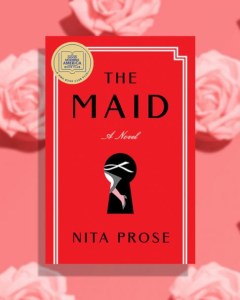
  • ‘The Maid’ by Nita Prose

    The Maid by Nita Prose is a one-of-kind, touchy-feely novel without collapsed grand narratives and vehement subjective rhetorics about existential vertigoes in life that burdens the reader with a duty to interpret the philosophical, the intellectual meaning of a story, all fragmented and adrift. Instead, the story uses the real to perfect the ideal delightfully blended with a taste of Murder She Wrote with relatively ordinary characters doing the most extraordinary things like you never know.

    The Maid is one lonely young Molly Gray. She is a Maid of Maids, taking her job religiously in a hotel that does not quite reciprocate her dedicated service but sees her as a quiet oddball because of her reclusive comportment. But Molly is a swan in a lake of ducklings and geese, a harpist among percussionists, whose feet constantly move beneath reality’s surface. Molly is anachronistically muliebral and incongruously proper. She belongs to a preceding era of decency, saying early Edwardian London as a chambermaid, a coveted position for working-class women. To judge Molly as a misfit is downright callous and heartless because she inwardly craves recognition from those she thinks of as sympathetic souls who use her as a pawn in their game of passion and avarice. The more we learn about Molly as the narrative deepens, the better we know of her as if we were contracted severe strains of Stockholm Syndrome. Hence, our better angels persuade us to forgive and forget the stupendousness of truth that Molly confides to us at the end of the story’s labyrinth.

    This fictional Maid by Nita Prose and that real-life Maid by Stephanie Land are stories about working-class women struggling with the realities of life by themselves. The only difference is that the former has a blessing of luck in the form of sympathetic and resourceful supporters who rescue her from a dungeon of hopelessness. It is understanding because, as Charlotte Brontë expressed, one of the reasons she wrote was to be a kind creator for her stories’ heroines otherwise to whom no sweet soft touch of warmth and love would caress their weeping heads. However, Molly, the Maid is not all melancholic, a damsel in distress, a clueless loner succumbing to a subtle form of gaslighting because she is the one who laughs the last laugh with intelligence wrapped in a maid’s hide. Molly Gray the Maid may have a woman’s body but has the king’s stomach and heart in the most magnanimous way. Therefore, don’t mess with Molly – and the likes.