Tag: reviews

  • ‘Buck and the Preacher’ (1971)

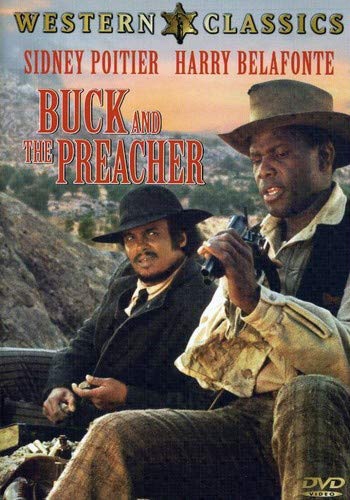
    Rousseau’s dictum of “Men are born free and are chains everywhere.” fittingly describes the condition of what it means to be free from slavery after the Civil War. Even so, freedom was recalcitrant to belong to them, and the hardships that came with the price of liberty from the carnage of the war still beset the newly freed along the trail of exodus to the new promised land in the west as articulated in Sidney Poitier’s classic western film “Buck and the Preacher” (1971).

    Buck (played by Sidney Poitier), a former Union sergeant turned scout, leads a wagon of freed blacks from Louisiana to the west, where they hope to start their new lives without a shadow of slavery. But alas, the shadow of slavery still haunts them. It is up for grabs in the form of renegade ex-soldiers, probably both of the Union and the Confederates, hired by the former enslavers to bring the migrants back to the chains of slavery. They attack the wagon, rape women, and kill the old and the young, constantly intimidating them to return to where they belong. But the pain of loss and death is even less painful than the thought of returning to the past, and the journey marches on. Buck protects the journey, and the self-proclaimed preacher conman artist (played by Harry Belafonte) a former slave, chimed in, despite his original ulterior motive of money-gaining. This unlikely dup proves to be something of Moses and Aaron, so to speak, in a way that they guide and protect the persecuted people from the sordid bondage to a new promised land even if it takes a nearly decimal lot.

    Then there are Indians across the wilderness as gatekeepers to the land of freedom. They are no outsiders to the persecution with their land taken away and their very beings threatened to decimate. The Indians live by the toll fees migrants have to pay when crossing their territories, not the least due to the paucity of livelihood resulting from the government’s confiscation of the land. When Buck implores the tribal chief to help them against the white attackers because they are all brothers, the chief retorts him by saying, “But black people also fought against us with the whites.” The mistrust is natural, as is the confrontation of the two peoples whose rights are put to contests orchestrated by the forfeiter of the rights. The class consciousness between the Indians and the blacks needs a manifestation of shared injustice and empathy, which both of them attest to an objective reality where they prove to be on the same side.

    This film is one of the great Sidney Poitier’s and finest as I have been watching as remembering this brilliant actor who has recently died. Always poised with a commending presence filled with natural confidence and will without being febrile and vociferous, Poitier exudes his irresistibly graceful charisma on screen in this memorable Western about blacks and Indians, who are often seen in the peripheral characters contributing to highlighting main white characters. But this is not a revisionist Western at all to polarize the thematic elements of the genre. Hardly so. Instead, “Buck and the Preacher” is an eye-opening Western film about the peoples who are likely to be cast as outsiders even if they also rightfully belong to, to quote Lincoln, “the family of freedom with a jewel of liberty” called Americans.

  • Leave the children out of it.

    We tend to be ready and eager to put fingers on those in need as if the milk of human kindness is not fit for them because we don’t like them as we see them. Such is because humans are physical rather than rational, operating on optical illusions to create our versions of reality. The present migrant crisis in the border of Belarus and Poland manifests dominance of Id over Superego, the eclipse of Reason by the Sense, in the face of travails on both sides of narratives.

    Migrants mainly from Syria, Iraq, and Afghanistan now fly to Belarus on tourist visas after paying from $1,000 to $4,000 to brokers and go-betweens in the high hope for a low heaven. They think their and their children’s lives are grim and dreary, with holistically low living quality in their home countries. So, they keep their eyes at the stars in West Europe’s firmament, scintillating bright futures despite the impending hostility toward their religious belief and cultural unfamiliarity. The frigid cold and the equally cold reception do not seem to overthrow the migrants’ will to catch Luck of Troy in Unfriendly Europe. On the contrary, it brings the grist for the mill of furious Belarus disaffected with the EU’s economic sanctions for its still Soviet-era Modus Operandi of the government. Belarus sends the influx of migrants to West Europe through the gate of Poland as an audacious manifestation of vengeance and anger.

    The Polish government defends their territory against the unwelcome intruders, clenching the fists toward heaven that their predecessors bled for the Polish, not for the aliens. The good-hearted people in the border area who help needy migrants face backlash from their neighbors and often become subject to judicial harassment for humanity. In this traumatic atmosphere threatening even the most basic requirement for and right of survival, the presence of children is default to provoke sympathy used as an emotional gambit to win the game of chance – for either side. People should not use children to acquire their political or social demands because that is another form of exploitation of childhood, using the vulnerability of children for soliciting the need for however righteous the cause is.

  • The Rambler on the interview

    In a post-industrial age, when the mingling of classes in streets is a norm, and social mobility is a reality in a society, the stories about royal families become reality period dramas that seem to give them a status that fuses the capriciousness of greek gods with the glamour of Hollywood celebrity.

    When I saw twitter’s promotion of Oprah Winfrey’s Harry and Meghan interview, I thought no wonder they were sought-after media darlings, living Romeo and Juliet, and something to talk about when things looked bleak and boring. And I honestly feel no qualms about them being a subject of gossip or the tabloid because they live in public eyes, albeit they most clamor for the privacy of their lives. Otherwise, what is the absolute need to broadcast their stories on a central television station at prime time? (No YouTube, please, in respect of their royalty.) Oprah Winfrey, who now seems to have replaced Barbara Walters’ seat, looks fit to the royal couple pleading for upscaled sympathy from the American public unfamiliar with the constitutional monarchy and possibly slightly partial to the name and images of monarchy without knowing them well.

    To put the wedding story of Prince Harry and Actress Meghan Markle on a par with Cinderella story is to ignore the fact she is from a privileged class in the States with expensive private education and parental support. Despite Princess Diana’s aristocratic family background, people sympathized with the lonely Diana because of her doe-eyed, ever muliebral innocent beauty that looked impossible for debauchery. By the same virtue of beauty fused with sensualness of exotic charm, the American actress/model Meghan charmed Prince Harry, who would even venture to Hesperides’ garden to bring her a golden apple should she request. And now Harry lives in the Golden State, the land of his Helen, with a face launching waves of media coverages.

    Ralph Waldo Emerson said that beauty tames the savageness of brutes and allays the hardened souls of criminals. Oscar Wilde added that a beautiful woman is the subject of conversations wherever she goes. The lovely Meghan beaming with sparkling amethyst eyes adorned with apricot cheeks reminded me of a modern-day Helen of Troy. After all, Helen’s prodigal beauty saved her from her first the ireful sword of her first and lawful husband Menelaus, the king of Sparta to whom she betrayed the slain Paris’s brother Deiphobus, her third husband. Despite vehement feminist catchphrases brandishing anti-sexism, beauty is still a woman’s privilege to achieve social escalation in work and an undefeatable power to purchase indemnity for all faults and foibles.

    In addition to the claimed blackness of Meghan’s heritage, the media seems to shoehorn it to fit her estrangement feeling in the procrustean bed to a histrionic degree because one cursory glance at her wouldn’t strike her as a black woman at all. I honestly think that if a woman is beautiful, then where she comes from does not matter. In fact, I feel something is not quite right when someone in her position keeps playing a race card as a chance gambit to muster her retinue against the criticism raised by her unwilling participation in royal attendances and cavalier attitude towards learning the royal manners, which appear antithetical to her carefree American spirit hard to domesticate.

    Call it an acrid narrative of a woman who juggles the daily affairs of life with what she has. Or you may say it is the usual cynical delusion of reference to those who got it all out of passionate envy burned in a fury. Yet, the interview appears to be nothing but their formal excuse for their present life, public proclamation of their still regal sovereignty warning people not to speak ill of them, which is probably directed to the ordinary whom they regard as meddlesome. Well, then let them be whoever they want to be. Playing Romeo and Juliet’s roles in a public theater in long-run shows will only lose favor with the audience, especially with Romeo now being well-stuffed, looking like a rich American, and Juliet still looking fabulous like a luxurious Beverly Hills demimonde.  

  • Elect Sensibility

    The wake of Black Lives Matter and subsequent racial justice movements have upended the fundamental quo of society from education to fine arts with full force and effect amid the Pandemic pandemonium. What was once a work of art is not art any longer if it is suspected of socially inappropriate. The Dawn of Brave New World looms large as the storm of revolution sweeps across schools’ hallways and the galleries of museums. Now the Reckoning Force stops paintings outside their racial principles and social taste in the case of Philip Guston Now.

    According to Julia Friedman’s recent essay about the artist’s paintings mentioned above, museums delayed exhibition worldwide until 2024. The woke culture tries to dominate the arts and humanities like Orwellian leviathan censoring the artistic expressions to curtail them into their Brave New World puritanical disciplines, breeding their types of artists conforming to the abstract figurative standards of ideological art. But that is what the directors of the NGA, Boston MFA, Tate Modern, and Huston MFA have done, holding off Guston’s 24 images from the 19060s and early 70s, which evoke imagery of the Ku Klux Klan through buffo depictions of hooded figures. In terms of the newspeak, the subject matter of the paintings in hooded robes implicate that Guston is a racist who exposes the vulnerable, the most eggshell sensitive viewers of non-whites, especially blacks, to “incendiary and toxic racist imagery” regardless of the intention of the artist.

    In her essay, Friedman opines that a lack of intellectual vigor on Guston’s subject paintings’ contextualization fails to protect the artistic license, but I differ from her opinion. Art is not for the practical analysis of sensibility, nor a vehement statement of a political campaign or social agenda. Art is an ultimate expression of the individual soul with universal appeal to all human creatures regarding principles of judgment and sentiment common to all humankind. In this sense, shaking the foundations of all social institutions and governing individuals’ Sense and Sensitivity are no less damaging than the dictatorship of minds. Just because you in with the Movement does mean you should conform to what they tell you to think and like. Artists should not hurry their imaginations with public affairs at the moment of creation. Stop patronizing the public what to like and how to think. Let us judge them on our own. Let art be for art’s sake.

  • The Rambler – History

    As members of society and citizens of the world, we are one way or another connected to the past, present, and future. That is why history is a multidisciplinary study to understand human nature and learn lessons from the past. Listen to Winston Churchill: “Study history, study history. In history lies all the secrets of statecraft.”  Watching our nation’s leaders on T.V., dividing the country into splinters of dissenters instead of embracing them as one people of the nation, makes me urge the current political leaders of our country to read about what it means to be an intelligent and influential ruler who knows a thing about leadership.

    Roman emperor Hadrian was of history scholar, specialized in ancient Greek history and mythology. He was affectionately known as a “Greekling” and endeared and admired by the Greeks whose land he made in the Roman Empire. The Greeks’ love of the Roman Emperor was inscribed in the Arch of Hadrian built in AD 131, an archeological wonder with the 59 feet high structure made from marble from Mount Pentellicus used for the Parthenon, that read: “This is the city of Hadrian, and not of Theseus.” The Greek elation reached the pinnacle when their Roman ruler built the Temple of Olympian Zeus, Hadrian’s dedication to the king of Greek gods and goddesses’ splendor. He also made the legendary Library of Hadrian, containing 100 marble columns with halls with printed ceilings, alabaster walls, and great statues of the Olympians destroyed by the malice of fortune AD 267. Greek enthusiasm for their Roman emperor was no unreason for their willing submission to Rome’s rule, which they had once colonized. The site of the Temple of Olympian Zeus and the Arch of Hadrian in modern Athens

    The Temple of Olympian Zeus and the Arch of Hadrian

    Hadrian’s fascination with Greece developed from his learning under the tutelage of his cousin Trojan became a foundation of Pan-Hellenism to turn Athens into a new cosmopolitan cultural center for the Roman Empire. By way of acculturation, Hadrian hoped to stabilize the Roman Empire’s fractious eastern part and effectuate the colonials’ ruling. Hadrian followed what the antecedent Roman poet laureate Virgil in the Aeneid to solidify Greece and Rome’s cultural link. In this fashion, he succeeded in ruling the colony with glad acceptance by the governed, who even declared him a founder of new cosmopolitan Greece, intent on cutting ties with the mythical ancient past.

    Hadrian’s motto of Pan-Hellenism reminds me of Macedonian predecessor Alexander the Great’s Hellenism, both of which proved work in incorporating different cultures into a dominant culture with respect and benevolence. Both Alexander and Hadrian had an eye for beauty in arts embedded in cultures they annexed to the dominion and knew how to rule wisely and effectively. It was acculturation of the native cultures on both sides, the ruling and the ruled. Yet, Hadrian’s way of exercising sovereignty over Greece is more accommodating and welcoming, even if the intention was not free from political ambition. The ancient Athenian historian Thucydides confirmed that history is the ultimate record of the events by recognizing certain commonalities between the past and the present that transcends the subject of times and applying it to our present situation. If our current political leaders take a cue about social integration to the same vein’s present social conditions, it might help the country stratified by race and class.

  • Philosophical investigation of education

    “I’ll teach you differences,” said King Lear as his motto of philosophical investigations in Shakespeare’s eponymous play. I imagine the ghost of King Lear would utter it again when he deigned to come to our realities of universities in this time. The importance of responsible education to remove the social ills and carbuncles resulting from dissentious political domination has never been more conspicuously called for in our high learning institutions as a recent consequence of the George Floyd incident, and the following the Black Lives Matter movement. However, this doesn’t mean that universities should be a breeding ground for training gladiators equipped with political syllabuses and dogmatic agendas to fight against the public foes. Instead, education should disabuse the ignorance of the unenlightened for our society’s universal betterment.

    Professor Benjamin Y. Fong, in his NY Times article “Teaching Racial Justice isn’t Racial Justice,” addressed the issue of education as the fighting tool. It has become fashionable that most American universities have competingly added courses on social injustice to the Black Lives Matter movement. However, the idea of education is to provide students opportunities to learn and actively engage with conflicting thoughts and various real-life issues in a place enriched with knowledge linked with the fellow members of the human race from antiquity. In this environment, a university is a place for education that can improve social conditions in the fight against social, political carbuncles, not for the battle itself, training students for social gladiators.

    Many universities are focused on the quantitative quota of educational syllabuses aimed for the universities’ reputations as the most liberal and forward-thinking higher-learning institutions for the socially recognized prestige, not the qualitative aspect of the education of the minds. It is not the textual syllabuses filled with political ideologies and social campaigns. Still, the practical teaching of various conservative and progressive considerations enables students to incorporate the learning to their perspectives. Education serves to articulate ideas based on the standard of reason and taste universal in all human creatures regarding the principles of judgment and sentiment common to all humankind.

    Suppose we want our higher learning institutions to remedy the existing ills of our social and political realities by implementing more social justice courses. In that case, we must first understand the fact that education itself is not the fight itself. Neither Plato’s academy nor Aristotle’s lyceum was a place for the battle against the absurdities of Man. Or even the beloved, peripatetic Socrates did not use his open universities in Athens as a place for campaigning against the government hostile to his philosophy. Remember that there is no new thing under the sun as long as we as the collective enterprise called Humanity continue to voyage in the Universe.