
Philippa is pushing through busy Main Street on a sunny Friday afternoon with her son Fred in the backseat of her bicycle by dint of solicitation and fortitude of the valorous McGreen family. Fred, an orphan abandoned at the age of two weeks on the step of her gingerbread lookalike house, is her de facto son, the middle one between Alfred, the eldest son of herculean feats of athleticism and the youngest, Philip, “Phil,” who, on an account of the solidification of hereditary traits of the adventurous family, goes for jocular adventure. But Fred is a different soul, he is a sensitive soul with a great mind and a tender heart. And today the foundling of Philippa is very ill that requires a doctor’s immediate attention; hence the mother is forcefully working pedals to Dr. Hobson.
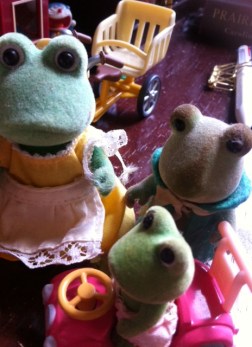 The mother and the son is also escorted by a trusty entourage of Phil, who is also concerned about his dear brother. Small as he is, Philip is all bravery and cheerfulness. He wants to make sure all’s well with Fred, who always reads him sweet bedtime stories by his nightly bedside as well as other illuminating stories about ancient Greek heros and the gods and goddesses of the Parthenon, great historical figures, and oeuvres of fine writers throughout the western civilization. Fred to Phill is what Yoda is to Luke in the Star Wars. Philippa is pleased to see her sons bound by Charity, Hope, and Faith, the three theological virtues, not by dint of mere blood relation that is often devoid of the virtues by default.
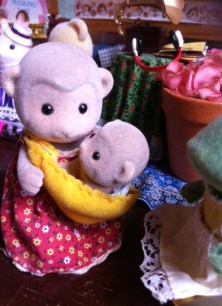
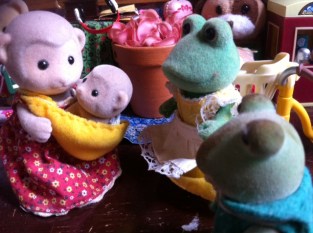 When the McGreen trio arrives at Dr. Hobson’s office on Kingsbridge road, they are amiably accosted by Helen, one of the prettiest and kindest ladies in Avonlea who is married with three children to a grocery proprietor Priam, who fell in love with her at first sight by thinking, ‘She’s beautiful, and therefore to be wooed. She’s a woman; therefore to be won.’ Helen and her three-old son George are pleased to see her neighbors there and wants to know what has brought all three of them to this far. “Fred has been in agony for two weeks due to a serious case of abscess on his right shoulder,” says Philippa, “But Fred did not tell me and his brothers until this morning, enduring all to himself only the gruesome pain that stymied his everyday activities, such as eating and working. In fact, the pain even prevented him from reading a book!”
 Helen does not understand Fred’s reason of silence that was broken this morning, so she ventures to inquire about the cause. “Fred, why did you not tell your mother when it began to hurt you? Had you told her about it earlier, you would have been cured.” Fred is absorbed in all the dialogues between his mother and Helen and forms the most honest and provident answer to the lady’s inquiry. “At first, I thought it would go away because it had happened before. But although I tried myself applying to a topical ointment and taking doses of pain suppressant and high hopes, it just became worsen… What’s more, I did not want to worry mom because she was always very busy with running the restaurant and the household all by herself. Now I am in great pain now, which has compelled me to alert mom about it.”
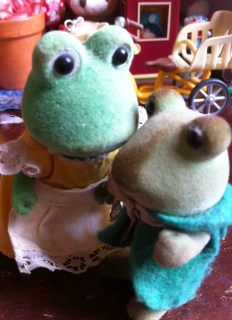
Upon hearing such stream of heartfelt soliloquy of Fred, Philippa’s eyes are welled up in tears and with an insurmountable gushing power of pathos and charity (which actually means “Love” as its original meaning of Caritas,) she hugs her dear son Fred and tells him tender words that can only be true if carried out by the one who possesses such spirit and soul: “O, my dearie Fred! You really shouldn’t have worried about my work and myself because I am your mother. A mother is ascribed to attend to her child with unconditional love, and it is an immutably, intractably, cardinal duty of Mother, who is also endowed with magical power to endure anything. So you do not have to worry about me, ever, Love.” Feeling the heartbeat of Fred against her own, Philippa reminds herself of her mother’s advice that it is a wise mother that knows her own child. All the more, she believes that love’s reason’s without reason, especially in the family.

 Ever a voracious reader of good books and sensible, informative articles of The Los Angeles Times, Paul Collie is immediately steeped in a headline of today’s newspaper; that is, an article he has just read in the Times about a fight over the present fishing laws. It is reported that some amendments were made to the laws, which are called “The Magnuson-Stevens Fishery Conservation and Management Act”, a 42-year old rules regulating over-fishing of New England Sea Scallops and Bering Sea Crabs, and that they were approved by the House of Representatives on Monday. Subsequently, these changes have stirred a projected friction between fishermen and environmentalists mostly consisting of researchers, scientists, and radical natural/animal conservatory activist whose viewpoints are normally out of touch with realities.

 She writes, and speaks to a soul in many sorts of music. She sometimes invokes inspirations from her favorite Muses: Kalliope for epic poetry; Clio for history; and Euterpe for lyric poetry. In fact, she feels most ecstatic when the divine inspirations become one with her body and soul creating the ineffable rapture of the body and elevating the excitement of the soul in zenith. She is no less a dilettante of amateur music aficionado and an apprentice of alchemy of literature and history than Seraphina by herself.




You must be logged in to post a comment.