
It was a great leap from northern New Jersey to southern California when I decided to relocate two years ago. At that time, I felt like a pioneer girl from Willa Cather’s novel or a Horace Greeley in his Overland Journey from New York to San Francisco. Now the not-so-long time has passed, and I still have the job I got first in California, but I am now not sure about being rooted here like a tree without luscious fruits, which is just one of many plain, common trees whose sudden absence will not be conspicuous. Amid in this existential tides of life, willful, fateful, or both perhaps, reading today’s article from the New York Times about a declining trend of relocation after the ease of Pandemic-related restrictions statewide seems to shake my already shaking ship adrift between Scylla and Charybdis.
The article reports that now that the post-Covid 19 has dawned a new era of remote-controlled employment, many people do not need to move to another state for their new jobs unless they are packaged with satisfying relocation fees. And staying put in their home grounds while working remotely for their bosses across the Rocky mountain or on the other side of the coast fortifies a sense of close-knit family and community that they feel strongly related and belonging by staying put in their home grounds. Further, the article illustrates a particular fragment of well-to-do middle-class people with professional careers or executive positions who indeed don’t have to take trouble moving their already content families to new locations. Finally, the article excludes the peripheral class that orbits around the lesser bright solar system whose life spans depend on a dominant sun’s brilliance.
People are still moving to and from for their uncertain futures, as I have witnessed so far, despite the Pandemic scare less than the existential threats of daily life. Hasn’t the journalist seen enough of the genuine fabrics of life by getting on a morning bus carrying a crowd of the middlings and underlings heading for their workplaces? Isn’t The New York Times proud of being one of the most liberal newspapers in the world? Or is it for most liberal middle-class only?
I still like to think of myself as a frontier woman in the Still Wild West, living with an elderly mother and an eleven-month-old tabby cat with chronically weak respiratory and digestive systems in a make-shift house on a pitiful homestead often besieged by the lawless and the uncultured. And I still don’t know my decision to move from here to there was a fool’s wish, acting on a foolhardy impulse neverendingly. Nevertheless, I want that all that wise sayings about hope and courage are truth and nothing but the truth, and I am sure that many people share similar kinds of wishes in the courses of their lives that today’s article excludes.



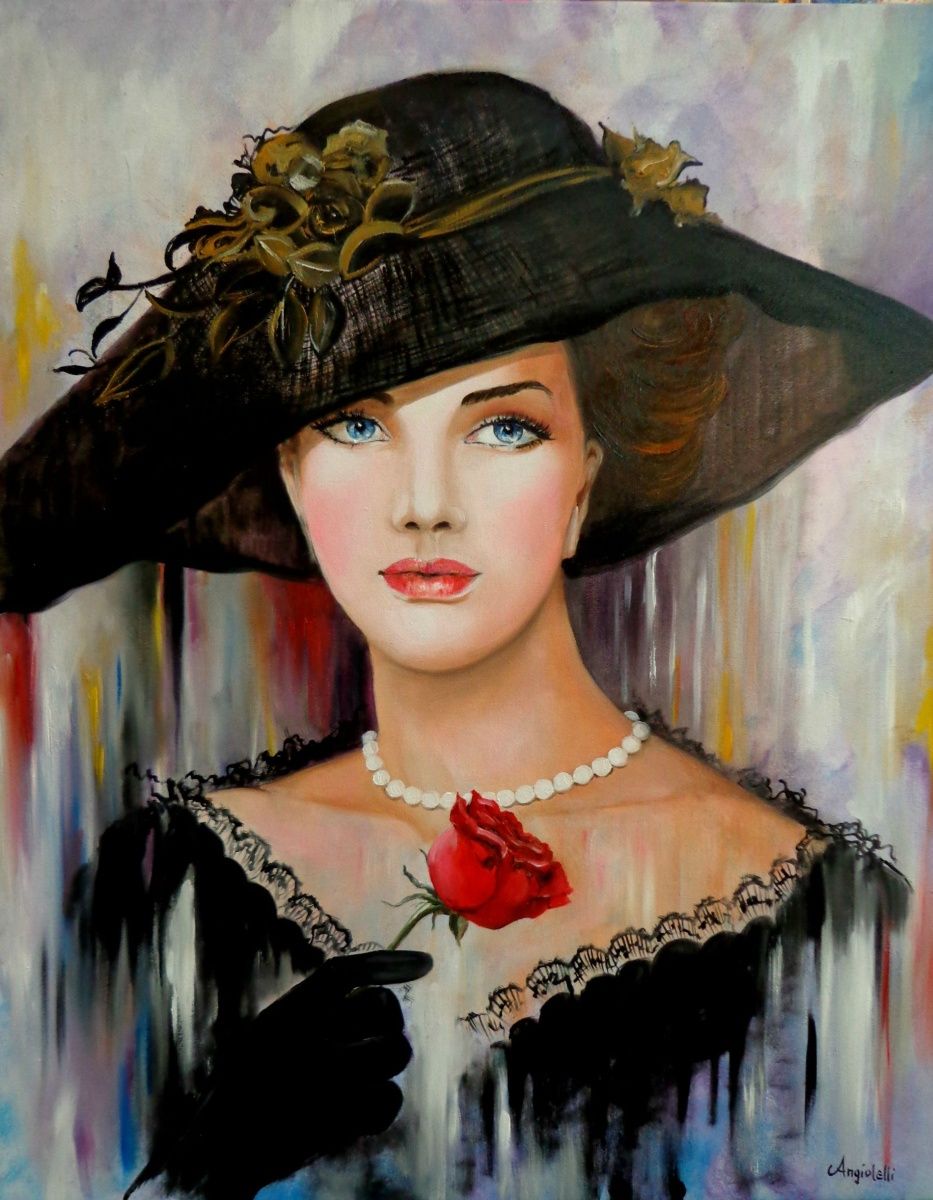 It wasn’t love at first sight, really. Although one look at him would suffice to appreciate the principle of beauty incarnate in his statuesque figure, it wasn’t the tall, well-toned body that she fell for. It was the eyes that played upon her usual stoic inner world, sweeping it in the whirlwind of unquenchable longing, wanting, and yearning: big, brown, warm, passionate, soulful, and doleful, all the marbles of his spirit sparkled in the windows of his soul. The faculty of her mind worked with her imagination in the peculiar alchemy of infatuation and turned the rut of life into a theater of fanciful motion pictures about love. That was what made her go through her existential life. For she always had to be in love with someone fictional, nonfictional in the highest ether of her imagination. For that was what she subsisted on to give her a burst of zest for life. What others would think of her was not her savior vivendi because she belonged to her class of her own, her own world of dreams and wishes, which was her own only in her muliebral meditation.

 “Ms. Long, your hazelnut coffee is one of the best in the town, and I told it to all my friends and colleagues at work and suggested them they come by here.They are not hypochondriacs or bombastic health freaks at all. I mean what can coffee possibly do harm on people? The eminent Baroque composer Bach once said without a cup of hot coffee, he would be like a grilled goat. and as far as I am concerned, I have never heard of any one who has died from drinking too much coffee.” There was a flicker of smile flitting in the gracefully aged face that shinned with her incorruptible beauty from within. Ms. Long had never felt more comforted and warm than ever in her long life as a spinster. “Thank you, Sally, for your caring words. I will continue to make the best hazelnut coffee just for you.” There was in the air something that filled the whole of Hush Puppy’s at the moment. It was wonderfully conflated with the aroma of Sally’s hazelnut coffee that Ms. Long had just finished brewing. Sally’s spirit was flitting in the loveliness of the ambience, soaking herself in the moment of happiness coming from within. It sure was a pleasant morning for Sally.


You must be logged in to post a comment.