Tag: story

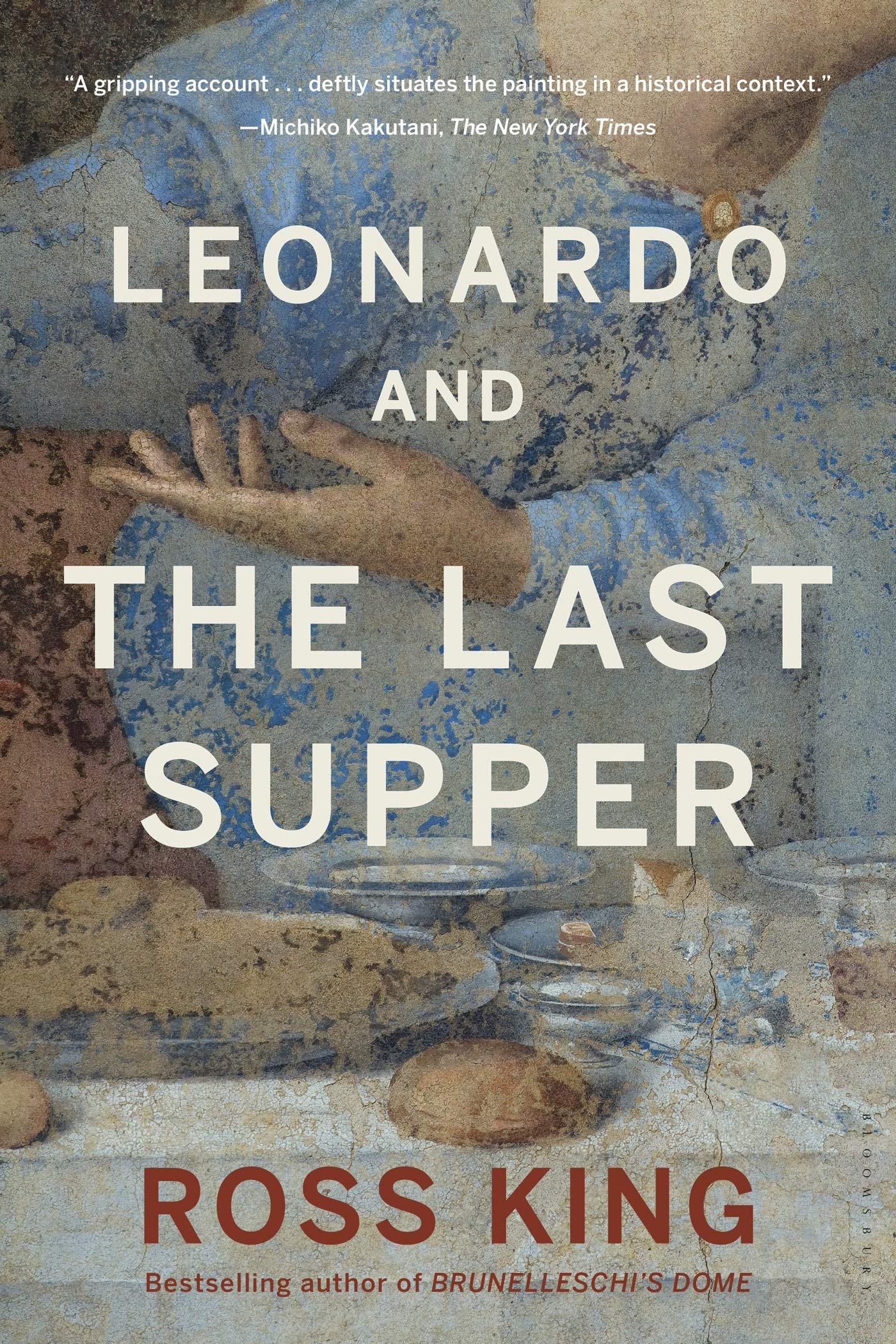
  • ‘Leonardo and the Last Supper’ by Ross King

    Leonardo and the Last Supper by Ross King

    My rating: 5 of 5 stars


    I still remember an excellent replica of Leonardo da Vinci’s “The Last Supper” in a tapestry form decorated on the wall of our family living room when I was in elementary school. It was vast and expansive, nonetheless magnificent with the profoundness of the scene and the expressions on the faces in it – all wondrous and curious. Now a stream of time has flown, but the first impression of the art still has become one of the stars in my heart’s constellation. “Leonardo and the Last Supper” by Ross King has added to the star the brilliance with telling stories resurrecting the atmosphere of the time and vividness of the people surrounding the creation and the creator of the art.

    The book is an alluring admixture of the biography of Leonardo da Vinci and the history of religion, politics, society, and culture; all skillfully swirled in Ross’s skillful narrative account of the person of da Vinci and his work of the Last Supper. The narrative becomes more intriguing as the chapters replete with entertainingly informative tidbits about personal accounts of people related to da Vinci and involved in creating the Last Supper are ascending. The story’s construction follows how Samuel Johnson, the 18th-century English essayist and cultural critic, narrated the lives of poets in The Lives of the Poets, composed of a brief biography of a poet, personal accounts of the poet, and professional criticism of the works. The reader will first be acquainted with da Vinci’s biographic backgrounds: parents, a well-to-do lawyer father, and a middle eastern slave mother owned by his father’s household. Da Vinci’s struggle with spelling and even harder Latin education, his fabrication of engineering work experience in his curriculum vitae to obtain a military commissioned engineer post when coming to Milan from Tuscany, and so forth. All the information is a telltale factor contributing to da Vinci’s rise to celebrity in his and our times, which is refreshingly informative to learn that the perennial polymath also had feet of clay with colors of contrast.

    Ross is a scholar with a novelist’s magic wand to wield his writing power, casting a spell on facts and knowledge with the beauty of language and ease of words, captivating readers of all life paths with gripping narrative skills. Another book of his “Michelangelo and the Pope’s Ceiling,” which I enjoyed with great pleasure, is a helpful companion to this book because both Michelangelo and da Vinci were contemporaries, working under their aristocratic patronage the recalcitrant spirits of creative souls in reins of livelihood. It would also be an excellent reference to the social statuses of artists at that time. Contrary to our images of free-spirited artists, artists worked for their royal, ecclesiastical, and wealthy employers. Therefore, they were not free to choose subject matters for their works because their bosses wanted their power and fame to become works of art, as it were.

    Upon closing the last page of Leonardo and the Last Supper, I reminded myself of Plato’s aesthetic definition. Art is a copy of Form, the perfect, pristine Beauty. It exists only in Idea because da Vinci was also a scientist and an engineer who found perfect beauty in perfect numerical and astronomical elements of nature. However, da Vinci’s Last Supper is filled with pathos, contrasts of human emotions, paradoxes of light and dark, good and evil, constantly changing, never-ending. Da Vinci was a humanist, finding beauty in nature as it is, regardless of perfect Form, the unattainable ideal that is out of touch. One thing right about Plato’s Aesthetics is that art is at best entertainment and at worst a dangerous illusion. That says it. Leonardo’s Last Supper is a soul’s entertainment, and so is Ross’s “Leonardo and the Last Supper.”


    View all my reviews
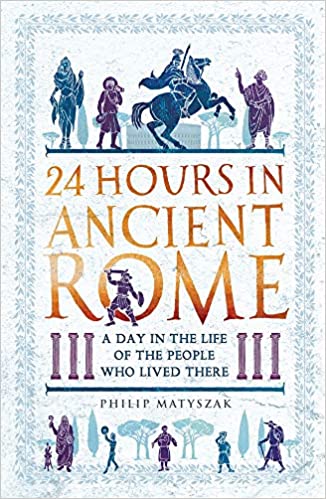
  • ’24 Hours in Ancient Rome: A Day in the Life of the People Who Lived There’, by Philip Matyszak – book review

    24 Hours in Ancient Rome: A Day in the Life of the People Who Lived There by Philip Matyszak

    My rating: 5 of 5 stars


    Edgar Allan Poe once declared that the great was Greece, and the grandeur was Rome. Rome was not built a day, and it lasted from Before Christ to His After for one thousand years. All roads led to Rome, and foreigners, colonials, and slaves from the foes all wanted to become the proud citizens of the Roman Empire. So, what then was it like living in Rome at its glorious prime? 24 Hours in Ancient Rome: A Day in the Life of People Who Lived There by Philip Matyszak comes and carries off the reader in a time coach to Rome’s grandeur and invites to the daily lives of people there with magic of words.

    In terms of residential mode, there were more apartment buildings than villas and detached houses in Rome. Apartments called Insulas had 3 or 4 floors with no bathrooms, which means the residents dumped their bodily wastes in buckets out of their windows to the ground any time of day or night when unfortunate passer-byes would have unpleasant surprise showers from above. The apartment residents were city dwellers whose livelihood was arranged from a fish-stroll attendant to a nightguard, an unlicensed independent prostitute, and primarily others diligent and savvy waiting their time and luck to come.

    Rome was a practical society with shrewd politicians and powerful merchants/tradespeople. For instance, baking was a highly respectful and lucrative trade because not many people had well-equipped kitchens to cook or bake at home. Bakers had their representatives in the Senate who would lobby for the increase in the price of bread. Still, the Senate often rejected the proposal because the Senate knew that keeping the price low would maintain social stability lest the mass should not cause riots for a change of living cost.

    On the other hand, unless they were aristocratic or wealthy mercantile families, women had not many choices of working with desirable pay or respect. They worked in shops or stalls densely concentrated outside the walls of Circus Maximus for long, arduous hours, wrestling between the demands placed upon their tasks at work and home without due respect. Slave women’s employment was mainly hairdressing and doing domestic chores. It was less rewarding and more demanding, contingent upon the mercy of their lustful masters and the whims and caprice of their mistresses, who often inflicted cruel punishment on their slaves if they irked their temper and nerves on a bad day.

    Rome was undoubtedly splendid in its dominance and influence consummate with the longevity, but only a few privileged basked in the sunshine of grandeur. Matyszak puts together tesserae in the mosaic of ordinary Ancient Roman lives in this leisurely entertaining and academically stimulating narrative of his part-fictional and part-actual characters. It becomes each vignette comprising a collective story of human life that still rings true to our modern life. Matyszak is an unlikely, uncommon historian whose erudition and humor put him on the same pedestal as renowned historians, such as Tacitus, Plutarch, Herodotus, and Paul Johnson. His narrative styles are engagingly knowledgeable but surprisingly personable, collapsing a great divide of time between the people of the past and the present reader.

    Rome was no fun when you had none. Nevertheless, for all that’s worth, Rome was a great city rich in ethnic and cultural diversity. The energy of urbanity made Rome all the more vivacious and vibrant, bustling with businesses and people, and created opportunities for better lives. It is no surprise that Poe thought highly of Rome.


    View all my reviews

  • ‘The Way Mothers Are,’ written by Miriam Schlein, illustrated by Joe Lasker – book review

    Nietzsche’s theory of Immanence is about intellectual kind of love of God, Agape, through an elevated perspective of God’s existence manifested in things great and small. That said, this vintage book about unconditional motherly love, first published in 1963, is a charming adaptation of immanence translated in simplicity of language in speaking “charity,” which also means love, as it is derived from “Caritas,” meaning “dear” in Latin. It is a kind of love that Mother Teresa expressed to all, discriminating none to prove superior level of love. And it is this love that Mother Cat has for her son.

    The story of the Tabby Cat Mother and Son reads like a poem. Also, the book has adoring illustrations delineated with admiring details on the backgrounds: the wallpapers of rooms, the feline version of Mount Rushmore’s Great Faces, and the carved decorations of charming furnishings – all heartwarming elements that are so fitting to this book about love. The son asks why his mother loves him even when he is a little urchin to his younger sister and is naughty all day. The mother tells him full of affection that she loves him because he is her son and cares for him for who he is, not what he does. The son cat tries to reason his mother’s love for more innocent questions rather than nagging but then finds that the reason she loves him even in his least desirable behavior is lovely. The epiphany of true love also reminds me of Marilyn Monroe’s saying that if one cannot love her in her worst self, that person does not deserve her love. It is not a blatant egoism of a Tinseltown celebrity, but the truth about unconditional love, which is not synonymous with Eros on the heat of passion.

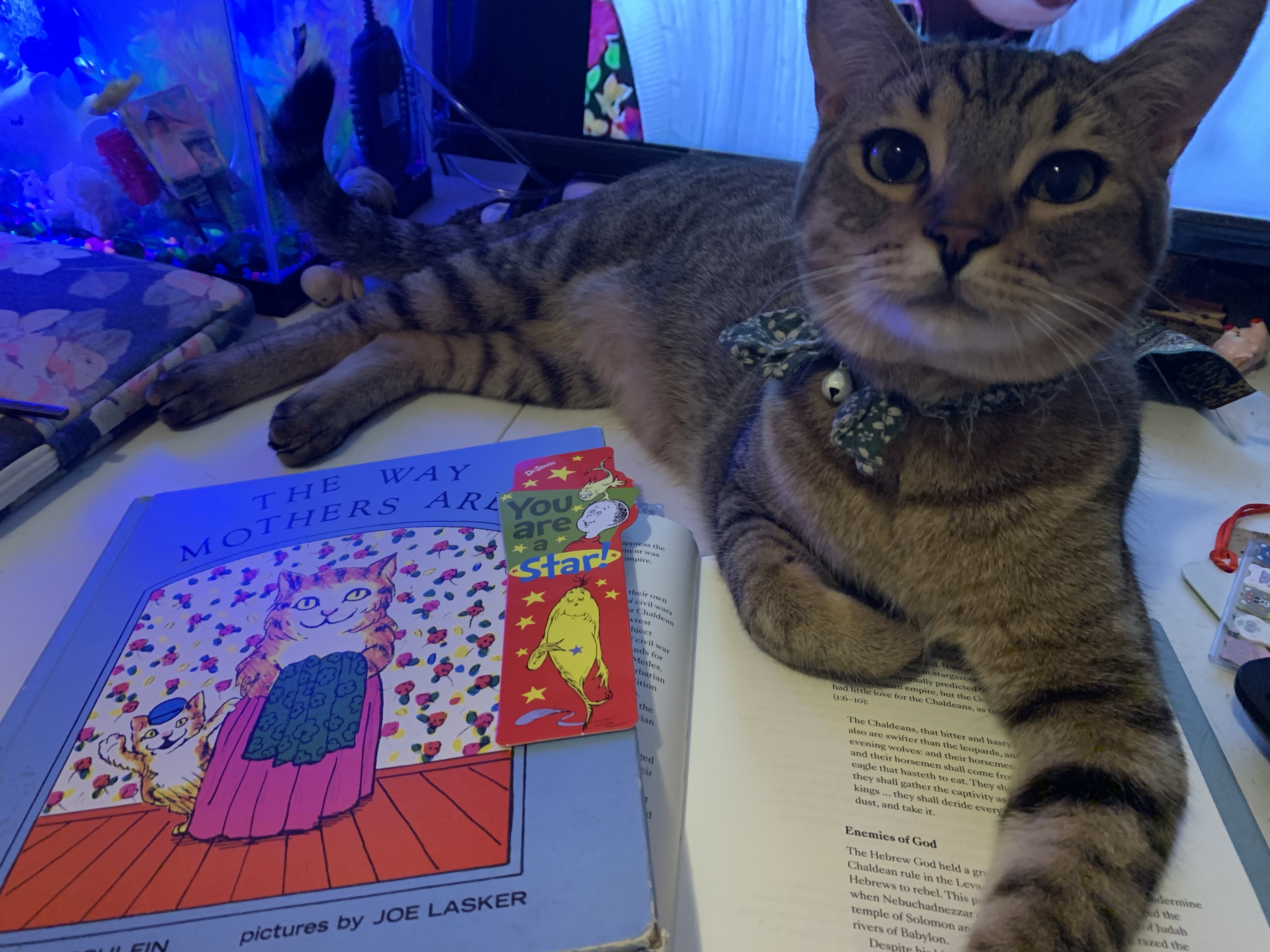
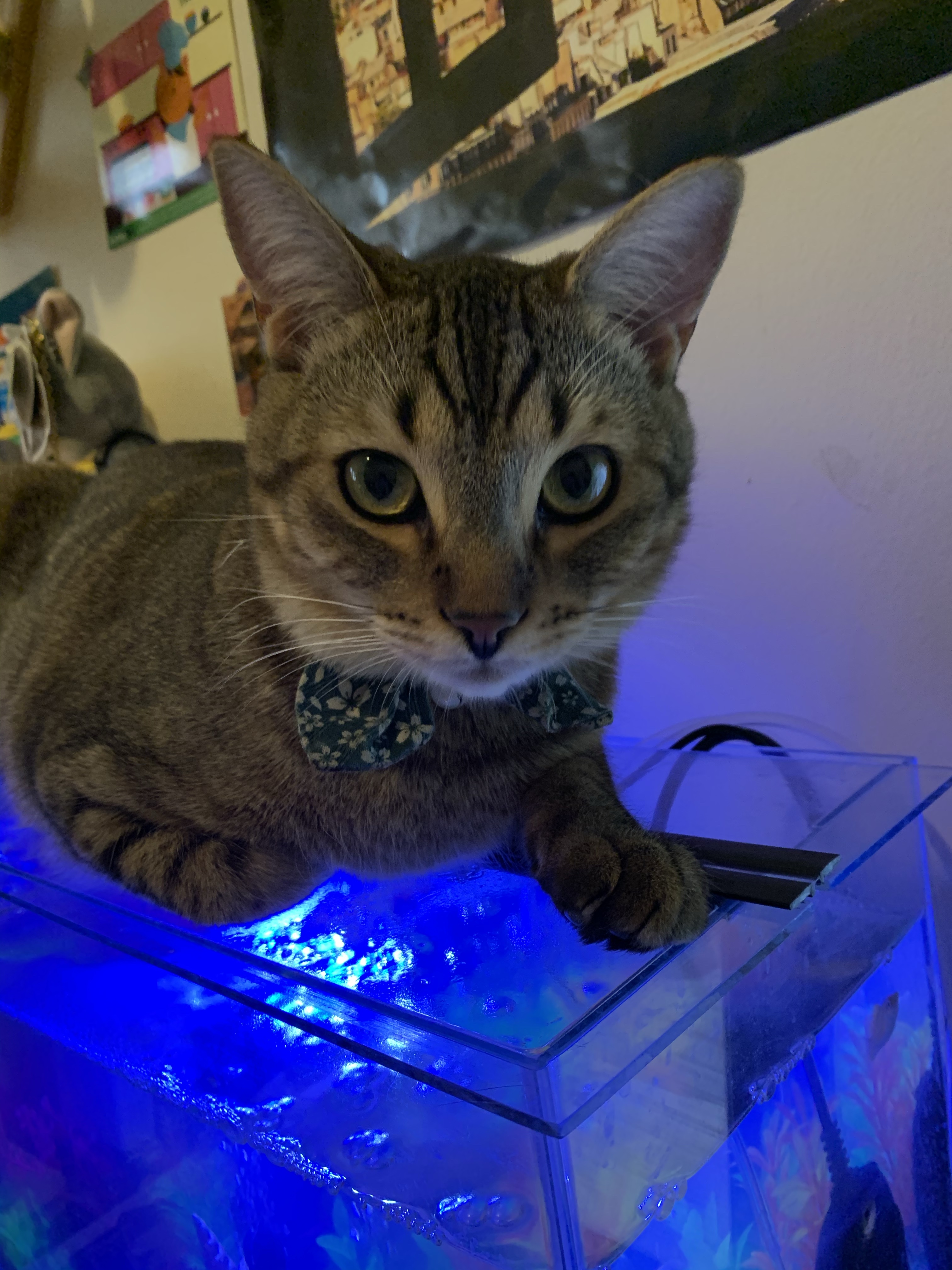
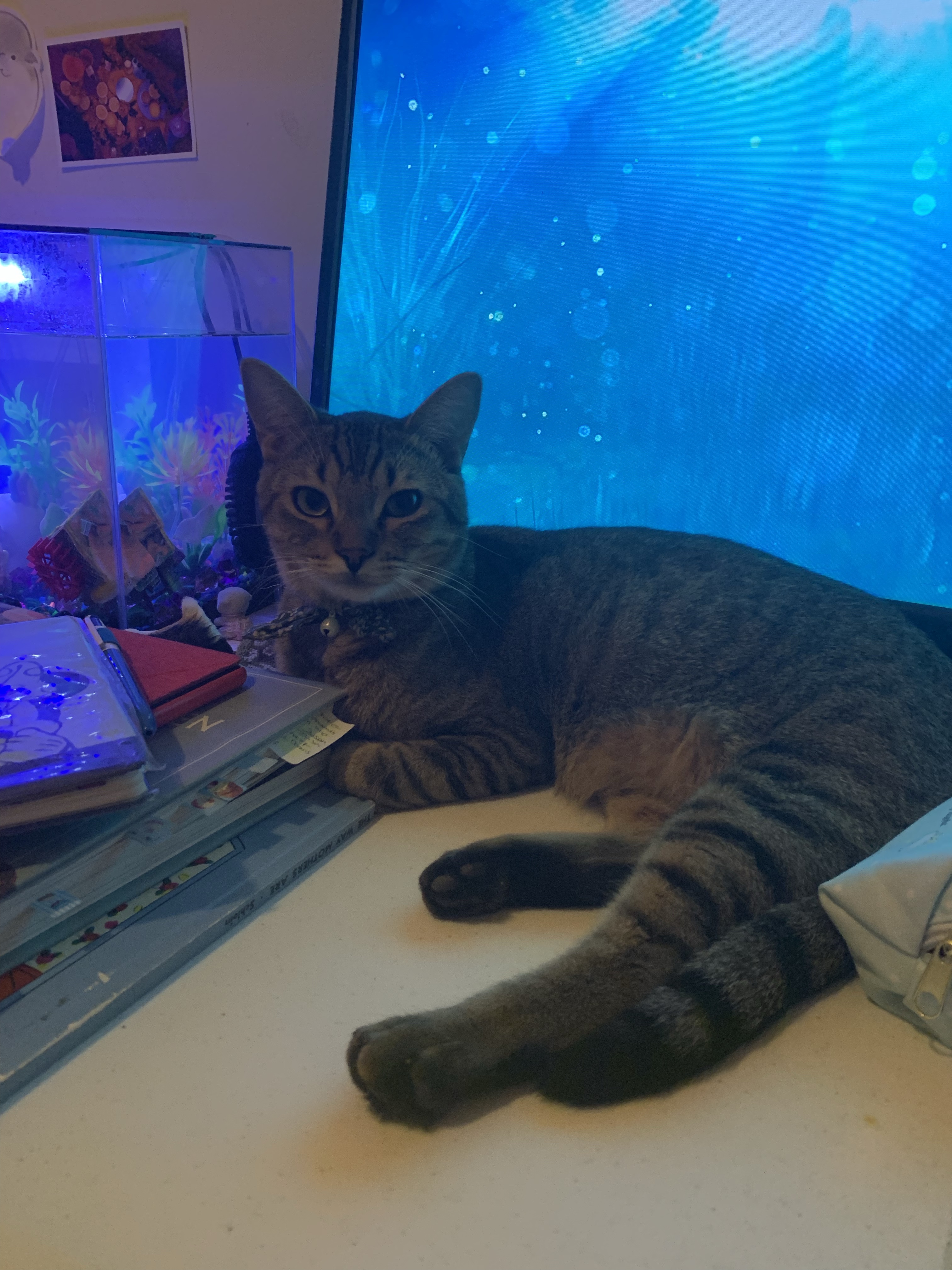
    It is a story for all ages whose inner children refuse to grow beyond the evolutionary scale of time. Mark Twain, Lucy Maud Montgomery, and Walt Disney had never outgrown their childhood whose childlikeness became all the more radiant and illustrious with their boundless imaginations conjured in the alchemy of the arts. On a personal note, When I saw a tweet about this book, the forever child in me urged the grown-up me to get it because of the adorable illustrations of the Tabbies reminding me of my tabby cat Toro. I wonder if Toro’s mother might have looked like the Mother Cat because the son cat takes a solid resemblance to Toro. So I read the book to Toro, and he seemed to like it, starting to close his eyes on my desk and then purring softly. And I understand Mother Cat’s love for her son because that is how I feel for my little Toro, whom I adopted when he was nine weeks old. Now he is 11 months old, and although he is a sweetheart, his occasional Zoomies and forceful nibbling surprise me. Still, Toro is my cat. And I say to him every day thus: “I love you, Toro. Never forget that.” I know how the mother cat felt for her dear son.

  • Chariot of Heart and Mind

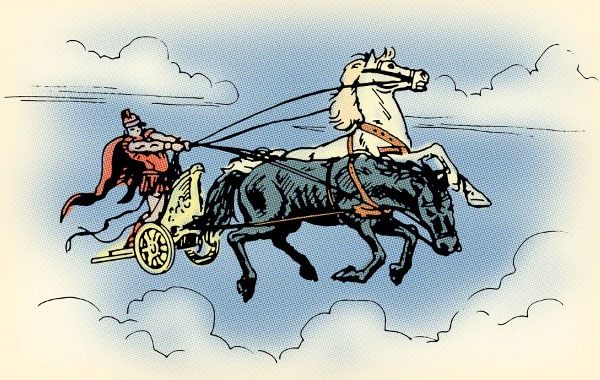
    The chariot has two horses

    Called Heart and Mind

    racing in their own fury

    Neighing in the strokes of urges

    Spurred by the driver’s goading

    Hard and harder, fast and faster

    As the horses are galloping

    On the long and winding road

    Toward the unknown end.

  • the night sky

    The great cloak of night

    Covers the waters

    in Tyrian purple;

    The maiden of the sea

    Standing on the tide

    Frescoes the skies

    With a moon and stars

    cut from the magic paper.

  • from this corner of the world

    A beautiful field of flowers on a background of mountains and clouds

    It was a great leap from northern New Jersey to southern California when I decided to relocate two years ago. At that time, I felt like a pioneer girl from Willa Cather’s novel or a Horace Greeley in his Overland Journey from New York to San Francisco. Now the not-so-long time has passed, and I still have the job I got first in California, but I am now not sure about being rooted here like a tree without luscious fruits, which is just one of many plain, common trees whose sudden absence will not be conspicuous. Amid in this existential tides of life, willful, fateful, or both perhaps, reading today’s article from the New York Times about a declining trend of relocation after the ease of Pandemic-related restrictions statewide seems to shake my already shaking ship adrift between Scylla and Charybdis.

    The article reports that now that the post-Covid 19 has dawned a new era of remote-controlled employment, many people do not need to move to another state for their new jobs unless they are packaged with satisfying relocation fees. And staying put in their home grounds while working remotely for their bosses across the Rocky mountain or on the other side of the coast fortifies a sense of close-knit family and community that they feel strongly related and belonging by staying put in their home grounds. Further, the article illustrates a particular fragment of well-to-do middle-class people with professional careers or executive positions who indeed don’t have to take trouble moving their already content families to new locations. Finally, the article excludes the peripheral class that orbits around the lesser bright solar system whose life spans depend on a dominant sun’s brilliance.

    People are still moving to and from for their uncertain futures, as I have witnessed so far, despite the Pandemic scare less than the existential threats of daily life. Hasn’t the journalist seen enough of the genuine fabrics of life by getting on a morning bus carrying a crowd of the middlings and underlings heading for their workplaces? Isn’t The New York Times proud of being one of the most liberal newspapers in the world? Or is it for most liberal middle-class only?

    I still like to think of myself as a frontier woman in the Still Wild West, living with an elderly mother and an eleven-month-old tabby cat with chronically weak respiratory and digestive systems in a make-shift house on a pitiful homestead often besieged by the lawless and the uncultured. And I still don’t know my decision to move from here to there was a fool’s wish, acting on a foolhardy impulse neverendingly. Nevertheless, I want that all that wise sayings about hope and courage are truth and nothing but the truth, and I am sure that many people share similar kinds of wishes in the courses of their lives that today’s article excludes.