People usually don’t want to hear your problems, pains, and premonitions unless they know you or relate to you. In the case of Tookie’s existential distress that seems to be an inexplicable sentence on her life, I will say it’s the latter case for me to be piqued with a kind of sisterhood attached to it.
Malcolm Jones’s review of The Sentence by Louise Erdrich from the Nov. 14th issue of the New York Times Book Review was the most brilliant. I found it so straightforwardly moving and personally related to my own narratives of life, both existential and philosophical, that I felt like finding a friend in the protagonist Tookie. Jones’s interpretation of Fiona’s ghost as one of Tookie’s many as though the ghost itself were a mock to her pitiable wish to have a sense of security in the normalcy of life was particularly impressive. It created unfathomable pathos for Tookie, who seemed to believe that she was kept away from anything happy happening to her.
So thanks to the review, I will get to read more about the kindred Tookie and look forward to seeing if there is indeed plenty of light in the book that sheds upon life’s predicaments.
Stephen King, the King of Horror, said we make up horrors to help us cope with real ones. Some people drink themselves to numb their existential maladies of daily life, or some abandon themselves to unguarded sensual or psychedelic pleasure. But I seek refuge in the stories about the supernatural world that have to be the actual, not the second-hand replica of the author’s imagination that I find hard to be connected. That said, to descry the headline title ‘The Horror’ from a recent issue of the New York Times Book Review delivered on my kindle seemed too pat not to feel psychic about it with a jolt of fillip bolted to my neural circuits. Reading it allowed me to reflect on my affinity for supernatural scare about whys and wherefores.
The article posits that horror movies scare us through exteriority with image and sound to create the illusion of danger, whereas horror fictions are more sophisticated and cultured to understand the complex interiority of the characters by passing over to the creator’s mind. But why do I have to play an amateur psychologist to analyze the inner world of an author when I try to find a niche for my battered spirit in a supernatural realm where no bullies, despots, or melees would follow me? My kind of horror has nothing to do with overtly thought-provoking fictional narratives that are more like psychological thrillers than supernatural ones. That is why I favor the Japanese ghost stories bereft of bodily fluids and materials but full of silent terror in the presence of a sorrowful dead refusing to depart for the Otherworld. Fear is universal. However, its expression is nuanced in the ordinary landscape of daily life, with the undead still among the living in their everyday attire as if they were still alive, not least because Japan is a country of spirits and gods dwelling in nature among the people.
The article is correct in saying that a love of the horror is a part-time love with a mysteriously eerie beautiful parvenue in Howl’s Moving Castle. By wallowing myself in the supernatural, I feel anxiety loosened, nervousness coaxed, anger diverted, sadness halved, and depression diluted to a certain degree. You may say it is another form of a psychedelic illusion of escapade from reality, then let it be. After all, aren’t we all addicted to something to that effect to relieve ourselves from existential frustration in a socially acceptable way?
What if the present is not present but dreamt? What if the past is not past but future forecast? For all of this, I am living now is reenacted Of the previous life, I once lived forgotten But not erased in the paroxysm of sadness That my soul cannot bear without tears And the heart refuses to shield in reason Because the grief weighs against hope – The forced illusory vision to staged elysium – With every fate already weaved, cut, and shipped To Destiny from Departure to Arrival, and again Till the Moon orbits the Earth for 1000 years To live 1000 lives elsewhere in whatever forms, Each bearing pieces of cracked memories Reflecting the central fractures of the pasts In the circle of life, the wheel of lives. Alas, poor soul! I know her, dear reader! Pity her not with the condescension of charity! But give her a rope at the end of a life Not to fall into the cruel rat race of the rut Not now, not ever, once, and that’s all for good.
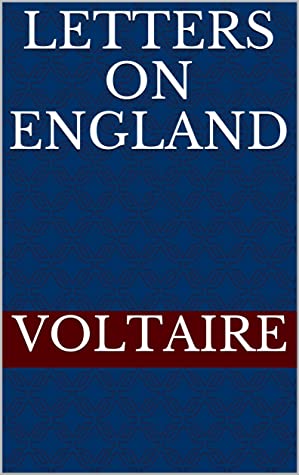
Voltaire’s Letters from England, originally published in 1733, is a solipsistic treatise on political, religious, and cultural observation during his stay from 1726 to 1729 of the benign nation that welcomed the thinker with open arms when he fled from persecution in his native France.
But the book is not a blinded paean to a rival country with a long sophisticated warring history with an intent to retribute his spites to his mother country as an expatriate. Instead, Voltaire takes a stance of a piqued paratactic storyteller in the fashion of Herodotus’s Histories or a trenchant journalist in the school of George Orwell’s Down and Out in Paris and London. In Voltaire’s eyes, that the English are practical folk with a propensity for realism: reflective, respectful of etiquette, cool-headed, and effusively proponent of scientific discoveries are conspicuous in the overview effect of France seen across from the other side of the Channel.
From the manners of English Quakers to Isaac Newton’s (whom he admires as the brilliant sun of Halios) quantum physics and the law of the universe in great detail, the subjects of interest and the depth of knowledge demonstrate that Voltaire is more than a rebellious French enlightenment thinker. He is a true intellectual whose reason is constituted by the consilience of multidisciplinary subjects in depth. The book is a testament to a genius of a particular kind who embodies a man of letters in its truest sense.
Watching the world leaders attending COP 26 and G20 vehemently discussing achieving the net-zero policy makes me wonder how Greta Thunberg can get away with her angry facial expressions and vitriolic remarks that would otherwise have been simply unpleasant. How powerful Greta Thunberg’s vehement narrative on her newfound purpose in life has become! Now the world leaders vow to her harmoniously, when they should know better as expensively educated men that the goal of net-zero carbon dioxide will require live human sacrifice and stultify the truth about carbon dioxide in its relationship with the earth.
To begin, you have to understand carbon dioxide is not evil but necessary to keep the appearance of this planet. The principal effect of increased carbon dioxide in the atmosphere stimulates plan growth, aka the fertilization effect. Thanks to its grim colorful image of the reaper as a hazardous element, its function to make the green greener sounds cynically antonymous. Also, carbon dioxide warms the planet earth, lest it turns into a dwarf planet like Saturn with frozen lakes adumbrated with gas-filled clouds. Besides, only 1/6 of a degree per decade has been increased, the amount inconspicuously perceptible and critical to producing any apocalyptic effects on the earth’s surface. Thunberg and her comrades command that all nations achieve net-zero in carbon dioxide emissions, which means using fossil fuels, which is too costly for underdeveloped and developing countries to keep up with. The poor always remain poor because of this unfair authoritarian policy without regard to the national economic system and social situations forcefully measured in the Outrageous Bed of Procrustes. In effect, most pollution in the world comes not from Western Europe but from those countries where the industrial revolution was the counter-product of colonialism or communism. Therefore, if these countries strive for the net-zero goal, they will fall by the wayside of their social progress for the welfare of the people by spending the national treasure on achieving the pyrrhic goal.
I have never seen an aggressive environmental campaign such as this at present. Of course, climate irregularities have always existed, but humans have remarkable skills to adapt to new surroundings with the power to think as a bipedal species. Dostoevsky said we could get used to anything, even hanging. But the current seismic environmental zeal with the Swedish teenager seems more unpleasantly cataclysmic with her militant warrior approach. The matching ensemble of the haughty voice is heartless, laughing at how the famous and influential adults are fumblingly and funnily reacted to her like dolts. Could it be her ambition to prove herself to the world that despite her autism and want of beauty, she could become the most well-known and influential girl in the world? After all, even the women politicians and intellectuals fall in love and even marry. The whole scene reminds me of a teenager dissatisfied with herself venting her depression and anger with a holler from the rebels against the demands placed upon daily tasks of life. In William Golding’s dystopian juvenile literature Lord of the Flies, Jack, the antagonist, plays innocent along with his followers in the eyes of adults. Greta is the female version of Jack. And the world leaders at COP26 and G20 are the officers who rescued the band of children and boarded them on the ship, not knowing what would happen soon. But Greta has much more followers to her alter of Climate Catastrophism.





You must be logged in to post a comment.