Tag: thoughts

  • ‘Coming 2 America’ (2021) – movie review

    The jubilant fanfare is blasting, the majestic elephants are trumpeting, and the sensual dancers are sprinkling rose petals on the ways to herald the emergence of the royal celebrity. It is no other person than Eddie Murphy’s Akeem Joffer himself after thirty-three halcyon years in his kingdom. He is back from the past and in America. Will the king’s festivity have the same level of brilliance it once radiated thirty-three years ago?

    King Akeem has got it all, and he envies nothing: the beautiful, thoughtful wife, wonderful daughters, the loyal friend and aides, and the kingdom of his that nothing is wanting. But alas, as it is our human nature wanting something, we think needful or must-have, so is our king who is egged on to bring out-of-wedlock son now living in Queens, New York. Akeem goes to New York and meets his old acquaintances, all of whom look immortalized in the abeyance of time because they are still alive and kicking with a little bit more gray streaks and a few more inches in their midriff circumferences. And yes, Akeem meets his young, intelligent, and brave son because, after all, it’s his son with the good genes in the blood, while the maternal line is the working-class heroine of a good sort. And yes, the storyline is all over but the shouting with introductions of a few more new faces.

    Coming 2 America is one of the recent Eddie Murphy’s big ambitious movies that he hopes to resurrect the glory of his days as the awesome, the one and only Eddie Murphy, one of the funniest comedians in the world. His sharp tongue offended no one because it wasn’t out of malice or tension to purge out his angst-ridden self. Even his pejorative language and slang were likable and genuine because he had a natural wit to make the words coming out of his mouth funny. Also, he had self-confidence in every scene he was, but it wasn’t hubris or warrior-like belligerence. People loved him for that and his movies, of course. But to be honest, when I watched this movie with enthusiasm mixed with nostalgia like meeting an old friend, I saw a different Murphy, who seemed to have lost that brilliant luster of the perk that signified him. Maybe that is why the movie’s story is mainly centered in his kingdom, for, in his kingdom, Murphy needed no quirky ad-ribs, no fast actions, no more youthful adventures of city life that would have required horse-whips of energy.

    However, the movie is not a failure because it brings fans of everywhere a nostalgia for their days of youth (mainly in the 80s) and gives them PG-13 appropriate entertainment, free of gratuitous sex and violence that movies nowadays automatically opt for. The thematic elements of family value, love, and will to meaning in life metastasize in the narrative, which we so much want in this crazy era of history. Nevertheless, I still miss Eddie Murphy when he was bolder, wilder, and funnier. For those who agree with me, I suggest another recent movie, Dolemite Is My Name, a biopic movie about the eponymous movie star because in the movie Murphy is funny with soul. It is good to see him that way.
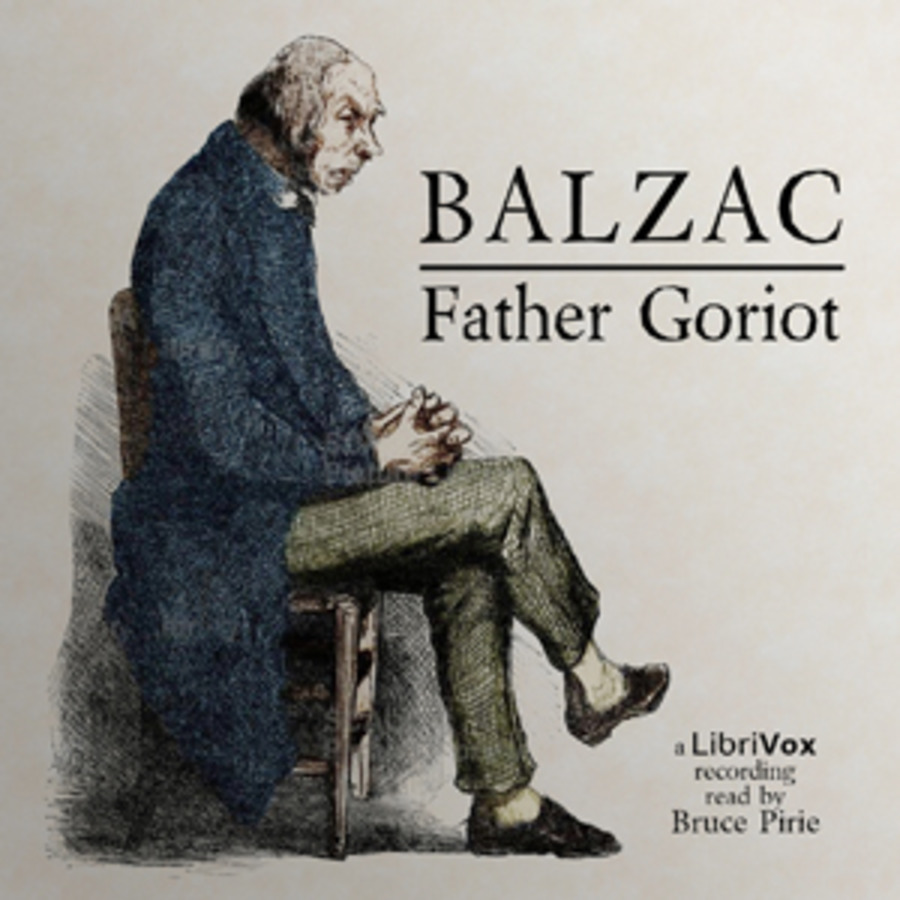
  • ‘Father Goriot’, by Honore de Balzac – reading notes

    Balzac’s Paris is no more different from today’s big cities like Los Angeles or New York City. It populates with the good, the bad, and the ugly, but mostly filling the in-betweens by the middling’s – the not-so-wretchedly poor yet decidedly needy with pride and prejudice –. The story about Father Goriot (no, he’s not a priest.) is about the people around him living inside and outside the Maison Vauquer. It is a boarding house in which the characters bring their stories to pay their dues of existence. The reader sees it as a microscopic view of the contemporary Parisian society where the poor, even in post-revolution, remains at the bottom of society—only the cold, indifferent climb up to the upper echelon.

    The residents of the widow Madame Vauquer are neither defiantly evil nor angelically good but realistically neutral. The house symbolizes the society of the somebodies who long for social mobility for respect and recognition. Balzac’s passionate narrative endures no sight of injustice and proudly averts the eye from inhumanity, making even egotism and selfishness move to a pity dipped in pathos.

    Balzac is a superb writer with detailed descriptions of the state of mind in the art of realism in a classical frame that makes scenes of everyday life a sight of history, banality of ordinary life a profundity of human life. Indeed, any of his famous fellow writers could have done it, but none of them can do it as blatantly well as Balzac does. For he knows how to make a villain sympathetic with an insightful eye looking into the depth of his wounded soul.

  • Yesterday

    Yesterday, yes her day
    like any day as her only
    today became bygone
    like today, the moment
    like this now, gone, ticked
    but she can’t just look back
    and say it’s just gone away.

  • Twister

    The mind has one door

    To various worlds of which

    Each illusionist is brought

    An elixir for lasting euphoria

    In the likeness of gossamer truth,

    Fleeting, transitory, apart, adrift

    Never realized but only chased.

  • ‘Howl’s Moving Castle’, by Diana Wynne Jones – review

    Howl's Moving Castle (Howl's Moving Castle, #1)Howl’s Moving Castle by Diana Wynne Jones

    My rating: 5 of 5 stars


    Whether it is for the pursuit of artistic aestheticism or indulgence in sheer egoism, writers tell their stories in books where, in the peculiar alchemy of words dipped in imagination, they blend the real with the ideal. That said, Diana Wynne Jones’s Howl’s Moving Castle is a beautiful world of magic and witcraft that cast a spell on the gloomy reality to make it a gorgeous fantasy.

    A melancholy of vertiginous existential crisis in a life fraught with responsibilities and duties morphs into a fantastic narrative of the imaginary world where magic, wizards, witches, and demons mingle with ordinary people and even fall in love with them like those of Olympus gods with mortals until Hesiod’s Heroic Age. Sophie Hatter, the book’s heroine, is Jones’s alter ego, only younger in age and freer in status. Still, everything else about her is Jones herself, most prominently her being the eldest child responsible for all things adult – by alas, birthright. Sophie’s self-analysis of being the oldest for the principal cause of misfortune applies to Jones’s family background, being the oldest of three sisters just as Sophie is for Martha and Lattie. I remember reading elsewhere that at the time of writing this book, Jones was going through the crisis in adulthood: a sickly husband, live-in mother-in-law, friends in need, children to take care of, etc. Despite Jones’s degree in English Literature from Oxford University, she felt injustice for her talent and mind eroding in the seemingly endless Sisyphean maneuvering of rolling up a daily boulder. So she took a pen to paper and wrote the book to spur her reservoir of existential frustrations on writing her story in the guise of fiction.

    However, after the book’s success, Jones withstood from telling it a reflection of her inner world. She referred it to a certain boy who wanted to create a moving castle. Although the integrity of the inspiration belongs to the author’s literary license, Jones appeared to be reluctant to admit that she told her story in the book due to her celebrity. On a personal note, I could understand her volition to employ a more lovely pretext in safely hiding her existential frustration in privacy. Still, the book’s background written at the time of a crisis of adulthood puts together tesserae in a fanciful puzzler. The agency of magical elements in the story enables Jones to free herself from the mental inhibitions to depict the world’s realism, which seems too dreary and drab, gloomy and harsh, for the reader to be burdened with the author’s frustrations. Instead, Jones created the world populated with witches and wizards not looking like creepy worshippers of the devil and a fire demon far from being diabolic. All the menageries of wondrous characters neutralize the pathos of Sophie.

    I read the book with a kindred spirit of being the firstborn child in the family, so it was a pleasure to know that I was not the only person who felt burdened with family and others’ cares. Witch of Waste’s turning Sophie into a ninety-year-old spinster adumbrates Jones’ feeling of oldness in her soul that affects her appearance due to her continuously solitary labor of care. Yet, Jones is kind to Sophie with the eccentric but wonderful Howl and other helpful characters, including Calcifer, a fire demon, all of whom recognize Sophie’s worth and beauty of heart with respect and care that she deserves so much. Jones does a fabulous job of transforming a vehement narrative of angst as an adult in the real-world into a fairytale of love and luck, where those who feel burdened with the weight of life will be awarded fabulous surprise long overdue.


    View all my reviews