Tag: writer

  • One World Less, One Mind Less: Goodbye to Mr. Jonathan Gold

    RE: July 22nd 2018 Article of “He Gave us the Keys to a hidden city” by Ruth Reichl of The Los Angeles Times

    I never thought about being interested in a food critic in my life. What’s more, I never thought about writing about a food critic or anyone associated with the word “Food.” Being a believer of food as a a means of providing energy to keep my body going to live, I never paid attention to anything written by a food critic whose audience I thought would involve bon vivants only. That was until I read the article written by Ms. Reichl, a former food critic and food editor at the Los Angeles Times about the death of beloved food critic Jonathan Gold that graced the front page of the Sunday edition of the paper.

    It is said that Mr. Gold died of pancreatic cancer on Saturday evening at St. Vincent Medical Center, the illness that had been so rapidly progressed since its diagnosis in early July that none of his close friends knew about it. The death of this Pulitzer Prize winning restaurant critic was beautifully recited in a one-of kind eulogy by Ms. Reichl’s vivid memory of him in her own words evocative of the simple but consequential writing impacts that I had seen from the writings of George Orwell, Stephen Crane, and Chris Bohjalian. Through her photographic writing, Mr. Gold came to life once again, driving with her to their destined food places, be it ever taco trucks, distinctive restaurants, or just any other places where the food that grabbed his attention was waiting for him. Ms. Reichl’s fine writing in combination with the discovery of Mr. Gold as a revolutionary figure in the genre of food criticism was indeed a fresh breath of the air.

    Ms. Reichl’s heartfelt presentation of this likable and democratic food critic drew me into another great writer with brain and heart who tried to democratized gastronomic experiences usually reserved to a certain strata of people and to break down the social and cultural barriers existing among the classes in our society. And certainly it would be a great loss not to read a book by this witty, vivacious food critic with a milk of human kindness who elevated the value of the taco truck and revered it more than the tasting menu of any high star Michelien approved snobbish New York City restaurants that were so overrated by rote.


  • Inside American’s Tomb for Illegal Wildlife Trade

    RE: July 16th, 2018 article of “On the Grounded in Commerce City, Colo. : Inside America’s tomb for illegal wildfire trade by David Kelly of the Los Angeles Times

    Imagine the vistas: a cornucopia of a mounted tiger fetus with its tiny ears, a grand giraffe head, a pair of shiny python skin-made thigh high boots, a black bear’s toes coupled with its gallbladders, and many more artifacts made out of animals that will never cease to blindside your vestige of humanity and overawe your tactile senses. If your mind tells you to think that the imagery is but a visceral affectation of a surreal painting of Salvador Dali, you just think yourself awake in the stupendousness of dreamlike morbidity. They are just a few illustrations of taxidermic animals confiscated in the course of international illegal trafficking of endangered animals exhibited in the National Wildlife Property Repository (the “Repository”) located in Commerce City, Colorado.

    My opinion on the report of the Repository as to its existence and nature is threefold: First, I can’t believe that there is such a horrendous and macabre exhibition of the animals killed and stuffed – and in the shoddiest way – open to the public, especially aimed at school students. Second, the grim underworld of a huge illegal trading market where a great demand of the coveted animal products is constantly met with a colossal supply of the dead animals is a stark reality even in this age of technological supernova. Third, it shudders me to think the wantonness of avarice and gluttony for which the sinners would find themselves in the third and fourth circles of Dante’s Inferno. What’s more, the fact that the Repository of such abhorrent kind is located not in the outpost of civilization where the artifacts of the sorts would be regarded as a cultural tradition but in Commerce City in Colorado chills me to the bone.

    It is reported that the purpose of the Repository is to educate the public on the gravitas of poaching and trafficking of endangered animals systematically perpetrated in global criminal syndicates of Chinese origin active in South Africa. However, I am concerned about the effects it intends to produce, however noble it may seem, which will likely work at cross-purposes, even counter-productively, pace its original intention to raise social awareness and ethical context of the issue. It might be all over but the shouting that rather than promoting awareness of destruction of the ecological system and its inevitable adverse impacts on mankind as well as the nature itself, the sight of the mutilated dead animal bodies and/or parts may be regarded as a freak show for those who have bizarre tastes of necrophilia and/or sadism emanating from the perceived sensual pleasures of watching animals torn apart from rib to rib, ear to ear, or head to toe in perpetual torture.

  • ‘Creators: From Chaucer and Durer to Picasso and Disney’, by Paul Johnson – review

    CreatorsCreators by Paul Johnson

    My rating: 5 of 5 stars

    Kurt Vonnegut encouraged anyone dabbling in the act of creativity: “To practice art, no matter how well or badly, is to make your soul grow. So do it.” Accordingly, the art of creation is a noble act of finding a meaning of life in which man searches for his freedom of will and will to meaning by translating the principles of sentiments and reason that are universal in humankind to various forms of creativity, ranging from writing and painting to music and dance, and to even gardening and making people laugh. Such act of making something out of nothing requires Herculean feats of courage and spirit that serves as a sovereign remedy for the existential ills of everyday life, however ordinary or exceptional. Paul Johnson’s Creators, which looks into the bright side of clever, talented individuals contrary to his previously published Intellectuals in which he recounted the hypocrisy of historically famous intellectuals, presents his thesis: that we all have creative traits in us is our divine prerogative of humanity; and to produce works of the arts involves prodigies of courage as well as talent that is sublimated to the aesthetic expression of intellect and beauty, such as to be in the cases of luminous artists whose oeuvres marked their standing in literature, painting, and music.

    Each chapter on each different artist draws up on the artist’s unyielding courage and creativity, which is a quintessential element of creative originality of outstanding quality. Johnson admits that an artist tends to be egotistical due to his extravagant faculty of creativity into which the artist pours out everything that is in him. An unusual degree of courage that is akin to physical courage of a soldier on the front is demanded of the artist unless he bows to the final enemy of creativity, such as age or increasing debility. Take Beethoven’s struggling against his deafness by using a toothbrush in his mouth to feel the tonality of each piano key while composing his immortal symphonies. Great impressionist painter Toulouse-Lautrec’s inherited disabilities and grotesque deformities as a result of hereditary inbreeding could not stop him from producing beautiful paintings with his triumphant willpower and courage until his death at the age of thirty-seven. Robert Louis Stevenson wrote incessantly despite his chronic illness due to his weak and unreliable lungs that eventually killed him in his early forties. Emily Dickinson wrote poetry without encouragement and public response, while David Hume failed to receive public recognition upon publishing Human Understanding. So did Anthony Trollope of The Macdermots of Bally Cloran that was neither reviewed nor sold of a single copy.

    The life of an artist is full of peculiar aspects and strange satisfaction often spurred on by personal weaknesses, such as in the cases of Jane Austen and George Eliot whose real name was Mary Ann Evans. Both of the women led lonely and lugubrious lives without experiencing felicities of love and adulation by men despite their brilliant spirits and ingenious minds. Surely beauty was in their time and still is only skin-deep, but their plainness left them in spinsterhood and forced themselves to spur loneliness on writing that was the solace in which they could fall in love with the men they desired. In effect, the reader will learn that it was the courage to express their spirits and feminine aspiration to be loved that fed on their creativity. Also, self-awareness, careful nursing, and restricting of the talents and subject matters, rather than audacious rampant criticism of society in general in undisciplined tempest of words, were added to the wings of their creative spirits.

    In light of the above, art is not genius but a work born of love and labor of its creator whose Herculean degree of courage and desire of expressing imaginations and intellect perform a painful but delightful feat of ingeniousness. Johnson avows that rational and professional methods of using skills, experiences, creative industriousness, and self-confidence are the ingredients to create the work of art. Also, he affirms the reader that there is no need to make a pact with the devil or perform a magical ceremony to invoke a creative spirit because inspiration comes from within. It is how to find it and reveal it like a hidden diamond in its most radiant luminescence. Written in common words devoid of academic locutions and once again his usual consummate narrative skills, this is Johnson’s another scintillating book to be acquainted with the human face of geniuses whose works have produced pleasure in our senses and minds.
  • Just One Day

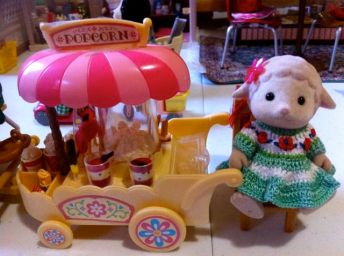
    IMG_3986

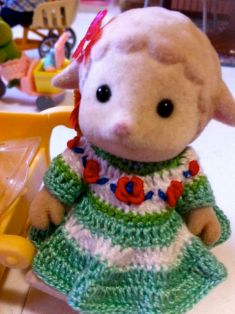
    “Dearie Me. I only wish I could be anywhere but here today…” Sally talks to herself as she sits down on a chair after setting up her popcorn cart for a day’s operation of her business. She has been selling popcorn, chocolate-covered bananas, frozen fruits, and French Fries for three years. Sally loves her job because she likes to interact with folks of all walks of life and hears their own stories of life and themselves. It gives her a new fresh point of view on her own life, which helps her look at her existential problems with a variety of possible solutions. Sally feels a sense of community and finds her existence  in her daily dealing with her customers, which can’t be materialized simply by reading books and internalizing the knowledge in the abstract. But Today is different. That is, only today she feels out of place, misplaced,  and  discontent with her sweet establishment.

    IMG_3987The proximate cause of the vagary of  her state of mind is her inability to go to see the outdoor music concert held in Elusian Park today at 12:00 PM. It’s a classical music event in which her favorite Regal Philharmonic Orchestra will play scores of music from the Baroque to Romantic periods. According to a program Sally has read from the Calico Times, the orchestra will play her beloved “Brandenburg Concerto No. 3 in G Major” By Bach, “Fledermaus Waltz” by Strauss II, “Trumpet Voluntary” by Hendel, “Radetzky March” by Strauss I, and so forth. Sally’s soul leapt up with effervescent joy and her spirit sprang from the dormant mode of cultural activity upon reading it and wanted to attend the concert in a heartbeat. So she checked the onlie ticket booth to get a ticket, which was sold at $3.00 each yesterday. But alas, all were sold out as there were many more likely-minded spirits wanting to enjoy the festivity of music – the festivity of art in the same place at the same time. A phantasm of a basking herself in the gorgeous feast of elegant music is vanquished.
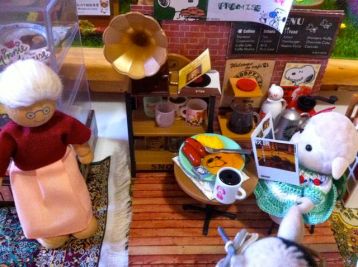
    IMG_3995Nevertheless, Sally is not sulky or soaked in a miserable feeling of being left out of a cultured crowd. It’s just one of those moments when you feel like doing things that you feel most comfortable and familiar with differently just for one day. Being a responsible and sensible being she is, Sally tries to take the image of the musical concert in her mind’s eye  and the music that plays in her ears off her mind by gently forcing herself to turn to a different subject. “I should have nice brunch with a cup of fresh Americano coffee at Snoopy’s now. It will make me awake again!” So she goes to the cafe that is just around the corner of the street with her cart being attended by her fellow street vendor Randy, the fruit guy. “Randy, thanks much for your help as always. I will come back in an hour with a nice take-out set from the cafe.” And when she goes into the cafe, to her pleasant surprise, Bach’s “Bourandebourgh Concerto No. 3 in G Major” welcomes her lovely entrance. This is sufficient for Sally to make amends for her failed hope of going to the concert today, and what with a cup of warm Americano coffee accompanied by her beloved brunch meal set and what with the customary cozy ambience of the cafe, Sally desires nothing more and becomes content with such simple joy of the moment she’s in.
    porky

  • Pirates: The True and Surprising Story of the Pirates of the Caribbean by Patrick Auerbach

    Pirates: The True and Surprising Story of the Pirates of the CaribbeanPirates: The True and Surprising Story of the Pirates of the Caribbean by Patrick Auerbach

    My rating: 5 of 5 stars

    Patrick Auerbach’s delightful account of the pirates of the Caribbean in the early 18 century, which is hailed as the Golden Age of Piracy, is Pirates: The True and Surprising Story of the Pirates of the Caribbean  for readers of all ages whose curiosity about these buccaneers is prompted either by the popular Disney movie installments of “Pirates of the Caribbean “ or Robert Louis Stevenson’s timeless novel Treasure Island. Auerbach’s vivid descriptions and elegant way of narration engages the reader in the history of these infamous sea marauders with telltale details of the piracy and the crew based on a wide variety of resources, including Captain Johnson’s A General History of the Robberies and Murders of the Most Notorious Pirates published in 1724 and other relevant historical records. This book will render the reader a new viewpoint on piracy that comes in a surprising twist of myth and legend in an instructive as well as an entertaining fashion.

    The Golden Age of Piracy (around 1716 to 1726) descended upon the open seas as a consequence of the end of the War of the Spanish Succession that begot a great number of unemployed able-bodied seamen turning into pirates in the business of plundering at sea. Although these jobless seamen had no alternative but becoming pirates to make a living, there were others who were captured from ships and forced into signing the articles under duress that stipulated fair distribution of the loot acquired from any plunder. Some of notable clauses of the articles set forth that (1) every man shall keep his watch night and day; and at the hour of eight in the very evening shall retire from gaming and drinking in order to attend his respective station; and that (2) no man shall open or declare to any persons or person his identity or any personal information. In fact, the articles were promulgated by captains based upon their own experiences by working under harsh commands on board naval/merchant ships to create a better life for all at sea to prevent the crew from causing a mutiny against their captains, who were democratically selected by the crew’s votes. Ironically, the society of pirates was comparatively freer from the despotic ruling of the powers that be on land, and it was this democracy of pirate regime that attracted many experienced seamen into piracy.

    Pirate ships were commonly known as privateers, commissioned by the government of their country or wealthy merchants (especially and notably the British) to attack and raid enemy ships in times of war by carrying letters of marquis served as legal proof , a license to steal. These privateers were most prevalently seen in the Bahamas because it was a base for pirates with a harbor tucked in water too shallow for any intervening force to enter and harass them. On board these ships, the hierarchy of pirates was reasonably strict in the necessity of each following status and role:

    • Captain: democratically selected and ousted at any time; needed to be able to provide enough money to the crew lest they would bring about a mutiny.
    • Quartermaster: nearly on the same level as the captain; played a role of cop; also elected; acted as bookkeepers and accountants.
    • Sailing Master: “the navigator”; an officer in rank; very valuable “worth his weight in gold.”
    • Mate: higher position than a sailor; a term used to signify that a person was under training
    • Sailor: the rest of the crew

    Auerbach provides the reader with many an interesting tidbit of popular imageries related to piracy. Take “Jolly Roger,” a white skull and crossbones image on a black flag associated with a pirate ship promoted by movies. Pirate ships usually and traditionally raised a solid black (signaling there would be no blood if a captured ship abandoned resistance) and red flag (death upon resistance). Then how did this image of Jolly Roger come about? It was used by the Knights Templar and later adopted by the Knights of Malta, who were also renowned pirates ultimately popularizing the flag as the emblem of piracy in later period. With respect to the pirate life on board, it was much better than on merchant or warships. Although rats were rampant and a range of food limited to salted pork and hard tack, pirates were obliged to do all kinds of chore and to spend their time for singing, playing cards, dancing or sleeping. Turtles were a specialty because they could live longer aboard, hence they were a precious source of protein in the form of soup. When pirates landed on Caribbean islands, they usually ravished hot spicy West Indian dishes and drank themselves in beer, rum, and gin.

    Overall, this is a comprehensive overview of piracy and pirates during the early 17th century in the Caribbean with fresh information on the subject matter succinctly put together by well-categorized chapters and the summaries at the end of each chapter to help the reader absorb the content lucidly. It will also be an excellent primer on the subject in the historical context of the era in case the reader wants to pursue his/her genuine curiosity about the subject matter in the quest of the legendary treasure buried by the pirates of the Golden Age.

  • Blank Slate

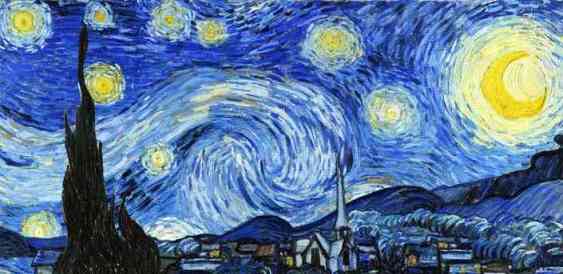
    imagen-starry-night-by-van-gogh-1ori
    Vincent van Gogh (1853-1890) The Starry Night 1888 from google

    A Hypothesis of Reality;
    A Wilderness of Sensibility;
    and a World of Multiple Incident
    tell many lies in the Likeness of Truth.