Tag: Writing

  • Paul Gauguin: With Sixpences Beneath a Visiting Moon

    The Writings of a Savage by Paul Gauguin

    With sixpences beneath a visiting moon, Gauguin could produce wonder. He was an artist in an endless pursuit of the rising sun at the dawn of a day with a flaming glory in dazzling magnificence. He was an intellectual with a wealth of knowledge drawn from a wide range of reading and classical Jesuit education. Gauguin was a man of irony, with contrasting colors reflected in the soul’s spectrum, from the passionate red to the sanguine blue, hopeful green, and melancholic purple, which is why he left Vincent Van Gogh alone in Arles, in never-ending loneliness. He craved recognition in a grand salon, yet he longed for independence on an island beneath an ancient sun. So, naturally, I wanted to know about Gauguin from his own writings, not from another in the form of a biography. Hence, The Writings of a Savage by Paul Gauguin.

    The book is an attractive compendium of mostly letters to his select few friends and, occasionally, to his wife, as well as essays and articles on the arts and religion, demonstrating Gauguin’s erudition and introspection. While reading the book, I could not help but think that if he had been a professional journalist or an art critic, his artistic talent would have basked in the glorious dawn sun rather than a struggling painter always on the verge of starvation. But most of all, what I wanted to know was if Gauguin had cut off Gogh’s ear, as I heard the rumor. Before reading this book, I had already assumed Gauguin was a man of temper because his image was incompatible with the Dutch painter’s delicate, sophisticated, and sensitive appearance and temperament. But while my prejudice was not entirely faulty, Gauguin proved himself innocent as he talked about it before his impending death away from civilization. Besides, my reading of Gauguin’s writings convinced me that he was not culpable for the injury, even if some like to assemble circumstantial rumors to make the French pariah artist appear jealous and violent toward the suffering Dutch genius. Gauguin might have been passionate, but his passion is directed toward his artistic creation of the worlds he sees in his mind, while the snobbishness of critics and bureaucrats curates the works of painters who know nothing about the arts.

    Imagination, innovation, and independence are the jewels of Gauguin’s prime colors that create his artistic Elysium. Gauguin was liberal in social stance, especially against clericalism, but sovereign in his artistic philosophy that how to draw doesn’t mean an exact copy of the figure because that’s not the purpose of art for art’s sake. As the title suggests, Gauguin was a noble savage who, as a disciple of Rousseau, returned to a primordial state of humanity to escape the over-intellectualized inertia of civilization, which depreciated and ignored his art. I still can’t say the book converted me to the cult of his paintings, which differ from those of Renoir, Monet, and Pissarro. But the book is a medium of looking through the labyrinth Gauguin has built, leading to his secret garden, wondrously vibrant and dazzlingly radiant.

    If this review moved you, you can support my writing at Ko-fi: https://ko-fi.com/steph79650

  • About Writing

    I can’t think of myself just simply vanishing into the passage of time, becoming a tribe of the forgotten. I don’t want to leave this world without a trace of my existence. That is one of the reasons why I have been submitting my work to journals and my first poetry chapbook since last May. Before, writing was my soliloquy in which I wallowed myself away from the cruel reality where God was unkind, let alone people. However, things have shifted for me. Now, it’s different. This is a time of striking hard when the iron is hot. And boy, is my iron so hot that I can’t hold it any longer.

    My first chapbook, “The Glass and the Flame,” consisting of 40 poems, was submitted to a couple of presses last week and this week. One of them required $15.00 for submission, which was quite costly considering that even if my chapbook were not selected, I would still have to pay the sum, just so the editors would read. Still, I decided it was worth it because I wanted to be famous. I want to mark my name in the aisles of bookstores from LA to Rome, to Paris, and wherever literate people live. Not vanity. Justice. My voice deserves to be heard. I write ache, loneliness, sorrow, and desire — with no shame. For whom should I feel shameful about expressing a free spirit in the language of beauty and truth? After all, even scholars have sex. No, my writing is not of Anaïs Nin. Instead, my writing follows the tradition of Anne Ernaux, Duras, and Sappho with the mind of Szymborska. Furthermore, elsewhere across the fields of desire, Plath calls for intelligent lust, which comes in the form of Eros in a purple cloak. And of course, Psyche comes in together. In the secret garden of language.

    I have received rejections from journals that tout themselves as publishers of so-called “intellectual,” “confessional,” “existential,” or “societal” poems that demand social activism. Writers are routinely defined by their social, racial, and cultural backgrounds, as if these alone drive their voices. For example, if you are a Korean-American woman from an immigrant family, you are expected to address prejudice and alienation, tinged with jingoism. The prevailing belief is that my race and gender are the only traits editors value — as if being an “exotic” woman seeking an audience is enough. God, when will they realize that, beyond differences, we share more in common?

    Maybe this is just a writer’s rant. If so, so be it. Nevertheless, I write the most universal human feelings about love and desire, about solitude and sorrow that any woman across all cultures, ages, and classes can understand. Forget the MFA writers. After all, writers do not need master’s degrees to be considered intellectuals whose work takes precedence over writers who have lived rather than studied.

    If this essay moved you, you can support my writing at Ko-fi: https://ko-fi.com/steph79650

  • Chasing Shadows: The Cycle of Love and Loss

    Ariadne, Dido, and Clytie—

    ancestors of the tribe called Beautiful Losers.

    Their loves were alone, half-met,

    steeped in the clandestine ache of disappointment.

    Spring meets Summer.

    Summer elopes with Fall.

    Fall yearns for Winter.

    Winter chases after Spring.

    The cycle of lovers’ tales.

    Some loves are born to be forever chasing.

    Even beauty cannot possess the souls of the beloved.

    Votives of curse are lit for Hecate.

    Still, Ariadne found herself

    in Dionysus’ arms—god of wine and pleasure.

    Dido let Aeneas touch her aching love in a cave.

    Clytie burned for Helios,

    who left her for a mortal princess.

    But I am chasing the shadow of his past,

    the ghost of a lover no longer himself—

    his eyes, the blue sky—so beautiful, so sorrowful

    they puncture my heart with helpless longing.

    I write his name on papyrus,

    seal it with the candle’s tears,

    and burn it in the quiet flame,

    calling his name within.

    The doors of time close.

    Candlelight flickers in the wind of the hour.

    Wistful images of his face—young, old—

    even those I would forget, I cannot forsake.

  • I Spoke Once, and Never Again

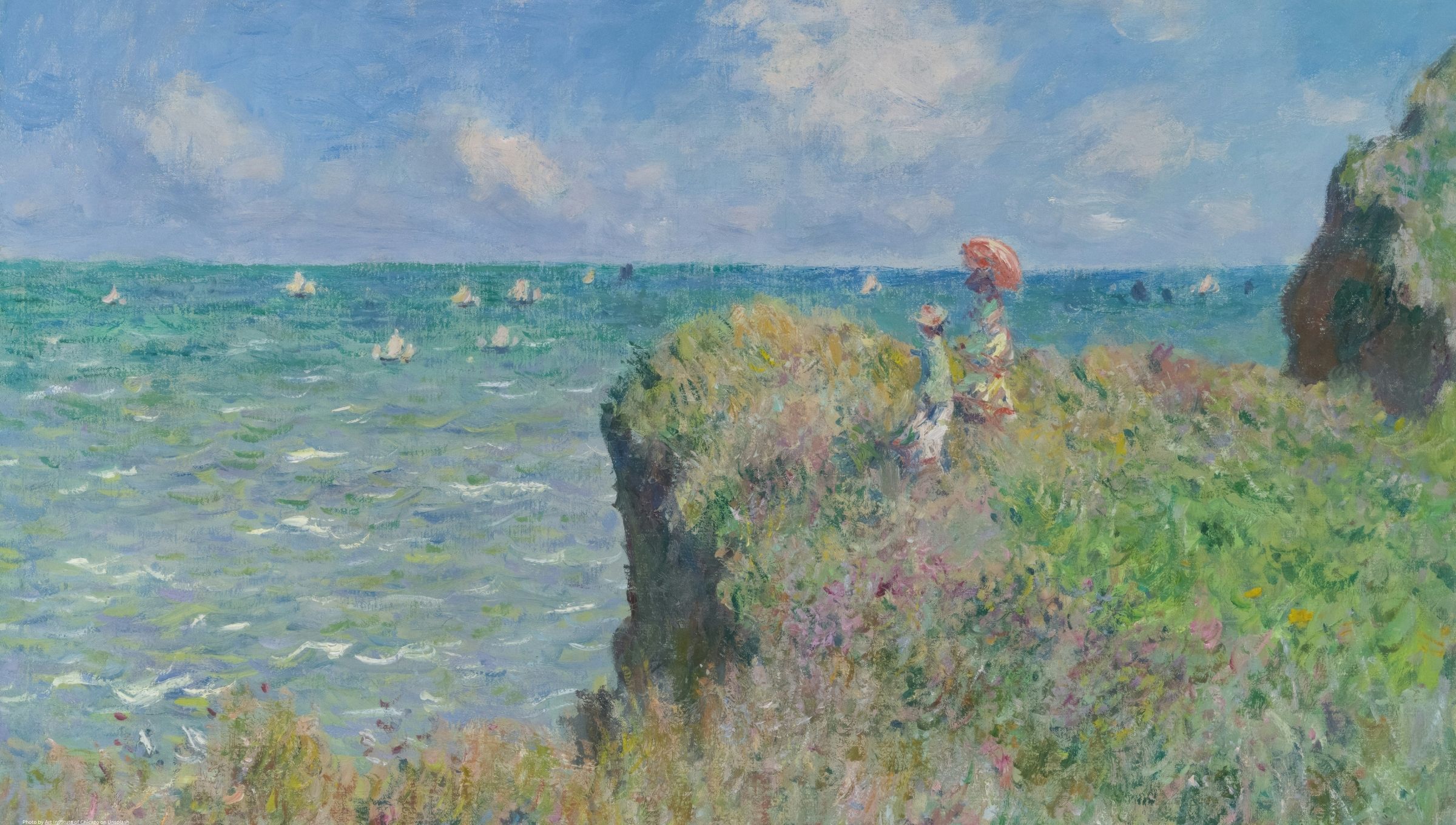
    Painting: Claude Monet, 1875. Public domain via National Gallery of Art.

    I keep it to myself, and myself—like a girl with no lips.
    And so, no one sees me. I’m forgotten, forsaken.
    Still, I am flesh and bone—the quiet soul, the raging spirit.

    Recognition is not my thing, or so I try to beguile.
    But the crying heart longs for it, like a flower needs water.
    The calm sea always hides the surge of roaring waves.

    I wanted to be someone’s one—even if he knows me not.
    I wanted to be a lover’s lover—even if he is someone’s one.

    When I shared what I felt, with streams of salt-sad fire,
    it was too much for them. They turned away.
    So I stopped confessing it altogether, evermore.

    I wish for nothing now—not tomorrow, not ever.
    With no expectations, I let the days pass—and fade away.

  • 🐾 Understanding Cats as Mirrors of My Soul

    They say pets reflect the personalities of those who care for them. The way they respond to others and express their feelings seems to mirror how they’re treated at home—or perhaps how their owners reveal the rawness of human emotion, unfiltered and instinctive.

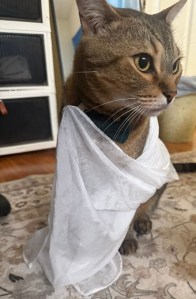
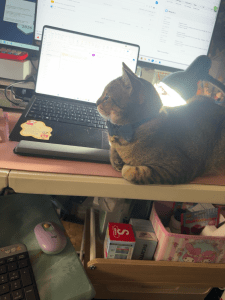
    My two cats, Toro and Camille, mirror my ego and superego, respectively. Toro is a sensitive soul, easily shaken by the outside world and never shy about his emotions, almost like a little human. Camille, in contrast, is calm and observant. He watches me in silence, as though he sees through to the very center of me. At times, I think of Toro as the General Cat from Cat’s Eye, and Camille as Jiji from Kiki’s Delivery Service.

    Sometimes, I wonder if they are the little brother and sister who were never born—that they somehow returned in fur and paws to be near me… and, strangely, near my mother, who once chose not to bring them into the world.

    Whenever they curl beside me, their small hearts pulsing gently against mine, I feel the wonder of life swell within me—a quiet awe at its vividness, like a tide of feeling stirred with reverence for the mystery of creation, and the One who makes all things beautiful.

    Rudyard Kipling once said that a cat walks by himself. But perhaps he never met mine.

    Whatever happens, they are my familiars—silent witnesses and gentle companions, walking beside me through this strange and lovely journey of life.

  • The Poignant Loss: A Reflection on Absence

    I never stood beside him.

    Nor did my eyes ever meet his.

    But when I heard he was gone—

    forever, yesterday—

    a strange sadness fell upon me,

    like dusk after the sun has set.

    One soul less in the world,

    and silence filled the void.

    We will never see him again.

    His voice and face are lost to us,

    like an old photograph of the beloved

    set quietly aflame.