 This lunar beauty is full and fast and proud
With the heart that changes where a ghost is
Heard but not seen, is seen and but not heard.
This lunar beauty is full and fast and proud
With the heart that changes where a ghost is
Heard but not seen, is seen and but not heard.
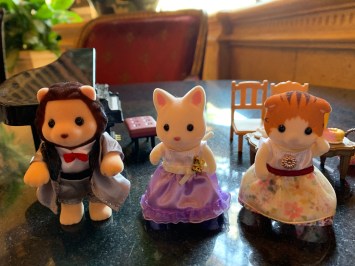
Music has such a charm; it makes bad good and conjures memories of the places and faces of the past with nostalgia in a magical way. It’s a kind of mind teleportation, artistic time-machine, which takes you from the rut of life to anywhere you can dream about. So much so that ever witty and lively William Shakespeare said: “There’s nothing in the world so much like prayer as music is.” Just as reading makes the reader pass over to the literary world of imagination, listening to music carries the listener over to the auditory feast of melodies and rhythms, wonderfully harmonized, all in the mastery of fine musicianship inspired by the Mousal, the music muses, which is demonstrated by the fabulous Biltmore Trio.
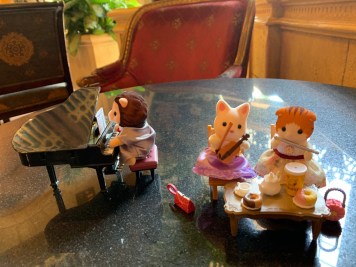
Biltmore Trio consists of Ben Lion (Piano), Claire Whitecat (Violin) and Julie Tigress (Flute). They are fine amateur musicians who get together two days a week to play music together for reason none other than being aficionados of music, especially of the Baroque music. All of them have full-time occupations by which they earn their livelihood: Ben is an associate professor of history at Avonlea Community College. He is also an established writer for various magazine and short stories. Claire is a free-lanced book illustrator primarily for children’s books. Julie is a legal secretary working at a busy litigation law firm that would not function without her presence. They are good friends from childhood and share their love of music, books and other interests that pique their intelligent minds with scintillating curiosities. Hence, Biltmore Trio is a musical manifestation of their fellowship in the Appreciation of the Arts and Altruism of Humanity based upon the idea that the beauty of art is for everyone, not a prerogative of a few select. It is important that the public has a right to art because as Oscar Wilde attested, “Nothing can cure the soul but the senses, just as nothing can sure the senses but the soul.” How true it is!
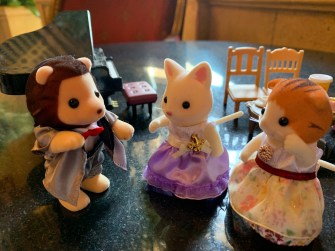
With such tenets of art in mind, Biltmore Trio’s free lunchtime recital of Frederic Hendel’s “The Arrival of the Queen of Sheba” at the eponymous hotel lounge fills the hearts of the audience with mirth and merriment and frames their minds with beauty and alacrity. The trio’s fine musicianship becomes even more brilliant with their milk of human kindness that benefits all regardless who they are and what day do.

A thing of beauty is a joy to them. Its loveliness increases. It never passes into nothingness. Oscar Wilde, who extolled physical beauty as a form of virtue manifested in a physical form, once flamboyantly remarked: “Crying is for plain women. Pretty women go shopping.” Although Seraphina Rabitte and Mathilda Beare demur at such uncharitable notion of meritocracy of women’s appearance, they love visiting beauty stores in a way that little children love going to candy stores (or toy stores to be more realistic these days). For the ladies like to keep themselves prim and proper in the belief that presentable appearance (not a physical symmetry per se) indicates how one takes cares of herself by realizing her creative, attitudinal and experiential values in everyday life.
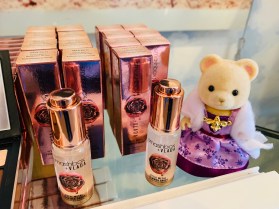
The belief is grounded in Logotheraphy, one of the three Viennese School of Psychotherapy founded by Dr. Viktor E. Frankl, a neurologist, thinker, psychiatrist, but above all, a remarkable human being who endured personal experiences of Promethean hardships and suffering in Nazi concentration camps and conquered them in triumph of will to meaning. Fashionable and knowledgeable Matilda and Seraphina are students of Logotheraphy, the theory that human nature is motivated by search for a life purpose that is unique to each individual. Unlike other schools of psychotherapy and many other subdivisions thereof, Logotheraphy encompasses a wide scope of the humanities and of course, neuroscience, making it a brilliant multidisciplinary school of thought. In fact, it is a paradigm of the consilience of the knowledge of the humanities and that of science. So, in the context of regarding Logotheraphy, the fashionable ladies’ attitudes toward appearance betokens their ways of preventing noogenic (existential) frustration by engaging themselves in activities to dispel a hint of depression or inertia from their minds, even if it means only going to shopping.
 So, you see it isn’t a symptom of conspicuous consumption as a result of our hyper industrialized social environment that Matilda and Seraphina like pampering themselves with cosmetics. Besides, who can blame them for having none other than a woman’s reason? Didn’t Queen Elizabeth also proclaim herself to have a lion’s heart in a woman’s hide? Also, did the Queen not show fierce attention to fairness herself by putting the most fashionable make-up and dresses and hairstyles of her time? Well, these modern ladies are no less different them from their loyal member of sisterhood in the race of Humankind. In fact, Matilda and Seraphina have aristocratic bearings in appearance and manners due to their fine upbringing and sweetness of the mind by nature, so whenever they go, they give admirable impressions on people whom they encounter. They are the paragon of a virtuous woman as John Milton extolled in Paradise Lost: “Those graceful act, those thousand decencies that flow from all her actions and words.”


They find the secret fountain and love the sounds and scenes of the pounding water.
Fran Frogg and Brenda Beaver are especially happy at the sight because of their aquatic proclivities. Kate Cat is listening to Handel’s Water Music and enjoying the moment of pleasure to herself.
Pleasure and mirth fills their mind.

The article on the Ainu as featured in October 2019 issue of BBC History makes the interesting parallels with the history of the Anglo-Saxon and the Celts in Great Britain. The Wajin, or more widely known as Yamato people elsewhere in the Far East, are the major ethnic group of the Japanese archipelago, many of whom are the descendants of the ancient Silla (57 BC – 935 AD), a kingdom located in a southern part of the Korean Peninsula. (The Anglo-Saxon). The Ainu whose wherefrom and wherefores are still a mystery primarily inhabited in Hokkaido (The Celts or the Welsh).
However, it must be known that the Yamato were not hell bent on obliterating the Ainu culture but in effort to unite the divided provinces by Shoguns under the newly established monarchy of Tenno, which was in fact modeled after Papacy of the West during the Meiji Restoration. And it wasn’t that the Japanese mercilessly persecuted the Ainu under the reign of terror. Rather, they tried to indoctrinate the Ainu modern way of life, which in many ways improved their primitive quality of living by conforming to the reformed policy in favor of their betterment.
True that the Ainu were often subject to discrimination by their unique ethnicity, just as the Welsh and the Irish experienced it from the English, but part of their diminutiveness of presence resulted from the juggernaut of the modernization that necessitated the swing of things.
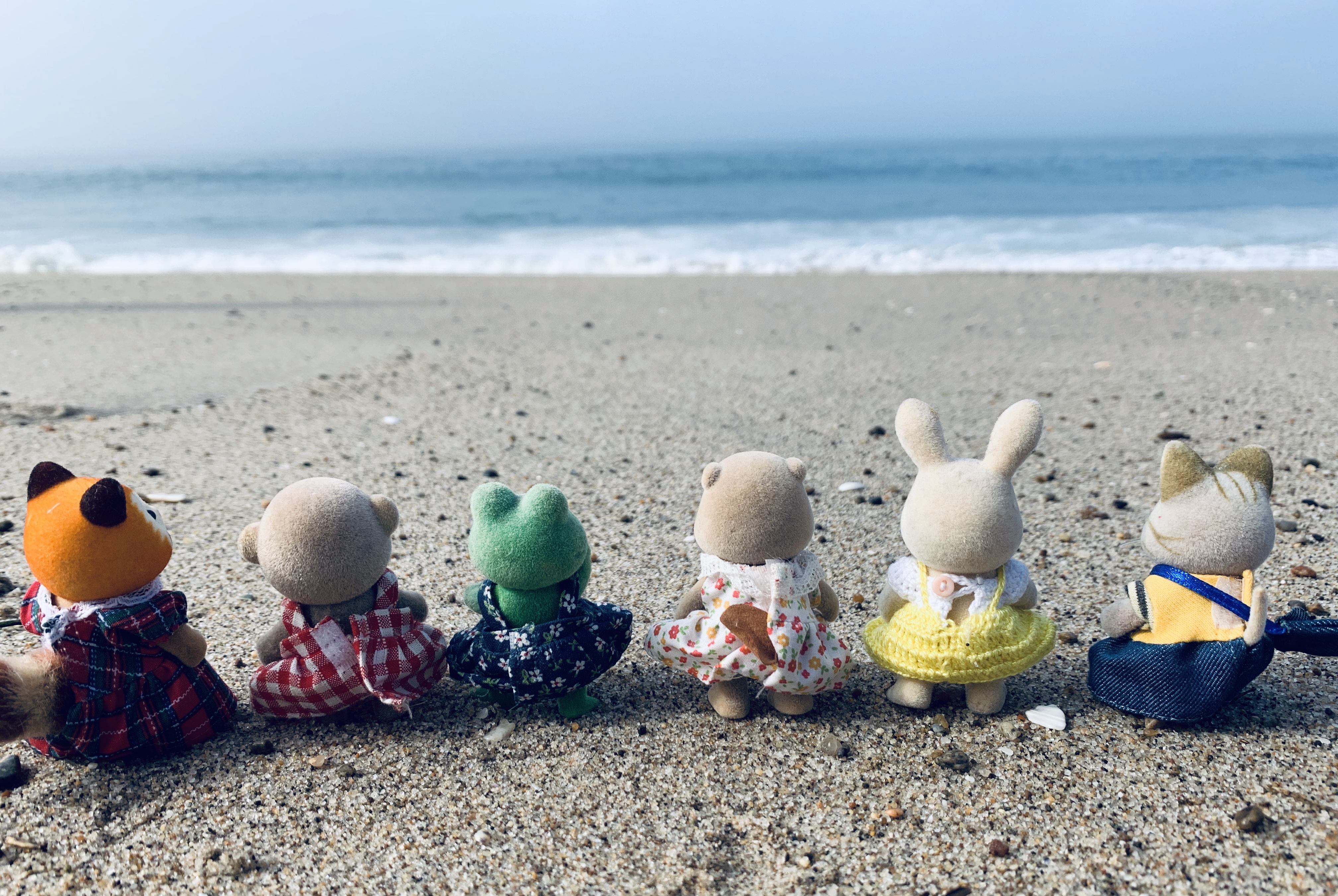
Looking at the sea, all blue and broad, the girls thought that they could not enjoy its loveliness anymore if they had millions of dollars and ropes of diamonds and pearls. Now they knew how Anne of Green Gables felt when she looked at the serene beauty of sunset that spread through her mind and lingered there in alterations, while standing on the farmland with uncle Matthew: “God is in heaven, and all’s well with the world.” Even if it would not obliterate their worries, concerns and troubles in their hearts, the very moment of equanimity made the girls forget all of it and imbued them with a sense of the sublime in life, a budding sense of meaning of life – to find a reason for hope with the awareness of odds in their favor.


You must be logged in to post a comment.