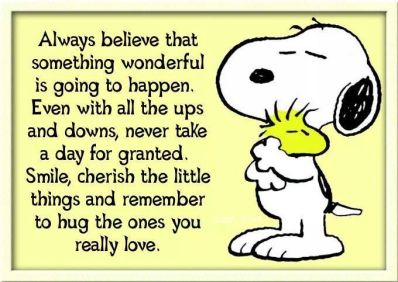
Before calling it a day to say hello to a new tomorrow on a hard day’s night, to happen on this comic strip of my all-time favorite Peanuts seems almost too pat. Provident, even. It chimes the bells of my heart and soul that are dented with the shrapnel of existential vertigo in the most impressively elliptical way: that none other than simple tenets of life are needful to live a less stressful life.
As Sally elegantly puts: Life does not end at one fell swoop even if I stumble into an imbroglio of misadventures; any such mistakes or misdeeds betray that to err is human; and that I should not fall into the bottomless pit of worries and anxiousness, for tomorrows are always new with their own unknowns.
What Sally blithely professes strikes the chords of Logotheraphy, a 3rd Viennese school of psychotherapy founded by Dr. Viktor E. Frankl based on existential analysis focusing on ego qua meaningfulness, a purpose of living a meaningful life. With these simple but potent tenets of life in mind, I can say good-bye to this spent day with the alacrity of departure for nightly dreamscapes to rest myself.
Celestial streams of Independence, Intelligence, Trustfulness
Became the Stars of Your Destiny constellated across the northern skies
Shining thru the cold wintry night as the radiant meteor diamonds,
Crowning you with the magical powers of mystic Aquarius.
Author’s Note: It’s a poem dedicated to all whose astrological sign is Aquarius 🙂
According to Greek historian Herodotus, there was the Egyptian pharaoh Psamtik I ruling in the 7th century B.C., who was keen on finding humanity’s primal language. Ergo, the inquisitive Pharaoh gave 2 infants to a shepherd to raise and told him not to speak to them because he believed that the first words the children spoke would reveal the Mother Tongue of all of the Human Race. Quite creative, even feasible, but highly abstract; the hypothesis resulted in one of the children’s utterance of the word “bread” in what sounded Phrygian, the language older than Egyptian. Nevertheless, the Pharaoh’s the Up series-like experimentation on human linguistic origin tells us something of a human desire to find anthropological aspects of languages in their origins even before the proverbial Tower of Babel was set about to begin forming.
Here in the States, one does not get bored with a mono language: English (American English, to be precise), Spanish with continental and regional variances, Hindustani, Pakistani, Mandarin, Cantonese, Japanese, Korean, French (mostly of former French colonies in Africa), Tagalog, and etc. So the story of Psamtik I’s ambitious experimentation to parse the root of all languages chimes with the cosmopolitan landscape of everyday life. Apropos of a diverse group of languages, Benjamin Franklin, however, seemed not to be in favor of multilingualism in the States in fear of the country’s being disseminated into a variety of different language communities. To Franklin, the importance of English as a unified official language of the States meant a national sovereignty and cultural identity that would bind people living in the States into one cohesive cultural group. In this respect, the English language as an official national language of the U.S. is the sine qua non for a lingual and social unity of a country as much heterogeneous as the States. That said, it is beneficial to know of the lingual root of the English language as well as of the other related language.
One of the most popular Indo-European languages in terms of active speakers, English belongs to the Germanic along with German and Norwegian under the Indo-European lingual branch, which also includes the following groups of language:
Indo-Iranian: Persian, Urdu, Bengali, and Romani
Greek: belongs to its own family
The Italic: Latin and the Romance
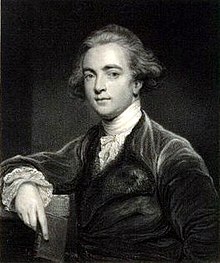
Sir William Jones (1746-1794)
The reader may be surprised by the fact that Persian, Urdu, and Bengali spoken in the Near East Asia and Asia are also a lingual family with English, but according to British jurist and amazing polyglot William Jones in Calcutta, India, Sanskrit, an ancient Indic language, had common ancestry with Greek and Latin because many of the words were similar to those in Greek and Latin. For instance, take the word “Fathera”. The Indo-Eurpean term is pater. Sanskrit is Pitar; in German, Vater; in Latin, Pater; in French, Pere, and in Spanish, Padre. In fact, Jones’s elation of the ancient Indic language in his industrious study of its deep cultural influence as well as lingual traits on the Germanic paved a way to modern comparative linguistics. In terms of the cultural theme of Indo-European cultures, the idea of trinity in aspects of life that are sacred, social, and economic can be traced in the old caste system of India comprised of Brahmans (the Priest), Kshartyas (The noble and the King), and Vaishyas (the Commoner). Likewise, in Greek myth the 3 Fates who are the beginning, the middle, and the end of each mortal’s life and the Holy Trinity of Christianity adumbrate a cultural connection between the continents that look remotely different at a first sight and yet interestingly alike with deeper insight.
To encapsulate, the relationship between language and culture is the sine qua non of human civilization, the inseparable archeological, anthropological, historical, and linguistic artifacts to study the origin of humanity and its misty pasts. The development of languages also relates to an expansion of its influence by means of trade, war, and migration that are still in progress in our time. It is a product of collective enterprise in the form of textual artifact. Otherwise, who would have thought that English, an obscure west Germanic language, would become a modern day lingua franca spoken across the five continents and six oceans? For what it’s worth, T.S. Eliot elegantly summed it all thus: “For last year’s words belong to last year’s language and next year’s words await another voice.”
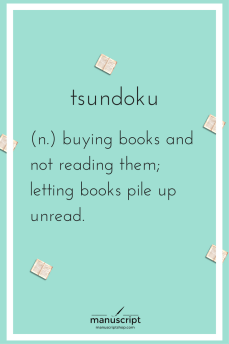
To come upon Word of The Day, Tsundoku, as I was checking messages on Facebook during my lunchtime at a regular Starbucks shop gave me a fillip to thinking of my unread books I have piled up, untouched, since my new job became my primary reality. A Japanese word for a pile of unread books, Tsundoku has become something of new word that describes a tertiary group of books attempted but disinterested, or tried but forgotten. Which is what my tsundoku are comprised of. My books pending my reading speak to me: “Have you deserted us?” Nary a One Bit, My Dear Textual Friends.
In fact, looking at a stack of unread or partially read books imparts me a sense of subtle satisfaction and small wonder: these books of mine indicate that there’s still unknown knowledge of the world I need to know and that my literary vanity is worth the indulgence. They are part of my personal library built upon flotsam and jetsam of sundry interests, which are similar to the Mathom-House in the Shire, inhibited by Hobbits. The Mathom House is basically a museum of paraphernalia, a sort of odds-and-ends things but not to be discarded for what they are worth. The House is ever-expanding as a Hobbit fills it with this and that to his heat’s content. Likewise, my library is ever-expanding as it is filled up with new ideas and fresh inspirations drawn from the world of writers with unique voices but who always manage to express the universality.
Tsundoku, the Mathom-House… they are terra incognita in the mind of any adventurer of knowledge. The importance of unread books reminds us that reading is a never-ending activity but an ongoing process of becoming who we want to be because we become what we read. Reading is not a competition but a creation of a reality of the reader by passing over to the minds of the author and the characters. All books , finished and unfinished, are possible to help you get there too because they are unknown unknowns. Therefore, a sight of Tsundoku is not a sign of a failed literary or academic ambition but a display of a wondrous mind whose intellectual/academic/artistic odyssey is still on.
As I read a daily Snoopy comic strip on my Kindle Fire, I believe the power of pop art that shapes the patterns of our culture and the modes of attitude toward the social customs and conventions. This relatively new modern art genre first emerged in the United States and the United Kingdom in the late 1950s as a counter cultural movement to challenge the orthodox forms and formulas of fine art by using imaginary figures or cultural objects from mass demotic culture, such as comic books and advertising. Its wide appealing to all stratum of society devoid of abstruse textual message or abstract imagery only comprehensible to a select few is elegantly manifested in Peanuts, featuring Charlie Brown, his friends, and of course his very famous resident beagle Snoopy.
Peanuts is all about being hopeful in the face of hopelessness in living daily life. The round shapes and soft faces of the characters of Peanuts evoke a sense of warmth, innocence, and artlessness with a feeling of secure comfort. What’s more, the simple themes of this affable comic strip are universally translated into the minds of readers all around the world, so much so that in Japan Snoopy and the Peanut Gang have become celebrities in the stationery firmament since their first debut in 1950. Peanuts shows us the incongruity and pain of everyday human condition in the appearance of innocent-faced children and stoical Snoopy. It reveals certain truths of our daily existential dilemma in which we struggle with the meanings of life against our unknown futures. In this regard, Peanuts is a profound comic strip dealing with very adult concerns – that is to say, life is a series of worries and more worries- in disguise.
Mr. Schultz at work.
The creator of Peanuts, Charles M. Schultz (1922-2000), was in many ways a lot like Charlie Brown. Both of them had that placid, affable smiles, soft facial features that make anyone feel guilty of hollering out their names out of earshot, and relaxed and almost self-effacing comportment that spells out “Humility.” In fact, the shy Schultz found the best medium in a comic strip to express his artistic talent and intelligence and thus created his simple but complex alter ego Charlie Brown. However, Schultz did not purport his creation to be a medium of pontificating about political or social agendas. He did not intend to use Peanuts as a visual aide to contextualize far-fetched psychoanalysis in this comic strip. The triumph of Peanuts over the flight of ages and gaps of cultures lies on Schultz’s keen observation of life per se and his effortless delineation thereof in this quiet but smashing timeless comic strip that deserves of universal recognition across the seas and continents. For this reason, Peanuts is an excellent paradigm of pop art whose excellence is simplicity in character, in style, and in form. Leo Tolstoy said, “There is no greatness where there is no simplicity, goodness and truth.” Peanuts fits all of this.
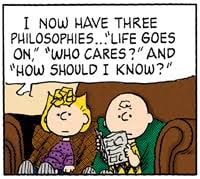 Before calling it a day to say hello to a new tomorrow on a hard day’s night, to happen on this comic strip of my all-time favorite Peanuts seems almost too pat. Provident, even. It chimes the bells of my heart and soul that are dented with the shrapnel of existential vertigo in the most impressively elliptical way: that none other than simple tenets of life are needful to live a less stressful life.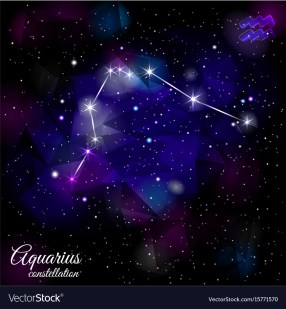


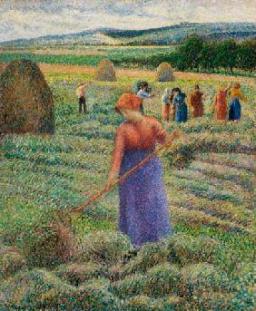
 To come upon Word of The Day, Tsundoku, as I was checking messages on Facebook during my lunchtime at a regular Starbucks shop gave me a fillip to thinking of my unread books I have piled up, untouched, since my new job became my primary reality. A Japanese word for a pile of unread books, Tsundoku has become something of new word that describes a tertiary group of books attempted but disinterested, or tried but forgotten. Which is what my tsundoku are comprised of. My books pending my reading speak to me: “Have you deserted us?” Nary a One Bit, My Dear Textual Friends.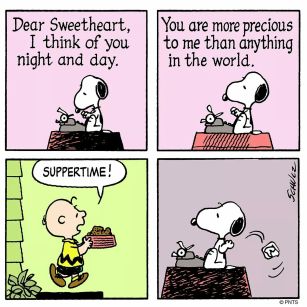




You must be logged in to post a comment.