Tag: Writing

  • Minor Earth, Major Sky

    As a hobbyist dilettante writer, I have been writing this and that on my beloved blog for four years. Despite English being my Second Language, I dare to write in it against criticism of solecism regarding all the prescriptive rules of the most popular language of the Indo-European linguistic superphyla. The reason I continue to and love to write is no more than the justice of my meek self, smothered under the mask of exoticness that has become my sole identity, and a written touchstone for the neural activities of the mind. I sometimes wonder affected by the progress of neurological or physiological maladies as I slowly walk toward the end of the mortal journey on earth. So, I want to leave the mark of my existence. Welcome to My Invisible World, the Minor Earth.

    The provenance of today’s post comes from my reading of a Saturday edition of the Guardian subscription on my Kindle two days ago. It featured a book review of Must I Go by Yiyun Li, exultantly described as a cracking read written by a Chinese-American woman writer deserving of the commendation. The article began with her illustrious academic background as an immunologist and a recipient of a prestigious MacArthur grant bestowed on geniuses. While such introductory curriculum vitae is undoubtedly relevant to denote her intellectual brilliance, I wonder if such a decorative prerequisite is necessary for the book’s worth. What if Li were just an obscure Chinese writer delving into English writing without the decoration? Such a hypothetical question might be regarded as nothing but an incoherent rambling of a jilted would-be writer. Yet, I have noticed that ordinariness is off-putting, unglamorous, and unworthy of recognition. Call it a groundless presumption or jealous subjectivism even, but it’s the truth. Charlotte’s Bronte’s author’s tenet of faithful allegiance to truth and nature seems to apply to the otherness of the Far-Eastern writers whose ordinariness is merely invisible and regardless. That is, they exist in an invisible habiliment of mysteriousness from Shangri-La.

    The review analyzes Li’s literary reality of uprooted sentimentality in the background against America’s wilderness, so to speak, in which her existential question of who she is based. Li also rides on the crest of the waves of cultural identity, as is the principal thematic element of most Far-Eastern writers. Rather than striking the chords with the universality of human life, they tend to focus on the egoistic litany of alienation with their selfsame egoist emphasis on otherness. In this regard, Far-Eastern writers themselves foster this strangeness, this otherness, these less-than-ordinary images based on their literary tenet they believe truthful and appealing to selective, not universal readers. That is why I, who is also from the far east tend to eschew their stories, void of the common ground of empathy, no other than the shared physical reality.

    Enter Kazuo Ishiguro, author of The Remains of the Day, whose literary world is not limited in his racial and cultural backgrounds. A good writer is capable of travel and metamorphosis beyond the existential terra, where the vision becomes a reality of its own. Ishiguro wants to be all that he can be away from his physical context to manifest his views on human nature, which aims to chime the bells of universal emotions. However, such transfiguration of physical reality into the universal realm of consciousness does not betray Ishiguro’s ascribed biological characteristics because creative force, in conjunction with desire for aesthetic values of literature, is mightier and higher than physical reality. In this sense, Ishiguro gloriously triumphs over racial barriers, and splendidly demonstrates that what you look like and where you are from cannot confine you who you want to become.

    I still write despite my imperfect command of English simply because I love the act of writing as a valve for opening myself dying for a fresh breath. My book has sold only five digits of a hand. I recently received a comment on one of my book reviews I posted three years ago on amazon with 32 likes that callously slighted my ability to write in general because of minor violations of grammar rules. Yes, I am an amateur writer of Far-Eastern backgrounds with an ordinary job as a legal assistant with a B.A. in English from a state university. Yes, my English is far from the perfection of English Undefiled. Yet, writing is no longer a prerogative of the academically privileged whose selfish seclusion of lettered cases is adulated. Writing is a democratic vehicle in which anyone can morph into whoever she or he wishes without restraints. Take Tolstoy, Charlotte and Emily Bronte, and Jane Austen, all of whom put their literary aspiration into reality despite their spelling weakness. No one shall bully my writing skills, nor belittle my volition to write for universal readership. Forget how I look and speak. It’s the heart’s passion and satisfaction of reason letting out of the cocooned physical reality that deserves manifestation. For this reason, I write with or without public recognition with a myriad of likes.

    P.S.: I don’t believe that you can follow my blog without liking what I have written. Also, even if you fulfill the requirement above, if you are regarded as a marketing puppet, then I will drive you away. Therefore, I will not treasure your subscription to my blog if you just press the button on caprice and whims. Certainly not for my blog.


  • After Rain

    A night’s serenade ends
    In a mist of morning rains
    ere the golden chariot shows
    as the sunflower becomes
    alive, anew, aglow -as ever
    radiant with the eternal desire
    for the indifferent charioteer
    reflected in the drops of dew
    shimmering in petrichor.

  • ‘The Wicker Man’ (1973) – film essay

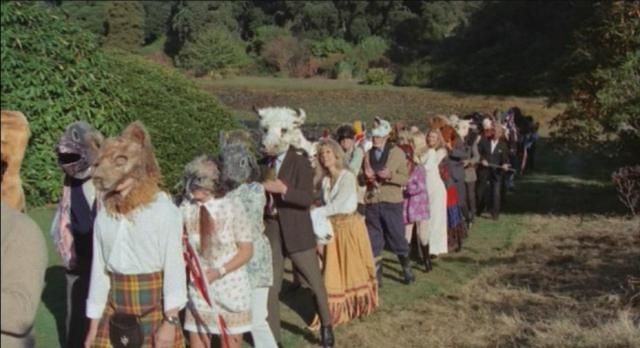
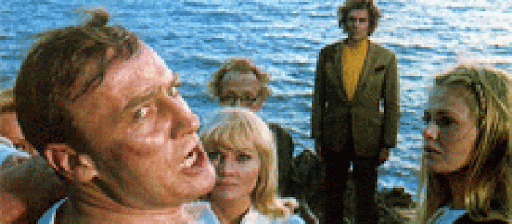
    The Wicker Man (1973) directed by Robin Hardy and starring Edward Woodward, Christopher Lee, Diane Cilento and Britt Ekland. Mesmerizing British horror with a screenplay by Anthony Shaffer and soundtrack by Paul Giovanni.

    The mentalese of Horror refers to an intense feeling of fear or shock that generates a feeling of repulsion, which is akin to ravaging terror to the sense. Consequently, horror films of our time, ranging from the 80s to the present, are filled with gory details of anatomical dissection with teeth and blood conjured up by the inflated creatures of scariest nightmares. That is why I have a soft spot for the 70s films of the supernatural phenomena with an intelligent storyline focused on the mysterious force of the beyond that subtly agitates our most primitive fear of the unknown, the uncertain, the unresolved entities lurking in between a thin line of reality.

    The Wicker Man (1973), directed by Robin Hardly, is a unique supernatural film that merits its name engraved on the obelisk of memorable films with the elements of folklore, belief system, music, and history unfolded in a vibrant kaleidoscope of scenes and scenery. It records fear in the ordinariness of landscape and people with the subtly suspected evil power lurking in the hidden alley of defenseless equilibrium. Such fear is not, therefore, forced upon the audience but tantalizing the anticipation of the sensation culminating in the extraordinary frisson of epileptic suspense blocked in a mental airlock.

    The story begins when policeman Neil Howie from Mainland Scotland journeys to the remote island called Summerisle in search of a missing girl. A young devout Christian and virgin into the bargain, Howie soon discovers that the whole island is a pagan territory of old gods to whom the pleasant-looking islanders with names of flora practice a human sacrifice when crops fail for harvest. Besides, eroticism abounds with lovers in the field and the cemetery. Sensuality is ubiquitous and free because the instinctual desire is a ritual practice of appreciation of natural beauty, which elevates the licentiousness into sacredness by the innocently joyful acts of the actors. Howe sees himself in a cultural and religious twilight zone and thinks himself as a lone Christian hero, a sort of Nathaniel Hawthorn’s Young Goodman Brown figure stranded in the deep forest where Satanic Sabbath is taking place. Both characters distance themselves from the diabolical influence. They belong to the tribe of Wicker Man in the reality of supernatural power translated from their most deep-seated terror sealed in dreamscapes.

    The efficacy of music used for the insularity of the proudly pagan island away from the Christian mainland shines through the film against the idyllically pastoral scenery and its happy-looking islanders joyfully practicing everything contrary to contemporary norms and mores. They are all beautiful and peaceful in their ways and see Jesus as a loser flopping in changing the world. It is this habiliment of pleasant appearance that insidiously pervades a sense of fear without blatantly exploiting it. Perhaps, that is why some people find this film monotonous or unsatisfactory in their touchstone for the ecstatic sensation. For this reason, it is not a statement film pontificating about the significance of endangered paganism but a visual story that tells a legend of the Wicker Man. If you are a fan of the supernatural tale clear of buckets of blood and chops of mutilated bodies, you will find this film worth watching.


  • Jaws (1975) – film essay

    unnamed

    Often, we find an answer to an existential dilemma in a situation that defenestrates us to an ocean of choices. How to respond to a challenge may change the compass of the fortune’s wheel. Patience and fortitude conquer all things in the mastery of fear in defense of the sovereignty of life against inconveniences and losses in existential selfhood. In this regard, “Jaws” (1975), directed by Steven Spielberg, shows how Man fights against the Leviathan of Life with will and courage.

    1_0HJNIQoYXxy53pQsUJ3BOw

    “Jaws” is a cinematic feast of horror and adventure that brilliantly blurs the genre of the movie fashioned in minimalist realism as regards to the storyline, characters, and leitmotif. Only the thematic lynchpin is larger- than- life: a hybrid of sea monsters, ranging from Johan’s Big Fish to Herman Melville’s Moby Dick and to Ernest Hemingway’s Mako that loves to swim around by the teeming shore in New York. In fact, the peaceful resort seaboard of Amity in New York betrays our idea of a Great White Shark as a dweller of the Pacific Ocean where tall palm trees and suntanned surfers are part of the landscape. Also, the appearance and roles of the characters in the movie do not carry Hollywood glamour. Police chief Martin Brody (played by Roy Schneider) is a mild-mannered family man who has recently moved from New York City but has aquaphobia due to childhood trauma. Oceanographer Matt Hooper (played by Richard Dreyfuss) is a wealthy neurotic scientist who is determined to get the formidable man-eater. Seasoned fisherman Quint (played by Robert Shaw) has all the characteristics of the choicest seaman with bravado sealed in unhealed fear. The ad-hocish triumvirate team formed mutual allegiance to defeat the predator that not only threatens the lives of people in the water but also agitates their fears buried in the waves of minds’ mains. Jaws is the contender of life’s challenge that the three characters must face and fight.

    JawsR-lead

    Spielberg is ingenious in using music as a leitmotif in expressing the intensity of emotions in scenes that produces suspense held in abeyance of impending danger that tantalizes our ready expectation of sequential segments of the story. He uses a recurring theme without the grandiose scale of orchestral tunes, signaling the menacing presence of the predator lurking in the uneasy equanimity of ordinary leisure. Spielberg also defies casting high-billed actors and actresses to create the verisimilitude of reality. The result produces relatability of the characters placed in situations where the ordinary people might have behaved in such extraordinary circumstances, asking us what we would do if we were in the position.

    EB20000820REVIEWS088200301AR

    The stupendousness of the big predatory fish and the nuanced emotions of trepidation is akin to reading Hemingway’s The Old Man and the Sea, where the seasoned fisherman Santiago’s serenity amid the battle against the man-eater in the ocean alone testifies to the steadfastness of human will and courage. Jaws is a film version of it that says, “Man can be destroyed but cannot be conquered.” “Jaws” is a masterpiece cinema that has become a classic in the history of cinema with its legacy. Now I know why people love to watch it anew and again across the oceans.

    62e3d18b55aa1d84a75e4021e85035be

  • ‘Hawaii’ (1966) – film essay

    Hawaii_(film)

    Religion is a man-made institution that has a hierarchy with a set of values and norms as dictated in protocols. Even the reformation trailblazer Martin Luther, who protested against institutional abuses of the Church, is not entirely free from the criticism. Thus, I hold a healthy amount of preconception about a religious individual whose outwardly practice of faith incongruent with his or her inwardly reflection of personality, which is a view shared by Gandhi’s opinion attesting, “I admire Jesus, not the followers of his.” The movie “Hawaii” (1966), an American drama about Calvinist missionaries and the Hawaiian natives directed by George Roy Hill, echoes the sentiment conflated with the profundity of religious zeal and the nature of humanity laid bare in the clash of cultures.

    images

    The epic adventure story is structured around stern Calvinist Reverend Abner (played by Max von Sydow) with his faithful and delightful wife, Jerusha (played by Julie Andrews). Abner’s devotion to the religious cause at the urge of young Hawaiian prince Keoki at the Yale Divinity School brings them to the beautiful heathen islands of Hawaii. Abner is a good man disoriented in the realm of dreary religiosity and ethnocentrism. He sees the beauty in his wife Jerusha and the land of the people he comes to serve but averts his eyes from it with the Bible on the one hand. He keeps all-natural feelings of love, joy, sadness, and even jealousy locked in his puritanical castle of mind and preaches the ire of God that imbues the natives with fear, not love. One look at him will make a man like Captain Hoxworth (played by Richard Harris) infuriated with contempt for the loss of her beloved Jerusha to such ungainly zealot. Abner is, in short, a man of God and would like to think him so as the will of God he serves.

    Hawaii2

    Max Von Sydow’s skillful performance of the role of Abner invokes both contempt and sympathy for the character who does not know how to act in the intimacy of human relationships. It seems that Sydow is particularly good at playing a clergy as he also did as veteran Jesuit Father Merrin in “The Exorcist” (1973). The tall slim figure carries the intellectual air without the pretentiousness that separates him from the mass, giving him the likeness of a suffering philosopher in the wrong place at the wrong time. In playing the internal character in the external context of reality, Sydow does a beautifully nuanced job of capturing all the inner conflicting emotions ranging from joy to disappointment, to ire mixed with envy, and to sorrow. Thus, Abner’s follies and foibles are forgivable and, in fact, a medium for his new conversion into the religion of Charity, Hope, and Faith.

    MV5BMTc1MzEzMzU5MV5BMl5BanBnXkFtZTcwMjY5ODA0NA@@._V1_

    The movie portrays a realistic portrayal of a missionary living in a foreign land. The excellent Jesuit method of enculturation is possible only when he is celibate without a family to support. Then, even mastery of enculturation guarantees no eradication of racial and cultural pride of the actor. Perhaps, the wish of an entirely benign messenger of the Gospel is vain mother to the thought in the ideation of an impeccable man of God. The best thing is to accept our human fallibility by which the meaning of God and the purpose in life come to a realization. “Hawaii” shows us a process of conversion into the mystery of faith occurring not in the pagan natives but Reverend Abner in the beautiful kaleidoscope of nature’s sceneries and the people living in them. This movie deserves its merit on the list of great films of all time for the posteriority.