Tag: Writing

  • Look with thy mind, not thine eyes

    Dear Reader,

    Hey, there! Thanks for visiting my blog and reading my post. And if you express it by pressing the Like button into the bargain, my spirit will surely be uplifted from the rut of my so-called life. If you are further intrigued by my e-book recently published on Amazon Kindle and drop just a few lines of your thoughts about the story upon reading, I will feel like a millionaire without the actual sort of money in my bank account.

    Well, it’s been two weeks or so since I published the e-book on Kindle, but a reception reminds me of the frightfully cold winter of New York City I have experienced. No one seems to read even the first page thereof, according to my Kindle Direct stats. Inevitably, a good book will find its readers without eye-catching promotions or pitiful solicitations for readership based on sympathy. But honestly, I don’t feel comfortable canvassing readership by either of the means. And yet, since I am a girl of contrasts, my ambition for full recognition of my work refuses to be humble and thus commands my unwilling spirit to write this letter to you.

    It’s only 57 pages in total, so the book won’t take much of your precious time. And I must admit that the formatting of the text may seem obtrusively arcane and dense, but Reader, look not with thine eye but with thy mind. The story is worth reading amid flotsam and jetsam of textual wonderland. Just click on the below book cover with one touch of your fingertip, and it will lead you to the place where the story begins via wondrous witchcraft. Many thanks for reading with my whole heart!

    Best, Stephanie 


  • wandering star

    1

    A puerile quest for a mirage, he rebukes

    A pristine request of the heart, she decries

    and begins a Ballard of a plain girl unknown;

    Since her star in the Milky Way lost

    its trail of Manifest Destiny shining the brightest,

    the heiress bereft of her heavenly bequest

    Without a speck of stardust has not been

    As others were – she has not seen

    As others saw – she has not known

    As others knew- she still can not find

    Where the tides of the ocean by wind

    Arise, rush, roll, and reach with the surge

    The silent silverly soil with the urge

    When the lost high star finds her at last

    And returns her overdue gifts of the best.

    P.S. I feel intimately acquainted with Charlotte Bronte, her fictional alter ego Jane Eyre, and Janice Sessions, the plain girl created by Arthur Miller in their quiet deportment, delicate feminity, sentimental loneliness, and plaintive want of beauty. They are, in fact, my spiritual sisters in whom I can confide my inmost feelings, repressed emotions, and provocative thoughts guarded by my own conceptions against the acerbic opinions of the brutish, insensitive rabble. Nevertheless, the aforesaid sisters all had the breakthroughs that led them to fortune, luck, happiness however it might have lasted or whatever they might have been. I feel that I am kept away from anything wonderful or even remotely felicitous ever happening to me by some unseen forces of godly or evil beings. Alas, woe is to me! Shakespeare believed that our lives are governed by the stars above us and that there are tides in the affairs of man, which taken at the right time, they will lead man to fortune. What with such cold reception of my first published e-book and what with my regret of having published it at first, I wonder when I can meet my tides and sail away into the wide ocean to reach the land of my destiny.

    Dear Reader: Hey, there! Thanks for visiting my blog and reading my post. And if you express it by pressing the button into the bargain, my spirit will surely be uplifted from the rut of my so-called life. And if you are further intrigued by my e-book recently published on Amazon Kindle and drop just a few lines of your thoughts about the story upon reading (but no words of derision or sarcasm), I will feel like a millionaire without the actual sort of money in my bank account. It’s only 57 pages in total, so the book won’t take much of your precious time. Just click on the below book cover with one touch of your fingertip, and it will lead you to the place where the story begins via wondrous witchcraft. Many thanks for reading with my whole heart! Best, Stephanie 

  • universal man: ‘Ben Jonson: A Life’, by Ian Donaldson – review

    Ben Jonson: A LifeBen Jonson: A Life by Ian Donaldson

    My rating: 5 of 5 stars

    I have always been drawn into a writer whose noble ambition and unswerving individuality are distinct from those of the officialized popularity of famed celebrities simply because of the sheer provocativeness of the author translated into the textual world of reality, which is a reflection of his conceptions by the barrier he establishes proudly and profoundly against those of others. In fact, it is this unapologetic individuality that enables the author to become what he is capable of in protean varieties; an alchemist of words, a high priest of the temple of Apollo, a mortal equivalent of Hercules, a neo-classist of a new renaissance, an independent scholar of the great leaning, and a humanist committed to the Classical principles to contribute to the new capital of the Arts. The hero of the splendid epithets is no less the poet and playwright than Ben Jonson himself, and it is in this superbly told biography Ben Jonson: A Life that his modern disciple Ian Donaldson resurrects the person of Jonson in flesh and spirit vividly.

    Ian Donaldson’s Ben Jonson begins with the burial ground of Jonson and then comes alive as Donaldson presents the protagonist Jonson through a phantasmagorical display of the epochal chapters of Jonson’s life as though to be screened for posterity in Immortal Theater of Art. Donaldson’s capacity of screenwriter and director of Ben Jonson’s dramatic life is deprived of blind idolization of Jonson as a suffering lone wolf-typed writer whose brightness was unfairly adumbrated by that of his contemporary peer William Shakespeare, nor is it intent upon accounting the greatness of Jonson over Shakespeare by elucidating the dichotomic feud between the two equally but differently brilliant literary stars in the constellation of Arts. Also, the book rejects the conventional mode of biography in the frame of “cradle to grave” by guiding the reader through specific epochal moments that profoundly influenced Jonson both personally and professionally during one of the most politically and religiously turbulent periods in the history of Great Britain.

    Rich in details of the political and social backgrounds of Jonson’s plays and poems in addition to his personal elements that make him stand out among the contemporary literary figures, Donaldson follows the Thucydidean way of examining the history of Jonson in attempt to transcend the subjectivity of the time and popular opinions on the subject and to balance scholarly objective equilibrium to test the validity of truth about the subject matter to the extent possible by holding his express personal opinion thereon. The result is myriad imaginations and images of Jonson as the reader likes to create, whether it be that of dauntlessly confident Achilles, wisely ambitious Agamemnon, divinely valorous Odysseus, or compassionately passionate Hercules.

    Upon reading this book, I saw the images of Rodrigo Mendoza played by Robert De Niro from the excellent film “The Mission” and Ben Jonson as himself springing from my mind’s garden as both of their faces a piece like a great Ancient Greek statue. Both of them are passionately devoted to their causes, unfailingly humane, and admirably courageous in fulfilling their destiny to achieve their noble ambitions for the good of humanity – one for the building of terrestrial heaven governed by deeds according to the Gospel in the case of Fr. Mendoza and the other in the person of Jonson for the reconstruction of British Renaissance based upon classical principles as a stratagem of moral and artistic reform. And behind this fascinating literary witchcraft lays Donaldson’s superb biography of Ben Jonson that successfully resurrects the noble and heroic spirit of his literary Hero whose work is enshrined in the Temple of Divine Arts as a scintillating star of the Humanities. And I am sure that Jonson is so happy with Donaldson’s account of his life that he introduces his biographer to the Immortals (including his chum Shakespeare) and that they are having a divine feast with heavenly wine in a constellation of literary stars evermore.

    View all my reviews

  • flowers of pleasure


    f14984cb7d932b5a13614b98778dd1b5

    Enchanting, Intoxicating, Fascinating,

    Enveloped in a trance of fragrance

    As a sweet mirage of romance floating

    Up to her lustrous eyes welled with pearls

    Of liquid dreams, misty wishes in beads

    Of bubbled evanescence that flashed upon

    Her watery eyes sparkling like diamonds,

    A sweet vision of Beauty descends upon 

    Her lithe figure wrapped in lovely heaps

    Of Roses, Bergamots, Jasmins, and Peaches

    In Every Possible Variety of Pleasures. 


    P.S.: This is a rather playful limerick that came upon my mind during bathing. The new set of bathing kits was filled with wonderfully lovely scents extracted from the aforesaid flora, which instantly uplifted my spirit. I felt like bathing in a fairy lake hidden in a magic forest or Aphrodite’s Beach in Cyprus with the glamorous spell cast on me that would be unbroken – forever. 

  • ‘Plain Girl’, by Arthur Miller – review

    Plain GirlPlain Girl by Arthur Miller

    My rating: 5 of 5 stars

    When I first came across this book while looking for my next read on the train, I was immediately hooked on by the simple no-nonsense title of Plain Girl and incredulously surprised by the famous name of Arthur Miller, a celebrity playwright who had once married Marylin Monroe in his prime. Such an incongruous admixture of the images sprang in my mind like phantasms from a presumed association between the Dolorous and the Gorgeous, the Lonely and the Lovely, the Unlucky and the Lucky, all compactness in this beautifully elliptical and deeply heartfelt story about a plain girl whose jewel of beauty was wrapped in a dull, grey, crude titular epithet.

    Janice Sessions, an intelligent young Jewish woman living in New York City, seems to share the sentiments of the introverts whose quiet modes of behaviors and shyness often make them unnoticed, if not obscure, among vociferous, glamorous crowds. Think Maupassant, who at the hour of his death confides in his close friend, “I coveted everything and enjoyed nothing.” And Charlotte Bronte, who always thinks she is deprived of beauty and fortune, which prevents her from a delight of love as a prerogative of beautiful fortunate women. And then the Monster created by Dr. Frankenstein whose deformity puts him in a cruel shackle of absolute loneliness with an outcry of “I see inside but dare not to go inside!” They are the concerted echoes of estrangement – whether voluntarily or involuntarily imagined or devised – from lonely souls roaming around, wandering about in a search of happiness in life that can culminate in the union of loves, both Eros and Psyche, the spiritualization of sensuality in totality. This Janice is in want of, this is the source of her existential distress, noogenic frustration that keeps her away from anything miraculous and wonderful every happening to her.

    In fact, I wonder if Miller writes this story of a plain girl on the thematics of existential frustration in which his protagonist is made to believe what she really isn’t, whereas her extraordinariness of resilient spirit against endless disappointment and distress renders her all the more distinguished from her peers whose ordinary femininity looks banal and trifle without stories to tell. Such emotional distress may arise from an existential vacuum caused by a collective value, such as in this story the disillusioned tenets of political and social ideologies ultimately culminating in World War II and the aftermath thereof. And Miller so elegantly and dexterously accounts for a woman’s solitary quest for the meaning of life, a sense of purpose in life as a woman of true value against epochal tides of world crisis. The apex of Miller’s literary finesse manifests in every sentence delicately nuanced sentiment wrapped in his elliptical expressions and laconic use of plain words, defying every streak of intricately baroque literature that does not communicate straightforwardly to the hearts of readers.

    This book is not to discuss woman’s liberation or to lecture about the superiority of spiritual beauty over physical beauty that so many of you would quickly respond with stock answers. Janice’s doubt about her value of being loved and her preoccupied consciousness to her appearance makes her all the more palpable and realistic to those of you who find a kindred spirit in her and feel that you are not alone in loneliness and that what you think you are may not be the truth. Janice doesn’t need the glamour spell to transform herself into beauty because Janice is not a plain girl, nor has been, and will never be. The same goes for you.

    View all my reviews

  • Feather of Two Truths


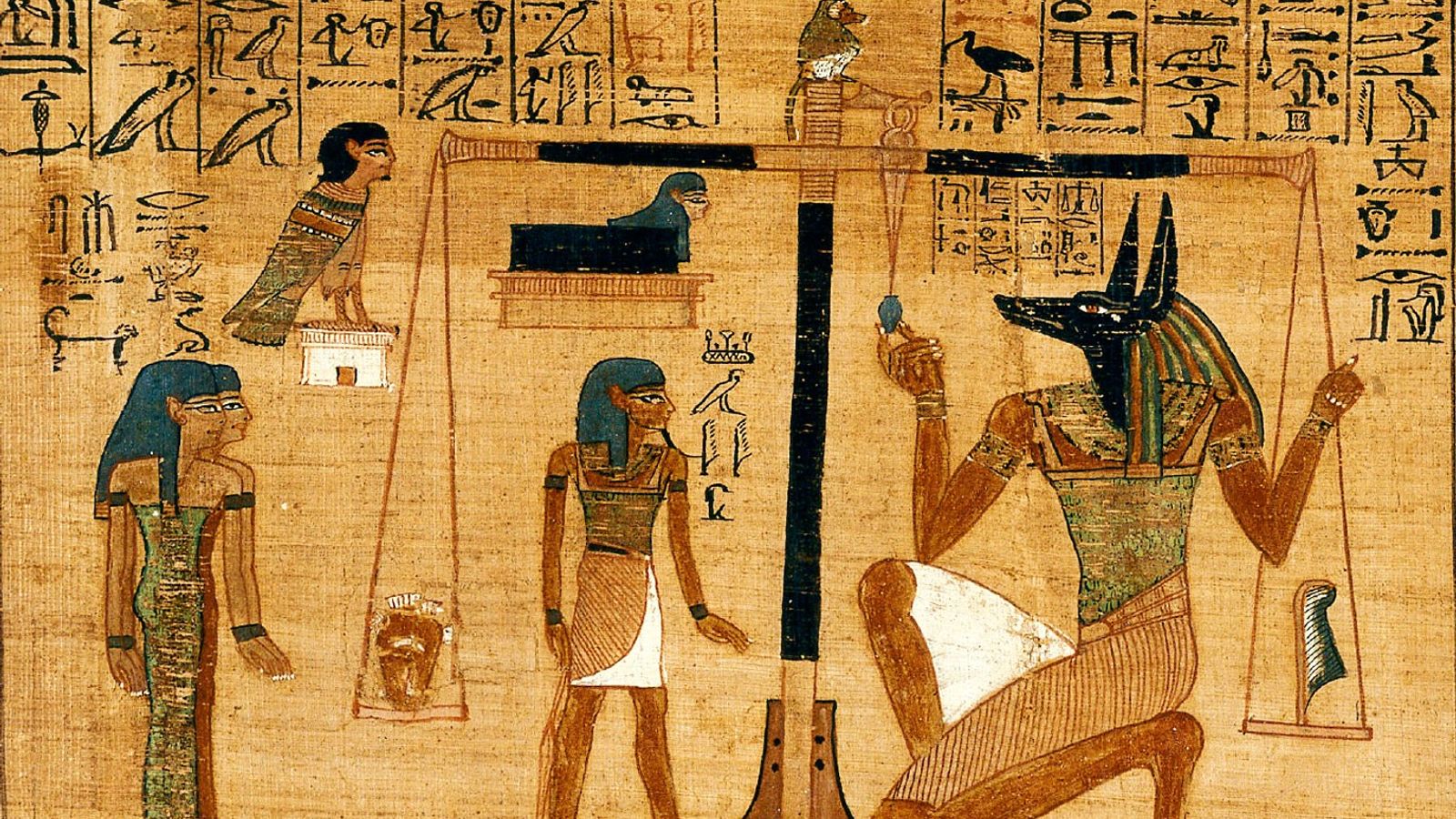
    02-ani-papyrus-anubis-bm07404g
    Osiris and the Sacred Scale, courtesy of National Geographic

    The days on earth ended

    And the days in Afterlife began

    As the Final Judgment of Osiris,

    The Lord of the Underworld

    To weigh the sins of the man

    On the Scale of Two Truths

    Against the Sacred Feather

    In the Hall of Goddess of Truth

    Waited for him to say “Never!”


    The assisting gods recited

    The long line of sins on earth

    To which the man answered,

    “No, I had committed none,

    None of the sins from birth to death.”

    Then Osiris ordered the goddess

    To put the man’s heart on the scale

    And the Sacred Feather in her arms

    To be on the other side of the scale.


    The heart as light as the Sacred Feather

    Kept the Perfect Balance of the Scale,

    And the Supreme Judge decided to declare

    The man to be true of voice by the Scale

    And allowed him to enter in eternal bliss

    Celestial Garden among the Stars

    That never died but lived forever

    Sailing as his happy heart wished

    And filled with Eternal Euphoria.


    P.S.: This poem was based upon my reading of the ‘Book of the Dead,’ an ancient Egyptian guide to the Underworld instructing the dead what to expect, where to go, and how to behave when entering the Underworld. The ancient Egyptians regarded death as new life, the beginning of the Afterlife where the souls of the virtuous dead lived in a heavenly landscape that looked so much like Egypt on earth. The blissful afterlife was meritorious by the ruling of Osiris, the supreme ruler of the Underworld, who questioned the souls of the dead according to a long list of sins that mankind was prone to commit by nature and put their negation of sins on a test by putting each of their hearts on the divine scale to weigh against Maat’s Feather.” Maat was the goddess of truth, and as she put the heart on the other side of the scale, the balance would remain the same if the heart was free of sins. Only such a sinless, weightless heart would give the soul of the man a passport to Paradise. Fascinating.