Category: Miscellany

Anything that’s on my mind.

  • Isn’t this irony?

    Our post-modernist culture is nuanced with anti-establishment of anything traditional and proper, such as decorum, mores, and codes of chivalry. The result of degradation of the values under the pretext of establishing a New Brave World is illustrated  in the following cases of Manifest Grand Irony of Liberalism that is supposed to be synonymous with altruism and niceness.

    ima
    A Nazi sympathizer? Are you kidding?

    According to this week’s edition of The Spectator, an anonymous former British Prime Minister revealed his hatred toward Theresa May by saying that she should be stabbed or done harmed in the most despicably atrocious fashion that reminds me of the gruesome murder of women by the Reaper of Whitechapel in the late Victorian period. Then there is a British conservative party leader named Esther McVey, who was maliciously excoriated by John McDonnell, a British Labor party politician instigating the mass in public to “lynch” her. Also, the First Lady of the U.S. Melania Trump was criticized for her supposedly apocryphal colonial fashion in Egypt by the media which also prompted the subsequent rebukes from the public. And this does not stop in the West. The first female president of Republic of Korea, Keun Hae Park was preposterously ousted by her radical left-wing contender Jae in Moon on the count of accepting bribery from a prominent business conglomerate based on unfounded grounds. Besides, Moon’s myrmidons maligned her reputation with indecent computer-generated photo-ops of her to destroy her political career as well as her personal life in prison because she was a leader of a conservative party.

    What the aforesaid ladies have in common is not only their conservative affiliations but also their social defenestration from their societies that show neither sympathy nor solidarity among the members of the parties and of the humanity in general. But then, woe betides anyone declaiming against the faults of the demagogues! Criticism of a political rival on different stances with courtesy is countenanced and actually encouraged in democracy, but contextualizing it in the egregiously violent words toward the women amounts to terrorism and therefore should be publicly deplored in full force and effect. Besides, however strong-willed and imperturbable the aforesaid women might seem in public, they are “ladies” deserving being treated with courtesy, for none other than being women because they are women. Where has all the honorable, respectful chivalry gone? It’s a code of honor, civility, respect toward womanhood that is transcendent of geographical, cultural, and racial boundaries. Just because they are conservative does not give anyone a license to harass them with malicious verbal remarks or gestures marshaling a mass prompting for the behoof of their political hegemony.

    To top it all off, the aforesaid betrays the usual faux-pas of declining against their contenders ad hominem, not on the ground of substantive factors or evidence, as Shakespeare corroborated thus: “Condemn the fault, and not the actor of it?” So it’s not altogether based on the standard of Reason but the manifestation of appetites, the raw emotions, the unbridled egos. Sounds antiquated, abstract, or even priggish? – Maybe so, but the men speaking about the women in the aforesaid manner are beyond the pale because it IS a violence of men in power against their women peers in a form of sordid verbal harassment. And it makes me wonder why #MeToo tweeters seem to connive at it, doing nothing to mobilize the supporters for pillorying the guilty men as usual.


    저장

  • Fairy summoning in the Florentine Renaissance period

    41a59389f2e8e71b94e50f9d1ae7d39a--vintage-fairies-vintage-artwork
    A supernaturally pretty fairy deludes men’s hearts.

    There are magical elements in religion, and there are religious facets to the practice of magic, as succinctly summed up by Sir Walter Raleigh: “The art of magic is the art of worshiping God.” That’s how I feel and what I see during my Dutiful Sunday Morning Masses, the ancient rite of the Church, a perennial panoply of syncretism with its splendid paraphernalia of prayers and the liturgical ceremony of rites and mechanical recitation of prayers; it is the melding of religions or beliefs of the similar elements but of different origins. Hence, to come upon an article in the recent issue of BBC History Magazine about an academic study by a certain British scholar of the existence of fairies in the context of the validity of cultural and historical artifacts gave me an uncanny pleasure.

    Dr-Faustus
    The famous Dr. Faust, summoning Mephistopheles for his service

    In fact, Religion (that is, Christianity) and Magic (in the forms of divination and sorcery) are not to be seen as polar opposites and antithetical systems of belief because they are interdisciplinary agencies of attempting to seeking and offering a panacea to our dilemmas – physical, metaphysical – competing for supremacy in propitiation. Such mysteriously syncretic elements of the two different agencies of beliefs became the academic subjects of intellectuals, such as Francis Bacon and John Aubrey who accepted the potentialities of physiognomy as an infallible guide to predicting one’s character and argued for the validity of non-Christian practice based on certain intellectual bases therein. With this in mind, you would not be surprised to learn that fairy summoning rituals were all the rage in the Renaissance period (15th~17th centuries), indiscriminately practiced by all strata of society, learned or ignorant, rich or poor, Christian or pagan. The author of the article informed the reader that the early Renaissance idea of fairies was pretty nebulous and varied with a wide arc of wonder and trepidation and that the dainty image of ever famous “Tinker-bell” was a Victorian construction of the whole fairy race.

    Then, how did the “real” fairies look? Although there is no magisterial, definitive version of the physiognomy of a fairy, a collective description gleaned from various records boils down to it as a supernaturally attractive man/woman imperiling the souls of whoever it was summoned to, which is reminded of incubus/succubus, consecutively. Notwithstanding the dubious nature of fairies, the invocation of fairies halfway between angels and devils was widely used in hope to (1) acquire medical knowledge, such as whereabouts of herbs and their properties; (2) delight in the highest degree of sensual ecstasy; and (3) reveal the future and prevent from misfortune in advance. Be it as it may seem wholly pagan, the summoning ritual was surprisingly required for God’s intervention because it included periods of purification through abstinence, fasting, and prayer in preparation, all of which would testify to the sanctity of the performer ministering to the moral and ethical character. God willing, a fairy at request manifested to the summoner, but he should not come out of the circle he had drawn because it protected from sudden maleficence of the ambiguous fairy.

    Delphic_Sibyl_Michelangelo___21969.1501257269
    Delphic Sibyl from the Sistine Chapel fresco by Michelangelo

    In sum, the article was an elegant primer for a further interdisciplinary study of literature, religion, and folklore from the medieval times to the Reformation period and possible stretching to this date. The exemplary texts that spring to my mind are Religion and The Decline of Magic by Keith Thomas and Christopher Marlowe’s version of the legend of Dr. Faust, both of which are excellent testaments to the contextualization of the esoteric knowledge on the grounds of intellectual bases into academic studies of social, cultural, and historical facets of different zeitgeists, which also serve as invaluable literary artifacts to epochal changes. But for all that is worth, this relation between religion and magic is commensal, exhibiting a mesmerizing consilience of gods and God, profane and holy, pagan and ecclesiastical, forbidden, and disciplined, as superbly unfolded in the Sistine Chapel fresco, prodigiously expressed by Michelangelo.


    저장

  • Pleasure Garden, Emerald Thoughts

    IMG_4085
            Mary’s Proud Pleasant Garden

    What an immaculately beautiful sunny Saturday it is! The sun claims its indomitable superiority alone in the azure sky without the scatterings of clouds with occasional pleasant breezes sent from the nearby Pacific Ocean, or “the Lethe of the Pacific,” according to Henry David Thoreau, who saw the West as Land of Rebirth or Rejuvenation where you could exorcise all your past easterly mishaps and misfortunes by the baptism of water in the Pacific. In the poetic eyes of Thoreau, a Lethean stream flew through the West, and it was imperative we drink it to forget the Old World and its Institutions in order that we could start anew in the West. With this poetic justice rendered by Thoreau in mind, Mary Lamb, a benign spinster and loving aunt of Sally Lamb, couldn’t think of doing anything more pleasant and uplifting than tending to her lovely garden this afternoon.

    IMG_4088
       Everything grows with love.

    Mary is an expert gardener trained in her old family home in New Jersey when she was little. It was her father Ted who inculcated in  her the wonder of nature and the beauty of simplicity. On point of digressive notes, people think that it was Leonardo da Vinci who legitimatized the aphorism of “Simplicity is the ultimate sophistication.” But come to think of it, who would not have arrived at such stratagem of aesthetics throughout our human civilizations? It’s all about the merits of whoever said it. That is, your status weighs against the validity of sayings.  For what’s worth, Mary’s gardening skills and her love of gardening prevails on any such abstruse philosophical musings of influential talking heads just for the sake of its pleasantness.

    IMG_4086
    Homegrown organic vegetables!

    Laura Collie, a good neighbor of Mary and trusty confidante, calls on Mary’s to look at her lovely garden in the afternoon. Laura wants to decorate her backyard with flowers and hedges around it, but the whole task of doing it seems daunting because she has so many other businesses to attend to: a wife, a mother, a shopkeeper, and a member of church’s guild for women. Laura thinks that Mary’s spinsterhood imparts freedom from marital obligations to her, which sometimes Laura secretly covets. But then unlike Mary, Laura is always surrounded by her laconic but loyal and understanding husband Paul and their perky and smart daughter Julie at home. Surely, looking at Mary’s gardening makes anyone think about the life itself. It’s a visual exhibition of life with its vicissitudes, with its impositions, and with its obligations, all beautifully embroidered with flowers, plants, and trees.

    IMG_4089
          The laborer is worthy of the reward.

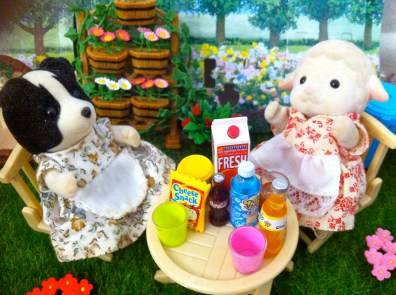
    When Mary finishes her gardening, she invites Laura to have refreshments with her in her proud garden to bask herself in the beauty of the sun and nature in general. It’s also very gratifying to have a glass of cold orange juice or Fanta after laboring on the nature’s work, which Mary regards as a religious experience of being a guardian of nature with the power of appointment by the Creator. Mary, who is also an admirer of Thoreau’s work, understands why Thoreau did not go to church despite being a Christian; it’s because of this feeling of sacred guardianship of nature conferred by the Creator, which can’t be felt by mechanical recitation of prayers without understanding the meanings. Although Mary’s unorthodox views on faith and the church worry religious Laura to a certain degree in a way that makes her unmarried friend look perched precariously on the brink of heathenism like a solitary village cunning woman in Elizabethan England accused of being a witch, Laura admires her spiritual friend’s tenderness toward nature and aesthetic expression of herself through gardening that is all the more resplendent with her erudition from reading many a good book, mostly classics pertaining to previous centuries. While enjoying the carpe diem of the afternoon, both Mary and Laura think in harmony that God is in his heaven, and all’s well with this world.

    thanks-for-reading-Rok-Hardware


    저장

    저장

  • Things can only get better

    IMG_3984
    Getting ready for work

    Patricia has been recently working as a legal secretary at a personal injury law office in the city, the job she secured through her former boss Alfred Petersen, Esq., a high-profile defendant insurance lawyer at a powerhouse Gothic City law firm. Patricia, a principled, intelligent, and discreet character could have found a position commensurate with her ability and experience in the city had the hiring managers in the HR departments been understanding of a nine-month lapse after her resignation from the position of paralegal at a boutique real estate law firm in downtown last year. The reason for her leaving was that the field of law did not turn out to be her best match, pace her previously held naive anticipation that it would require of her less contentious meeting with demanding clients and less leg work that would push her to be out of the doors most of time. Besides, she did not get along with her boss, Susie K. whose whimsicality flitted though the ebbs and flows of her melancholia and in the weather of her sanity with all too frequent paroxysm of hysteria. Patricia wanted to keep her sanity and dignity rather than to succumb to the incivility of an irreparable solipsist. Hence the lapse in her work experience.

    IMG_3866
    At home

    When Patricia needed a helping hand to secure her employment with a B.A. degree that would leave you either overqualified or under-qualified in this ever volatile job market and the inglorious gaping period in-between employment history, she could not help but think of Mr. Petersen who was a lot like the empathetic boss of Bartleby the Scrivener in Herman Melville’s eponymous short story : that intellectually brilliant, characteristically benign, and professionally equable epitome of a “good” boss. Likewise, when Mr. Petersen whose heavenly blend of moral character and intellectual gifts endeared him to many of his admirers got email from Patricia out of the blue, he was willing to cast her a life jacket on a perilous sea under the aegis of his perennial benign influence. Since Mr. Petersen knew that Patricia was a good person who had not only the intellect but also the heart, an angelic admixture of humanity, he phoned one of his best lawyer colleague in town and connected him to her by sending him her resume via email for review and consideration that did not de rigueur need afterthought; it was the job to be had for the asking.

    So far Patricia has been well adjusted to her work routine in the new office and the work style of her new boss who’s fair and magnanimous. She only secretly wishes that the current state of things will remain unperturbed because she feels that she’s worthy of such reward after what she went through while being the subject of the vertiginous treatment that knew no reason and stratagem at the expense of her wailing spirit smothering in the existential daily duties and responsibilities. Isn’t it a crime for anyone to yearn such a continuation of equilibrium?

    thanks-for-reading-Rok-Hardware

  • A travesty of some things

    I’m thrilled to read good stuff- I mean a real good one!

    Oscar Wilde, the wonderfully strange writer with a keen eye on the panoply of human behaviors, knew about voyeuristic streaks on human nature when he said thus: “One must keep a diary when traveling anywhere by train or coach to read something sensational.” Maybe that’s why people like to read the lives of others. Maybe that’s why the memoir, which I regard very much as a diary written backward in time, always bestride the bestselling list of nonfiction of The New York Times Book Review, which has become a formidably profitable genre of American literature. Admittedly, it’s awe-inspiring to read a success story of one whose hardscrabble background is a fortiori certifiable and renders a kind of feel-good sentiment with something of a vicarious experience to the reader sharing similar constraints of life in one way or another, or it may seem so. Frankly, any of the best-selling memoirs can hardly be less a modern version of Cinderella story than it seems to me, which is nothing but a proud exhibition of achievements by a select few (“The Chosen”) in the melee.

    I might be cruel, only to be real. I am all the more respectful of anyone who has risen above biological/social inhibitions in his/her own fashion. But this topic of Triumph of Will over difficulties has become a literary fad, as though anyone who had rough and tough times in growing up somewhere in the backwater of downtrodden south or mid-western regions were suddenly in a zealous Olympic competition of writing the most heart-wrenching personal story on one cardinal condition: that the writer must have a very good career that provisions him/her with a nice place to live and loving, understanding significant other into the bargain. That is, unless a would-be writer of memoir is well-established in society, it’s not worth the writing of the story because after all, who’s gonna read your story if you still live among the melee with some ordinary, if not nondescript, job with meager income to barely get by despite your noble resilient spirit and evergreen hope to better yourself?

    It’s all derivative of one model!

    For example, the October 7, 2018 issue of The New York Times Review carries an elegant book review of “Hey, Kiddo: How I Lost My Mother, Found My Father, and Dealt With Family Addiction”, a newest memoir of a certain popular illustrator-writer of children’s books named Jarrett Krosoczka, hailed as another survivor of economic and social determinism. The review presents the book as a courageous live-to-tell account of his childhood shadowed by his mother’s drug addiction and of his triumphant accomplishment as a successful artist who can presumably inspire many kids unfortunately mired in disadvantaged surroundings through no faults of their own. The spirit is commendable, but the gist is visceral. According to the elegant summary of the book, Krosoczka was better off than many other kids in his station because he had lumpish but loving grandparents who took care of him and encouraged his artistic inclinations, plus a cast of odd but good characters that complemented the other void of affectionate attention needed for a child. Back in our real nonfiction contemporary life, how many kids are fortunate to be endowed with the luck he had, and what if a kid struggling to escape from the plight with his intelligence and industry turned out to be just an ordinary adult still laboring to make the ends meet, while still secretly entertaining the thought of becoming somebody in his solitude? Would you think that his life is a failure? The memoir of this kind is more of a resume of individual experiences and achievements that, in a twist of irony, provokes a sort of catharsis in the reader as if he were watching a television drama that would made him feel like living in a holistic virtual reality.

    In all fairness of my acerbic and arbitrary opinion on the review of the aforesaid memoir, it goes against the grain not to point out other popular memoirs perching on the best-selling list: Educated by Tara Westover is about her story of how she got away from her bohemian parents to immerse herself in scholarship; Hillbilly Elegy by J. D. Vance, another one by a Yale Law School Graduate recounting the struggles of the white working class struggles through the story of his own impoverished childhood; Heartland by Sarah Smarsh, a daughter of a poor wheat farmer in Kansas telling her poverty-stricken childhood into adolescence and the hard lives of the working class in the Mid-West; and finally, Glass Castle by Jeannette Walls, revealing her errant childhood and her struggle to be away from the rabble that led her to a gainful literary success. And I suspect that there will be more memoirs to be published in future like new soppy television movies in production.

    Am I being too acerbic? But that is how I feel.

    As someone who regards Courage, Endeavor, and Resilience as great American drama in three acts, I am all for reading about someone who would continue his/her secret aspiration, while keeping the foot firmly grounded in reality, such as Laura Ingalles Wilder, Lucy Maud Montgomery, Jane Austen, and Charlotte Bronte, all of whom continued to tend their ordinary daily duties and responsibilities even after their literary success. To say it’s an anachronistic and antediluvian mode of thinking in the 21st century is to depreciate their literary geniuses and modus vivendi peculiar to the ethos of their times. However, the love of the writing must not corrupt into the worship of the hero. It’s the sense of the writer’s spirit that addresses the spirit of the reader, not the pageantry accolades of material successes that seem to be the bedrock of the memoir riding on the crest of popularity of rags-to-riches telltale revelations. We might live in an Orwellian world of reality prioritizing the ostentatious display of wealth or power, but we shall not devalue the truthfulness and value of ordinary life where the meaning of life depends upon whether or not we fulfill the demands placed upon our daily tasks however insignificant or trifle they may seem. For this reason, I don’t subscribe to the popularity of the best-selling Cinderella memoirs in which the sacredness of ordinariness in combination with the peculiar magic of literature is conspicuous by its absence.

  • Merry heart goes all the day

    IMG_390

     As days of Indian Summer seem to be fading away with the arrival of fall in earnest this week, so do the halcyon park days of Henry Bovine, a tram operator of thirty years and a decorated veteran of the Abracadabra Campaign, whose pastimes include reading his periodical subscriptions and writing his essays and reviews in his weblog basking himself in the sun alone or sometimes with his good errant friends enjoying their temporary free times away from their homes in reminiscence of their bachelorhood. Wasn’t it Francis Bacon who also lamented the pathos of a married man with children? “A man with his wife and children gives hostages to the goddess Fortuna,” was his philosophical utterance. It’s not that all the married men in Avonlea regret their conjugal ways of life, but that they inevitably have to sacrifice some of their personal times for the sake of families. Surely, John and his chum Randy Beaver, the wonderful chef at the fabulous French restaurant called La Boum (meaning “The Party” in English) are aware of their duties as married men and rights as individuals who do not forego their weekend sovereign pastimes.

    IMG_4001

    “Hey, Henry. What’s new today? What’ re you writing about? Whatever is worth doing at all is worth doing well, I think. That means your writing is worth the reading in my part.” Anything coming from Randy is not flattery of a sycophant or an empty approbation of a busybody. He means it with all his heart and with all his mind. Knowing this makes Henry a fortiori pleased and appreciated, and because Henry is a very reticent man who tends to dissimulate his realm of thoughts, unless otherwise he trusts one to become his confidante over a long period of probation to test the character of the would-be confidante. “Hi Randy. Instead of writing, I am reading this week’s edition of The Watcher that mostly deals with the issues arising out of gender dysphoria in elementary and middle schools. For goodness’ sake, I could not have imagined to read such articles a decade ago. I guess I am falling by the wayside of the epochal changes and stuck in forgeyism,” says Henry with a wry smile. “Oh, cheer up, Henry. For what it’s worth, the world is not such a bad place to live. Life is like a voyage of Odyssey, packed full of vicissitudes of fortune,” declaims Randy against Henry’s self-effacing disservice to himself. “Shakespeare said it a personal play, but I call it a voyage because it seems more daringly venturesome. You know that between the devil and the deep sea, there was a strait where one of the most endearing and exciting adventures of Odyssey happened? Vide our own lives in that perspective!”

    IMG_3962

    Randy’s passionate delivery of philosophical speech brings the grist to the mill for Henry’s reservoir of writing and enlivens his otherwise gloomy spirit with a visceral feeling of hopefulness and good-humorousness, of which Henry is in need. Ever humane and munificent, Henry wants to treat Randy with nice homemade styled lunch at Snoopy. Randy is, of course, glad to lunch with his intellectual friend who understands what he has read, ranging from the Classical to the contemporary, and what he talks about with verve and gusto. Isn’t it wonderful to have a kindred spirit in life? But in case Fortune has not yet revealed such spirit to you, do not be disheartened, for you can dispel your gloomy spells by trying to braving the world outside your comfort zones little by little: walking in the hustle and bustle of the center of town with no particular destinations in mind, followed by enjoying a coffee time with a journal to write and a book to read at your favorite coffee shop, will surely frame your mind to mirth and merriment that can make you immune from a thousand harms for the day. At the end of the day, Petula Clark’s “Downtown” will sound apposite to your day’s adventure, or it will seem.

    thanks-for-reading-Rok-Hardware

    저장