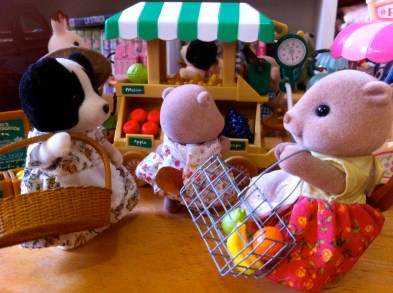
Mornings in Avonlea always start with the calliphony of euphonious “good morning” exchanges between and among whomever you meet in the street, banterings of the townspeople on just about anything from what they ate yesterday, to the books or magazines they have recently read with relish, and to their projections on the next episode of their favorite TV movies including “Oliver Twist,” “The Brief,” “Mind Your Language,” “Macgyver,” etc. And of course, they do gossip in the grapevine about anything they see or hear prodigious and pronounced from the quotidien landscape from their suburban life as it is our indelible human evolutionary trait to be incessantly curious about the lives of others. In this Darwinian regard, Mrs Brenda Beaver and Mrs. Mary Collie are probably the very essence of collective human curiosity. They are good chums together bound by mutual cultural interest, roles and duties of married women with children, and vivacious loquacious nature.
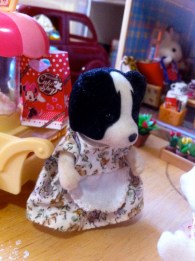 As usual, Willie’s Fruit Cart is the first business enterprise that heralds a beginning of every day. The merry women of Avonlea are loyal customers of Willie’s fresh and scrumptious fruits because the products are organically planted, cultivated, and handpicked by the conscientious farmer Wille himself. Naturally, it is no surprise to spot both Mary and Brenda chatting away around the cart on every saturday morning. “Hi, Brenda! You bought some fruits there. Did you get them from Willie’s Food Cart?” Mary opened the day’s bantering (or gossiping, depending upon your point of view.) “Hi Mary! Yes, I needed to get some fruits for my family because my daughter Betty is on a diet. I told her she would not need to lose weight, but you know, girls are girls. (sigh)” Having said it with a touch of motherly concern for her daughter’s growing self-conscious image about herself, Brenda looks ruefully at Betty picking up more fruits from the cart. Mary ‘s innate empathy connects her into the inner world of Brenda and commiserate with her incidental m melancholy. So she decides to turn Brenda’s attention to something provocatively productive.

“Brenda, you surely read The Glass Castle by Jeannette Walls, right? I finished reading it last week and have to tell you my honest review of it. Well, although I admire the author’s resilient and independent spirit in combination with her high intelligence and academic achievement against the vicissitudes of her childhood fraught with economic insecurities and shiftlessness of her parents, her situations did not seem to be as destitute and adverse as Judy Redfox’s in our own town. ” After decanting what she had in mind about the book, Mary feels that her mind could never be clearer and sober. Mary’s zeal soon grasps Brenda’s inquisitiveness, so she asks her to go on. “You know, the Redfoxes who moved into our town two years ago and have since lived on Bell Street? Well, their only child Judy has been supporting her mother and father since she was eighteen years old by working at odd jobs and going to university at the same time. She worked through her way to university with financial aid from the state and the government. She even joined the National Guard to receive tuition assistance – all because of the fact that her parents lack practicality and totally depend upon their daughter for subsistence and everyday drudgery. I firmly believe that Judy’s travails are incomparable to what the best-selling author went through in her early life as narrated in her famous memoir in all aspects. Judy’s everyday life is a testament to resilience, courage, and determination because although Walls achieved her career and materialistic success, Judy still lives in the existential labyrinth of endless impecuniousness, arbitrary filial responsibilities, and ambivalent future of her own.

Having read The Glass Castle when the book came out for the first time, Brenda knows what Mary talked about enthusiastically and can’t help agreeing to her friend’s point of view. For the author of the book’s now public travails do not amount to what her town’s Judy has been going through. Although Judy has never confided her feelings about her hard life to anyone, Brenda can see her unparalleled difficulty in life that Judy has to bear with all her might, with all her spirit, and with all her intelligence, to get by. Of course, you can not compare one’s life to the other’s, as that’s what social conventions and religious tenets have been conditioning the minds of people. But for all Brenda and Mary see, Judy is an unsung heroine whose existential tasks akin to the Eleven Labors of Hercules are worth the writing of her own memoir in future. So what the merry women of Avonlea will do next is to stop by where Judy works today and treats her with some nice lunch to cheer her up to let her know that she’s not alone.



 Dr. Fleming’s finding of Penicillin was something of serendipity or more likely divine providence. Dr. Fleming, an erstwhile captain in the Royal Army Medical Corps during World War I, began researching antibacterial substances at St. Mary’s Hospital in London after witnessing so many deaths of soldiers due to rampant pervasiveness of infections even though the wounds were not seriously intractable. Then one day in August 1928, Dr. Fleming left his bacteria cultures stacked up on a bench before embarking on his family holiday. On his return in September, he found a mould growing in one of his sample cultures, destroying the bacteria. What’s more, the mould produced a substance that destroyed the bacteria responsible for scarlet fever, diphtheria, pneumonia, and meningitis. Dr. Fleming first named it “mould juices” in 1940. Then in 1940, two medical researchers from University of Oxford named Ernst Boris Chain and Howard Florey succeeded in mass-producing penicillin. The concerted collaboration of the three trailblazers of the first modern antibiotic awarded them with the Nobel Prize in Physiology in 1945. Indeed, the laborers were worthy of the rewards.
 Let’s go back to the time when the great American humorist and writer Mark Twain (1835-1910) regularly featured in the nationwide newspapers with his trademark scintillating remarks on just about any subject that piqued him; but none other than reading articles about his own deaths twice in the New York Times would have perturbed his otherwise usual sanguine nature. After the first ignominy, the writer told the Times that it was an exaggeration. But after the second occasion, when the Times suggested that he had been the victim of a yachting accident, he thought he had it enough for such media farce and remonstrated to the Times with a public complaint that he would make a thorough investigation of the fallacious report. To think that a respectful newspaper such as The New York Times published such fake news of the famous writer of the time twice is something of a bitter pill to swallow, but it also shows that reputation isn’t necessarily likened to integrity or even probity.

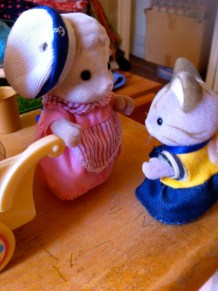 Anyone around Julie is flabbergasted by her sudden change of mood. None has seen her this lugubrious, saturnine, and crestfallen. This perturbs the heart of ever altruistic, magnanimous Sally, who is tending her aunt Mary’s Sweet Cart today and tomorrow during her brief jaunt to Lake Leda 10 miles away from Avonlea. Having known Julie for over ten years since she and her vagabond intellectual father Willie made their debut entrance to Avonlea. Although the father and the daughter have been living in a hut with limited bare necessities, they are rich in humanity, knowledge, and imagination. Knowing this eggs on Sally to ask Julie if all is okay with her and her father.”No, Sally. Actually, I am deeply worried about my father. Last Wednesday, he went to see his physician for his result of a blood test. And the doctor told my father that his kidneys were damaged and that he needed to take medications everyday for two months until the next appointment with the doctor. My father has been diagnosed with “Acute lobar nephronia”. That was why my father was often dizzy and stumbled on the ground as flat a pancake.”
 Christian Dior, the father of modern women’s fashion, said of a perfume thus: “A woman’s perfume tells more about her than her handwriting. ” How rightly so. A scent is stronger than a sight because it not only creates a certain mystery of ambience but also unlocks a cascade of memory. Hence is my approbation of a certain perfume I have begun to like.

You must be logged in to post a comment.