For eleven years you have read me here. I am still here. But I am also writing on Medium now — longer essays, book reviews, and the kind of prose that arrives at midnight and demands to be written. Come find me: medium.com/@etoile1291
Category: Music/Guitar
Music of my kind. My self-education of playing the guitar including learning the chords, reading tabs, etc.
-
Fugue of Beauty, Spirit, and Hope
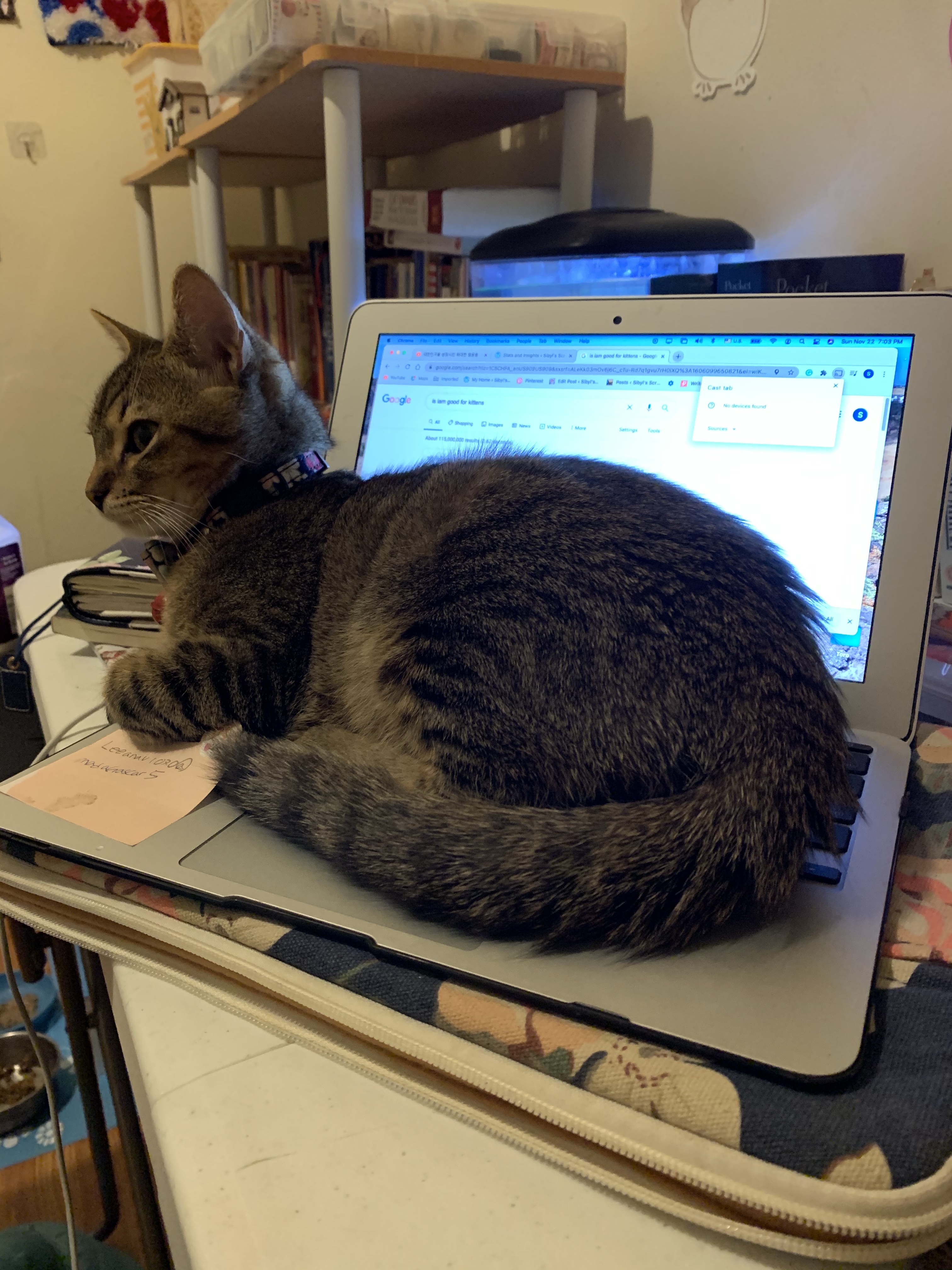
Nothing is more exhilarating than ending a day’s work with a gorgeous fugue of uplifting melodies. In sweet music is such art, moody food of me and my cat.

-
glittery wild west


I have recently read an article about California Gold Rush from my subscribed British history magazine with particular interest as it was somehow relatable to my own experience of being a recent single pioneer woman from the East to the West with new prospects for the future. Although the article was informative in unpicking the social manifest and latent dysfunctions of Gold Rush, there were also new and innovative modes of business as spearheaded by adventurously daring individuals who paved the way to the prosperity of the Wild West in years to come.
Wells, Fargo & Company, founded by Henry Wells and William G. Fargo, started and prospered the West’s all-purpose business, consisting of transportation, security, and communication agents, buying gold from prospectors and selling them paper bank drafts and delivering the valuables and mail guarded by a hired detective against outlaws. Pony Express, founded by William Russell, Alexander Majors, and William B. Waddell, was the first express courier service in the U.S., delivering mail from California to New York in fifteen (15) days by dedicated excellent employees on horseback day and night until the transcontinental telegraph was established. And there’s the famed Levi Strauss, the founder of the iconic Strauss & Co., who made the first blue jeans for miners, cowboys, etc.
California Gold Rush prompted a huge spike in the demand for changes in various sectors of the American society, which was an inevitable calling of the ethos, Manifest Destiny, and it also begot some of the most interesting and impressive enterprising spirits whose establishments are still among us and whose names are made into the history of the U.S.
-
Academy of Ancient Music: “Baroque Journey” with Lucie Horsch – review
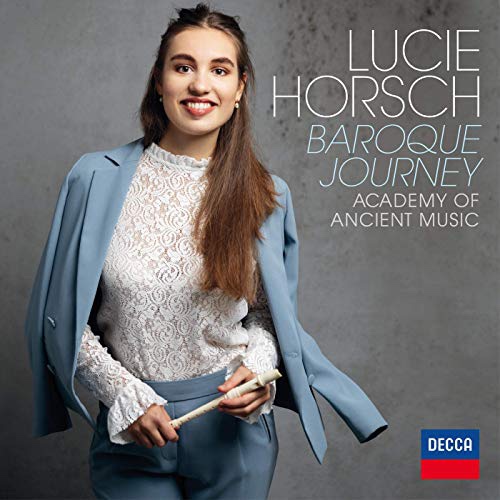 The recorder is a wonderful woodwind musical instrument: light in weight, affordable in price, delightful in timbre, and easy to learn, it has been adopted as a part of music curriculum at many elementary schools, just as ancient Greek schools necessitated students to learn an aulos or a lyre. However, this seemingly insouciant musical instrument was the centerpiece of Baroque music because of its florid and vivacious sound that strikes the chords with busy, sophisticated, delicate melodies of Baroque, the term which originally means irregular shapes of pearls in Portuguese. So much so that Vivaldi, Handel, and Bach had composed music just for the recorder long before the cello, the violin, or even the harpsichord came into the scene and outclassed the lovely recorder.
Ergo, the wanting of its significant contribution to the history of music and of its tainted beauty of the timbre has recently been brought to light, especially in Europe. The heroine of this jubilant revival of the Baroque recorder music is Lucie Horsch, a young Dutch recorder player whose musical finesse characterized by her vivaciousness of technicality and instinctive understanding of baroque music makes her exquisite musicianship look effortless and seamless. That classical music is not for the old conservative snobs but for anyone who has an ear for beautiful music is a tenet of the Arts on the grounds that the standard of taste and reason is universal in all humans as regards the principle of sentiment and judgment is common in humankind. As illustrated in this music video, Horsch and her musician friends represent the democratizing of classical music in general, making it accessible to enjoy for all, not a prerogative of a few fortunate in a stuffy concert hall.
If you are a novice in Baroque music, then Lucie Horsch’s Baroque Journey is a choice introduction to the world of Bach, Handel, and Vivaldi. She will be your Beatrice who will guide you to Paradise of the music, as she did for Dante in the Divine Comedy. In my opinion, the best number is The Arrival of the Queen of Shiba by Handel, for it best shows Horsch’s dexterity of playing the recorder flawlessly, delivering the best of her musicality with a burst of pep like a vivacious sprite.
Author’s Note: You can download Lucie Horsch’s Baroque Journey from your iTune on your iPhone to enjoy the delightfully whimsical world of a Baroque Recorder. The music will cast out from you a momentary vertigo of worries and anxieties and elevate your mood to an instant jolly caprice 🙂
-
Legally Haunted, Really.

1 Laveta Pl., Nyack, NY 10960 I enjoyed reading “10 Horrifying Haunts,” from November issue of “BBC History Revealed” on my Kindle, which inspired me to share with my fellow readers the story of a “legally” haunted house here in the U.S. Compared to the famed haunted castles, pubs, or inns with colorful histories in the U.K, it might be deemed rather commonplace, but it is the real McCoy in the supernatural phenomena devoid of hoaxes and mass media hysteria. It’s so spellbinding and real into the bargain that it’s worth the noting.
It’s the house built circa 1890 that sits right on the Hudson River in Nyack, New York. It had been used as both a boarding house and a family residence before one woman by the name of Helen Ackley moved in with her family, who soon realized that the house was also inhibited by the restless poltergeists of the supposedly Revolutionary War era. The Ackley family and the spirits began their tacitly mutual ghostly cohabitation until late 1980s when a young Yuppie couple from the New York City bought the house, not being aware of the haunted history of the house because neither owner Helen Ackley nor her real estate broker revealed the haunting to buyer Jeffrey Stambovsky before and at the time of a sale of the house. The aftermath of purchasing the house was all over but the shouting; the new Stambovsky family could not cope with the daily disturbances of poltergeist activities and wanted to rescind the contract with the former owner, who failed to inform them of such historicity of the house. Hence, the matter was eventually brought to the Appellate Divisions of the Supreme Court of the State of New York, which rescinded the contract, ruling that a seller was duly to let a buyer aware of all the information about the house at sale resulting in a proverbial case law entitled “Stambovsky v. Ackley”, aka the “Ghostbuster Ruling”.
Bizarre or preposterous even the situation might seem, it was certainly a paramount case of a haunted house that a court of law, the authority of Reason and Judgment, officially declared it to be. The house with a spooky and celebrated litigious history still stands still at the same place but with a series of new residents always giving way to the old spectral residents. The story of the famed haunted Nyack house sends the chill down my spine because it even persuaded a solemn court of law to accept the phantasmal existence in this otherwise lovely old house in the ordinary landscape of everyday life that could be in my town and your town. By the way, the house is currently on the market. The address is: 1 Laveta Pl, Nyack, NY 10960.


You must be logged in to post a comment.