In the sound of silence
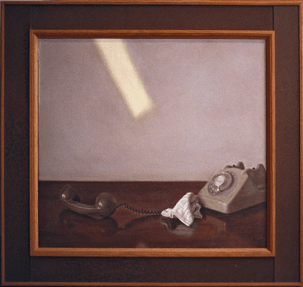
The phone breaks silence,
The numbers on the screen
Don’t tell me anything;
In the simulation of anticipations,
A concatenation of awry expectations,
I pick up the phone with hesitations
then listen to the silence of the caller
Vanishing into the electronic ether.
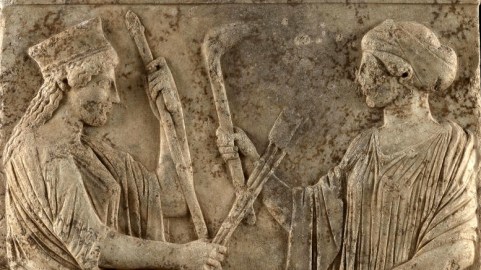
Veiled in the ancient shrine of the mysteries,
Robed in the esoteric knowledge of Olympus,
There appeared a numinous woman on the altars
Of a great temple built by Keleos, King of Eleusis
At the instruction of Demeter, the disguised goddess
Presiding over grains and the fertility of earth in distress,
For her daughter Persephone, deflowered by Hades,
The god of the Underworld was still retained in Hades.
The tale of woes so lachrymose with her eyes so dolorous
With the tears of the goddess welled with pains of heartaches
Began as Demeter called Keleos and other priests by the altars,
All of whom were equally intoxicated by her divine humanities
Of Anguish, Despondency, Dolefulness, and even Wretchedness
And listened to the elegy of their goddess of sacred grains
Of earth where now was barren and fallow for she was without grace .
“My daughter Persephone, the apple of my eyes, Flower of Flowers
On earth was ruthlessly ravaged by Hades, that dreadful Hades,
Of the Underworld, who then abducted her to his realm of darkness
Where only shadowy spirits wander with eyes depraved of lights,
Where the shadowy spirits importune for drops of blood for prophecies
To those a few mortals of valor destined for performing heroic feats.
There, Persephone, my beautiful daughter, was bound to Hades,
Who was also a brother of Zeus, god of gods, the ruler of the Universe,
Who was also an accomplice of this great crime, this god of gods!
Alas! Where’s Justice? Where’s Nemesis? Where’s God of the Universe
When this god of gods connived at his brother’s crime and sealed the mouths
Of other gods and goddesses who were nothing but divine cowards?
Thus, I searched high and low for my dear Persephone for nine days,
And on the tenth day, Hecate, a daughter of Rhea, and the sun god Helios
Came to me, for their pangs of godly consciousness disturbed by the pathos
Of my grief and lamentation was more divine than their divine essences
To tell me the crime of Hades and where my Persephone was that was
Hard to bear, harder to believe when my divineness was betrayed in Olympus,
Where all but I, the goddess of grains and fertility on earth was left amiss!
Thereupon, I fled Olympus, the ghastly place of godly beings in idleness
Who were nothing but abductors of fair maidens, manipulators of wars,
And conspirators of jealousy, all of it was against my nature and sacred office
With righteous contempt for all of it, I left that place of lewdness,
With no regrets, but with a longing heart for my Persephone in darkness.
Into this land of Eleusis, your land of Eleusis I wandered with hopes
Of meeting my Persephone one day as an old slave woman in disguise
Named Doso and met your wife by an old well near your splendid house
Where I became a burse to your son whom I fed ambrosia at nights
For Eternal Youth and put in the center of fire for Immortality, my Graces
To your kindly family till your wife full of foolish speculations
Betrayed my sacred appreciation and divine intentions and thwarted your son’s
Gifts of Eternal Youth and Immortality, the essence of the Immortals in Olympus!
Here, you built me my temple in honor of me, to initiate the Eleusinian Mysteries,
My Persephone will also preside for her four months’ stay on earth from Hades,
Alluring her to eat four pomegranate seeds, so she can’t stay here in bliss
For ever, forever with me, when the land will abound with crops and flowers,
And when you will purify yourselves with nine days of fasting and celibacy
with a consecration of the first grain harvested first of the year for the rites
In honor of me and Persephone, the goddess of spring of blissful liveliness.
Thus was a tale of the goddess, who was the goddess of humanities in essence,
Who was the goddess of the Eleusinian Mysteries with full of arcane principles
Of Purity, Morality, and Humanity, sealed in ancient secret rites so mysterious,
With sacrosanct pledges of select a few mortals mystified by the Mysteries
That would elevate the excitement of the souls and the passion of the hearts
Like no other in this world and in that world, afterlife where the spirits
In bliss promenading in the Eleusinian Fields boundless into the Mystic Universe.
One Saturday morning, Mathilda Bear, who currently works at Bauer Daycare run by Hannah Bauer, stops by at Bonjour Cake Shop to reward herself with a cup of freshly brewed hot French Vanilla coffee with cream and two cubes of sugar and a piece of Ispahan cake that captivates her dormant testing bud and elevates her withered spirit with wonderful rose cream. It’s her weekly treat as a sweet reward for her hard work as a daycare teacher.
Since it’s Saturday, the proprietress of the cake shop, Laura Collie, is at home with her family, attending to keeping the household neat and tidy, doing laundry, preparing for special Saturday menu for her family, and probably taking a promenade with her friends late in the afternoon. So Laura has hired Bonnie Poodle, originally from Paris with her two baby twins, named Nena and Neno, both of whom are one-year old with Nena being five minutes older than her brother. The Poodles lost their parents two years ago by a tragic car accident in Paris. Since the death of their parents, the Collies being distant relatives by their mother’s side have invited the Poodles to live in Avonlea to help start new life in a different land under their aegis.
“Good morning,” greets Mathilda first when she comes into the cake shop. “Bonjour!” is the French reply from Bonnie, who despite the fact that she’s a good English/French bilingual, oftentimes tends to reply in French because her brain’s language facility has already been cemented in her first language. It is said that you can have native-level fluency in acquisition of a foreign language if you learn it before the age of fourteen. Anyhow, Bonnie is getting well adjusted to her new life in Avonlea and likes her new job as a cashier/attendant at her aunt’s cake shop. She likes to talk with her customers with a pretty smile on her face, and always works hard even during a period of lull in the store hours because the word procrastination does not exist in her disposition as it is a hereditary trait in her family.
“May I have a medium hot French Vanilla coffee with milk and two cubes of sugar?” Mathilda orders with her eyes gravitated toward the delicious-looking donuts by the counter. ‘”Anything else, miss?” Bonnie asks with a sweet smile. “Hmm, I can’t decide which one I should have because all looks so very scrumptious. I am wrestling with temptation of getting both donuts and cakes. But I can only take one because I have to watch out my figure. What do you recommend, miss?” “Then I’d like to recommend you our Ispahan, a rose-cream filled cake made by our fine patissier Laura, who is also my aunt.” “Oh, is Laura your aunt? Well, nice to meet you! What’s your name?” “I am Bonnie Poodle, and Laura is a distant cousin of my mother from France.” “Oh, I see. Bonnie is a pretty name for a pretty girl! I am Mathilda Bear. I work at Bauer Daycare. I am a regular customer of your establishment. I love coming here after hard days of a working week. I will have an Ispahan, which is actually one of my favorite delicacies in the world.”
Bonnie thinks Mathilda a bit loquacious but pleasant and affable. Besides, the fact that Mathilda works at a daycare school provides her with a sense of relief that she can take her two baby twins in the care of Matilda when she’s at work without having to take Nena and Neno to her Laura, whom Bonnie wants to alleviate from loads of responsibilities, so that she can enjoy her own private time with her own friends. So she writes down the address of Bauer Daycare School to check it out on Monday morning when she’s off from work. If all goes well, Bonnie wants to learn a new trade that can help her start a new business of her own in future. What trade it will be, Bonnie will do it just fine.
Uncle Willie has recently started his private enterprise of selling organic fruits from his at affordable prices in the town of Avonlea. A proud proprietor of his new business venture, Willie’s business prospect is full of auspicious anticipations of making high profit; his business motto is “Honesty makes best policy,” which is a quotation from Cervantes, the author of Don Quixote. Also, Uncle Willie has adopted a business principle of Sam Walton, the founder of “Walmart” who became a business tycoon by means of a mass sale at everyday low prices. But above all this business blueprint for his new enterprise of fruit wagon, Wille’s goodness of heart and simplicity of character, not to speak of his freshy organic fruits picked up from his farm in Green Gable, is the mainstay of his economic and social activities. With his innate diligence, the fruit wagon opens from 8:00 am to 7:00 PM, Mondays to Saturdays at 113 Kingsbridge Street nearby Elysian Park. The fruits are so fresh and scrumptious that you will always come back for more.
The news that his fruits being tested like Ambrosia of Mount Olympus traveled fast all over the town. It’s the case of great power of the grape vine, especially when it is stirred up by women. Brenda Beaver took her daughter Betty last Monday to Uncle Willie’s fruit wagon to to see if she could be a regular customer of his establishment because Betty’s priority was to take utmost care of the health of her family. And Voila! It’s no surprise to see Betty enthralled by the pretty sight of her favorite fruits that looked all lovely to her beady eyes: Grapes, Bananas, Apples, Melons, and so forth… Betty wanted all, but in accordance with her family motto of “Moderation is a Virtue,” she ended up choosing a melon, a bundle of bananas, and an orange. Her mother Brenda encountered Laura Collie, the co-owner of the “Bonjour Cake Shop” with her husband Paul Collie in the town, who also came to check the new wagon establishment. Of course, the housewives of Avonlea raved about the freshness and affordability of Uncle Willie’s organic fruits, which meant that his business success was a foregone conclusion.
The “Bonjour Cake Shop”is also a new enterprise in Avonlea; Operated by Paul and Laura Collie originally from Scotland, the cake shop has also been busy with newly acquainted customers in the town who come back to taste the homemade cakes for all occasions. The cakes are all made by Laura, who is no only a fine seamstress but also a lovely patissier who learned the art of cakes by working at the famed Patisserie Valerie in London in her maidenhood. In fact, making cakes and cookies has been Laura’s true passion because that’s what she really likes; however, she first had to deprecate her love of making cakes to support her family along with her husband Paul in a new land by working as a highly skilled seamstress. So when she and Paul (who was employed as an assistant manager at a supermarket) saved enough funds to start their own private business, they chose to open a cake shop without hesitation. Surely, Laura’s spirit was elevated when she and Paul signed the contract for the shop at a real estate agent’s office a month ago.
Laura’s cakes are of supreme quality, second to none in comparison with the cakes of Patisserie Valerie or Laduree or Pierre Herme because first of all, the cakes are all made fresh by Laura herself whose culinary skills are divine. Besides, she makes all her cakes with utmost care for authentic pleasure that can make her customers truly happy when they taste her cakes. In fact, it’s not merely a kind of eatery but a creation of art that provides people with genuine pleasure of life. Viktor E. Frankl, the founder of Logotherapy attests to this principle by telling us that a moment of pleasure, such as from listening to our favorite piece of music, doing things we enjoy, or appreciating a pleasurable sensation therefrom, can equal to a meaning of happiness, which is not at all a grand abstract idea. In like manner, Laura’s homemade cakes can be a good source of happiness to her customers regardless of who they are.
Sally’s sundry wagon is also newly launched; it has popcorn cooked on premise according to her aunt Mary’s family recipes from England passed down from generations. Topped with butter and salt per request, Sally’s Popcorn cups are sold like hot cakes at $1.50 for each. In addition, she also sells candies and cold beverages, all less than $2.00 per each. She likes to talk with her customers when her spirits feels jovial and delightful. Judging her as a moody person is injustice to her true character, however. Sally is something of an artist who wants to dabble many things that she has in mind to express herself against self-doubt and obscurity. She’s well-read, compassionate, and creative. But she does not suffer the fool, the uncouth, and the uncivil gladly. After all, she is just very honest about her feelings and acts upon her principles, for how can one always smile and be pleasant like a robot? Hasn’t anybody heard that a psychopath can be extremely pleasant?
So the new enterprises by enterprising spirits are well established now. They might look a bit anachronistic for the modern time and incongruent to today’s business trend as regards to the business principles set by the owners as aforesaid. But nothing is insignificant or less meaningful in the sense of size or value than any of their contemporary competitors in other places. However simplistic their business ventures may seem, what’s important is their dedication to their work and care for the people they serve, which has become a rarity in our today’s society.
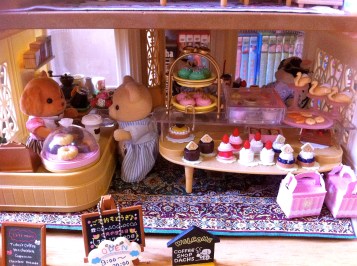 One Saturday morning, Mathilda Bear, who currently works at Bauer Daycare run by Hannah Bauer, stops by at Bonjour Cake Shop to reward herself with a cup of freshly brewed hot French Vanilla coffee with cream and two cubes of sugar and a piece of Ispahan cake that captivates her dormant testing bud and elevates her withered spirit with wonderful rose cream. It’s her weekly treat as a sweet reward for her hard work as a daycare teacher.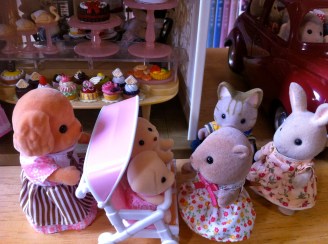
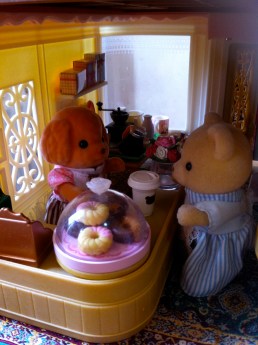
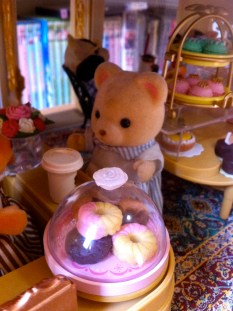
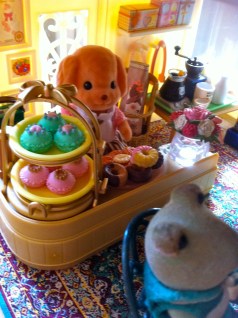 Bonnie thinks Mathilda a bit loquacious but pleasant and affable. Besides, the fact that Mathilda works at a daycare school provides her with a sense of relief that she can take her two baby twins in the care of Matilda when she’s at work without having to take Nena and Neno to her Laura, whom Bonnie wants to alleviate from loads of responsibilities, so that she can enjoy her own private time with her own friends. So she writes down the address of Bauer Daycare School to check it out on Monday morning when she’s off from work. If all goes well, Bonnie wants to learn a new trade that can help her start a new business of her own in future. What trade it will be, Bonnie will do it just fine.


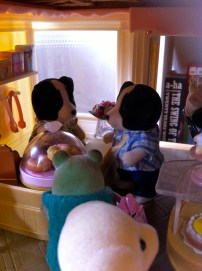 The “Bonjour Cake Shop”is also a new enterprise in Avonlea; Operated by Paul and Laura Collie originally from Scotland, the cake shop has also been busy with newly acquainted customers in the town who come back to taste the homemade cakes for all occasions. The cakes are all made by Laura, who is no only a fine seamstress but also a lovely patissier who learned the art of cakes by working at the famed Patisserie Valerie in London in her maidenhood. In fact, making cakes and cookies has been Laura’s true passion because that’s what she really likes; however, she first had to deprecate her love of making cakes to support her family along with her husband Paul in a new land by working as a highly skilled seamstress. So when she and Paul (who was employed as an assistant manager at a supermarket) saved enough funds to start their own private business, they chose to open a cake shop without hesitation. Surely, Laura’s spirit was elevated when she and Paul signed the contract for the shop at a real estate agent’s office a month ago.
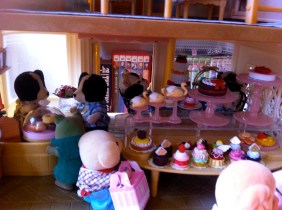 Laura’s cakes are of supreme quality, second to none in comparison with the cakes of Patisserie Valerie or Laduree or Pierre Herme because first of all, the cakes are all made fresh by Laura herself whose culinary skills are divine. Besides, she makes all her cakes with utmost care for authentic pleasure that can make her customers truly happy when they taste her cakes. In fact, it’s not merely a kind of eatery but a creation of art that provides people with genuine pleasure of life. Viktor E. Frankl, the founder of Logotherapy attests to this principle by telling us that a moment of pleasure, such as from listening to our favorite piece of music, doing things we enjoy, or appreciating a pleasurable sensation therefrom, can equal to a meaning of happiness, which is not at all a grand abstract idea. In like manner, Laura’s homemade cakes can be a good source of happiness to her customers regardless of who they are.







You must be logged in to post a comment.