Tag: american literature

  • Later by Stephen King

    What seems abnormal may be normal to you. Seeing dead people may not be the most pleasant talent, but if that’s what you are born with, then it’s normal, and you have to live with it through Kubla-Ross’s famous five stages of dying. That happens to Jamie in his narrative of the coming-of-age proclamation of his identity in this story.

    Dead people are like quiet people lurking in the background of Jamie’s life. They appear to him as the last moments of their earthly lives, talking and joking to Jamie, who can see and hear them, albeit rather unreluctantly, because he’s not much pleased with his uncanny ability. But then it’s the discerning talent -says the Bible – that helps him know who he is, like an epiphany of a family secret locked in his uncle’s lost memories, thanks to nature’s force of dementia. However, this story is not so much a psychological thriller as a supernatural drama that is so characteristic of Stephen King’s novels, with a level of uncanniness combined with realism that makes his stories all the more real and relatable. The settings, the dialogues, and the jobs the characters have are not far-fetched, fanciful, or bourgeoisie, all of which attest to King’s engagingly realistic storytelling skills.

    Later is a three-fold story of horror without goriness, mystery without glamour, and bildungsroman without teenage angst. King has a unique knack for incorporating popular entertainment with serious literature that attracts readers of all generations and classes. He is a literary descendant of Nathaniel Hawthorne, Washington Irving, and Edgar Allen Poe, who defined American literature in the constellation of the World’s Literature for the joy of the beholders from generation to generation. All in all, this book will be one of the stars in the constellation.

  • A Man Without a Country by Kurt Vonnegut

    A Man Without a Country by Kurt Vonnegut Jr.
    My rating: 5 of 5 stars

    A man without a country is a connoisseur of humanity, appreciating the universality of sentiment and reason common to all humankind beyond the demarcation of the territorial, cultural, and racial ambits. In that regard, Kurt Vonnegut is not only a great American writer but also an honorable citizen of the world.

    Vonnegut was liberal and socialist without being Marxist, but he was also a traditionalist and Christian without being conservative and religious. He was on the side of the underdogs because he regarded himself as one by being a kind of black sheep in the literary circles for his studying engineering, not English literature. However, he wasn’t a grumpy sullen dark literary figure but a funny, talkative writer who stroke conversations with anyone in daily life. Vonnegut refused to lose his days in unsocial solitude and decided to become – as Samuel Johnson called – the sun in his evening declination, remitting his splendor and maintaining his magnitude, pleasing more, though intimidating less.

    A Man without a Country is a charming little book packed with thoughts, wits, and knowledge. Vonnegut was only a human because he saw the heart of human nature and wanted to help people bring it out and nourish it thus: “To practice any art, no matter how well or badly, is a way to make your soul grow. So do it.” Vonnegut was a writer who practiced what he preached. So why not read this book by such a writer?


    View all my reviews

  • ‘American Made: What happens to people when work disappears’ by Farah Stockman

    Howard Stern might not be everyone’s friend, but he’s got the point when he articulated in his radio show a decade ago that what was eating out this great nation was not racism but classicism. The recent unionization movements among service industry workers, such as Amazon and Starbucks, indicate that the demand for the dignity of workers supersedes ideological politics that discourage the growth of American esprit de corps. American Made is a story about this American class consciousness that will put together disintegrated tesserae of the collective national mosaic made by the people and events.

    The author follows the three principal workers of the now-defunct Rexnord Factory in Indiana: Wally, a black man whose diligence and amiability promoted him to a coveted position in the factory; Shannon, a single white woman with an abusive partner taking pride herself in being a wielder, a male-dominated position, and John whose fortitude and conscience never left him during his long, turbulent unemployment days. Sex and race don’t matter when it comes to losing their jobs, let alone loving them because the importance of what they do for a living and the need for their livelihood are their commonalities that build a sense of camaraderie. In fact, class solidarity can never be achieved if class consciousness is transcendent of racial prejudice to be achieved first. Unfortunately, the antebellum wealthy southern plantation owners systematically destroyed the poor white laborers’ wage systems by replacing their workforce with the free labor of African slaves, thus planting the seeds of racial hatred in the hearts of the poor whites. The vicious cycle of devious racialized economic caste system has since firmly constituted the American economic system ethos under “Separated but Equal.” The author sees the absurdities of American society as a result of the disintegrated labor movements primarily due to racial prejudices, which is why worker’s solidarity is a way forward to achieve national unity.

    Wally, Shannon, and John are not just working-class Americans. The author emphasizes differentiating her elite station characterized by expensive private higher education and intellectual “profession” from those with hardened coarse hands of workers in the factory. They are ordinary people, a majority of Americans making up this country, ubiquitous in the landscape of our daily life. They are expendable at the whims and caprice of profit-driven employers who see their employees as no more than living at-will automates. That is what happened to the Rexnord Factory, where workers’ lives were no less than collateral damage for a successful operational mission of the company.

    At times, the author positions herself as a conscientious liberal intellectual, paralleling her fortunate environment with her unfortunate subjects. Perhaps it’s an occupational hazard for being an NYT journalist. Nevertheless, the book succeeds in pointing out a lack of national cohesion resulting from the politicization of racial rhetorics into bipartisan ideology, which falls by the wayside of solidarity of labor movement overcoming institutionalized racial prejudices. Recently, I have read that the workers of Starbucks and Amazon in New York have voted to unionize. American Made is a story about them and us too because the dignity of work makes us who we are.

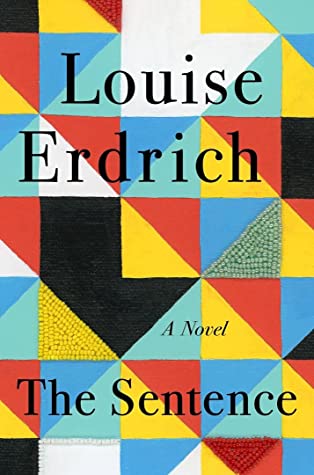
  • Spirit Away: ‘The Sentence’ by Louise Erdrich

    The Sentence by Louise Erdrich
    My rating: 4 of 5 stars

    The Sentence by Louise Erdrich is about the power of words, spoken or written, awakening the spirits of the author, storyteller, characters, and readers, all adrift and luminous as the boundary between the real and the ideal collapses. It’s a polyphonic work of trauma narrative, cultural studies, social commentary, and philosophical memoir interwoven in multiple strands of a joint account.

    The story evolves around Tookie, a doubting bibliophile who thinks books have everything you should know except what actually matters. Books are no more than a portal to mental escapade, a world of make-believe in the likeness of truth or reflected in the highest ether of reason and sentiment, which makes no defining impact on her checkered life as if it were her sentence from the judges of this world and the beyond. So much so that when Tookie finds that the newly deceased soul of a regular customer haunts the bookstore, she works at, she laments her fate of chaos that seems ever to stalk her small wish to live a quiet everyday life. Is it her sentence to live In perceptual existential malaise? And yet, Tookie ends up living daily life with a loving husband and daughter in a house of their own with a steady job as a bookstore attendant. Isn’t it what is considered an everyday life? So why can’t Tookie let the ghost alone when ghosts refuse to depart for the other until they finish their businesses in the world as part of their spiritual sentence?

    I decided to read this book after reading a review from the NYT Book Review a couple of months ago because of Tookie for being exceptional wanting to be ordinary. I felt for her, which was valid until the middle of the book. But as Tookie became settled with her husband in their own house burgeoning as a knowledgeable employee at a local bookstore, she began to lose her fabulous, unique luster. Indeed, I was all high fives for her happiness that I felt deserving, but the further I progressed to pages, the more my heart parted with Tookie’s existential frustration, except the touching moments of love between her and her husband. Also, unlike the book’s general introduction as a ghost story, It is not a supernatural book that will fulfill your cravings for an intelligent horror story. Instead, it is an extended short story featuring a ghost as a fire-starter of narratives connected by bibliophilia. The author believes bibliotherapy is a recipe for the existential malady to quiet the anxious mind. There is no more enchanting than a book, electronic or bound. The lifeless words become alive as the reader awakens the book’s spirit by entering the world of make-believe through the labyrinth of stories leading to the secret garden of truths that the author has fruited.


    View all my reviews

  • ‘The Amiable Fleas’, by John Steinbeck – review

    John Steinbeck was all man. He was a writer of muscles. I meant the powers of strong individuality that disagreed with grandstanding with the political in-vogue trends of his time with his writing as literature for an ideology of grand cultural context, not for the mind’s pleasurable satisfaction. In a word, Steinbeck appears to be in touch with the real world, with the characters realistic and stories palatable, not confined in the seclusion of a leisurely abstract world of the elite. The Amiable Fleas conveys all of the charms described above of Steinbeck as an attractive raconteur at his best: humorous, heartfelt, and honest in his tough cowboy appearance in a strange city filled with quaint aromas of the old civilization.

    The Amiable Fleas is Steinbeck’s testimonial narrative of the truth found in life’s ordinariness; the meaning of life realized in the joy of small pleasure against provisional needs of instant fame and worldly prestige. It’s an innate folly of human nature trying to reason against the significance of Serenity, Courage, and Wisdom as if they are remotely associated with Intellect. As Steinbeck held against criticism about avoiding the political and social issues of his time, he tried to reason his own reason for writing about such simple truth of life.

    The Amiable Fleas is the res ipsa loquiter of the value of small things that Steinbeck treasures, for it is what keeps the troublesome, pugnacious, bickering human tribe tamable and bearable with humor, which is a handmaid to hope and resilience. The amiable fleas represent the idyllic but oddly likable bunch of professionally intellectual people whose existence is a canvas of abstract painting that lacks a touch of realism. The poet, the architect, and the painter occupy their self-designated seats in the eponymous restaurants in Paris, doing nothing but contemplating about their artistic works in the selfishness of intellectual stasis. The excellent chef of the restaurant M. Amite embodies an artist whose ambition is the stir that his honest mind raises. The desire for fame is the infirmity of his admirably good, hearty nature. The star of the Michelin Guide is the apple of the discord, a symbol of outside influence that incites M. Amite’s ambition, not from his love of cooking to please his feline friend named Apollo. M. Amite is the image of an artist swayed by the great things of the world, even if it would cause him a loss of joyful dailiness.

    Originally published in the historically renowned French newspaper Le Figaro on July 31, 1954, as the tenth weekly installment of “One American in Paris,” The Amiable Fleas was published in English for the first time July-November 2019 issue of Strand Magazine. The background of this charming and heartwarming short story was that Steinbeck wanted to be himself, not how the French media imagined him to be or wanted to create their version of him from the counterproductive interviews with the American writer. And so he wrote a series of short stories that only he could tell with his quintessentially American way of storytelling. Yet the result is beyond the territorial boundaries and cultural enclaves, for the narrative reaches the hearts of not only the hard-to-please sophisticated Parisian readers but also the universal readers of all ages. Steinbeck is undeniably American to the core. Yet his love of realism that gives a new viewpoint upon dailiness of life enables readers of the world to get a fresh, bright hold upon our problems. Given that perspective, everything is something, and everyone is someone.

  • The legend of the Catskill Mountains

    480E3F4F-A245-44AE-8BD9-A2EE798EFE8C
    courtesy of google

    Where the earth meets the sky on the mountain, 

    An old mountain spirit opens and closes the doors

    Of Day and Night every day at the proper hours

    And works the wonders of nature in the divine design.


    The vault of heaven, the dome of Sky God’s palace

    She frescoes with celestial ephemerals every night

    With new moons hung and old moons cut into stars

    Sprinkled across the nightly firmament golden bright.


    The garden of the earth, the parterre of Earth Goddess

    She waters with rains spun out of soft summer clouds

    Woven by early morning’s gossamer cobwebs and dews

    Flake after flake, like those of fluffy white cotton balls.


    The wise mountain spirit, the wonderful divine artist

    Adorns the heaven’s frescoes every night with cheer;

    The wise mountain spirit, the wondrous fairy gardener

    Cherishes nature’s garden every day with delight. 


    P.S. This poem is based upon my reading of Washington Irving’s ‘Rip Van Winkle’ in which the fictional historian character named Mr. Knickerbocker relates to the native American legend of an old squaw spirit living on the Catskill Mountains in New York. I envision her as a fantastic fairy version of Michelangelo frescoing the vault of the Sistine Chapel and as a fabulous gardener tending the earthly garden with tenderness and quiet assiduity. What a fascinating vision of a magical magnitude it is!