Tag: arts

  • ‘Plain Girl’, by Arthur Miller – review

    Plain GirlPlain Girl by Arthur Miller

    My rating: 5 of 5 stars

    When I first came across this book while looking for my next read on the train, I was immediately hooked on by the simple no-nonsense title of Plain Girl and incredulously surprised by the famous name of Arthur Miller, a celebrity playwright who had once married Marylin Monroe in his prime. Such an incongruous admixture of the images sprang in my mind like phantasms from a presumed association between the Dolorous and the Gorgeous, the Lonely and the Lovely, the Unlucky and the Lucky, all compactness in this beautifully elliptical and deeply heartfelt story about a plain girl whose jewel of beauty was wrapped in a dull, grey, crude titular epithet.

    Janice Sessions, an intelligent young Jewish woman living in New York City, seems to share the sentiments of the introverts whose quiet modes of behaviors and shyness often make them unnoticed, if not obscure, among vociferous, glamorous crowds. Think Maupassant, who at the hour of his death confides in his close friend, “I coveted everything and enjoyed nothing.” And Charlotte Bronte, who always thinks she is deprived of beauty and fortune, which prevents her from a delight of love as a prerogative of beautiful fortunate women. And then the Monster created by Dr. Frankenstein whose deformity puts him in a cruel shackle of absolute loneliness with an outcry of “I see inside but dare not to go inside!” They are the concerted echoes of estrangement – whether voluntarily or involuntarily imagined or devised – from lonely souls roaming around, wandering about in a search of happiness in life that can culminate in the union of loves, both Eros and Psyche, the spiritualization of sensuality in totality. This Janice is in want of, this is the source of her existential distress, noogenic frustration that keeps her away from anything miraculous and wonderful every happening to her.

    In fact, I wonder if Miller writes this story of a plain girl on the thematics of existential frustration in which his protagonist is made to believe what she really isn’t, whereas her extraordinariness of resilient spirit against endless disappointment and distress renders her all the more distinguished from her peers whose ordinary femininity looks banal and trifle without stories to tell. Such emotional distress may arise from an existential vacuum caused by a collective value, such as in this story the disillusioned tenets of political and social ideologies ultimately culminating in World War II and the aftermath thereof. And Miller so elegantly and dexterously accounts for a woman’s solitary quest for the meaning of life, a sense of purpose in life as a woman of true value against epochal tides of world crisis. The apex of Miller’s literary finesse manifests in every sentence delicately nuanced sentiment wrapped in his elliptical expressions and laconic use of plain words, defying every streak of intricately baroque literature that does not communicate straightforwardly to the hearts of readers.

    This book is not to discuss woman’s liberation or to lecture about the superiority of spiritual beauty over physical beauty that so many of you would quickly respond with stock answers. Janice’s doubt about her value of being loved and her preoccupied consciousness to her appearance makes her all the more palpable and realistic to those of you who find a kindred spirit in her and feel that you are not alone in loneliness and that what you think you are may not be the truth. Janice doesn’t need the glamour spell to transform herself into beauty because Janice is not a plain girl, nor has been, and will never be. The same goes for you.

    View all my reviews

  • ‘The Wildest Dream’, by Me – review

    413JqnAw54LJudy always feels kept away from anything miraculously fortunate or even moderately pleasant ever happening to her. Neither gorgeous nor homely, Judy seeks approval of love and care to which she seems to be barred. This is her whimsical journey of a quest for her niche through the awesome events that she never expects to visit her. This is a short tale about Judy’s adventure in her wildest dream that turns her inside out and helps her to look at the world instead of looking askance at the world to look at her and approve her. It’s a kind of whimsical story mixed with adventure, western, and fantasy that I hope to be a fall-away from the dull flat platform of life. My first book ever published on Kindle is now available on Amazon for free. I hope you will like it. Thanks for reading. 🙂
  • Wandering cloud

    il_fullxfull.1139146871_dsmh_1200x1200
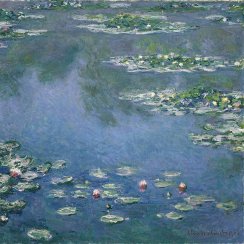
    Water Lilies by Claude Monet

    Like a wandering lonely cloud

    Skybound, Softbound, Spellbound,

    I walked down to the lonely street

    In the silver shimmering daylight,

    Lingering in the horizon beyond

    Reflecting on the shining pond.


    P.S. I took a walk at the park this beautiful afternoon and saw a pretty pond therein. It was sparkling with the reflection of sunlight, which made me wonder if this had been what Anne of Green Gables might have seen on the way to the Green Gables with Matthew from the train station and named it “Lake of Shimmering Waters”. 

  • celebration of National Classic Movie Day

    6 from the 1960s Blogathon
    courtesy of Classic Film & TV Cafe

    FOREWARD: In celebration of today’s National Classic Movie Day, this post is written as my contribution to 6 from the ’60s Blogathon for National Classic Movie Day’ as hosted by Classic Film and TV Cafe. Thank you, Rick, for this awesome invitation 🙂

    Ah, the 60s. Doesn’t it chime the bells of your cultural acknowledgment that resurrect all the images related to this provocative era? Whether or not you were a child of the ethos,   it was the age of new wave, it was the age of revolution, it was the epoch of change, it was the epoch of experimentation. The zeitgeist of the 1960s called for a new mode of thinking. Through the seditious waves of societal changes, the thematics of films needed swiftly to adapt to the changing circumstances. That’s why I regard the 60s as a renaissance of the film, which I dare say elevated its status to that of the classical theaters in terms of quality of the thematics that attempted to portray the complexities of human nature amid the changing social norms and values at variance. That said, here are my best films of the 60s.

    Paul-Newman-Melvyn-Douglas-Hud

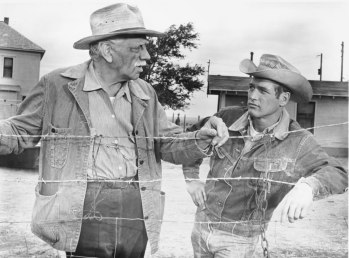
    “The Hud” (1963) – Although dubbed as a western, this film betrays its habiliment by representing the eclipsed glory days of cowboy machismo that seems incongruent and anachronistic amid the rapidly changing social circumstances. The characters struggle, tenaciously gasping on their cattle and Modus Operandi, but the results are all over but the shouting. I think it is also Paul Newman’s best performance that shines through the film as a fictitious embodiment of the collapsed grand narrative of American machoism. 

    ACE180613.original_ySIVHdd

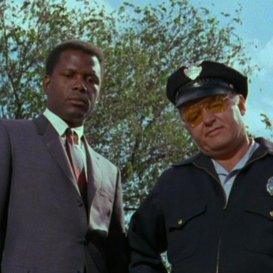
    “In the Heat of the Night” (1967) – Attempts to portray social injustice are most cleverly and artistically translated in this excellent film about policemen of members on the opposite social continuum. Rather than antagonizing the characters, the film connects them with a mutual goal of finding truth and justice in their own ways that are seemingly diametric yet ironically similar in their steadfastness in upholding the most common human nature: pride, ambition, and compassion.

    Sidney-Poitier-To-Sir-with-Love-James

    “To Sir with Love” (1967) – Based on a true story, this British drama is packed full of visual and audio delicacy. This film doesn’t, however, turn out to be a grand grave social activist movie about racial tensity. It shows how a dedicated teacher with mind and heart can lead his recalcitrant but misunderstood students to responsible adulthood without sanctimonious pedagogy or reign of terror. It reflects Plato’s cardinal virtues of Prudence, Justice, Temperance, and Fortitude embedded in the way the brilliant teacher treats his students despite their outward rebelliousness and general distrust in adult figures. The selfsame song by Lulu gives the atmosphere of the film all the more alluring and unforgettable. 

    okmrdt5f33sooom3

    “A Man and a Woman” (1966) – This French film that won a Grand-Prix in the Cannes Film Festival is an art itself, with beautifully ambient cinematography, doubled by the hypnotic leitmotif of a main musical theme that invokes the idea of ideal love that is never vociferously effervescent but quietly enduring, a perfect admixture of eros and psyche. The love between a man and woman can be this beautiful, and even smoking looks so artistically suitable to the theme of the film, making it all the more riveting.

    Unknown

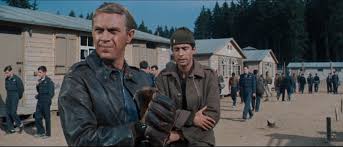
    “The Great Escape” (1963) – What I like about this film is not the luxuriant cast of top-class Hollywood actors but the underlying theme of fortitude, courage, and patience, wrapped in a package of humor even in the times of trial. Although this is regarded as a war movie, no undertones of the campaign against the enemy or propaganda promoting wartime vitriol are underlined here as the dichotomy between the captors and the captives is often blurred by their day-to-day personal interactions within the ambit of conscience and humanity. That said, even the Nazi prison authority headed by stern but fair and conscientious officers is hard to invoke animosity or contempt.  It’s more of personal ambition of achieving success in what the characters are driven to do – whether it’s escaping the prison or preventing it – This film is not about who escaped but who survived. 

    gbu33

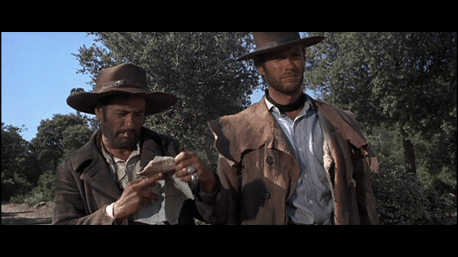
    “The Good, the Bad, the Ugly” (1966) – Who says that you have to be born into the culture if you want to talk about it? Often dubbed as a Macaroni Western, this is the most iconic western film made by a brilliant Italian director whose fascination with the Old West and artistic ingeniousness made him capable of crisscrossing time and territory as if he had been born in the 19th Century American west. Besides, unlike many American-made westerns, this film does not have black-and-white ethical characters, either extremely evil or angelically good in nature, nor does it propitiate moral values or didactic lessons. It also employs the music by Ennio Morricone as an effective vehicle for creating the mood of the film without superlative narratives or gratuitous action scenes. It’s all about the naked human nature surfacing when temptation beckons with irresistible allure. What’s more, the film was entirely shot in Spain that looked so much like California. 

    In sum, the aforesaid films are innovative in incorporating visual presentations of stories with ambient music to translate the world of make-believe reality onto the screen in the most natural way. They are also bodacious in choosing the thematics that reveal the changed look on society in general, rendering the verisimilitude to the stories in order that the audience can feel relatable and sympathetic. For these reasons, my selection of the six films, I think, stand the test of time and merit their own places in the classic canon of masterpiece theater of motion pictures. 


  • She-Ras, Xenas, and Wonder Women

    images
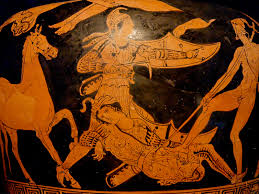
    Ancient Amazonians courtesy of google

    Before the mercantile empire of ‘Amazon’ amid the Sea of the Internet, there once was an eponymous band of fierce women warriors whose famed ferocity and fearlessness was enshrined in the Classical literature and history. It is said that they were real women soldiers living in ancient Eurasia with husbands and children who seemed to know something about how to maneuver the sphere of personal life and that of military commitments. The subject of this mysterious ancient militant women from this month’s National Geographic History intends to deconstruct such mysticism surrounding the factual evidence thereof and demystify the origin of the meta women fighters modern feistily feminists and politicians love to panegyrize.

    First, the origin of Amazonian warriors comes not from the Amazonian jungle who are believed to be scantily clothed with breasts deformed women prone to attack men without reason. They were, in fact, the female warriors among Scythian and other nomadic Steppe cultures across the Eurasian plain as embedded in Homer’s The Illiad, Herodotus’s Histories, and Plato’s Laws. The recent discoveries of 4 female corpses bearing combat-related injuries, such as slashed ribs, fractured skulls, and broken arms are claimed to be of the lost Amazonians prevalently seen among Scythian women riding to battle alongside their men.

    Notwithstanding the above archeological excavation and factual evidence, my personal sentiment toward the adulation of the female combatants is anything but the elevated opinions about them. Although Homer in The Iliad praises Amazonians for being the equals of valorous men, I wonder if he would have wanted to take one of them as his better half in reality. Plato in Laws recommends that boys and girls should be trained for horse-riding, archery, javelin-throwing, etc., which is very indeed commendable, but I opine that no every girl should be forced into such training because every girl is not of the same aptitude or disposition. Of all these complacently abstract perspectives on women soldiers, Herodotus seems to be only one who has a comparatively objective view on Amazonians not as a glorified tribe of female bravery but as a tribe of women freed from conventional conjugality. They were a group of shipwrecked women tended by local men with whom they moved to new lands and happily lived after while maintaining their own separately private lives as something of common law marriage couples.

    The modern perspectives on the Amazonians as a manifestation of gender equality in the spheres of domestic and public life exceedingly lionize the necessity of upending what is perceived as traditionally patriarchal gender roles peculiar to the biological characteristic of men and women. Needless to say, the word “Equality” is highly admirable and desirable, especially on the frontline of livelihood, but you can’t force everyone – that is every woman- to be as aggressive or belligerent as these ancient female warriors were in fighting everyday strains of life. Besides, I see there are more widespread issues of racism, classism, lookism, and agism than sexism in daily life because womanliness adorned with beauty and sex appeal armed with the art of seduction can work wonder in every place, helping her to achieve social mobility. Reading the article intent upon the historical evidence of these Amazonians makes me realize that the advocation of public sentiment in practice overrules the consideration of single individuality in theory.

  • they coveted anything and enjoyed nothing: ‘The Complete Short Stories of Guy de Maupassant’, by Guy de Maupassant – review

    The Complete Short Stories Of Guy de MaupassantThe Complete Short Stories Of Guy de Maupassant by Guy de Maupassant

    My rating: 5 of 5 stars

    Attempts to describe ordinary life without an empathetic heart and sympathetic ear are often led to cliched political or social screeds marred by a partisan ideology that fails to chime the bells of the hearts of universal readers across a great divide of territorial, cultural, and biological planes that we want to cross over. In this regard, Guy de Maupassant, a great 19th Century French writer stands alone, showing us what life means to ordinary folk at the heart of its vicissitudes with an honest, profound observation of the performers of acts as an usher to the theatre of human drama.

    The short stories are vignettes of collective contemporary lives of ordinary French folk from the middle class Parisian civil servants to the Normandy peasants that are all connected in one way or another in the wheel of fortune spun on the whims and caprice of Lady Fortune. Titles and ranks lose their forces in this game of cruel lottery, and the characters are fallen apart from their most cherished yearnings, treasured wishes, deluded hopes, and forced beliefs. Humanity, in general, lays bare its essence in the face of tragedy, and it is this aspect of human nature that Maupassant laments and pities as a detached observer of each act of the drama. “Two Friends” shows how life can be altered by the current political affairs of the time, while “Monsieur Parent” portrays a man consumed by solipsistic passions kept in a voluntary estrangement. The hypocrisy of religious sanctimoniousness aided by the idiosyncratic custom in the guise of regional tradition in “The Christening” is accused of a crime against humanity. The bullying of meekness and joviality in “Toine” manifests Shakespeare’s adage that the unkindest beast is kinder than mankind. And there is the awakening of greed and sloth in “The False Gems” as Lady Fortune beckons with a fortuitous lure that even you will be tempted into. The panoply of emotions, varied incidents, and inner conflicts are blatantly displayed in their revelation but are nuanced in their language.

    Maupassant is a genius in this regard that he elevates the perspective on the seemingly ordinary outlook on life into the intricate psychology of the human mind with the feeling of the sublime as though seen from the position of a god or an angel not permitted to interfere with mortal life. Through the characters, Maupassant shows us what makes them behave the way they do lest we should criticize their follies and foibles a priori. He is in a way a pre-existentialist by which the experience of their characters precedes their existence. That is, if you know them, you will understand them. Maupassant through the literary looking glassed-selves of the characters tells us to read their own stories breathed in a pulsation of unfulfilled longings, disallowed happiness, and shattered dreams to find sorrow and suffering enough to disarm all hostility toward them.

    This book is not for a rapid reading at one sitting. Rather you should read this anthology of short stories chapters by chapters, words by words, day after day like you are reading psalms that speak to your heart amid the vicissitudes of life that try your trust in yourself and others. For that’s what Maupassant wants you to as life is seldom fathomable to ascertain how far it will have to be lived and how much it can be appreciated based upon your own appreciation of the meaning of life in daily life.

    View all my reviews