Tag: book essay

  • On Philip Pullman’s Republic of Heaven

    A great writer of our time is Phillip Pullman in his moment of pleasure.

    Great writers are great because they know how to tell entertaining and enduring stories without religious and didactic overtones. Moreover, they are unafraid of speaking their minds without a qualm of conventional belief or sectarian principles. Yesterday, I read an essay called “The Republic of Heaven” from Demon Voices by Philip Pullman, a renowned British best-selling writer whose intelligently tongue in cheek styled narrative raises the dander of the Catholic Church for his acerbic view of the orthodox teaching. With my reading of Candide by Voltaire still fresh in mind, I find Pullman and his philosophy of free thought familiar with that of Voltaire and realize that true intellectuals think among people and live in social companions of public spirits for the good of humanity. Thus, here is my discursive impression of Pullman’s “The Republic of Heaven.”

    Pullman urges us to step aside from habit, a banal molded frame of life, to see the world outside the box, which will lead to an immense world of delight, the Republic of Heaven, for we are worthier than we think we know because we are such stuff made of wonder. Pullman’s heroine is Charlotte Bronte’s Jane Eyre, who has resisted against the magistrate of grim and gray puritanical ethos that decries an expression of feelings and emotions under religious disciplines. She remonstrates against the cold-hearted Mrs. Reed thus: “You think I have no feelings and that I can do without one bit of love or kindness, but I cannot live so.” Her demand for love stems from her need for it, which is an essential food for the soul that serves a purpose and pique for life. This sense of love so wanting in Jane cannot be quelled by false optimism that such distress is the best for the best of all possible world. On the contrary, it is an outcry of the soul desirous of warm and soft human touch that thrills the heart and invigorates the mind. Human beings cannot live by Reason alone, forced to utilize when the right of five senses is forfeited and bound by misconceived religious concepts and false moral measures.

    The founder of Logotherapy, the third Viennese school of psychotherapy, Viktor E. Frankl, witnessed a learned Jewish woman in his concentration camp killing herself despite daily recitation of wise sayings of the Torah supposedly being a consolation. Frankl affirms that we humans cannot live without the joy of life, that is, an appreciation of pleasure to the senses because otherwise, we will degenerate to a provisional being living day to day like prisoners of dreary dungeons in the darkness of hopelessness. Pullman agrees with Franklin the creative and experiential values of pleasure that keep a journey to live a purposeful and meaningful life.

    The creation and experience of art spark the joy of moments that can be synonymous with a meaning of happiness in life. Some find consolation in religion, but it does not give them whys to live for, nor kindness to show hows. Pullman’s concept of the Republic of Heaven comes to a head prominently when we are stranded in the chaos of existential vacuum, the kind of which the loyal and conscientious butler Stevens felt when he lost his faith in his idealized employer in Kazuo Ishiguro’s The Remains of the Day. However, if Stevens pursued his love for Miss Kenton and appreciated the pleasure of love he consciously denied, he would not have felt the sudden void in his life. The sense of delight in the physical world is the essence of the Republic of Heaven that he and we are conditioned to ignore. The point of Pullman’s philosophy is that we are too serious about the pleasure our physical world provides. And it’s not a chemical-induced euphoria for escape from the world but a new attitude toward our perspectives of it. Elenore Roosevelt also knew how to become a citizen of the Republic, thus: “Do one thing every day that scares you.” I should try that.

  • Hercules the first superhero – book review

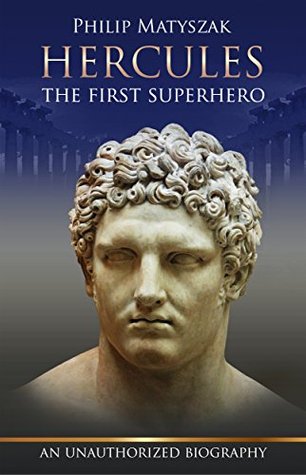
    Hercules – The first superhero: by Philip Matyszak

    My rating: 5 of 5 stars


    The ancient Greek superhero Hercules always has a status of a modern-day Mount Hollywood celebrity with Paparazzi-conscious showmanship. He also reminds me of an advantaged individual who could get away with wrongdoings. Hercules was an impulsive egoist and an irascible aristocrat for what was worth the ancient Greek superhero, a paragon of masculine heroism with a view to celebrity. This uncommon biography about the superhero whose name still rings red herrings after millennium flows of time evolves around the legendary performance of the Twelve Labors, anchoring them to the historical events of a man with a colossal ego.

    With a wealth of knowledge on ancient Greek history and extensive research on the subject, Matyszak puts in the capacity of Hercules’s counsel per se in the tribunal between humanity and divinity, who searches for truth based upon factual findings. Matyszak’s defense for his now divine client Hercules is erudite and comprehensive, with exhibits drawn from classical Greek and Roman historians and writers whose wits and reasons were anything but those of Hercules. In addition, the author’s trademark storytelling narrative makes the story of the ancient Greek killer all the more vivid and engaging that each chapter holds the attention of the reader in the phantasmagorical display of images as depicted in Grecian urns or vases.

    Notwithstanding the attractiveness of the narrative and the narrator, there are reasons I disapprove of Hercules as a hero, an antithesis of the other half-god, half-man Jesus of Nazareth in millenniums later. The Labors resulted from his egotistical attempt to free himself from the guilt of killing his family in moments of passion. However, he was neither remorseful nor appropriately punished for killing his music teacher Linus whose head his recalcitrant prince pupil Hercules shattered with a lyre he was trying to teach him how to play the way it should. As a prince of Thebes, Hercules had no qualms of consciousness for killing his elderly music teacher whose social status was beneath him, and gods condoned it because he was a son of Zeus.

    His peremptory sense of entitlement knows no boundary because of his arrogance and hubris. For example, during his Fourth labor of capturing Erymanthian Boar, Hercules killed almost the entire race of centaurs, driving them to near extinction. But Hercules himself was the cause of the killing spree because he intimidated Pholus, a wise, kindly centaur, to open a jar of undiluted wine, a gift from Dionysus to centaurs, who became intoxicated and attacked Hercules out of stupor. Yet, his killing of the drunken centaurs was not even a subject of guilt and was regarded as collateral damage because centaurs were known as lustful creatures. But didn’t Hercules also sleep around with women – and only the beautiful – wherever he went to, and sire children, one of whom became the founder of the Scythians?

    To summarize, the story of Hercules boils down to a conclusion that Hercules was a representative figure of a human whose essence is both divine and mortal, always on a chariot race with two horses of desire and reason. Some revisionists claim Hercules was an ancient Greek psychopath who took pleasure in killing people, beasts, and demi-gods. To me, a psychopath loses either the shackle of the ego or the supervisor of the superego, running a mind chariot alone even it drives to a pit full of fire. Methinks, Hercules was a cossetted brat without disciplines that controlled his power of reason, which is apart from mental acuteness or ingenuity. Adler’s will to power embodies the figure of BC man-God hero without regard for compassion and charity. Hercules was anything but Samuel Johnson’s conception of a biographic figure who empathizes for the common characteristics of life in the principle of universal judgment and sentiments. I now know why Christianity has won favors from poor and ordinary people and become the subject of persecutions from emperors and kings because Jesus of Nazareth, begotten by God and born of Virgin Mary, is gentle yet strong, kind but firm, which seems simple but divine.


    View all my reviews

  • John Dee, Queen Elizabeth’s Gandalf who designed 007 – book review

    John Dee: The Life and Legacy of the English Occultist, Alchemist, and Philosopher Who Became Queen Elizabeth I’s Spiritual Advisor by Charles River Editors

    My rating: 5 of 5 stars


    Ben Jonson’s alchemist Subtle in his famous Elizabethan play ‘The Alchemist’ is a knave quack intent upon doing a lucrative occult business by luring the gullible, rich or poor, learned or general. But John Dee, Queen Elizabeth I’s English-Welsh astrologer, was anything but. He was a highly educated man graduating from Cambridge University with a penchant for esoteric knowledge beyond the realm of the physical world, and brilliant engineering feat contributed to his epithet as the queen’s occultist to the eyes of those who regarded him as something of Rasputin in the queen’s retinue. To me, Dee was a curious figure of science and magic, fact and mystery dissolving into one another.

    From the cradle to the grave, John Dee’s life appears to be starlit with mystical numbers and stars that govern his destiny to pursue the knowledge of the beyond. Born in the household of a well-to-do textile merchant on July 13th, 1527, Dee’s fate was already revealed in the combination of the lucky number 7 and the ominous 13. He was endowed with intellect and heart, which is not typical for an astute scholar with a high education degree. Also, an ingenious engineer in stage productions of plays, Dee created the modern-day equivalent of special effects employing a man-powered crane and other apparatuses used as a counterweight fly system. He was fascinated with the science behind mathematics and used it to know astrology and celestial navigation in understanding human lives. He chose the coronation date for Elizabeth when Jupiter juxtaposed alone with Venus, opposing Saturn, and conjecturing Mars. The astrological interpretation betrays the virgin queen’s reign with the beauty of the goddesses and the power of the god of gods. Methinks, Dee’s interpretation must have attributed to the queen’s famous Tilbury Address in which she described herself as possessing “the body of a weak, feeble woman but the heart and stomach of a king.” Furthermore, the famous secret code of “007” was an invention of Dee used between Dee and the queen meaning “For your eyes only” as in “00” as a symbol of eyes and “7” Dee’s favorite lucky number.

    Dee had a bona fide intention to use his knowledge to benefit people of all classes. During his post as royal astrologer under Queen Mary’s reign, Dee proposed to the queen that she establish a national library accessible to all for the universal education of the minds. This revolutionary idea was unprecedented and rejected. Dee was a man of books and used his learning from reading for the welfare of England. He propelled England into the Age of Exploration. He legitimized the British expansion of territories, including America, to which, according to Dee’s certification, a Welsh prince sailed in 1170, which was three centuries before Columbus’ voyage. Patriotic stargazer elucidated further that it was Grate Britain’s destiny to gain all of the territories supposedly appropriated by King Arthur by coining the term “The British Empire.”

    After the death of his beloved Queen Elizabeth, Dee dwindled in his career and fell into obscurity, not least because he lost favor with the successor King James I, the scourge of god against witchcraft and magic as deviltry. We don’t know whether he was secretly in league with the devil in his once magnificent personal library. The opinions on John Dee are still debatable, if not controversial. Some might say he was a would-be Merlin or Gandalf. Some might call him a Rasputin who tricked the virgin queen into believing superstitions with his mephistophelean pact for the souls to populate the circles of hell. I want to say Dee was akin to Atlas, one of the Titans who was also fascinated with astrology and astronomy and generous with munificent generosity in the form of divine fire to mortals, for which he was condemned to bear the weight of the celestial globe.


    View all my reviews

  • ‘Forgotten Peoples of the Ancient World’, by Philip Matyszak

    Forgotten Peoples of the Ancient World by Philip Matyszak

    My rating: 5 of 5 stars


    Forty years on our evolutionary scale amounts to a microsecond on our twenty-four biological clock. The millennium years, even Before Christ, feel so alienly anachronistic from our modern sensibility. The sense of time builds upon a fundamental element of consciousness as molded into a collective emotional experience as contemporary citizens of the world, just as the peoples of the misty pasts we tend to overlook felt the same for the civilizations before them. They were the titans of the pre-ancient Egyptian, Greek, and Roman cultures. They, like the evening sun in its full declination, vanished in the hazy horizons of the time, still dazzling with its scarlet hues of radiating halo lingering on the remnants of human civilization to this date.

    Forgotten peoples of the Ancient World is an anthology of the peoples whose feeling of permanence and importance in their time of the world betrayed their fates buried in the tires of cities beneath the earth and returned to the dust in the winds. To illustrate, Akkadians were the first builders of the empire who elevated the Akkadian language to the cultural and political lingua franca of the late Bronze Age. The Hyksos were outstanding charioteers, and their military prowess benefitted their Egyptian subjects. The Bactrian culture was a delightful mixture of Greek and Indian heritages, while the Vandals gave a final, fatal blow to the already destabilized Roman Empire. These peoples affected the celebrity civilizations we are automatically associated with the ancient civilizations. As to why the forgotten peoples became peripheral in our realm of ancient history, it is a question of the immanence of the supreme being in the universe. However, what is certain is that they were the torch-bearers of the first civilizations passing the torch of society they had ignited and encouraged to the next in a relay run of collective humanity.

    The book is an excellent anthology of these ancient peoples in chronological order from east to west, showing how civilizations expanded from the cradle across the plains, mountains, deserts, and seas to the Isles of Britons. Divided into the eras marking the epochal changes of history, Matyszak succinctly elucidates the peoples of the misty past with his trademark witty ways of describing historical contexts. Moreover, the exciting historical trivia resurrects the eras in a phantasmagorical display of faces and places.

    To conclude, the stories about the forgotten peoples attest to the objectivity of truth applicable to any time of history that that which is here was there, has been, and will be. All things must pass, and there is nothing new under the sun. Our sense of time and culture is a likeness of truth, a matrix-like reality, because our facility is rather instinctive than reasoning, rather physical than metaphysical. Who would have known that people 100 years later now would think our time and us in this time anachronistic and antediluvian? Herodotus felt the same when he arrived in Egypt and saw the wondrous pyramids in awe that the people before his generations had built. So did the Babylonian king, who dug and discovered artifacts from centuries ago. We have seen the hungry ocean gain advantage of the kingdom of the shore, and the firm soil win of the watery main, increase with loss and loss with increase. The forgotten peoples and we are time’s subjects, and time bids are gone.


    View all my reviews

  • ‘Leonardo and the Last Supper’ by Ross King

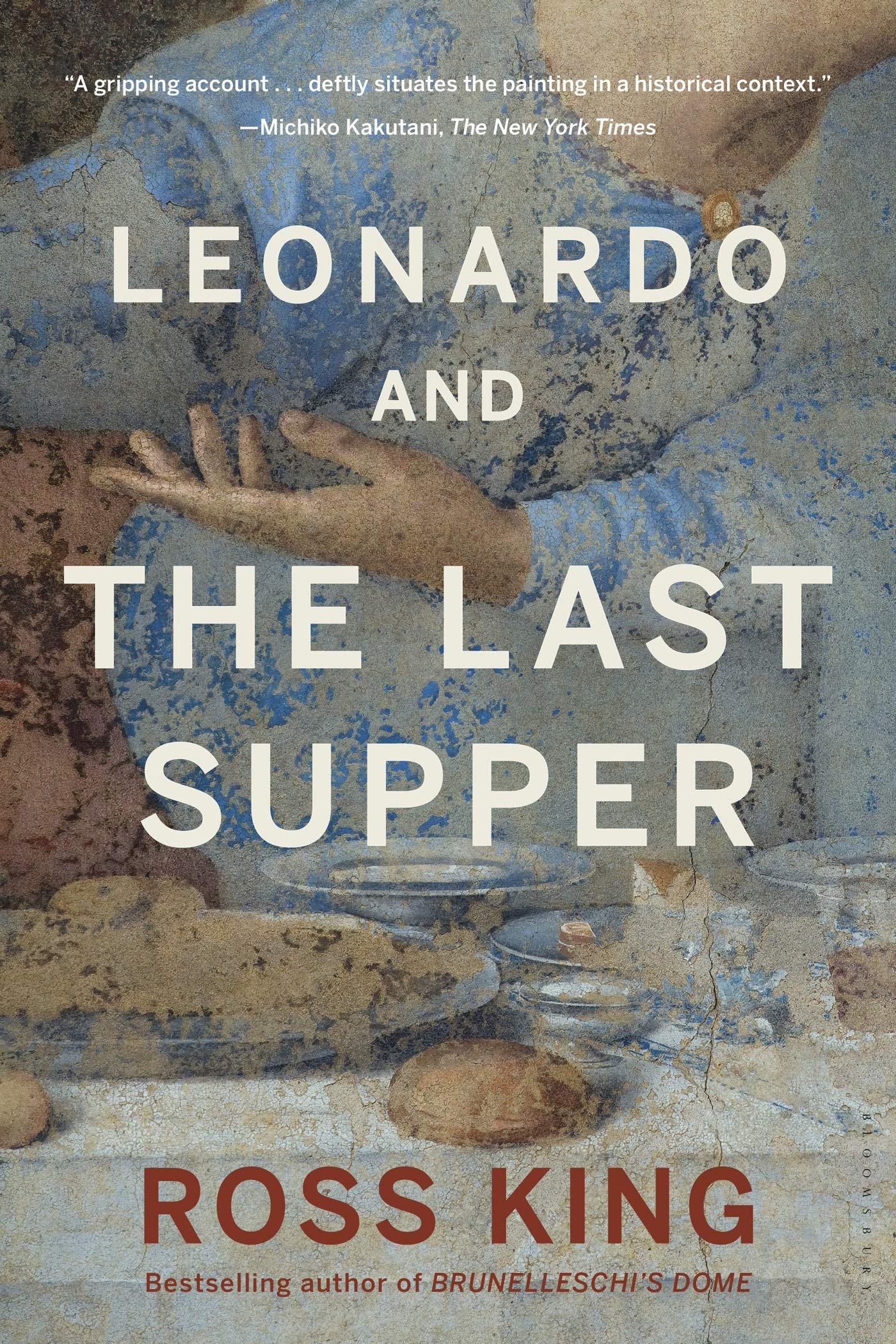
    Leonardo and the Last Supper by Ross King

    My rating: 5 of 5 stars


    I still remember an excellent replica of Leonardo da Vinci’s “The Last Supper” in a tapestry form decorated on the wall of our family living room when I was in elementary school. It was vast and expansive, nonetheless magnificent with the profoundness of the scene and the expressions on the faces in it – all wondrous and curious. Now a stream of time has flown, but the first impression of the art still has become one of the stars in my heart’s constellation. “Leonardo and the Last Supper” by Ross King has added to the star the brilliance with telling stories resurrecting the atmosphere of the time and vividness of the people surrounding the creation and the creator of the art.

    The book is an alluring admixture of the biography of Leonardo da Vinci and the history of religion, politics, society, and culture; all skillfully swirled in Ross’s skillful narrative account of the person of da Vinci and his work of the Last Supper. The narrative becomes more intriguing as the chapters replete with entertainingly informative tidbits about personal accounts of people related to da Vinci and involved in creating the Last Supper are ascending. The story’s construction follows how Samuel Johnson, the 18th-century English essayist and cultural critic, narrated the lives of poets in The Lives of the Poets, composed of a brief biography of a poet, personal accounts of the poet, and professional criticism of the works. The reader will first be acquainted with da Vinci’s biographic backgrounds: parents, a well-to-do lawyer father, and a middle eastern slave mother owned by his father’s household. Da Vinci’s struggle with spelling and even harder Latin education, his fabrication of engineering work experience in his curriculum vitae to obtain a military commissioned engineer post when coming to Milan from Tuscany, and so forth. All the information is a telltale factor contributing to da Vinci’s rise to celebrity in his and our times, which is refreshingly informative to learn that the perennial polymath also had feet of clay with colors of contrast.

    Ross is a scholar with a novelist’s magic wand to wield his writing power, casting a spell on facts and knowledge with the beauty of language and ease of words, captivating readers of all life paths with gripping narrative skills. Another book of his “Michelangelo and the Pope’s Ceiling,” which I enjoyed with great pleasure, is a helpful companion to this book because both Michelangelo and da Vinci were contemporaries, working under their aristocratic patronage the recalcitrant spirits of creative souls in reins of livelihood. It would also be an excellent reference to the social statuses of artists at that time. Contrary to our images of free-spirited artists, artists worked for their royal, ecclesiastical, and wealthy employers. Therefore, they were not free to choose subject matters for their works because their bosses wanted their power and fame to become works of art, as it were.

    Upon closing the last page of Leonardo and the Last Supper, I reminded myself of Plato’s aesthetic definition. Art is a copy of Form, the perfect, pristine Beauty. It exists only in Idea because da Vinci was also a scientist and an engineer who found perfect beauty in perfect numerical and astronomical elements of nature. However, da Vinci’s Last Supper is filled with pathos, contrasts of human emotions, paradoxes of light and dark, good and evil, constantly changing, never-ending. Da Vinci was a humanist, finding beauty in nature as it is, regardless of perfect Form, the unattainable ideal that is out of touch. One thing right about Plato’s Aesthetics is that art is at best entertainment and at worst a dangerous illusion. That says it. Leonardo’s Last Supper is a soul’s entertainment, and so is Ross’s “Leonardo and the Last Supper.”


    View all my reviews

  • ‘The Roman Empire and the Silk Routes’, by Raoul McLaughlin – review

    The Roman Empire and the Silk Routes: The Ancient World Economy & the Empires of Parthia, Central Asia & Han China by Raoul McLaughlin

    My rating: 4 of 5 stars


    We are easily apt to presume that what we can do was an impossibility for those of different eras and places. Yet, what is happening now has happened before, although in various modes of Operandi. Global trade was also part of the ancient world’s economy that affected civilization’s fortune just as it is today in our time. This book shows the reader how ancient commerce happened thousands of years ago across a great distance of continents from the Far East to the West to propagate the prospects and prosperity of Europe and Asia’s far-flung regimes via silk routes through Central Asia.

    The book is a fine organization of roads, resources, and governments involved in the ancient business world that surprise the modern reader that without airplanes, cars, and computers even, our forefathers of humankind found ways to travel a great distance for profits with flares for adventure. First, the term “Silk Roads” became famous by the 19th Century German geographer/explorer Baron Ferdinand von Richthofen, who surveyed the land routes crossing Central Asia from Afghanistan to China as used in the ancient Chinese and Roman texts. His ambitious plan was to construct a railway line across Central Asia that would have linked the German economy to Chinese markets. In ancient times, the Romans imported Chinese silk that came to Roman Syria from Iranian caravan routes crossing the Parthian Empire from Uzbekistan to Mesopotamia. The Romans’ Eastern business also included Indian valuables via the Persian Gulf that reached Parthian markets in Babylonia. An ancient text reveals that one Indian sailor from the wreckage of a trade ship from India around the Red Sea rescued by a Greek patrol ship from the Ptolemaic kingdom of Egypt around the Arabian Peninsula told the Greeks how to sail from India via season Monsoon winds.

    The Romans had already known about India but not the Far East until 1 B.C., when silk began to reach the Mediterranean Sea through the Parthian Empire ruling in ancient Iran via caravan routes, aka the silk roads. It appears that commerce contacts and cultural interactions indeed existed. Modern archeologists discovered the graves of slave workers of textile production during the first century A.D. at Vagnari in southern Italy; one of them had a DNA of Far Eastern ancestry inherited from his mother. From Julius Caesar to Caligula, silk both ornamental and devotional in the panoply of magnificent Roman authority. The Romans made ceremonial silk curtains dyed in royal Tyrian purple as awnings in public ceremonies to protect spectators’ eyes from the fiery Mediterranean Sun’s glare. Silk also made beautiful garments and garlands presented to classical gods’ images and offered to the protective household deities. The reader would be pretty surprised to learn that the end of Cleopatra VIII and her paramour Mark Anthony was a purple augury of lucrative Roman trade from the eastern world. The accumulated Roman economy from Ptolemaic Egypt’s annexation and control over the eastern legions made the distribution of the Roman citizens’ funds possible. The empire gained direct sovereignty over the Red Sea shipping lanes into the Indian Ocean.

    Reading this book confirmed my conviction that people would find the way to do what they needed. However, the younger generations of our time often make the anachronistic mistake of judging the previous generations as culturally retrogressed and hemmed in insular thoughts. It is only a different way of doing business, however slow or primitive it may seem. The ancient commerce contacts show that a country cannot stand alone and survive alone in the world if it refuses to measure the truth with the desire based on ethnocentrism growing into xenophobia. Human cultural progress is a collective enterprise. We live not in isolated islands but a global village.


    View all my reviews