Tag: book reviews

  • the world’s oldest musical instrument

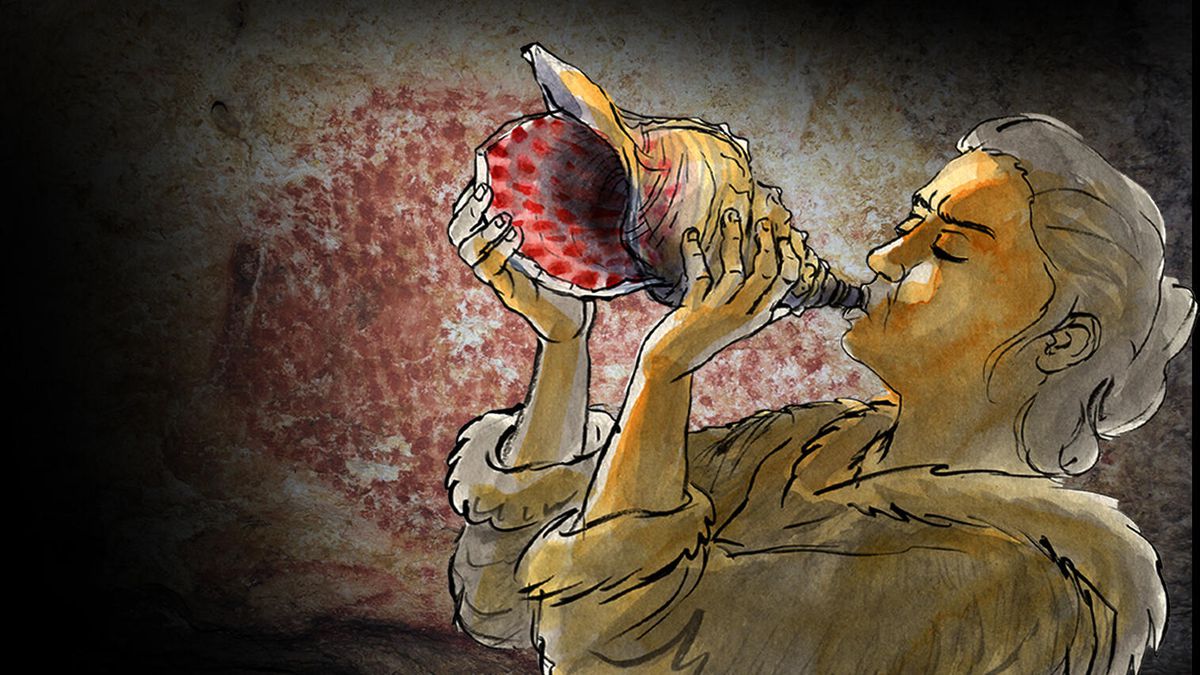
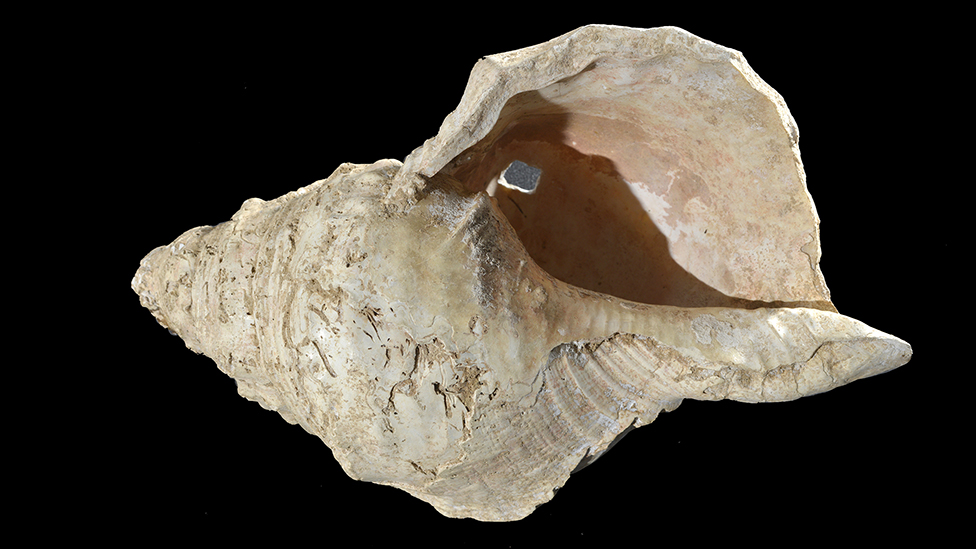
    A team of scholars has recently reexamined a conch horn discovered around the Marsoulas Cave in southern France, the famous cave art site, and concluded that the conch was more than just an ornamental artifact used for a drinking vessel or any other trivial purpose in Upper Paleolithic Age, aka Old Stone Age, dating from around 17,000 to 12,000 years ago. It was an age when Cro-Magnons, a Homo Sapiens nomadic tribe in western Europe, emerged as formidable hunter-gatherers of reindeers and horses from a new cold and gray prehistoric horizon in the dawn of the ages of man. They were Magdalenian, named after a rock shelter located in the French Pyrenees where the artifacts and human remains were discovered. They left the prehistoric legacy in the form of the Magdalenian conch.

    By using a carbon dating system and other state-of-art scientific apparatuses, the scholars posited that the conch horn was a musical instrument to enjoy the prehistoric Magdalenian symphony in the cave. The cause of reason for the hypothesis is a purposefully cut-off apex of the conch horn as if to adjust for blowing and making sounds. In fact, a modern music player tried playing it at its initial discovery and found out that the tunes were ranged close to the notes of C, C Sharp, and D, making it the oldest wind instrument of its kind to this date. Moreover, the conch patterns were similar to those appearing in the pictures of cave walls, which scholars deduced that they were significant in denoting cultural functions in the communes.

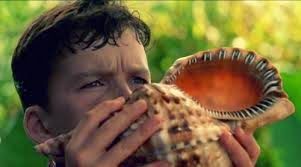
    However, although the connections between the cave art and the conch horn are intelligent hypotheses, the idea of the conch as a musical instrument doesn’t quite hold water to me. First of all, the image of a conch horn always conjures up the dystopian vision of the boys in William Golding’s Lord of the Flies. In the story, boys blow the conch whenever they convoke meetings, which usually spring from sinister motives resulting in gloomy consequences. Also, the god of sea Poseidon blows a conch when he heralds his formidable divine presence, shaking the waves of the oceans. The use of the conch was to be more of notification of alarm for political or social events, not of a musical instrument for cultural appreciation. Besides, as aforesaid, a conch is often associated with the sea, unfittingly matched with hunter-gatherers in the mountain or sea-locked regions. Although scholars pointed out that the Magdalenian could travel to the shore and brought a conch as a souvenir, using it as a pastime wind instrument is a bit of stretch, a romantic imagination about the cave people differentiated from ruthless, animalistic, highly advanced kinds of ape.

    If the scholars’ educated guess becomes a theory, then the Magdalenian conch horn will be entitled to the first place in the history of musical instruments. But considering the geographical reason and natural tendency related to a conch shell drawn upon historical and literary contexts, the Magdalenian conch shell must have been either a curiously collected souvenir from a trip to the shore or a valuable instrument to call upon meetings in the communes. Also, it could have been a convenient alarm to indicate a sight of animals for a hunt or protection. For melodious variations pleasing even to uncultured ears, the sounds of strings made from the leftovers of hunted animals hung on pieces of wood would be perfect for their hunter-gatherer entertainment.

  • ‘I Belong Here’, by Anita Sethi – Book Review

    To tell a story within you is an expression of yourself, an affirmation of your identity, in an expanse of will wielded by the spirit of freedom. Storytelling is, in fact, a way of logotherapy that helps you find meaning in life from your daily tasks to your traumatic experiences by sublimating the pains of the heart to the blessings of the spirit, in the realization of Amore Feti. In this book, Anita Sethi shoehorns her experience of racism in England into a rivetingly ingenious travel memoir in the spectacle of a beautiful natural landscape where she belongs.

    Her narrative has a lyrical quality with a poet’s rhythm that reminds me of a Portuguese Fado song. Her words sing her story of an uneasy love relationship with her own country into a continuous fugue of love, betrayal, loneliness, and friendship vested with her experiences with people and nature. It is at once dolorous and enchanting as if to listen to a mysteriously elusive melody hummed by a ghost of a sad maiden who died in brokenheartedness. Yet, this doesn’t mean Sethi is a ghost damsel in distress bemoaning her betrayed love. She is a warrior who chose the pen to vindicate her attacker and other minor offenders of her South Asian ethnicity as a way to overcome her fear and anxiousness, arising from her ashes like Nietzsche’s noble phoenix.

    Sethi’s narrative then becomes a eulogy to the natural landscape of Great Britain; she finds an elbow room, a niche, her library of wonder. As Shakespeare pointed out, nature is exempt from public haunt, finds good in everything. It is a grand luxurious spa free of charge to all, although that is not always tainted by the malice of incivility on the part of humans. However, Sethi, in her story, asserts that no one can take away her right to belong in the beauty of nature and the country she regards as a home and proclaims her self-identity by telling her personal story incorporating the words into the images of British mountains and forests, exempting her from a malady of social ills and elevating her to the citizens of the Universe.

    The book is an excellent bedtime fellow when you want something thoughtful but not burdened with elements associated with scholarly apparatuses. The narrative is flowing melodiously, and the author’s spirit is within the texts, full of emotions but nuanced in her infatuation with the beauty of British landscapes that provide her with holistic healing power. They say you don’t protect what you don’t care about, and you don’t care what you have not experienced. To appreciate the value of this book doesn’t mean you have to be of a particular ethnicity, gender, or race. As long as you have taste and judgment universal in all humans, especially with a strong sense of empathy and a lover of nature, you will find her story alluringly gripping and feel her pains and loves as if they were your own.

  • Toro is back

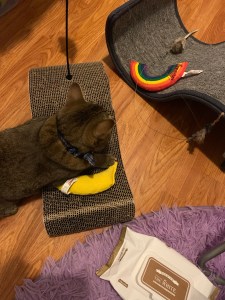
    St. Frances de Sales’s advice, “Have patience with all things but first with yourself.” is no more so than with the three weeks’ heartbreaking ordeal to win back my cat Toro’s trust in me. His traumatic visit to the veterinarian now seems to dissipate across the feline Elysium slowly, or so I want to think. He is not hiding under the bed in my presence, becoming a sweet writing company on my desk once more.

    I have recently watched a YouTube that goes viral about an unlikely friendship between a stray cat and a young woman, which makes me think of my relationship with Toro and what it means to build trust between two lives. The woman found a stray tabby cat around her house and began to acquaint him with food. She named him “Tiger,” not least due to his perspicacious tiger stripes and adorable feistiness, giving him a distinct personality and charms that were all the more endearing to the sensitive woman who was also in need of company in her solitude.

    Thenceforth, they became complementary to each other for consolation, security, and most of all, love. Tiger is still his feisty self, and the woman is still trying to adjust herself to his whims and caprice. Still, they feel comfortable in their presence and love. The tears welled in the windows of her soul when she said that building trust between two took time and patience. You can’t make someone love you arbitrarily by force. You don’t need a love spell or magic potion to enslave someone into your desire of possessing the body and mind, as the ancient Greeks and Romans used to. Without Psyche, Eros would not/could not have culminated in perfecting the art of love as a primordial god of Love.

    Toro is in some way like Tiger: his name means a little tiger in Japanese with his distinctive stripes, and M signature proudly marked on his little forehead. Although not as feisty as Tiger, Toro has a remarkable personality of adventurousness, curiosity, playfulness, and resilience, all affectionately wrapped in his good nature. But I don’t take for granted that wonderful Toro is my cat, and therefore, I deserve his trust and love. Animals, especially pets, also have hearts that pump up the blood and feel the feelings. I regard them as friends, companions to enrich our existential human lives with a touch of sentimentality that we hardly express when we are among our species in fear of being regarded as a sign of weakness. And I am always thrilled to feel his little heart at my feet as a friend.

  • ‘Mata Hari’: la madame butterfly – book review

    Mata Hari: A Life From Beginning to End by Hourly History

    My rating: 4 of 5 stars


    A paragon of femme fatale with a name meaning Eye of Dawn in Indonesian, Mata Hari has become an unlikely figure of feminism that elevates a famous courtesan into a tragic martyr against male chauvinism. Some even have turned Europe’s first-class exotic dancer into an innovative artist, surpassing the great French-American creative dancer Isadora Duncan. Although Mata Hari expressed her unbridled erotic charge on the influential men in an era when the ideal victorian femininity still reigned in the social consciousness, she was hardly any more creative to the art of dance than Isadora Duncan and less manipulative than Delilah. This concise bioptic narrative about Mata Hari leaves the image of her open to creation on the reader’s perception of her.

    Before her rebirth as Mata Hari, Margaretha Geertruida MacLeod was a divorcee from a Scottish-born dutch army officer. Her divorce from her husband was a ticket to her freedom from conventional womanhood whose place was home, tending her family and domestic affairs. Mata Hari used her womanly prowess tinkered with an exotically alluring atmosphere surrounding the sultry appearance that she used for the glamorous life. While reading the book, I found Mata Hari hard to sympathize with her, commiserate with her when she was hoodwinked by the men she fluttered with, and she believed to fall in love with. A life of courtesan she was leading was dangerous and ephemeral, and she didn’t seem to bother making her livelihood without toiling her hands into specks of dirt, as most of the poor women in her time had to earn a living.

    It is not to say that her wayward lifestyle was meted with her unjust execution, which conspired to use her as a political and diplomatic scapegoat during World War One. She was an easy target to put all the misdeeds of the men involved with her and the faux-pas they wanted to conceal in consideration of her reputation as a persona non-grata with a questionable reputation. The trial of Mata Hari was nothing but a Kangaroo court procedure that only showcased the famed woman under an international spotlight behind which the real culprits of the espionage were hiding. However, her trust in beauty as a sexual prowess over men should not be confused with a woman’s symbol of an unyielding independent spirit under the pretext of being a divorcee without long-term financial security. The spirit of womanhood that evokes a feeling of camaraderie lacks in the figure of Mata Hari.


    View all my reviews

  • Becoming the Ancient Mariner

    Think. What do Kubler-Ross Model of Five Stages of Grief, Spinoza’s Amore Dei, Nietzsche’s Amore Feti, and Logotherapy have in common? That it is all about how to accept fate as it is, the stupendousness of truth, the veracity of suffering as a way of finding meaning in what you have to endure. Religion is a poetic way of describing the suffering, a burden of life, another intuitive interpretation of looking at the pain and yielding to it as a destiny. But it is easier to be said than to be done when your spirit is plunged at the lowest tide of life and sees no hope of descrying a land of opportunities in the doldrums. And it betrays your noble hope and begins to shoot albatrosses then become like the Samuel Taylor Coleridge’s Ancient Mariner. Or so it seems.

    All the wise in the civilization of humanities told their progeny the reason for bearing the unbearable because they all knew about one thing: that’s what life was about. It is what it is and will be as long as humans exist. In his theory about Amore Feti, Nietzsche posited that evil was what prevents us from striving toward our goals and that power to affirm what we have is the only way to move on in the sailing of life, however terrible it would be. Knowledge and its pursuit are a must-have to shape an essential feature of our consciousness to keep sanity in contextualizing the whys and wherefores of struggles in life with an active mind. It is indeed a noble psychological philosophy, but what about people who are not intellectual as the renowned philosopher but just ordinary earthlings stuck in the existential backwaters of the rut? Did Nietzsche, Spinoza, or Kubler-Ross have to worry about livelihood? Well, Spinoza was a watchmaker, so he should have known something about making a living, but still, he was autonomous in pursuing his intellectual Elysium without having to worry about the burdens of daily life.

    I had not known what the darkest night of the soul until now, and the fear of losing myself has finally descended upon me. C.K Charleston said madness is when you lose yourself except for your reason. Shakespeare quipped when nature, being oppressed, commands the mind to suffer with the body, and you would become derailed from norms of behavior and faculty of cognition. I prefer the latter version of madness because if I lose myself, then it should be all or nothing for the complete liberation of my spirit from the chains of enslavement. From insidious dominion of gaslighting to dreadful ascribed duties that I didn’t choose, to endless sadness, and cursed estrangement, I now know why the Ancient Mariner killed the sacred albatrosses whom seamen believed to be the souls of the dead sailors. Ire for the delusion of hope, retribution for the betrayal of faith, and freedom from the pain of unrealized dreams drove the Ancient Mariner to execute the birds and then become one of them, never returning but always wandering.

    If only. I long for a sign, omen or augury, that can show me what to do or if I can break this vicious circle of unhappiness that has been cursed on me. No Ouija Board. Why? I don’t trust bargaining with the Devil because he, as a henchman of Satan, is like an angel of God in reaping as many souls as possible to build their armies or populate their cities of the Beyond. Then why do I find myself pleading to God by default while writing this for not ignoring me when he prefers the beautiful and the pleasant? Spinoza and Nietzsche, I beseech you to persuade me with your best reasonings of why I should believe that life is still worth living!

  • ‘Leonardo and the Last Supper’ by Ross King

    Leonardo and the Last Supper by Ross King

    My rating: 5 of 5 stars


    I still remember an excellent replica of Leonardo da Vinci’s “The Last Supper” in a tapestry form decorated on the wall of our family living room when I was in elementary school. It was vast and expansive, nonetheless magnificent with the profoundness of the scene and the expressions on the faces in it – all wondrous and curious. Now a stream of time has flown, but the first impression of the art still has become one of the stars in my heart’s constellation. “Leonardo and the Last Supper” by Ross King has added to the star the brilliance with telling stories resurrecting the atmosphere of the time and vividness of the people surrounding the creation and the creator of the art.

    The book is an alluring admixture of the biography of Leonardo da Vinci and the history of religion, politics, society, and culture; all skillfully swirled in Ross’s skillful narrative account of the person of da Vinci and his work of the Last Supper. The narrative becomes more intriguing as the chapters replete with entertainingly informative tidbits about personal accounts of people related to da Vinci and involved in creating the Last Supper are ascending. The story’s construction follows how Samuel Johnson, the 18th-century English essayist and cultural critic, narrated the lives of poets in The Lives of the Poets, composed of a brief biography of a poet, personal accounts of the poet, and professional criticism of the works. The reader will first be acquainted with da Vinci’s biographic backgrounds: parents, a well-to-do lawyer father, and a middle eastern slave mother owned by his father’s household. Da Vinci’s struggle with spelling and even harder Latin education, his fabrication of engineering work experience in his curriculum vitae to obtain a military commissioned engineer post when coming to Milan from Tuscany, and so forth. All the information is a telltale factor contributing to da Vinci’s rise to celebrity in his and our times, which is refreshingly informative to learn that the perennial polymath also had feet of clay with colors of contrast.

    Ross is a scholar with a novelist’s magic wand to wield his writing power, casting a spell on facts and knowledge with the beauty of language and ease of words, captivating readers of all life paths with gripping narrative skills. Another book of his “Michelangelo and the Pope’s Ceiling,” which I enjoyed with great pleasure, is a helpful companion to this book because both Michelangelo and da Vinci were contemporaries, working under their aristocratic patronage the recalcitrant spirits of creative souls in reins of livelihood. It would also be an excellent reference to the social statuses of artists at that time. Contrary to our images of free-spirited artists, artists worked for their royal, ecclesiastical, and wealthy employers. Therefore, they were not free to choose subject matters for their works because their bosses wanted their power and fame to become works of art, as it were.

    Upon closing the last page of Leonardo and the Last Supper, I reminded myself of Plato’s aesthetic definition. Art is a copy of Form, the perfect, pristine Beauty. It exists only in Idea because da Vinci was also a scientist and an engineer who found perfect beauty in perfect numerical and astronomical elements of nature. However, da Vinci’s Last Supper is filled with pathos, contrasts of human emotions, paradoxes of light and dark, good and evil, constantly changing, never-ending. Da Vinci was a humanist, finding beauty in nature as it is, regardless of perfect Form, the unattainable ideal that is out of touch. One thing right about Plato’s Aesthetics is that art is at best entertainment and at worst a dangerous illusion. That says it. Leonardo’s Last Supper is a soul’s entertainment, and so is Ross’s “Leonardo and the Last Supper.”


    View all my reviews