The sky is howling in the twilight
As the chariot of the moon flies;
She hears her fate that she wants not
Thru the rustling leaves and grass
Swaying in the wind of the chariot
And draws the moon from the seat
To take back her unwanted future.
The sky is howling in the twilight
As the chariot of the moon flies;
She hears her fate that she wants not
Thru the rustling leaves and grass
Swaying in the wind of the chariot
And draws the moon from the seat
To take back her unwanted future.
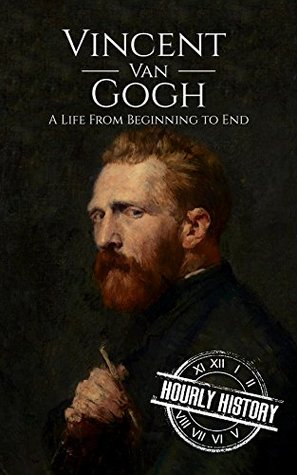
Vincent van Gogh: A Life From Beginning to End by Hourly History
My rating: 5 of 5 stars
Here’s a portrait of a man who hated being alone yet found freedom when alone. Austere yet bohemian, religious yet autonomous, he was a paradox himself like the faces of Janus. It was no other than the painter Vincent Van Gogh himself in his well-known portrait looking more in disappointment with the world than in madness against it.
As the late eminent Australian biographer of Ben Jonson Ian Donaldson once put, good biography is anything but a bland, chronological summation of a man’s life, and I am not intent on reciting the dates of from Gogh’s birth to death and in-betweens. Instead, I am all mind in positing what I think he was, other than the man with a bandaged self-mutilated ear because our sensory perception often betrays the truthfulness of what we see when stimulated to the external sensation. Indeed, Gogh was a disturbed man whose sensitivity found no elbow room in the world with which he so endeavored to have a long-lasting content relationship. It is not to say that Gogh was an archetypal self-imposed exiled artist who voluntarily distanced himself from ordinary life scenes. Hardly so. As shown in his letter to his beloved little brother Theo, who helped his misunderstood forlorn artist brother as ever, Gogh tried to be as good-humored and cheerful as he wanted. Still, it was the world that seemed to betray him with blows that bludgeoned his unalloyed wishes and noble aspirations.
Gogh’s paintings reflect his love of realism and reject artificial romanticism without the ideal romantic ambiance in vogue with the time. He was interested in all that existed as they were because discovering beauty in the coarseness of reality was his objective in achieving creative and experiential values. In this regard, Gogh was in the same artistic vein as Francoise Millet, whose paintings Gogh admired because Millet believed that treating the commonplace with the feeling of the sublime was what gave art its true power. The only difference between the masters of art was how to portray it with individual flairs of colors, techniques, and perspectives based on their tastes and judgments. Gogh’s ‘Potato Eaters” might not have that romantic dignity surrounding the hardscrabble peasants. Still, they were unforgettably expressive in the nuanced struggles and strife they had to bear and live with. Perhaps the uneasy cohabitation of the independent spirit and the loving heart distinguished Gogh from his famous peers who had the practical sense to reconcile their creative souls to social needs.
Moreover, Gogh lost a sense of direction when he realized that a man of the cloth wasn’t his cloth. The existential frustrations from the confliction of the will then added to his already innate fragile sensitivity, a hereditary mental trait running in his maternal family. Nevertheless, Gogh continuously endeavored to fend it off and conquer it, even when the citizens of Arles, where he dreamed of building a haven for his kindred spirits, united to expel him from the city he once cherished. However, one good-hearted postman continued to give him a touch of kindness till he voluntarily admitted himself into a mental asylum for the peace of his mind and others’.
To me, Gogh tried to live up to his conviction of good, fulfilled life with exquisite sensibilities, and unalloyed humanity too great for the realities of the world he was born into. His life was life imitating art, and art was not imitating but expressing life as he saw. Yet, be it ever the play of the fate, the more he tried to be good-humored, the more estranged he became because he was an extraordinary artist constantly breaking away from confinement prejudicial to his ever sensitive and creative spirit. Upon reading this elegantly narrated life of Vincent Van Gogh, I realized the truth of the genius only took some time for its brilliance to shine, no matter how long it would take. Who would have thought Vincent Van Gogh, who once sold only one of his works out of hundreds, would be looking at his admirers in the constellation of brilliant painters in heaven? For those who are creators of arts in all genres, famous or hidden, amateur or professional, the story of Vincent Van Gogh will be a consolation to the heart and hope to the spirit that never knows the end.
View all my reviews
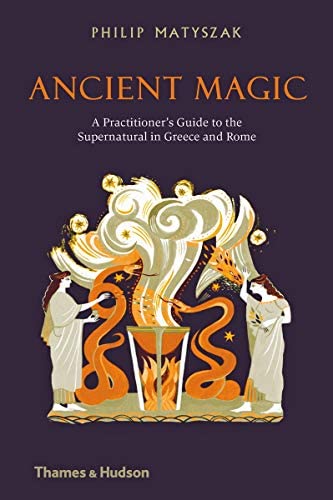
Ancient Magic: A Practitioner’s Guide to the Supernatural in Greece and Rome by Philip Matyszak
My rating: 5 of 5 stars
Magic in ancient Greece and Rome was an art of crafting natural force with a bit of help from the world of gods and spirits wonderous to the user without fully knowing them. Contrary to traditional orthodox Christian teachings, magic was not associated by default with sorcery privileged to an esoteric spiritual elitist often dark and sinister. To the ancient Greeks and Romans, magic was their belief system, part of their modus vivendi in everyday life from slaves to emperors in the sense that we go to doctors or counselors. In a word, magic, as we understand now, was not so much deviltry as a variety of rituals of individual petitions pleaded for the fulfillment, which even the tremendous ancient minds regarded worthwhile to record.
Before the era of Christianity, the concept of magic was often interchangeably used with the knowledge of natural and supernatural worlds, which the ancients saw as not impossible to cross in between and thus believed the ghosts and the afterlife. Plato and Pliny, the Elder, advised no mortals go to graves alone after dark because there the restless souls of the dead not crossing the Styx, wandered. The most significant of the ghost story is Pliny the Younger’s letter to his friend Licinius Sura. He tells of the philosopher Athenodorus, a stoic astronomer and tutor to Octavian, the future emperor, witnessing a ghost of an old man in shackles showing his improper burial site.
Magic encompasses auguries and omens by the flights of birds, spells, and potions to charm the figures of desires, and the astrological signs in the ascendant at births and the sun, all of which to make uncertain futures known as guides to walk the paths of life to arrive at the fates. Matyszak tells the reader in the capacity of a Virgil leading Dante to the Underworld that seers at Delphi and Cumae were relatively easy to foretell the futures, which were unchangeable. Their acute intuition took a dreamy leap to poetically versed oracle pronouncement in the background of ethylene atmosphere and told what the petitioners could do at their best to deal with what laid ahead of them because there was no more than one fixed future.
The book invites the reader into the world of magic like never before because knowledge is a composite of Herodotus, Plutarch, Pliny the Younger, Socrates, and Plato. They took the extraordinary subject seriously because it was part of their daily lives bordering on a thin line of the spiritual world that was as real as they were. The book is written in a language accessible to all spectrums of education and walks of life. It is philosophy, religion, and history magically mixed in the author’s magic potion of erudition that significantly produces learning charmed in natural wits.
View all my reviews
The Lives of the Poets by Samuel Johnson
My rating: 5 of 5 stars
Great writers are not necessarily great people in the integrity of their characters, which perhaps most of us know, and yet cannot help but associate the excellence in letters with the personal attributes of the writers simply because we are enchanted and gobsmacked by the mind. Samuel Johnson, an eminent English cultural critic of the 18th century, also knew about these somewhat restively volatile facts about famous writers and poets of his time. The result was these entertaining and informative composite biographies of the poets of his time with his trenchantly honest eyes and esteemed erudition to disembarrass the person of the poet from the genius of the poetry.
Originally written as a referencing preamble to an edition of The Poets of Great Britain complete from Chaucer to Churchill, Johnson’s supplementary prefaces became so popular that the booksellers decided they were worthy of separate publication under the subject title of this review. And there were reasons that make Johnson’s biographies of the eminent poets attractive among the insipid panegyrics to the famous. A good bio is read in a way a good novel or short story is enjoyed with characters that are differentiated from the common because of their recalcitrant individualism that gets away with the intellectual attraction and personal flairs despite their flaws. In this regard, Johnson’s wit and sagacity play an essential role in being an objective judge of the characters and their works to the extent that none of his subjective poets could escape from his hawk-eyed criticism, be that ever great or small. Johnson’s biography resembles Herodotus’ parataxis in narrating the accounts of people and events. It consists of a summary of the subject’s life; accounts of their personalities and analyses of their works. The individual narrative account became a history of the poet, which showed something about his work and indicated the person himself.
For example, Johnson’s take on John Milton was so freshly revealing that it upended my view on the creator of The Paradise Lost. I used to think of Milton as a benevolent-looking wise poet whose blindness didn’t stun his will to knowledge and creativity and whose fatherly tenderness toward his daughters encouraged them to be his eyes and hands when the visions of the world became blackout totally for the poet. Instead, Milton was one of those who clamored for the liberty of others but did not grant liberty to others. He was an arrogant intellectual who disparaged the works of others whom he regarded as less intellectually esteemed than his standard, which was despotically biased in terms of impressive academic credentials. Milton’s poetry was intrinsically intellectual and not for the light-hearted pleasure of the heart roving through the meanders of fairyland. His elevated soul ascended in the sphere of the Form, the perfect beauty that was unattainable in this real world.
Johnson also cast somewhat contradicting masks on the creator of Gulliver’s Travels, Jonathan Swift. Like Ben Jonson’s iconic characters in his plays, Johnson’s Swift appeared to be both miserly and munificent, flaunting and humble, aloof and social. I particularly liked Swift because, unlike other writers of his time and of our time, he was not an ace student with flying colors on academic subjects. Swift was, however, a great student of learning, always pursuing and laboring to learn however long it might take. He was a man of industry and diligence, which made him all the more human and imitable because his genius was hard-won, not easy born. Methinks that Swift’s resilient spirit tinged with feistiness for an Anglican Church priest had to do with his Irishness. He was an Irish man at heart, in nature and soul. Johnson also attributed the protean imaginativeness and admiring independence of ideas to his Irishness that resulted in wondrous creatures during Gulliver’s travels.
There are other poets than Milton and Swift in the book, and you do not have to read about them all if you are unfamiliar with them or their works because that would go against Johnson’s purpose of the writing. Or you can read the book as an admirer of Johnson’s signatory witty and erudite writings from which you can learn a lot about his subjects and himself. The book serves as an eighteenth-century intriguing exclusive close-up documentary. It is about celebrity poets whom someone like Johnson, who was something of Roger Ebert in the criticism of the art of literature, could unpick and reconstruct as they might have been sans the mindless blinded paeans to their works without even being read. Undoubtedly, Johnson’s views on the poets have been and will be subject to criticism too, but his writings piled with a bonfire of splendidly sparkling expressions and apposite vocabulary drawn on his natural faculty of mind are nonetheless worthwhile to spend your time reading.
View all my reviews
The wind hears my thoughts
and tells me not to say them,
for words will fly out to them,
seize their sheer gossamer wings
sparkling tinsels of dream drops,
and break them before they fly
to the sky and meet my stars.
Owl at Home by Arnold Lobel
My rating: 5 of 5 stars
We all have natural octaves for narratives of ourselves to speak in various notes and tempos. But Arnold Lobel’s is a fugue of loneliness, disappointment, sadness, and longing vested in the good-heartedness and geniality. ‘Owl at Home’ is Lobel’s ballad of melancholic warmth that sings his heart’s song.
This little book tells of an owl who lives alone in the treehouse. The owl has the comforts of life, from a comfy sofa to a pillowy bed and a beautiful teapot set, but not a life companion to speak. So the owl invites winter with a wide-open door, even if the wind sweeps over the house’s warmth rudely. But that’s not it. He makes tea from his tears of sad thoughts by pouring them into a jar. Hence his tea is named ‘tear-water tea.’ Oh, and yes, the lonely owl wants to befriend a moon that he regards too beautiful and lofty to be acquainted with. The melancholy ballad has such a simple loveliness that it touches the reader’s heart and transforms pathos into sympathy.
The book’s genre is officially and publicly children’s literature, but that doesn’t mean that readers aged beyond 18 years can’t. While reading the book, I kept associating the owl, the likable solitary owl, with the author and illustrator Lobel, whose life was also ended in a lonely man’s theme. Bullies tattered Lobel’s childhood at schools due to his weak disposition and shyness, which made him estranged from the crowd of life, being utterly unattached and felt unwanted and unfit for happiness. Likewise, the goodhearted but quixotic owl is Lobel himself at his saddest, loneliest, and paradoxically best because the truth about him lays bare through the narratives. The author’s beautiful illustrations delineate the shape of his heart that is warm and generous and move a feeling of pity for the dreadful solitude to a sense of love with a sound of mirth.
View all my reviews
You must be logged in to post a comment.