Tag: book reviews

  • dishes and books

    2c2cc0e944d117ab0561431f0cb8710a

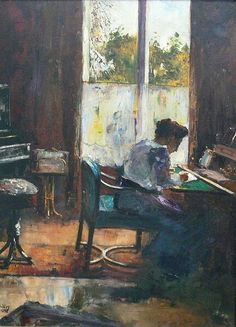
    Agatha Christie once said: “The best time for planning a book is while you’re doing the dishes.” So did Jane Austen, who used to write before preparing a meal for her elderly father and after washing the dishes. And there was Laura Ingalls, an incredible pioneer woman tenaciously grasping on her aspiration to write while guiding her poor family to the long and winding climb to long-term financial security.  Then there was Lucy Maude Montgomery working full time as a teacher and writing full time to arrive one day as an established writer. Now enter Christine De Pisaner, a single mother of three children and mother, employed as a full-time supervisor at a scriptorium in the Late Middle Age France. What they had in common was the inexhaustible self-discipline and the independent will that drove them to spur their creativity on the craft of writing while juggling with their existential needs of life.

    In fact, the figure of Christine De Pisan stands scintillating amid the somber Gothic spheres of cathedrals and gargoyles in the Late Middle Ages. She was the first professional woman writer making a living out of writing to support her three children and mother on her own against the custom of remarrying as a widow. Pisan was a precocious, voracious reader at a very young age, wallowing herself in books, soaking up in knowledge gained from hours of reading at the royal place of the Louvre. Upon her husband’s death, Pisan worked at a scriptorium where she supervised the works of calligraphers, miniaturists, and bookbinders while writing in her spare time. It was during this time of employment Pisan began to write for livelihood under the aegis of King Charles VI, attracting European royal patronage of Phillip II of Burgundy, Queen Isabella of Bavaria, and England’s Earl of Salisbury, despite the fact that England and France fought against each other during the Hundred Years’ War. But Pisan’s feats of words and erudition triumphed over the vortex of the war and communicated to Taste and Reason universal in humanity by which her love of France and admiration of the Virgin Maid of Orleans were sublimated to the epic romantic poem “The Tale of Joan of Arc”.

    Pisan, Agatha Christie, Jane Austen, Laura Ingalls, and Lucy Maude Montgomery are soul sisters bound by the ambition, fortitude, and talents to express their inner voices in the peculiar alchemy of literature with a burst of pep in spite of their dealings with the existential world hostile to their sensitiveness. They were writers who knew how to strike the chords of readers with their artistic craft and admiring independent spirits that are contemporary with our time. For they write despite life’s challenges with a resilient sense of purpose in search of a meaning of life by actualizing dreams, hopes, and values in an expression of will across a blank page in divine madness of art. You see, washing and writing are not apples and oranges.

  • ‘The Time Traveler’s Guide to Elizabethan England’, by Ian Mortimer – review

    The Time Traveler's Guide to Elizabethan EnglandThe Time Traveler’s Guide to Elizabethan England by Ian Mortimer

    My rating: 5 of 5 stars

    People tend to make an anachronistic mistake of assuming that their times are more culturally and socially superior to their previous generations’ times, whereas forty years on an evolutionary scale amounts to a million second on a twenty-four-hour clock, the amount so infinitesimal that it makes you smirk. What makes us set apart from the predecessors of our human civilization is not how they looked but how they looked at the landscapes surrounding their everyday lives, which led to the creation of the ethos of society peculiar to the different historical periods of time. This Thucydidean approach to history as a branch of social science as well as humanity strikes the chords with Ian Mortimer’s perspectives on his Elizabethan ancestors in his scintillating book, The Time Traveler’s Guide to Elizabethan England.

    Rich in details and splendid in descriptions that successfully and naturally resurrect the period, Mortimer’s vividly atmospheric accounts of the era transform the people and the landscapes of Elizabethan England from one-dimensional textual elements to animated figures in his engagingly vivacious narrative that strut in the mind’s theater of the reader, commanding attention in every chapter in a way that looks virtually real, evoking a phantasmagorical display of the periodical images. Mortimer is a knowledgeable and witty guide well versed in the English Renaissance with a practical sense of reality, which makes him something of Dr. Who, who pitchforks his wide-eyed volunteer reader to the subject time and then materializes when the reader is in a pickle. He shows the reader both the beauty and the beast of the Elizabethan society at its core with his wealth of knowledge drawn upon extensive research on the period and general erudition without putting a supercilious air of a highly learned man and stands in awe with the reader of the cultural and social progresses of Elizabethan England that began to define the “Englishness,” with which we tend to associate when the name “England” chimes the bell of literature, religion, and geography, all in the collective image of being “English.” Mortimore does this wonderfully with his engaging narrative skills that will not make you bored and skip a page.

    Mortimer as a literary Dr. Who aims to bring the gaps of time and space between the reader and the populace of Elizabethan England to elucidate his stance on the truth about unchanging human nature wrapt in a periodical costume; in fact, history is a branch of literature made by artificers and artists with stories full of events, persons, and places that are woven into a tapestry of time, which also reflects how we have become what we are. In light of this, Mortimer is a cross between Herodotus with his entertaining narrative skills and Thucydides with his objective analysis of the historicity of society and culture. At the end of the book, the reader will find William Shakespeare, one of the most notable figures of Elizabethan England, holding up “a mirror to Mankind and shows people what they really are.” This is a cracking read packed full of interesting tidbits on the ways of life in Elizabethan England which he relates with wonderfully lucid insights into the turbulent but magnificent era that marks an indelible landmark in the history of England, and ultimately, of the world.

    View all my reviews

  • ‘Adam Smith kidnapped’ by Stuart Kells – review

    In the case of life imitating art, you tend to find meanings of events in life, to liken them to values of adversity in life, and to sublimate them to the divine auguries of purposeful human existence. In fact, this existential approach to the causality of certain human behaviors and characteristics can help you to understand whys and wherefores of the way people are and thus can even disarm all hostility towards strangers without prejudice. Such is the case of Adam Smith, the father of modern idea of Capitalism, author of “The Wealth of Nations” whose such proverbial reputation had piqued me no more than as a boring illustrative curriculum vitae of just another stuffy intellectual with privileged educational and social backgrounds until I read Stuart Kells’s article about the Real Adam Smith whom I might never have known.

    Adam Smith, a posthumous son of a successful lawyer and customs official, was a rather melancholic, lonely, but humane thinker who liked to spend time with himself alone but also kept his foot in reality by observing everyday people’s lives and considering them to employ in contextualizing ills of society as a result of ineffective rules of law failing to protect the welfare of subjects. Smith’s brilliance shines on the simple and lucid illustrations of his thinking in common language that the literate and the illiterate could understand. He was a soul of the wit distinguished from his peers and progenitors favoring abstruse expressions of bombastic words pedantic of their academic learning. 

    Kells enlightens us that this humane trait in Smith can be originated from the traumatic experience of being kidnapped aged four at the home of his Scottish maternal uncle allegedly by a set of vagrants called ‘Tinkers’ or a party of Gypsies, the Wandering Egyptians. Although who the real culprit of this kidnapping is still a mystery to this day, what the event affected the tender mind was all over but the shouting. It was Smith’s first interaction with the world outside the safety of class, the innocence of childhood, and the security of the family. Already fatherless, the very young Smith must have felt powerless, hopeless, and homeless at the hands of his kidnappers. And this melancholy spell cast upon him became his curse and bliss as it made him look into the pains of other people and meditate on the causes and effects thereof by sympathizing with their sorrows and emphasizing with the sorrowful. 

    The kidnapping incident of Adam Smith read like a piece of sensational news to me, a kind of new awakening, the equivalent of modern-day news that a bestseller writer or a prize-winning writer hails from a poor family without expensive private high education. And it makes you think about what makes a person become who he or she is and appreciate the person’s values that overcome adversity. In this respect, Adam Smith is in league with Charles Dickens, who turned his suffering into works of art. It’s a triumph of the human spirit over the travesty of life. All in all, thanks to Kells’s telltale article about the wondrous event, I have abandoned my prejudice against Smith as a cold, stiff upper lipped economist and warmed to his humane side. Maybe I might even read “The Wealth of Nations” into the bargain.

  • ‘The Real Guy Fawkes’, by Nick Holland – review

    The Real Guy FawkesThe Real Guy Fawkes by Nick Holland

    My rating: 5 of 5 stars

    It was a fateful day for a man, it was a fortuitous day for a crown. A man of imposing physique with a more imposing spiritual credo stood there speechless in the cellar of the House of Lords stocked with barrels of gunpowder that could blow up the parliament to the detritus of the past sovereign supremacy. The captors were in awe of the man’s imperturbability amid the silent trepidation of the weight of aborted stratagem. He was no less than a person than Guido “Guy” Fawkes himself, one of the eight Gunpowder conspirators, the man whose effigies are ceremoniously mocked and burned on 5th of every November throughout England as his eternal Promethean punishment for defiant treason since 1605.

    Nick Holland’s The Real Guy Fawkes tells it all about who this unfortunate but formidable man of unshakable faith in his realistic discourse of the accused based on historical evidence gleaned from his exhaustive research superbly blended with his vivid storytelling narrative skills that resurrect the atmosphere and ethos of the era contributing to the making of Guy Fawkes. We see young Protestant Guy with a great linguistic talent, good looks, and full of life, playing a Nine Men’s Morris with his friends. We witness Guy’s conversion to Catholicism, his stint as a valorous soldier in the Spanish Army in Flanders, his involvement in the Gunpowder Plot as the right-hand man of Robert Catesby, the charismatic leader who wanted to bring his beloved England to the One, Holy, Apostolic Church, and his last moment on the scaffold. He was a passionate man of faith who keeps his words by actions, and the image of Guy Fawkes overlaps with that of Father Mendoza in the film “The Mission”, who tried to revolt against the tyrannical oppression of despotism suppressing a freedom of wills and faith incompatible with its claim of totalitarian supremacy over individualism.

    Holland’s role of compassionate and open-minded narrator helps the reader to understand what motivated Guy Fawkes to involve in such an epochal plot and who the person of Guy Fawkes was. The infamy that chained Guy Fawkes in the unbroken shackles in the darkest dungeon of history becomes justifiably lessen, and the eternal mockery of his likeness becomes faded off as a collective echo of demotic populism orchestrated by the powers-that-be with systematic religious prejudice. Personally, I feel that the celebration of Guy Fawkes Day is akin to the eternal punishment of Prometheus, which should be lifted in order that his soul can rest in peace. If you feel the way I do, or if you understand what it meant to be a Catholic in the Reformation era and before the Second Vatican Council, then you will probably agree with me.

  • ‘Ben Jonson’s Walk to Scotland: An Annotated Edition of the ‘Foot Voyage”, by James Loxley – review

    Ben Jonson's Walk to Scotland: An Annotated Edition of the 'Foot Voyage'Ben Jonson’s Walk to Scotland: An Annotated Edition of the ‘Foot Voyage’ by James Loxley

    My rating: 5 of 5 stars

    When I first learned of Ben Jonson from Stuart Kells’s Shakespeare’s Library as a member of the Shakespeare triumvirate, I was piqued by the personal background of this unreconstructed Elizabethan playwright and poet and wanted to know more about him. My search for the intelligence of Jonson then met a devotee of Ben (a Tweeter equivalent of Sons of Ben) in London, England, which led me to the treasure cave piled with Jonson’s writings and the writings about him. Among the treasure is this pleasant travelogue of Jonson’s famous walk from London to Scotland with his unknown companion in 1618.

    An energetic vicambulist and a lover of sensory delights of life, Jonson’s journey to Scotland, the land of his birth, on foot seems natural and celebratory of his feisty and adventurous spirit in comparison to his statuesque contemporary men of letters. Be it that his working-class background or unconventional Modus Vivendi, Jonson meets people of all walks of life, ranging from a madwoman to a jovial tinker, and to a scullery maid to the lords of stately houses, like a learned troubadour and interacts with them as such artlessly genial attitudes are also reciprocated with respect in jovial mood. The unknown companion whose identity is open to presumptions is nonetheless a vital witness not only to the authenticity of Jonson’s celebratory foot journey but also to the recognition of his humaneness that gives life to the textual figure of Jonson, bringing the reader close to this literary celebrity in his unvarnished prose narrative. In fact, it is this plainness of account without a platitude of florid language in want of erudition that reveals the person of Jonson and the realistic views on social and cultural landscapes of the Elizabethan era devoid of heavyweight academic stuffiness and intellectual seriousness.

    Further to the authorship question, I like to think that Jonson as a producer must have commissioned his apprentice or trusty servant of literacy to write it because (1) the original manuscript called ‘A Discovery’ was burned in the 1623 desk fire; (2) the scrolls of documents presented by the Aldersey Family in Cheshire contains a manuscript entitled “My Gossip (c.f. the term meaning a kin through God) Jonson”; and (3) most of all, the narrative does not possess Jonson’s literary allure and erudition proprietary to his oeuvres. Notwithstanding the dubious authorship, the narrator went, saw, and narrated Jonson’s foot voyage to Scotland, where both were made honorary burgesses, a well-deserved titular trophy for the journey completed.

    With respect to the motif of this voyage, I think it was intended to be a literary supplement to his well-heeled subscribers as an entertaining accouterments to their library in an appreciation of their patronage. In this regard, it could also have been a wager journey benefiting from the subscribers in the promise of delight from the travelogue to the seekers of vicarious pleasure as if they were traveling with the famed literary figure of their time.

    Contrary to the introduction of the book as an appropriate read for upper-level students of English literature or scholars devoted to Ben Jonson, this book is accessibly enjoyable even to a general reader like myself and recommendable to the initiated and the uninitiated with a promising delight to the mind. Upon finishing my travel with Ben Jonson and his unknown companion, I now see him as an artless man of action with bouts of hearty laughter and a caring heart attentive to his ill servant and a lowest sculler maid in a manor he visited, not as an unapproachable Elizabethan celebrity whose star in in the constellation of universal literati sparkles radiantly in the celestial fresco. His bibliographic tantrums of temper were proverbially formidable, but his humanness wonderfully saturated with his literary feat and artistic talent dominated the vice as readers will see in this travelogue. And I think Jonson will like us readers to think of him that way. Or I like to think that way as a fan.

    View all my reviews

  • ‘Humorists: From Hogarth to Noel Coward’ by Paul Johnson – review

    Humorists: From Hogarth to Noel CowardHumorists: From Hogarth to Noel Coward by Paul Johnson

    My rating: 5 of 5 stars

    It’s gobsmacking to see how people misidentify humor with mockery or sarcasm in their misconception about laughter (the loud the better) as a product of a merry heart. Whereas humor should be appealing not only to the senses but also to Reason with a natural assistance of wit to discern the light side of life and to elevate it to wisdom of life it bears, people tend to derive funniness from faux-pas and gaucheness of targeted individuals as if they were Olympian gods and goddesses laughing at the sorrow and travail of mortals on earth. That being said, this aptly witty book by Paul Johnson is an intelligent receipt against the philistine understanding of humor drawn on his erudition and sharp witticism.

    Johnson sees humor as a handmaid to hope in life that gives a jolt to a meaning of life, a mental and physical therapeutic means to make the strains of existential malaises bearable, and presents us a society of famous artists who shares the same views on the pristine essence of humor. Life is indeed a comedy in a long shot and a tragedy in close-up. If our human existential life is a tragedy at the core, it also has a periphery of comedy, which helps us to understand and embrace the attitude of “Amore Fati” Love of Fate, regardless of a boundary of classes, races, and genders. Accordingly, finding humor in human suffering is one of the manifest functions of arts in sublimating human emotions and thoughts into the aesthetically pleasing and intellectually satisfying artifacts.

    From Johnson’s humorists, the persons of Charles Dickens and G. K. Chesterton strike me as scintillating artists of classless humor whose abilities to draw humor upon people of all walks of life and to look upon the bright side of existential life and kindly side of human nature, for human nature is the same in all professions as it is in water, not stone. Even madness does not look grim and dismal in the eyes of amiable Chesterton: “The mad man is the man who has lost everything except his reason.”

    This is the fourth book by Paul Johnson I have read, and it never ceases to amaze me with his erudition and wit manifested across pages after pages at the expanse of his will to enlighten general readers in plain English accessible to all. If you think abrupt peals of boisterous laughter in disguise of hearty mirth in public places are none other than a sign of incivility and citizenship, then this is a fit read that you will enjoy to your quiet hear’s content.

    View all my reviews