Tag: book

  • Walk like Poet Henry David Thoreau!

    photo (1)
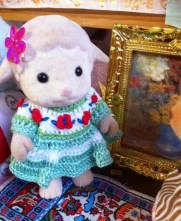
    Sally, the Thinker

    “Give me a box of bonbons and a pouch of fruit candy assorted with gummy worms to sweeten my vapid imaginations! Oh, and a cup of Hazelnut coffee with a little bit of half-and-half to spark up my dormant spirit that resists to awake after a day-off.” Sally was hoping to make a new Monday as vivacious and jovial as possible, so she decided to meet with her lovely alter ego Bonnie for brisk morning sauntering. Yes, sauntering. Or even perambulating, which in fact reminded her of a baby perambulator.

    “Hi, Sally!” Bonnie’s euphonious soprano voice manifested her presence like a spirit conjured up by a magician in an esoteric ancient language. Sally saw her dear friend approaching her from a distance waving effervescently at her with genuine smile. ” Oh, Dear. You look a bit pale… Have you eaten well? And please tell me not you are in a diet because you need it not.” Bonnie was concerned about a noticeable difference in Sally’s outward view: she looked thinner than before, and it did not look becoming to Sally. No, it was not out of that cardinal jealousy of womankind that knew neither friendship nor truth. In the eye of Bonnie, Sally looked prettiest with her round cheeks and dimpled elbows.
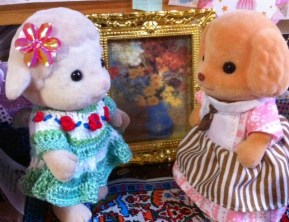
    photo (2)

    “No, I am not on a diet, but I just did not have any appetite… I like walking than eating! Well, let’s call it our “sauntering” as the great poet Henry David Thoreau defined. Do you know Thoreau himself was an aumbulater nascitur non fit? He was an avid walker who used to spend about two hours walking in nature. His study was out of doors like his poet pal William Wordsworth.” “Oh, I did not know it, Sally. I only know that Thoreau was a great naturalist poet and died from consumption. “Yes, Bonnie. That too was right. Soon both adorable ladies were embarking on their ritualistic morning sauntering along the Avenues of trees and flowers with larks and bluetits vivaciously chirping and tweeting, all in nature’s symphony that could make you forgive your foes and love humankind at least for that pristine moment of pleasure.
    photo
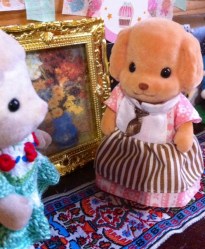
    Bonnie, La Bonne amie

    Thoreau was right: the act of sauntering in nature would blot out the strains and cares of contemporary life and anesthetize your weary body and minds against the strains of everyday life. It’s absolute freedom from all worldly engagement. Like Thoreau, Sally thought that sauntering was not an exercise but a kind of enterprise, an adventure of a day that invigorated her spirit and mind. And Sally was hoping that Bonnie would share her pleasure of appreciating the symphony of nature. “You know Thoreau was something of an eccentric genius,” Sally decided to add some tidbit of gossip on the poet. “Oh, really? How so? ” Bonnie seemed intrigued.  “Well, he never went to church but believed in God; did not marry, nor did he cast vote, nor did he pay taxes! But this very individuality endowed him with a crown of literary ascendancy, I think.” “How could he not pay his due taxes as it’s his sacrosanct duty and responsibility as a citizen? You know what, Sally? That’s why I do not like any of these intellectuals who put ideas before their civic duties and personal responsibilities.”

    Bonnie’s truculent remark was a bit startling aberration of her usual diplomatic modus operandi of expressing her opinion. But come to think of it, she couldn’t agree more with her friend about the duplicity of so-called the intellectuals, the new ecclesiastical estate of our modern society. And Sally was inwardly glad to have a friend as thoughtful and truthful as Bonnie. But still, Sally wanted to spare Thoreau from the supercilious learned elites.

    1-210

    The ante meridian sun was suavely sunny in the fiercely blue sky that would remind you of the celestial garb of the Virgin Mary in Rembrandt’s paintings.  The Italians would call the color “azure,” and they were good at making the pigment for Renaissance painters who raved about its lucidity and vivacity of the exquisite hue. And the fragrant breeze was a blessing of the beautiful Titan-goddess Aura for their friendship bound by mutual understanding and love of history and literature. As the two good friends were continuing to enjoy their sauntering in nature, it seemed right that without even going to church on Sundays, you could find the evidence of the Creator in awe of nature’s beauty and feel the presence of the existence just as Thoreau and the late Pope John Paul Second had felt and expressed.

    hqdefault

  • Italy Dreamin’

    Amalfi Coast photo book, Italy (60 photos) : Europe series 4Amalfi Coast photo book, Italy (60 photos) : Europe series 4 by Akira Okubo

    My rating: 5 of 5 stars


    When my spirit feels weary of existential dealings of daily life and whets a desire of carefree escapade from the reality I am anchored in, I tend to daydream about places I want to travel alone. John Steinbeck once admitted that oftentimes, reading magazines and books full of colorful pictures of foreign countries would be more satisfying than actually going there, save all the hustling and bustling, flotsam and jetsam related to traveling. Hence my choice was this beautiful pictorial read of Amalfi Coast in Italy on my Kindle Fire. The delightful pix of southern Italy will take you out of your humdrum life while looking at them; they bring vibrancy of the ambience of the region to your eyes and allure your heart to the romance with the beauty in a heartbeat, alone with yourself.  The rustic and restive sensuousness of the scenery as vividly illustrated in the pictures will dazzle the reader’s eye like a beautiful paramour secretly pleading with you not to leave.

    저장

    저장

  • Time to Make the Donuts by William Rosenberg

    Time to Make the DonutsTime to Make the Donuts by William Rosenberg

    My rating: 4 of 5 stars

    Before Starbucks claimed a monopoly on franchised coffee-houses around the world, Dunkin Donuts had been arguably one of the most popular American food service franchises in the States as well as other countries. With its signatory Munchkins and famous slogan of “American runs on Dunkin” presented by Super Mario-look alike Fred the Baker (although he retired from the public in the late 90s), the famous coffeehouse brand has made its mark on the American urban culture thanks to its straight-talking, no-nonsense founder William Rosenberg who drew up his case history of being a successful entrepreneur against personal all odds in this simple but admirable memoir written during his last days of life while succumbed to a cancer.

    Rosenberg’s business philosophy of what works and what does not in business to share with the public forms the basis of this book whose inception was first conceived by encouragement of Mario Puzo, the author of The Godfather in the 60s. Straightforward and enterprising he was, Rosenberg’s sharing of his own experiences with the reader for altruistic motive without a sense of entrepreneurial machismo is traceable in every chapter. What he lacked in formal educational background because he had dropped out of school at age fourteen in the height of the Great Depression in 1930, was compensated by the simple but timeless tenets of achievements: diligence, persistence, determination, risk-taking, diligence, innovation, vision, and passion. Surely, all of the aforesaid seems bromidic, but oftentimes, it is these simple elements of life that we oversee as trifle and insignificant without pondering over Leonardo Da Vinci’s truthful adage: “Simplicity is the ultimate sophistication”

    In fact, there are parallels that the reader can make between Rosenberg’s elements of success and the three values for meaningful life in Logotherapy, the third Viennese school of psychotherapy established by the great Viktor E. Frankl whose experience in Auschwitz was a testament to its veracity and validity of Logotherapy, which is to help us find a meaning of life by freedom of will and will to meaning. Throughout the book, Rosenberg emphasizes that it is what we do with the challenges that determine our failure of success because learning from errors is the sine qua non of success. Whatever the circumstances may be, a person can find a way to succeed, and it is attitude that makes it possible. Having a good-hearted but violent-tempered father did not stop him from going out of his way and establishing world famous Dunkin Donuts. This forthright attitude links to attitudinal value of Logotherapy signifying our triumph over biological, social, and cultural inhibitions during difficult times with a discovery of meaning of suffering by the way in which we respond to. That is, how we respond to challenges will make a heaven out of hell, a hell out of heaven.

    Also, a sense of humor is a must-have for taking us a long way to succeed in life. “Work hard, play hard,” was Rosenberg’s mantra. Yet to put it lightly is to miss the gist of the meaning; humor is a prerogative of human that can help us take on a different view of life in a light-hearted way, so that we can be soundly assured that unpleasant things we may be going through are not everlasting and that they are occurring because there is a meaning to them. This, in fact, also relates to humor as a vehicle to turn our backs against emotional distress in life that may hamper our continuation of searching for a meaning of life. Whether or not Rosenberg might have been aware of Logotherapy in his lifetime, the reader will find at every turn analogy between Rosenberg’s business philosophy and Dr. Frankl’s Logotherapy.

    Philosophy aside, there is plenty of interesting information on how the brand name came up with, the origin of Munchkins, and revolutionary way of operating the stores . To illustrate, the catchy name of “Dunkin’ Donuts” came from “You dunk a donut,” Munchkins, previously called Dunkin Donuts Donut Holes sold for 19 cents per set, got the name of a character from “The Wizard of Oz” with the right to utilize the name exclusively in the food service business. After all, the famous Munchkins have become a household name throughout the States and achieved a unique status in the food firmament.

    This is an interesting read that the reader will find both practically helpful in applying Rosenberg’s elements of success to his own set of principles for betterment in life and entertaining to discover the history of the franchise in pastime. The reader will also find that the narrative will reflect the author’s artlessness, cleverness, and forwardness in this engaging book that matches its topic worth the writing.

  • The Blank Slate: The Modern Denial of Human Nature by Steven Pinker

    The Blank Slate: The Modern Denial of Human NatureThe Blank Slate: The Modern Denial of Human Nature by Steven Pinker

    My rating: 5 of 5 stars

    We are living in an era of blank state of mind operated by leviathans that bind our collective social wills under a doctrine of the Standard Social Science Model established by intellectuals, such as sociologists, behaviorists, philosophers, and artists under the aegis of postmodernism. That we become who we are and what we are as a result of our relationship with society has become an ethos of our time. Yet, do we really have to believe that what we think and what we do is nothing but a product of social conditioning, excluding our own unique individual constitutions? Is our own hereditary individuality the enemy of free will and perpetrator of biological determinism that needs to be constantly kept in check by the bastion of rationalism? So Steven Pinker presents his passionate and erudite thesis on the illogicality and fallacy of the modern ethos in The Blank State in terms of social and cultural norms of our society and offers a breakthrough point of view on human nature based upon cognitive science which invokes Anton Chekhov’s aphorism “Man will become better if you show him what he’s like.”

    Pinker straightforwardly avers in the beginning of the book that the current intellectual ethos is tainted with intellectual complacency, a vice of so many intellectuals who do not bother to exert their academic efforts to find the truth of human nature. Instead most of them conveniently refer to a mob psychology and social relations to avoid being labeled as anachronistic or even supercilious intellectuals in agreement to postmodernistic political and cultural trends that have been in vogue since the mid 20th century swept by the motto of the blank slate. Hence Pinker introduces the reader to the fathers of the liberalism whose doctrines reverberate gloriously in the every theater of our modern societies. In fact, the philosopher John Locke coined and deployed the term “tabula rasa,” which mean “the blank slate.” Locke undermined a hereditary royalty and aristocracy and supported abolishment of successive monarchy. He motivated his political philosophy and paved a foundation of Liberal Democracy with the motto of the blank slate. Also, Rousseau’s avocation of the “noble savage,” the belief that humans in the primitive state are free from social ills is still regarded as an antidote to our overtly modernized society with moral decay.

    To top it all off, Descartes’ dogma of the ghost in the machine promulgates dualism of human nature by which our body can be nonexistent by the use of our thinking faculty which belongs to the mind; it can also promote our imagination of having the body as a mere hallucination. This may sound true and wonderful to think that our mind can do wonder, when in fact, it nihilistically denies the sciences if human nature itself. The aforesaid doctrines are the tenets of the intellectual ethos of our time in which the modern consciousness is collectively corrupted by the repercussions of the Enlightenment philosophers. That is, these airy, fallible ideas are deeply entrenched in our consciousness. It is the ultimate liberator of human will – the mind of man by the power of social communication jettisoning him from biological determinism.

    With respect to dominant psychology of out time, Pinker brings out that Behaviorism is an offspring of associationism that bans a talent or an ability, ideas, beliefs, desires, and feelings. That behavior is not a physical manifestation of hereditary factors is indeed hostile to the studying of human nature. The core of behaviorism is the blank slate that is inscribed with sensations and ideas conditioned by social interactions. Thus the most natural and popular topics in psychology, such as love, hate, work, play, food, religion, and art are invisible from the texts because regardless of our individualities, we are only a group of blank slates operated by social devices.

    In case of the arts, Pinker asserts that contrary to intellectuals’ grown indispositions that the possibility of sustaining high culture in our time is considerably dwindling problematic, the arts and humanities are not in a pickle. In fact, advances in technology have made art more accessible to the masses than ever before with the advent of personal computers and other information-related apparatuses. It has always been that in every era for thousands of years critics have bemoaned the decline of culture because competition of praise inclines to a reverence of antiquity, for we contend with the living, but with the dead. Such human nature is duly reminded by the Gospel: “Old things are passed away; and lo! All things are become new.”

    Furthermore, Pinker disagrees to the indiscriminate acknowledgement of postmodernistic view of art and culture in the name of social reality that does not appeal to the senses – human pleasure. In his opinion, a work of art and appreciation thereof are universal human traits across the boundaries of culture, race, and geography. It is an epitome of conspicuous consumption, a pleasure technology, such as erotica, food, and drug. According to Pinker, western societies are good at providing things that people want in art forms appealing to basic human tastes and engaging a universal human aesthetic experience due to the eclectic and appropriating nature of western culture. This notion of the versatile adoptability of western societies may stir a fit of rancor in today’s overtly politically conscious societies, but Pinker’s forthrightness results from consilience of the understanding the knowledge of sciences with that of humanities on the grounds of cognitive science and cognitive neuroscience that attempt to explain human nature and the mind in scientific terms not rooted in airy philosophical observations.

    This book is a testament to the erudition, intelligence, and conscience of an intellectual who sees a fallacy of theories heavily influenced by political motivations and personal ambitions that are so prevalently found in various strata of our society and theaters of academics and arts. In this heavy tome, Pinker expounds his knowledge of the subject matter and tries to make the reader understand the illogicality of the theory of the blank slate to the fullest extent. Anyone who does not believe in this theory or other popular theories that encourage nihilistic approaches to human existence will find a kindred spirit in this book. Upon reading this book, the reader will feel a sense of relief that (1) this world is not an arbitrary construct – a phantasm created by social contexts only – and that (2) our own period is not of decline because human nature has not been changed and will remain unchanged until humankind exists.

  • Pirates: The True and Surprising Story of the Pirates of the Caribbean by Patrick Auerbach

    Pirates: The True and Surprising Story of the Pirates of the CaribbeanPirates: The True and Surprising Story of the Pirates of the Caribbean by Patrick Auerbach

    My rating: 5 of 5 stars

    Patrick Auerbach’s delightful account of the pirates of the Caribbean in the early 18 century, which is hailed as the Golden Age of Piracy, is Pirates: The True and Surprising Story of the Pirates of the Caribbean  for readers of all ages whose curiosity about these buccaneers is prompted either by the popular Disney movie installments of “Pirates of the Caribbean “ or Robert Louis Stevenson’s timeless novel Treasure Island. Auerbach’s vivid descriptions and elegant way of narration engages the reader in the history of these infamous sea marauders with telltale details of the piracy and the crew based on a wide variety of resources, including Captain Johnson’s A General History of the Robberies and Murders of the Most Notorious Pirates published in 1724 and other relevant historical records. This book will render the reader a new viewpoint on piracy that comes in a surprising twist of myth and legend in an instructive as well as an entertaining fashion.

    The Golden Age of Piracy (around 1716 to 1726) descended upon the open seas as a consequence of the end of the War of the Spanish Succession that begot a great number of unemployed able-bodied seamen turning into pirates in the business of plundering at sea. Although these jobless seamen had no alternative but becoming pirates to make a living, there were others who were captured from ships and forced into signing the articles under duress that stipulated fair distribution of the loot acquired from any plunder. Some of notable clauses of the articles set forth that (1) every man shall keep his watch night and day; and at the hour of eight in the very evening shall retire from gaming and drinking in order to attend his respective station; and that (2) no man shall open or declare to any persons or person his identity or any personal information. In fact, the articles were promulgated by captains based upon their own experiences by working under harsh commands on board naval/merchant ships to create a better life for all at sea to prevent the crew from causing a mutiny against their captains, who were democratically selected by the crew’s votes. Ironically, the society of pirates was comparatively freer from the despotic ruling of the powers that be on land, and it was this democracy of pirate regime that attracted many experienced seamen into piracy.

    Pirate ships were commonly known as privateers, commissioned by the government of their country or wealthy merchants (especially and notably the British) to attack and raid enemy ships in times of war by carrying letters of marquis served as legal proof , a license to steal. These privateers were most prevalently seen in the Bahamas because it was a base for pirates with a harbor tucked in water too shallow for any intervening force to enter and harass them. On board these ships, the hierarchy of pirates was reasonably strict in the necessity of each following status and role:

    • Captain: democratically selected and ousted at any time; needed to be able to provide enough money to the crew lest they would bring about a mutiny.
    • Quartermaster: nearly on the same level as the captain; played a role of cop; also elected; acted as bookkeepers and accountants.
    • Sailing Master: “the navigator”; an officer in rank; very valuable “worth his weight in gold.”
    • Mate: higher position than a sailor; a term used to signify that a person was under training
    • Sailor: the rest of the crew

    Auerbach provides the reader with many an interesting tidbit of popular imageries related to piracy. Take “Jolly Roger,” a white skull and crossbones image on a black flag associated with a pirate ship promoted by movies. Pirate ships usually and traditionally raised a solid black (signaling there would be no blood if a captured ship abandoned resistance) and red flag (death upon resistance). Then how did this image of Jolly Roger come about? It was used by the Knights Templar and later adopted by the Knights of Malta, who were also renowned pirates ultimately popularizing the flag as the emblem of piracy in later period. With respect to the pirate life on board, it was much better than on merchant or warships. Although rats were rampant and a range of food limited to salted pork and hard tack, pirates were obliged to do all kinds of chore and to spend their time for singing, playing cards, dancing or sleeping. Turtles were a specialty because they could live longer aboard, hence they were a precious source of protein in the form of soup. When pirates landed on Caribbean islands, they usually ravished hot spicy West Indian dishes and drank themselves in beer, rum, and gin.

    Overall, this is a comprehensive overview of piracy and pirates during the early 17th century in the Caribbean with fresh information on the subject matter succinctly put together by well-categorized chapters and the summaries at the end of each chapter to help the reader absorb the content lucidly. It will also be an excellent primer on the subject in the historical context of the era in case the reader wants to pursue his/her genuine curiosity about the subject matter in the quest of the legendary treasure buried by the pirates of the Golden Age.

  • Taking it like Edgar Allan Poe in Criticism

    It is hard to digest criticisms. Sometimes, it can plunge your inspiration, motivation, and determination to a gaping crevice of diffidence. But then in a tweak of mind to see a reality favorable to the growth of the mind,  it is mentally stimulating to receive constructive criticisms  in the form of thoughtful, intelligent comments on any of your work because it gives you a chance to see how others think about subjects or things you see in different and usually interesting ways. Edgar Allan Poe took even tougher stance on criticism:”In criticism I will be bold, and as sternly, absolutely just with friend and foe. From this purpose nothing shall turn me.”

    They might be disagreeable to your own opinion. In my case, reading a reader’s comment on my work is a form of information processing, giving me an opportunity to learn new things – also known as consilience, the unification of the understanding of one one principle and that of another – thus creating a synthesis of new viewpoint.

    In light of the above, I find some of the comments I have received on my book reviews that I have so far published concurrently on Amazon.com scintillating in their contexts according to the individual weltanschauungs. I try to respond to such comments on my reviews only if they are legitimately sound, thought-provoking, and thoughtfully composed even if the commentator disagrees to my points of view, such as the following one I received from my past book review on Breakfast at Sally’s by Richard LeMieux,  a book on homelessness based upon the author’s own brief spell of living in his car with his canine companion until witness to humanity was finally manifested to them. Poe was right. In response to any feedback that does not read affably favorable, my confidence should be ironclad, my conscience armed with reason clear and just even with dissenters.

    xenia10 days ago
    We are NOT all responsible for homelessness in this country. As is evident from this book, many people are homeless because they have untreated substance abuse problems, many are veterans who were deserted by government agencies which are supposed to help them, some have mental health issues, and some all of the above. There are also some, like Richard, who were quite irresponsible in life while they had very comfortable living, and did not have enough common sense to think about “rainy days”. Also, let’s not forget that one of the greatest causes of homelessness in this country is the breakup of the family, yes, divorce and people just “leaving” and everyone pretty much thinking just of themselves and their own “happiness” and not willing to sacrifice for other members of the family.
    (MY REPLY)
     

    Thank you for reading my review and leaving me your comment thereon. My agreement and disagreement to your opinions on homelessness are as follows:

    Yes, you are right in pointing out that there are substance abusers, neglected veterans and family members, and the mentally afflicted who become homeless against their will. But some of the homeless are the middlings who used to eke out a living by working hand to mouth without long-term job security despite their willingness to work at a low wage.

    Apropos of your point on a weakening family value, the big issue of our society is a dissolution of a family, which is the basic unit of any civilized society. Accordingly, my assertion of collective responsibility as members of this society ensues from the increasingly prevalent disintegration of families without moral obligations and ethical standards.

    What I mean by our collective responsibility is , therefore, our disregard for losing touch with the values that keep families and a society together. As for Richard, if his children would have asked him to move in with them, he would not have been homeless. Yes, he was responsible for himself in the first place, but he did not have to be homeless should his children give him a helping hand. Let’s not forget what Mother Teresa of Calcutta said: “Charity begins at home.” Hope this helps.