Tag: english

  • The Rambler – History

    As members of society and citizens of the world, we are one way or another connected to the past, present, and future. That is why history is a multidisciplinary study to understand human nature and learn lessons from the past. Listen to Winston Churchill: “Study history, study history. In history lies all the secrets of statecraft.”  Watching our nation’s leaders on T.V., dividing the country into splinters of dissenters instead of embracing them as one people of the nation, makes me urge the current political leaders of our country to read about what it means to be an intelligent and influential ruler who knows a thing about leadership.

    Roman emperor Hadrian was of history scholar, specialized in ancient Greek history and mythology. He was affectionately known as a “Greekling” and endeared and admired by the Greeks whose land he made in the Roman Empire. The Greeks’ love of the Roman Emperor was inscribed in the Arch of Hadrian built in AD 131, an archeological wonder with the 59 feet high structure made from marble from Mount Pentellicus used for the Parthenon, that read: “This is the city of Hadrian, and not of Theseus.” The Greek elation reached the pinnacle when their Roman ruler built the Temple of Olympian Zeus, Hadrian’s dedication to the king of Greek gods and goddesses’ splendor. He also made the legendary Library of Hadrian, containing 100 marble columns with halls with printed ceilings, alabaster walls, and great statues of the Olympians destroyed by the malice of fortune AD 267. Greek enthusiasm for their Roman emperor was no unreason for their willing submission to Rome’s rule, which they had once colonized. The site of the Temple of Olympian Zeus and the Arch of Hadrian in modern Athens

    The Temple of Olympian Zeus and the Arch of Hadrian

    Hadrian’s fascination with Greece developed from his learning under the tutelage of his cousin Trojan became a foundation of Pan-Hellenism to turn Athens into a new cosmopolitan cultural center for the Roman Empire. By way of acculturation, Hadrian hoped to stabilize the Roman Empire’s fractious eastern part and effectuate the colonials’ ruling. Hadrian followed what the antecedent Roman poet laureate Virgil in the Aeneid to solidify Greece and Rome’s cultural link. In this fashion, he succeeded in ruling the colony with glad acceptance by the governed, who even declared him a founder of new cosmopolitan Greece, intent on cutting ties with the mythical ancient past.

    Hadrian’s motto of Pan-Hellenism reminds me of Macedonian predecessor Alexander the Great’s Hellenism, both of which proved work in incorporating different cultures into a dominant culture with respect and benevolence. Both Alexander and Hadrian had an eye for beauty in arts embedded in cultures they annexed to the dominion and knew how to rule wisely and effectively. It was acculturation of the native cultures on both sides, the ruling and the ruled. Yet, Hadrian’s way of exercising sovereignty over Greece is more accommodating and welcoming, even if the intention was not free from political ambition. The ancient Athenian historian Thucydides confirmed that history is the ultimate record of the events by recognizing certain commonalities between the past and the present that transcends the subject of times and applying it to our present situation. If our current political leaders take a cue about social integration to the same vein’s present social conditions, it might help the country stratified by race and class.

  • The Rambler – Religion

    “To one who has faith, no explanation is necessary,” said Thomas More, who died for his relentless faith despite Henry VIII’s promise of honor he would confer on to his most trusted counsel in his cabinet. Samuel Johnson also confirmed that faith required no byzantine theories or philosophy for the validity of truth. Until I attended a public Sunday mass in a parking lot yesterday, I had not realized the power of faith, which I doubted I still had in my heart.

    The beautiful liturgy of the mass, which culminated in the Eucharist, was akin to a flowing of streams of life to the eyes of a seasick seaman and the thirst of a weary traveler. I had never expected such exaltation of the soul with faith disappearing into an abyss of despondency populated with a school of doubt, disbelief, and frustration nurtured in a reality of everyday life. But while listening to a priest’s sermon based on the reading of Matthew 25:31-46, which is about the importance of practicing faith into actions, especially by sharing milk of human kindness with people you feel least likable or unkindest.

    The priest further asked if we would counsel with God in making decisions in life or just about anything needful of help. No one answered yes because let’s face it, we regard such tendency to recourse to God as a derogatorily medieval way of living life in this Digital Age of Artificial Intelligence. We try to reason our faith with the validity of practical truth and willfully turn our heads from the Gospel with the usual facade of “Religion has nothing to do with it.” But then can you also prove that we are nothing but of a highly complex living organism made of accidental atoms, sans souls? What is the feeling that urges you to search for meaning in life, our sense of purpose? Can atoms do it?

    It is my wholly solipsistic reflection of hearing mass, but now I feel like finding Ariadne’s Thread in the labyrinth to find a way out on this last day of the church calendar. What a feeling. Peace to be with you, and God bless you all. 

  • Samuel Johnson Rambles on the practicality of knowledge – essay

    Ignorance is the timorous and indolent plight from fear because knowledge is considered to be remotely extensive and inscrutable to be comprehended. It retards the progress of the mind and numbs the sense. Samuel Johnson avers in his weekly essay ‘The Rambler, No. 137’ avers that one remains unenlightened unless he is diligent to search for the origin of wonder with a pause of reason, a sudden cessation of mental progress when confronting the unknown to him. The need for general knowledge, the knowledge that confers Citizenship of the World, is an essential element of human characteristics, and an easy task to fulfill in search of meaning in life.

    Johnson’s idea of knowledge is simplicity. It is jettisoned from a concatenation of needless abstrusely sophisticated theories and ideologies. It also chimes the bell with the Renaissance virtuoso Leonard da Vinci’s adage that simplicity is the ultimate sophistication in all principles. However intimidating or formidable the unknown is, the essential feature is simple to understand by way of ‘Divide and Conquer,” a principle that complication is a confederacy of the abstruse that can be broken into parts marked by the gradations from the first agent to the last consequence. The force that breaks the shackle of fear for conquering the unknown huddle is patient diligence armored in confidence. The labor of inquiry for wonder follows natural curiosity and confidence that eclipses the soul’s darkness. It comes to fruition by ceaseless efforts to ascertain the origin of the wonder in simple ways. The English philosopher who also advocated democratic pedagogy, John Locke, affirms that the surest way of thorough comprehension knowledge is to attempt little by way of repetition. For the widest excursions of the mind result from short flights of mental imagery and instant thoughts triggered by neurons fired in our cerebral cortex, which can be transformed into an organization of ideas firmly engraved in the mind.

    However, knowledge loses its purpose if it dissipates into the possessor’s cerebral ether or is locked in the mind’s cabinet. It becomes useful and purposeful when put into practice. That is why Johnson gives heed to those who pride themselves in the impressive educational backgrounds and belittle others whose mental capacities they arbitrarily judge ignorable or even ordinary. Knowledge is for share, and it is a duty of a scholar who has a wider variety of knowledge through years of academic endeavors for the common benefits of the world he lives in. As Francis Bacon fittingly concurs, books can never teach the use of books. Generally speaking, it is common for intellectuals, despite their ostensible calls for democracy and justice for all, to live out of touch with the practical realities of life and often regard such matters as trifles. But what is worthy of their glorious learning if it does not accommodate the purpose of life? Johnson criticizes such lofty arrogance of the rarified subset of the general population because they lose their days in unsocial silence and live in the crowd of life without a touch of humanity. It also reminds me of Bacon’s utterance of loneliness in a group as such: “Magna Civitas, Magna solitudo.” In this regard, George Orwell is together with Johnson because they saw the educated’s superciliousness, the intellectuals, who often conferred their knowledge to their honor in the voluntary seclusion.

    Upon reading Johnson’s essay, I could not help but wholeheartedly agree with the purpose of knowledge and the idea of sharing it with others for the world’s common good. I was also glad to learn that I was not the only one who thought that people with academic credentials were frequently dismissive of the opinions of what they regarded as the mortals of the ordinary among whom I am. Therefore, I hope that the reader who reads this essay of mine should not belittle the soul attempting to obtain the sunshine of the light of letters to understand the world in a perspicuous way to declare to the world that I also can think and express it cogently. That is my essay on knowledge for the purpose of life.

  • The bio of seventeen weeks old Tabby Tom

    Hi There. Nice to meet you!

    Ralph Waldo Emerson said: “What lies behind us and what lies before us are tiny matters compared to what lies within us. How rightly so. Despite my sixteen weeks of life thus far, my feline instinct feels that there are unpathed waters and undreamed lands within me. So I deem it high time to unravel the mystery of Me.

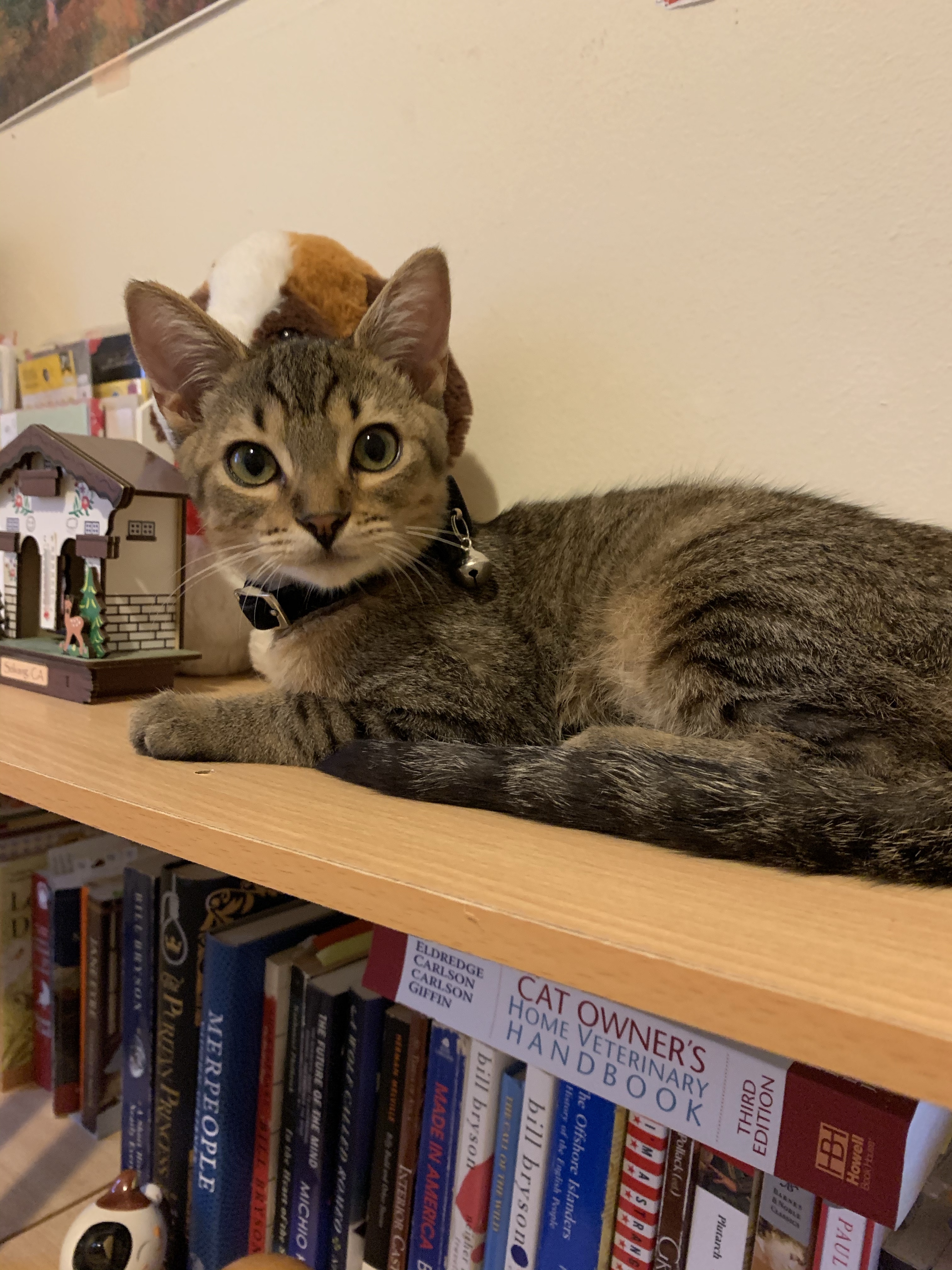
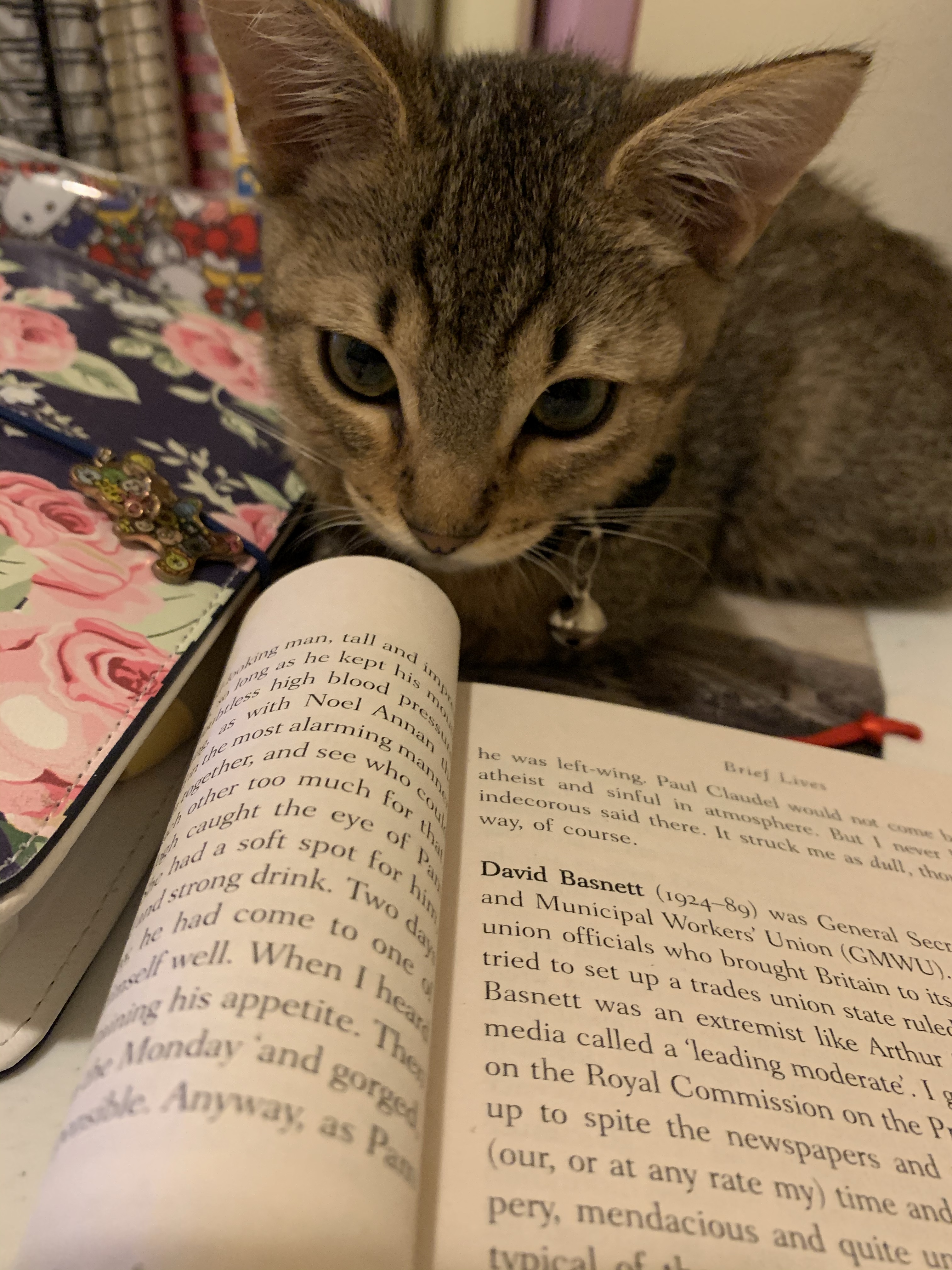
    My name is Toro, the co-editor at large of this blog with Stephanie. I am sixteen weeks old. I am a domestic short-haired tabby tom, but Stephanie believes that I am of an Egyptian Mau, admired by ancient Egyptians and the divine cat of Ra, God of the Sun, as portrayed in the Book of the Dead. I think Stephanie’s hypothesis of my suspected heritage is due to my beautiful turquoise eyes and dainty figure. She also seems to want to liken her and me to Cleopatra and her beloved Mau. (Wow!) Well, no one can blame her for regaling herself with such lofty imagination of my elated pedigree because – in all honesty – I look like one. What can I say? Seeing is believing, and beauty is in the eye of the beholder. Then the truth is to the end of reckoning, as the Bard chimed in.

    As is the queen, so is the subject.

    Despite my regal appearance, my biological and family background is that of an orphaned pauper, lesser than the pauper who exchanged his identity with a prince because he had mom and dad. When I was born, my mother left me alone, so a passing old lady took me to a nearby shelter where I met my sister Stephanie. I followed her because there was something that connected us from moods to tendencies and personalities. We share our peculiarities in mutual solitude shared by orphaned patronage of love and care.

    How’s the writing going?

    Because I was left alone to tend myself at so young an age, I am prone to frequent mood swings from high and low, which often makes me frantically run around the room back and forth, up and down, and left to right without stopping. I know this strange behavior of mine startles poor Stephanie, but I can’t help such impulsive pulsing as it is part of my irrepressible feline nature. However, one thing is sure that when I see Stephanie returning home from work, my whiskers are moving all withers, my tail rises to fortune, and my little feline heart fills with meows and more meows.

    This much is the bio that I dictated to Stephanie for my new career in publishing. As I am excited about this new adventure with Stephanie on board, I hope readers will join us in our one of a kind literary enterprise in joyous spirit! Meow.

    I am done with my share. So, I am taking a break.
  • Theodore Tom’s Virgin Maid – ‘How To Be Owned By A Cat’, by Kate C. – review

    How To Be Owned By A Cat: Simple Action Plan For First Time Cat Owners Who Have NO Idea What They Are Getting IntoHow To Be Owned By A Cat: Simple Action Plan For First Time Cat Owners Who Have NO Idea What They Are Getting Into by Kate C.

    My rating: 4 of 5 stars


    Cats remind me of whimsical and capricious Greek gods and goddesses. Sometimes, cats are like Baroque European aristocrats with sophisticated finickiness. They are like spoiled children with no regard to manners in the sudden pulsing of stalking and jumping, rigidly dominated by their blindly unchecked ego. Whatever of the feline nature it may be, there is undoubtedly more than one of it; cats are convincingly intelligent, bracingly artless, and surprisingly affectionate with a display of individualities particular to each cat. No wonder there are celebrity cats as follows: A Cat in the Puss walking around as if he were man, Tom outwitted by Jerry, Garfield as laid back as his lookalike master, Felix the Car becoming a timeless icon of the style, and Theodore the Cat, who likes to challenge, “Who’s the Boss?” in this amusing read.

    With an imposing name associated with a man of outstanding achievement, Theodore likes to think himself as a lifetime resident of a presidential suite attended by his matron-in-waiting Kate, a virgin cat owner without prior experience of raising a cat. Her meeting with Theodore, whom she happened to adopt from a pet shop, is a match made on earth, orchestrated by time and chance, aka Fortune. Or it may be the stars that shine brightly above their heads. The journey both Kate and Theodore has thus far embarked is akin to a real one of a road trip by a small caravan, consisting of bumpy drives, drive-ins, park-ins, give-ins, give-outs, etc. Kate’s relationship with Theodore parallels that of the Chef and his stray gourmet cat named Apollo in John Steinbeck’s “The Amiable Fleas” regarding the narrative’s realistic atmospheres illustrating the significance of ordinariness in daily life. Both works celebrate the values of simple pleasures that give a fresh hold upon our problems and different perspectives on life.

    This charming little book also attests to Emerson’s tenet that thinking is the function, and action the functionary. In other words, the understanding of truth results from the successful union of knowledge and practicality on reality. Kate comes to the A-HA moment by realizing that her knowledge about cats from books and the media is not complementary to its applicability to tending her cat, Theodore.

    I picked up this read because in reading its summary, I felt related to the author’s case for being a first-time cat owner without initial interest in cats. Her daily interactions with Theodore has taught her that there are no bad cats but only misunderstood cats due to a lack of patience or a deficiency in compassion on human parts. What will happen when what you read from books and watch from Youtube about cats contradict the realities of your Toms and Mollys at home? Just as lawyers do not learn their trade at law schools till they practice, pet owners will not know about their flurry fireballs till they clean their poops. In light of the above, this book is a lightheartedly vivacious and entertainingly down-to-earth read that makes you emphasize with her experience as a first-time cat owner.

    Furthermore, for those who criticize the author’s poor writing style as posted on Amazon reviews, I want to tell each of them that being a purist regarding English Underfiled does not guarantee that you are not an ignoramus. Good writing means not in immaculate grammar but in the richness of sentiments and of thoughts. Therefore, I regard this book as an excellent read to read; especially, if you are a virgin cat owner like we are.


    View all my reviews

  • Wounded Wings

    I often feel excluded from circles of literary people who seem to think less of what I have written. Be it self-conscious or counterintuitive perception, but my senses feel acutely from the stolid reaction or derisive comments on writing platforms. When my writing is derided or ignored, I take arms against the invisible keyboard scoundrels to guard the bastion of my creative world. Otherwise, I will remain a victim of ruthless bullying combined with barbarous ridicule, which I do not deserve, ever. I am only a human, so there’s no magnanimous pretext of “constructive criticism” because there’s no such.

    There are new comments for my review of a particular book posted on Amazon. The acrid and derisive comments that my writing was incomprehensible pierced my heart with a great spear and put my entire body fixed to the wall. While I have been trying to write better, the comments only affirm a doubt about the purpose of writing. The common denominators of the words were as follows:

    • They were both men.
    • They seemed to form an appreciation of English Undefiled.
    • They were British and American.

    Though I always try not to associate people with their national characteristics, men who speak English as their mother tongue have a certain air of arrogance, young or old, and seem to delight in schadenfreude. What makes these men put their hands on keyboards to pillory my writing skills in public is astonishingly callous and vile. I am with the disappointment dipped in the anger of Timon of Athens uttering, “The unkindest beast is kinder than a man.” How rightly so.

    People associate a fluency of language with a level of intellect, believing that thinking shapes language. Therefore, solecism in writing equals a lack of education, learning disability, or low intelligence. It is their ignorance of such a mode of thought because language is instinct, not a thinking product. It is said that the windows of learning other languages are typically closed at the age of 13. Given that fact, shall we regard someone who tries to exercise an adopted language by writing, however poorly, as a buffoonish dilettant pitifully trying to simulate the impossible?

    I am more in sorrow than in anger as I am trying to compose my emotions’ agitated waves. That does not mean I beg for customary sympathy, empty consolation, or instant charity. I want to defy being put in a public pillory to endure underserving mockery, harassment, and ridicule like a poor maid masquerading as a refined lady of high society. Truth is truth to the end of reckoning, and it will reveal itself someday. You may not like my writing, but that doesn’t give you an ipso facto reason to belittle it.