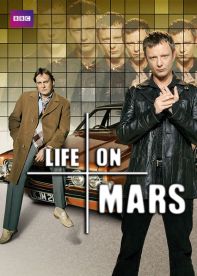
A good detective drama propounds you with an jolting twist in a story line with verve and gusto, making it an enjoyable and enlightening view. In this regard, Life on Mars is an ingeniously crafted TV drama, packed full of elliptically well-written scripts, impressively executed performance of a fine cast, and highly detailed periodical background setting that renders all the more convincing verisimilitude of each episode that resurrects the past in a mind blowing way.
The story evolves around the protagonist Sam (brilliantly played by John Simm), a clever, sharp-witted DCI with a heart who after a near-fatal car accident, finds himself awake in the year 1973, four years later he was born, as DI in the Manchester Police Department. The cause of the mysterious teleportation to the decade and the dilemma of Sam trapped in the past are the gist of this wonderfully thought-provoking drama which otherwise would be just another cop/crime drama with gratuitous hot car pursuits, bloodshed crime scenes, and mindless half-nude scenes. Sam constantly wants to return to what he believes to be the present or the reality, but the police department of the past needs his help. And that’s how the entire two seasons of the drama are unfolded.
Life on Mars is fun to watch with a delightful combination of 70s American cop drama appeal in appearance and scintillating synthesis of SCI-Fi and Psychological Suspense in content. It is a modern detective procedural worth the watching. You will have no guilty feeling of indulging in the entire two seasons at one setting on your Kindle Fire because it will both entertain your senses and spur your mind on to think about your own reality.
Charlotte Bronte’s Jane Eyre (under the pen name of “Currer Belle” to discombobulate her biological determinism) is neither a romantic novel about a lonely young woman falling for her rich master nor a proto-feminist literature subtly championing women’s economic independence and choice to select their lovers on their own. It is a story of a resilient and noble spirit armed with education, clothed in a canopy of humanity, and adorned with reflective beauty of the mind that transforms physical plainness into comeliness. That’s what makes our heroine Jane Eyre timelessly unforgettable, undeniably attractive; perchance, that’s why this novel has been made into a series of film versions for television and cinema resurrecting the ambiance of the period and bringing the hauntingly impassioned characters into life. Of all the dramatized adaptations of Jane Eyre, this 1983 BBC mini-series version merits itself in the movie firmament as the authoritative translation of Charlotte Bronte’s original novel, wonderfully delivered by a cracking screenplay, a brilliant cast of performers, and a correct setting of the story, resembling none other than themselves altogether in this riveting panoply of Bronte’s dazzling creation.
Dramatized by Alexander Baron, this TV series is composed of eleven episodes that faithfully capture the epochal moments of the passionate heroine Jane Eyre from the moments she was cruelly castigated by her callous aunt and her equally sordid cousins to her eight years of boarding school experience, to the fateful encounter with the brooding but vulnerable Mr. Rochester, and to the significant events packed full of surprises and serendipity worth every reward to the lonely Jane. The gem of this BBC miniseries is that each of the episodes is treated as a small story – that is, a story embedded in a whole story as if it were a short story itself – so you can skip the early years of Jane and jump into her employment as governess for Adele, the only daughter of Mr. Rochester at Thornfield without feeling adrift from the previous story that will defenestrate you to the middle of nowhere in the whole story. Of course, for those of us who have read and re-read the novel since the time immemorial, it’s a foregone conclusion, but even if you haven’t, take heart and play it fast forward to meet the grown Jane (although she’s only nineteen years old.) in her tantalizing, suspenseful moments with Mr. Rochester and even St. John Rivers.
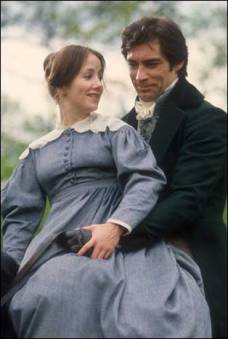
Zelah Clarke as Jane Eyre and Timothy Dalton as Edward Rochester
At the heart of the drama lies the commendable performance of the characters: Jane Eyre, played by Zelah Clarke, Edward Rochester aka “Mr. Rochester,” by Timothy Dalton, and St. John Rivers, by Andrew Bicknell invest the drama with the beautifully nuanced dialogues and gestures, which are never outlandishly displayed, vying for individual attention, but harmoniously concerted that impart the enthusiasm and the verisimilitude to the story. The appearances, gestures, and diction of these three characters are exactly what I have always imagined them to be in my mind’s eye. Clarke’s rendition of Jane Eyre is the finesse itself that would make Charlotte Bronte happy with her performance as well as physiognomy. Jane is a passionate soul, but conservative, if not conventional. She is an intelligent woman who loves her gruff but deeply hurt and lonely Edward Rochester as her equal despite a sea of an age difference and his petulant past. Unlike other Jane Eyres played previously and posteriorly, Clarke’s Jane epitomizes the heroine of oddly beautiful enigma personified: the plain but pretty, expressive but demure, passionate but docile, sensitive but intense, patient but yearning… Which is befittingly summarized by St. John Rivers, wonderfully and unforgettably played by Andrew Bicknell: “She has an unusual face rather…The grace and harmony of beauty are wanting in her features. She is not at all handsome…” I have seen other film versions of Jane Eyre, but none other than this Clarke’s Jane Eyre has won my approval in terms of all things regarding the heroine of Charlotte Bronte’s original novel.
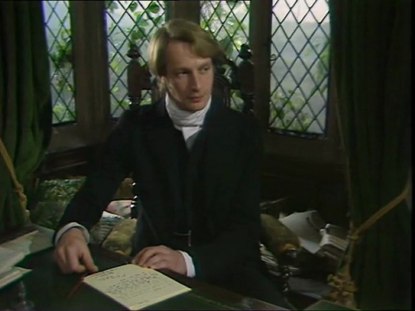
Andrew Bicknell as St. John Rivers
That goes the same for Timothy Dalton’s irrepressible Edward Rochester and Andrew Bicknell’s stoical but misguided St. John Rivers. On a personal note, Bicknell seems to nail the role down as handsome and intelligent St. John Rivers, who prioritizes his religious duties as a parson over his human feelings and emotions for his beautiful and kind-hearted admirer Rosemund Oliver in the irrational belief that stoicism is the grist for the mill of vocation as a man of the cloth. He believes that it is his calling to be a missionary in India and that it behooves him to abnegate sensuous delights to which a man is naturally inclined with all his might. Watching Bicknell playing the character makes me wonder if the casting director or the screenwriter had the uncanny ability to conjure up the spirit of Charlotte Bronte and ask of her the fitting image of the character before the production of the drama. The tall, imposing manly figure of St. John Rivers with beautiful Grecian facial features and golden hair is just as the description created by Bronte in the novel as if she had seen Andrew Bicknell in the peculiar alchemy of literature that enabled her to look into the future and to view her character incarnate.
All in all, this 1983 BBC miniseries of JaneEyre will arrest your full attention to every scene of the episodes without infelicity and pomposity that classical period dramas sometimes tend to produce on account of obsolete diction and rude gestures that look incongruously emphatic to our modern senses and sensibilities. This is a quaintly gorgeous drama without the ostentatious glamor of television drama exhibiting luminous Vanity Fair; it shows that just simple good scripts based on the loyal adaptation of the original novel and excellent performance of the fine cast that seems to be destined for the roles can translate the imaginative world of the author into the visual firmament of television drama this beautifully and impressively in a way that makes you feel the emotions of the characters by passing over to their inner worlds.
What distinguishes Charles Dickens from his contemporary writers is his belief in redemption, forgiveness, and benevolence of a human spirit triumphing over poverty, guilt, and death, the three cardinal ordeals of existential phenomena. For almost every character in his oeuvres, including villains, heroes/heroines, and even minor characters, has some shred of redeemable traits, if not goodness in the case of swindlers, pickpockets, or murderers. The question of morality in the Dickensian world is never proprietarily imposed upon the reader, and thereby leaves out harsh puritanical judgment of a character because humans are more sinned against than sinning. That’s the beauty of Dickensian reality set in the background of the stuffy Victorian reality. That’s why I can’t hate any of his characters, such as Bill Sikes, The Artful Dodger, and even Fagin from Oliver Twist in the parade of humanity.
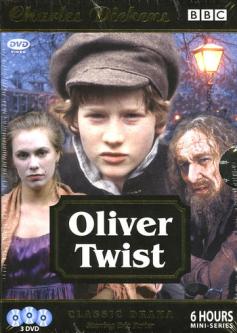
The TV adaptation of the novel by BBC (1985) is truthful to the original context, capturing every moment of emotions and feelings as finely portrayed by a skillful cast of the characters. The story of an impoverished orphan child whose resilience and innocence got him through misadventures and ultimately rewarded him with a bounty of loving family and well-deserved munificent largess may look to be a typical rags-to-riches fable. But such a presumptuously precarious judgment of the story will deprive the reader of the beauty of Dickensian characters as aforementioned.
Take Bill Sikes, a tall and lean professional burglar whose callous treatments of Nancy, his live-in girlfriend also a pickpocket, and his loyal mutt Bull’s eye are downright contemptible. It goes without saying that this Bill Sikes character is in no way likable or pitiable. Yet, such egregiousness that only invokes contempt is what makes Sykes a fortiori pathetic. After he killed his beautiful-hearted Nancy in a paroxysm of rage, Sikes shed a cascade of tears that looked to me more of guilt and regret than of any other reason I could think of. As a matter of fact, watching the Sikes character shedding tears perturbed my heart because I could glimpse at his heart hardened by his life of poverty that had led him to the life of crime.
What about Fagin, a boss of juvenile pickpockets, who is driven half mad at the thought of his being hanged at Newgate? Maybe it’s because his character was visually manifested on screen, but he also won my sympathy over such madness, which made me wonder if his insurmountable surge of remorse for his crime made him mad. Also, the artful Dodger, the most skillful pickpocket of the gang captured and tried at the court, was the figure of pathos. Would he have fallen into the world of crime had he been born into a well-to-do family? Or if a divisory lot – that is, a play of chance given by goddess Fortuna – had been favorable to him, would he have found himself in where he was?
Call it childlike credulousness or a feminine streak of maudlinness, but I don’t want to make draconian measures against these antagonistic characters by putting them into a Procrustean bed of morality one by one. For it is necessary without a gesture of condescension or insolent attitude masked in charity to get into the inside world of the characters to understand what made them choose the life they lived in the face of poverty, hopelessness, and loneliness. I cannot help thinking that a game of chance each of them tried to get was against him and scoffed at his attempt to make it right in his life. In that regard, this is the question that Dickens asks to us: what would you do if you would put yourself in their shoes? Dickens tacitly implies that only the goodness of our heart that comes from our empathy can save the world. Come to think of it, it is no wonder why Catholics and Marxists alike wanted to claim Dickens to be one of their own in his era. For these reasons, his novels should not be confined in a genre of Victorian literature because the subjects are timeless, and the characters appealing with universal traits of humanity that know no cultural, linguistic, and social barriers.
It was my first moment of spiritual Eureka mixed with awesomeness and bewilderment in terra incognita when I first read The Jungle Book by Rudyard Kipling. It was a wonderful pictorial book painted with the scenes from the Disney’s classic animated film version. To the child’s eye, it was like a fiesta of vivid colors and vivacious characters set in motion in the heart of jungle I had never seen. What’s more, the animals were so humanlike and likable into the bargain that while reading the book, I almost forgot that they were beasts speaking their own language, which I was able to understand through the presence of Mowgli, who looked a lot like Tarzan in diminutive stature and size wearing only a loincloth and long dark hair. Mowgli’s knack of communicating with his beastly friends who were always there for him even compelled me to try talking to my domestic puppy Nena at that time by using a quaint conflation of the human alphabets and the doggie phonetics to a moderate success.
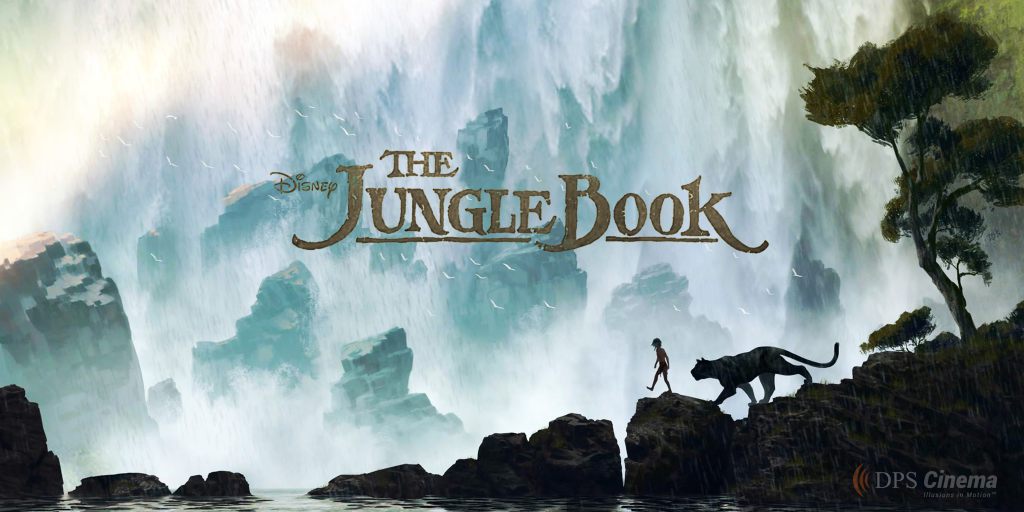
Now I am pitchforked forward in 2018, but the childlike sensation of reading The Jungle Book still resonates strongly with me in defiance against the existential horrors of life that I deal with everyday. Amid the the detritus of daily chores and duties, I turned to Disney’s remake of The Jungle Book (2016), which I chose to watch on my Kindle Fire a few nights ago. At first blush, I had a certain indisposition to watch the highly-acclaimed film: although I am not altogether unreconstructed in terms of watching a film version of classic literature, I tend to shun adopted film versions of classic literature because of the gratuitous rendering of post modernist revisionist interpretations of the books they put on screen. But such misgiving was proved to be an unnecessary mental albatross.
The Jungle Book is a cinematic eye candy to children and adults with its stunning visual impacts and a spectacular scale of the story set in the background of a deep jungle somewhere in India populated with a cast of magnificent characters representing human characteristics in different forms. To classify this film as an anthropomorphic children’s film is to miss the essence of Kipling’s allegorical allusion of our human nature to multifarious animal forms: Sloth, Integrity, Conscience, Humor, Greed, and Vengeance, all of which is manifested in contact with the nature itself whose essence is of neutrality. It is in this background of nature, which is neither paradise nor hell where our human nature becomes conspicuous in its very essence, a primeval form. The manifestation of such human traits is a fortiori overcome by the figure of Mowgli, a feral child brought by a benevolent wolf family. Mowgli is an emblematic of resilience, independence, and courage against the gravitas of trepidation, death, and despondency.
Given the authenticity of the storytelling aligned with the original context by Kipling and the performance of the characters studded with breathtaking scenes of nature so characteristic of Disney’s creative imaginativeness, it is a film worth of the spending your time on screen. It is a kind of film that stimulates your mind by inviting you to think about a meaning of our human life and existence and of our purpose of life. It will also thrill your heart with the adventures of Mowgli in the heart of the jungle and the stereoscopic views of the nature on screen created by a wonderful collaboration of our timeless human imaginations and 21st century feats of technological bona fides.
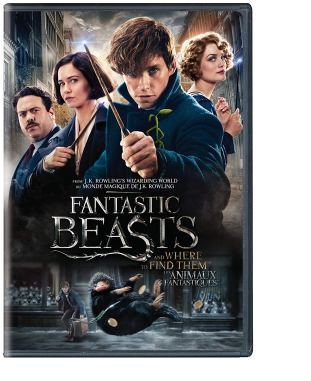
J. K. Rowling bewitches us again with her famed literary magic wand. Her fabulous creation of fantastic beasts, a young brilliant wizard, white witches with hearts of gold, an ominous black magician, and an amiable non-magician all coming vividly alive on the screen, will please your senses and touch your heart in no time with delightful feats of magic and boundless imaginativeness without interventions of boredom or cheesiness.
Set in the 1920s New York City, the film yields the verisimilitude to the story-line that anchors the world of imagination in reality where magic is smoothly laced with chores of everyday life without forcing you to accept the fictitious ludicrousness and cinematic anachronism. At the heart of the film lies the wonderful chemistry of the actors and actresses harmoniously manifested in their illustrious performance of the characters in their own roles, coupled with a dazzling technical employment of bewitching visual special effects.
What’s more, this film will get to your heart, so after watching it, you do not want to leave the world of the fantastic beasts and remain with them even though you may be non-magicians. A feast to the eye, a festivity of the mind, this film will take you breathtakingly from the humdrum life to the world of magic, making you wonder if you could also find the fantastic beasts just as I did, for “There are more things in heaven and on earth than are dreamt of in your philosophy,” as Shakespeare believed too.
Have you ever tried to explain a certain colloquial expression, such as “kick the bucket,” “shoot off his mouth,” or “until the fat lady sings” to someone whose mother tongue is anything but English? You probably have been delighted to find out how meanings of words can yield multifarious feats of creative interpretations, which can also, in turn, be prospective nouveau vocabulary of the most effectively deployed Lingua Franca of our time. After all, that’s what Geoffrey Chaucer and William Shakespeare, and George Bernard Shaw did to the English language, which is still kicking and alive in keeping up with the evolution of our own cultural progress. And certainly, the students in the evening English class are a tour de force of such cultural enterprise in this hilarious original British sitcom “Mind Your Language.”
The story of Jeremy Brown, an ingenuous young academic teaching English to his slightly offbeat motley crew of foreign adult students at evening classes in an adult education college in London forms the basis of the show. Mr. Brown has to deal with his students’ creatively wily answers to his questions, while trying to instill in them the elements of the English language with his Oxford-educated academic credentials. In fact, it’s the class that gets the laugh by pushing their naive enthusiastic young teacher into an imbroglio of jocular situations all for the celebration of joviality in their evening English class after hard days of work. In bewilderment of his students’ wily but innocuous chicanery, Mr. Brown’s affection for his class grows bigger and deeper as the show continues; you see him becoming something of Jack of all trades for his students as well as the principal, Ms. Courtney. You will find Mr. Brown at the police station, in court, in hospital, on the dance floor at the school fete, and of course at the pubs with his beloved students or Sidney, the cockney school caretaker.
The Cast of “Mind Your Language”
The delightful peals of hearty laughter, the bounty of warmth, and even remedial lessons of English embroider on these three scintillating series of the show produced by London Week Television between 1977 and 1979 for ITV in England. Each of the episodes was ingeniously written with simply brilliant feats of words and ideas on the grounds of realistic situations relating to anyone who speaks English as a foreign language or anyone who deals with such person in reality. Also, the collective efforts and performance of the cast with each actor and actress harmoniously contributing the best of the self to the respective character is the ipso facto gem of the perennial popularity of the show to this date. All in all, the setting, the topic, the storyline, and the cast of “Mind Your Language” give you the idea that in order to make a good TV comedy show that strikes the chords with a wide range of people regardless of ethnic, racial, and/or social backgrounds, all you have to do is to look into the everyday life around you and see if there is anything that transcends the subjectivity of the aforementioned backgrounds in order to reach the universal code of humor and humanity without pontificating social/political ideology. For these reasons, “Mind Your Language” is an unmissable feast of comedy of intelligence, wit, humor, and a touch of innocence that deserves of its recognition in the canons of British Classic Comedy.
 A good detective drama propounds you with an jolting twist in a story line with verve and gusto, making it an enjoyable and enlightening view. In this regard, Life on Mars is an ingeniously crafted TV drama, packed full of elliptically well-written scripts, impressively executed performance of a fine cast, and highly detailed periodical background setting that renders all the more convincing verisimilitude of each episode that resurrects the past in a mind blowing way.
 What distinguishes Charles Dickens from his contemporary writers is his belief in redemption, forgiveness, and benevolence of a human spirit triumphing over poverty, guilt, and death, the three cardinal ordeals of existential phenomena. For almost every character in his oeuvres, including villains, heroes/heroines, and even minor characters, has some shred of redeemable traits, if not goodness in the case of swindlers, pickpockets, or murderers. The question of morality in the Dickensian world is never proprietarily imposed upon the reader, and thereby leaves out harsh puritanical judgment of a character because humans are more sinned against than sinning. That’s the beauty of Dickensian reality set in the background of the stuffy Victorian reality. That’s why I can’t hate any of his characters, such as Bill Sikes, The Artful Dodger, and even Fagin from Oliver Twist in the parade of humanity.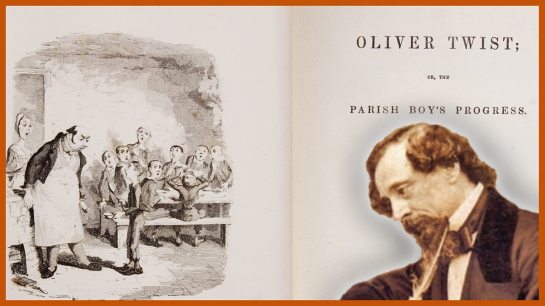
 Given the authenticity of the storytelling aligned with the original context by Kipling and the performance of the characters studded with breathtaking scenes of nature so characteristic of Disney’s creative imaginativeness, it is a film worth of the spending your time on screen. It is a kind of film that stimulates your mind by inviting you to think about a meaning of our human life and existence and of our purpose of life. It will also thrill your heart with the adventures of Mowgli in the heart of the jungle and the stereoscopic views of the nature on screen created by a wonderful collaboration of our timeless human imaginations and 21st century feats of technological bona fides.
 J. K. Rowling bewitches us again with her famed literary magic wand. Her fabulous creation of fantastic beasts, a young brilliant wizard, white witches with hearts of gold, an ominous black magician, and an amiable non-magician all coming vividly alive on the screen, will please your senses and touch your heart in no time with delightful feats of magic and boundless imaginativeness without interventions of boredom or cheesiness.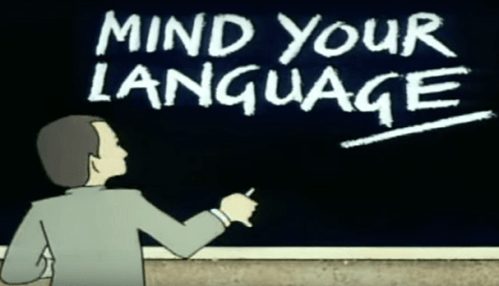


You must be logged in to post a comment.